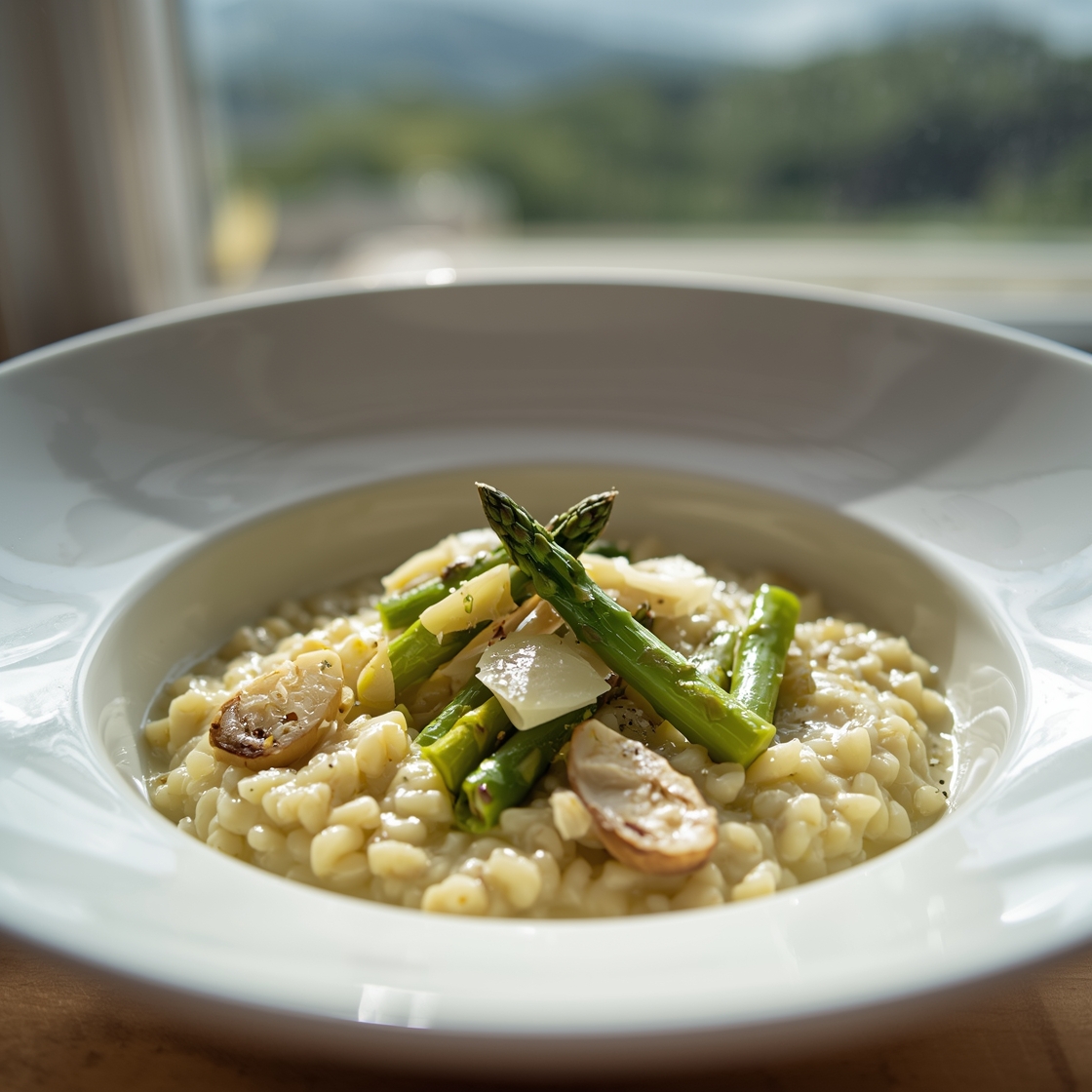
Roasted Garlic & Asparagus Risotto
A creamy, indulgent risotto featuring two of the best prebiotic foods — garlic and asparagus — in every luxurious bite.
Gut Health Benefit
Garlic and asparagus are among the richest sources of inulin, a prebiotic fiber that specifically feeds Bifidobacteria. Roasting garlic mellows its flavor while preserving its prebiotic properties.
Why This Recipe Is Great for Your Gut
This risotto pairs two of nature’s most powerful prebiotic foods — roasted garlic and asparagus — in every creamy, indulgent bite. Both ingredients are exceptionally rich in inulin, a long-chain fructan fiber that acts as the preferred fuel source for Bifidobacteria, one of the most important beneficial bacterial genera in the human gut.
Inulin is a type of fructooligosaccharide that cannot be digested by human enzymes. It passes intact through the stomach and small intestine, arriving in the colon where it is rapidly and selectively fermented by Bifidobacterium species. This fermentation produces short-chain fatty acids (SCFAs), particularly acetate and propionate, which lower the pH of the colon, inhibit pathogenic bacteria, and provide energy to colonocytes. A single serving of this risotto delivers approximately 4–6 grams of inulin fiber from the garlic and asparagus combined — a significant prebiotic dose.
Roasting the garlic is a deliberate technique choice. Raw garlic contains allicin, which has powerful antimicrobial properties but can be harsh on sensitive stomachs. When garlic is roasted at 400°F for 30 minutes, the allicin converts to ajoene and other sulfur compounds that retain their health benefits while becoming much milder and sweeter. Crucially, the inulin in garlic is heat-stable and survives the roasting process completely intact.
Asparagus is one of the few vegetables that contains measurable amounts of inulin in concentrations comparable to chicory root (the commercial source of supplemental inulin). The stalks also provide folate, vitamin K, and a unique compound called asparagine — an amino acid that supports kidney function and fluid balance.
The risotto technique itself — slowly adding warm broth and stirring — gradually releases the starch from the Arborio rice, creating a creamy texture without heavy cream. This slow-cooked starch is gentle on the digestive system and provides a soothing base for the prebiotic fibers.
Key Ingredients for Gut Health
Roasted Garlic
A whole head of roasted garlic contains approximately 2–3 grams of inulin fiber. When you squeeze the soft, golden cloves into the risotto, you are adding one of the most concentrated prebiotic foods available. Garlic also contains fructooligosaccharides (FOS) and allyl sulfides, which have demonstrated antimicrobial activity against harmful bacteria like Clostridium perfringens and E. coli, while leaving beneficial Lactobacillus and Bifidobacterium species unharmed. This selective antimicrobial action makes garlic a true “precision prebiotic.”
Asparagus
Asparagus spears contain 2–3 grams of inulin per cup, making them one of the highest-inulin vegetables available. The inulin is concentrated in the lower portion of the stalks, so do not trim too aggressively. Asparagus also provides a rare combination of folate (essential for DNA synthesis in rapidly dividing gut epithelial cells), glutathione (a master antioxidant), and saponins (plant compounds with anti-inflammatory effects on the intestinal mucosa). Roasting the asparagus caramelizes its natural sugars while keeping the inulin fully intact.
Arborio Rice
Arborio rice is a short-grain, high-starch variety that releases amylopectin as it cooks, creating risotto’s signature creaminess. While not as fiber-rich as brown rice, Arborio rice is gentler on the digestive system and serves as an excellent vehicle for delivering the prebiotic-rich garlic and asparagus. When leftover risotto cools in the fridge, the rice starch undergoes retrogradation and forms resistant starch, making reheated risotto even more gut-friendly.
Ingredients
- 1 1/2 cups Arborio rice
- 1 bunch asparagus (about 1 lb), trimmed and cut into 1-inch pieces
- 1 whole head of garlic
- 5 cups warm vegetable broth (kept simmering in a separate pot)
- 1/2 cup dry white wine (such as Pinot Grigio or Sauvignon Blanc)
- 1 medium onion, finely diced
- 2 tbsp olive oil, plus extra for roasting
- 2 tbsp unsalted butter
- 1/2 cup freshly grated Parmesan cheese
- Salt and freshly cracked black pepper to taste
- Fresh lemon zest and microgreens for garnish
Instructions
- Roast the garlic. Preheat oven to 400°F (200°C). Slice the top 1/4 inch off the garlic head to expose the cloves. Place on a square of aluminum foil, drizzle generously with olive oil, and wrap tightly. Roast for 30–35 minutes until the cloves are deep golden and buttery soft. Set aside to cool slightly.
- Roast the asparagus. Toss the asparagus tips and pieces with 1 tablespoon of olive oil and a pinch of salt on a baking sheet. Roast for the last 10–12 minutes of the garlic’s cooking time until tender-crisp and lightly charred. Set aside.
- Sauté the base. Heat 2 tablespoons of olive oil in a large, heavy-bottomed pan or Dutch oven over medium heat. Add the diced onion and cook for 4–5 minutes, stirring occasionally, until soft and translucent.
- Toast the rice. Add the Arborio rice to the onion and stir constantly for 2 minutes until the edges of the grains become translucent and the center remains opaque. You should hear a faint crackling sound — this toasting step is essential for risotto’s texture.
- Deglaze with wine. Pour in the white wine and stir until it is completely absorbed (about 1 minute). The alcohol will cook off entirely, leaving behind acidity and depth.
- Build the risotto. Begin adding the warm broth one ladle (about 1/2 cup) at a time. Stir frequently and wait until each addition is nearly absorbed before adding the next. This process takes 18–20 minutes. The risotto is done when the rice is creamy and al dente — tender with a slight bite at the center.
- Finish with garlic and asparagus. Squeeze the roasted garlic cloves from their skins directly into the risotto and stir to melt them in. Fold in the roasted asparagus pieces, butter, and Parmesan cheese. Stir gently to combine.
- Season and serve. Season with salt and freshly cracked black pepper. Serve immediately on warmed plates, garnished with fresh lemon zest and microgreens.
Tips
- Do not rush the broth additions. The slow, gradual addition of warm broth and constant stirring is what coaxes the starch out of the Arborio rice, creating risotto’s signature creamy texture. Patience is the key ingredient.
- Keep the broth warm. Always use warm broth. Adding cold broth shocks the rice and interrupts the cooking process, resulting in uneven texture.
- Extra prebiotic power. Sauté sliced leeks alongside the onion for an additional boost of inulin fiber. Leeks are in the same allium family as garlic and add sweet, mild flavor.
- Make it vegan. Replace the butter with olive oil and substitute the Parmesan with 2 tablespoons of nutritional yeast for a cheesy, dairy-free finish.
Variations & Substitutions
- Mushroom & Garlic Risotto: Replace the asparagus with 2 cups of sliced mixed mushrooms (cremini, shiitake, oyster). Sauté them separately until golden brown and add at the end. Mushrooms provide beta-glucan fiber and unique umami depth.
- Lemon & Pea Risotto: Swap the asparagus for 1 cup of frozen peas (added in the last 3 minutes). Increase the lemon zest and add 1 tablespoon of fresh lemon juice at the end. Peas add 4g of fiber per serving.
- Butternut Squash Risotto: Replace the asparagus with 2 cups of roasted butternut squash cubes. Add 1/2 teaspoon of sage and a pinch of nutmeg. The squash adds natural sweetness and beta-carotene.
- Pressure Cooker Risotto: Use an Instant Pot to dramatically reduce active cooking time. Sauté the onion and toast the rice using the sauté function. Add all the broth at once and pressure cook on high for 6 minutes with a quick release. Stir in the garlic, asparagus, butter, and Parmesan after opening.
Storage & Meal Prep
- Refrigerator: Store leftover risotto in an airtight container for up to 3 days. It will thicken considerably as it cools. When reheating, add a splash of broth and stir over medium-low heat to restore the creamy texture.
- Freezer: Risotto can be frozen for up to 2 months, but the texture will be slightly softer after thawing. Freeze in individual portions for easy single-serving meals.
- Risotto cakes (arancini). The best way to repurpose leftover risotto: form the cold risotto into patties, coat lightly in breadcrumbs, and pan-fry in olive oil until golden and crispy. These make incredible appetizers or snacks.
- Resistant starch bonus: Cold, leftover risotto actually contains more resistant starch than freshly made risotto due to the retrogradation process. This means reheated leftover risotto is arguably better for your gut than the first serving.
Frequently Asked Questions
What makes garlic a prebiotic?
Garlic is rich in inulin and fructooligosaccharides (FOS), both of which are classified as prebiotic fibers. These carbohydrates cannot be digested by human enzymes and instead travel to the colon where they selectively feed beneficial Bifidobacteria and Lactobacillus species. One medium head of garlic provides approximately 2–3 grams of prebiotic fiber. Roasting does not destroy the inulin — it is heat-stable.
Does roasting garlic reduce its health benefits?
Roasting changes which benefits garlic provides but does not eliminate them. Raw garlic contains allicin, a potent antimicrobial that is partially destroyed by heat. However, the inulin (prebiotic fiber) in garlic is completely heat-stable. Roasting also converts allicin into ajoene and other organosulfur compounds that retain anti-inflammatory properties. For gut health specifically, roasted garlic is equally effective as raw garlic because the prebiotic fiber is what matters most.
Can I use brown rice instead of Arborio?
You can, but it will not produce a traditional risotto. Brown rice does not release starch the way Arborio does, so the result will be more like a pilaf than a creamy risotto. If you prefer brown rice for its higher fiber content, make a brown rice pilaf with the same garlic and asparagus flavors. Or, for a middle ground, try farro — it produces a chewy, semi-creamy result with more fiber than Arborio.
Is risotto considered healthy?
In the context of gut health, this risotto is genuinely healthy. The garlic and asparagus provide significant prebiotic fiber, the olive oil provides anti-inflammatory monounsaturated fats, and the Parmesan adds protein and calcium. The rice itself is a refined grain, so this risotto is best enjoyed as part of a balanced diet with plenty of other fiber sources throughout the day. At 420 calories per serving, it is a moderate-calorie dinner.
Why does my risotto turn out mushy?
Three common causes: (1) adding too much broth at once instead of ladling it in gradually, (2) cooking over too-high heat, which causes the exterior to overcook before the interior is done, and (3) overcooking past the al dente stage. The rice should still have a slight bite at the center. Taste frequently during the last 5 minutes of cooking and stop adding broth as soon as you achieve the right texture.
More Prebiotic Recipes
 Prebiotic
 Banana Oat Pancakes with Honey
Fluffy, naturally sweet pancakes made with ripe bananas and oats — a prebiotic-rich breakfast the whole family will love.
 Prebiotic
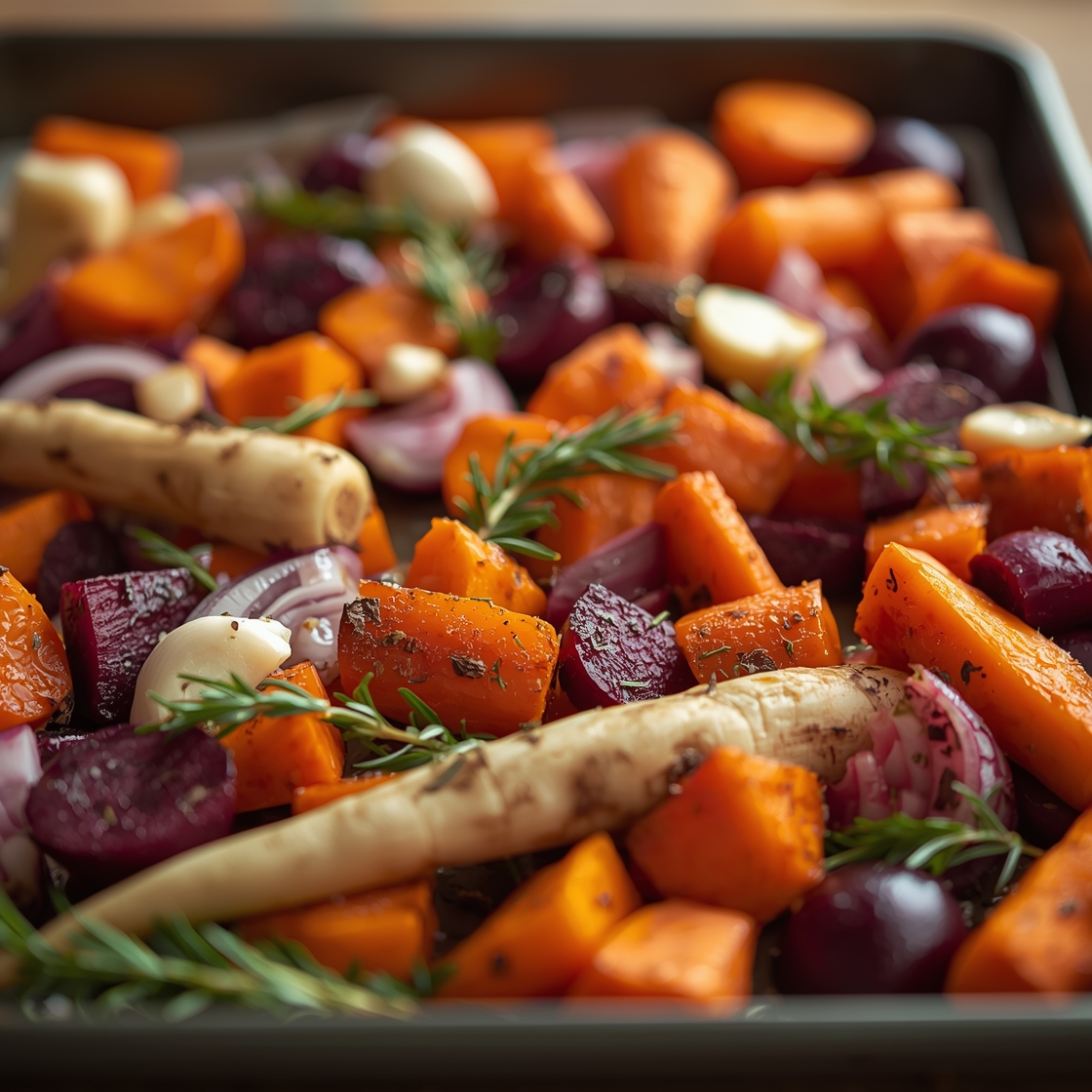
 Garlic & Herb Roasted Root Vegetables
A colorful medley of roasted root vegetables with a generous amount of prebiotic garlic, fresh herbs, and olive oil.
 Prebiotic
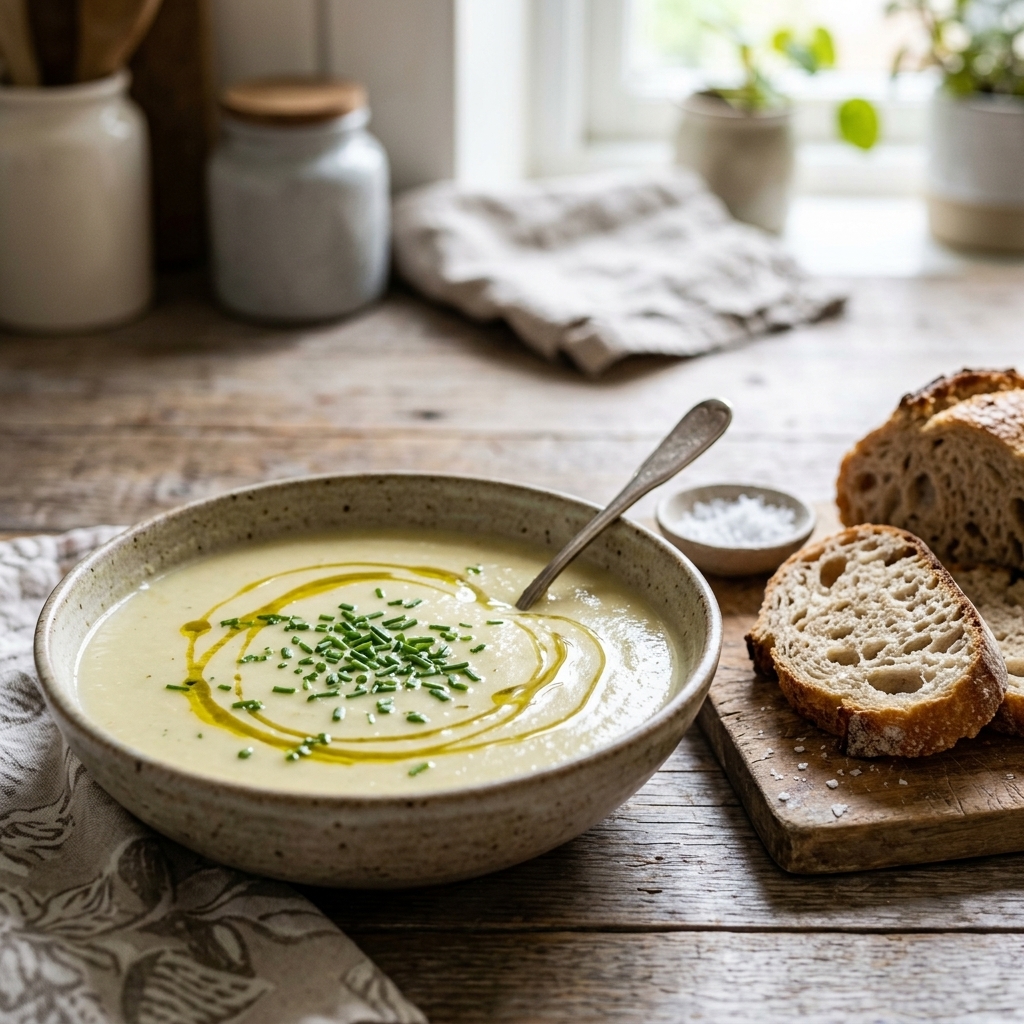
 Caramelized Leek & Potato Soup
A velvety, comforting soup starring leeks — one of nature's best prebiotic foods. Creamy, warming, and deeply satisfying.