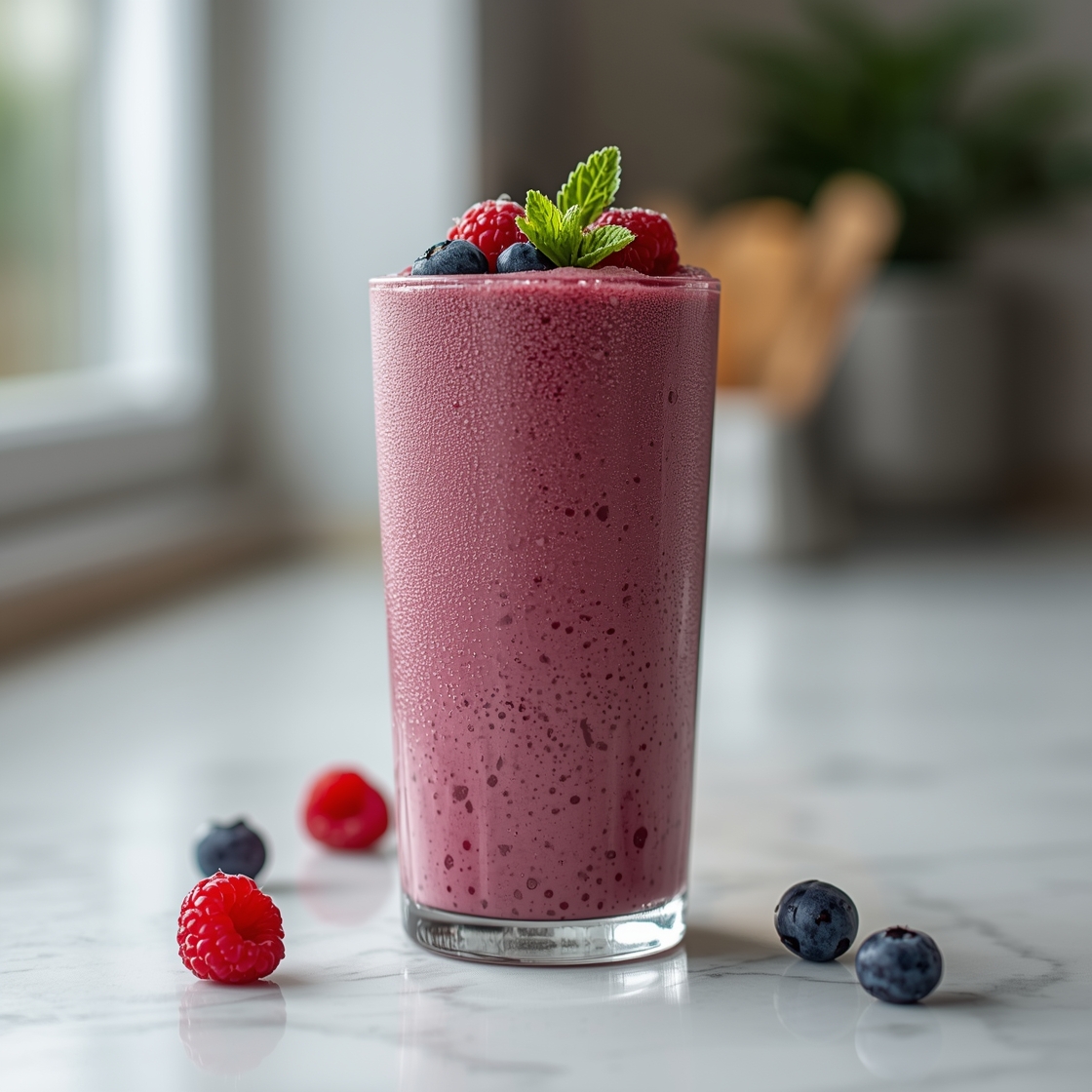
Tangy Kefir Berry Smoothie
A thick, creamy smoothie packed with probiotic kefir, antioxidant-rich berries, and a hint of honey. Gut health in a glass.
Gut Health Benefit
Kefir contains up to 61 different strains of bacteria and yeasts — far more diverse than yogurt. This microbial diversity is key to building a resilient gut microbiome.
Why This Recipe Is Great for Your Gut
If yogurt is a probiotic, then kefir is a probiotic superpower. While a typical yogurt contains 2–7 strains of beneficial bacteria, kefir has been scientifically documented to contain up to 61 different strains of bacteria and yeasts. This extraordinary microbial diversity is what makes kefir one of the single most effective foods you can consume for gut health. And this smoothie delivers all of that probiotic power in a thick, delicious, 5-minute breakfast.
Kefir is made by fermenting milk with kefir “grains” — a symbiotic culture of bacteria and yeasts (SCOBY) that has been used for over 2,000 years in the Caucasus Mountains. The dominant probiotic strains in kefir include Lactobacillus kefiri, Lactobacillus kefiranofaciens, and the unique yeast Saccharomyces kefir. What makes kefir especially powerful is that many of these strains can actually colonize the intestinal lining — unlike most probiotic supplements that pass through without establishing residence. Studies published in the Journal of Dairy Science have shown that regular kefir consumption significantly increases populations of beneficial gut bacteria while simultaneously reducing harmful pathogens like E. coli and Helicobacter pylori.
The berries in this smoothie serve a dual purpose. They provide intense antioxidant protection through anthocyanins (blueberries), ellagic acid (raspberries), and pelargonidin (strawberries). But their gut health contribution goes deeper: approximately 90% of the polyphenols in berries are not absorbed in the small intestine. Instead, they travel to the colon where they function as prebiotics — selectively feeding and nourishing beneficial bacterial species. This creates a synbiotic effect: the kefir delivers live probiotics while the berries feed them.
The banana adds natural sweetness along with fructooligosaccharides (FOS), a premium prebiotic fiber. Ground flaxseed contributes additional soluble fiber and omega-3 fatty acids (ALA) that combat intestinal inflammation. Together, this smoothie is a complete microbiome optimization tool disguised as a delicious breakfast.
Key Ingredients for Gut Health
Kefir
Kefir is the undisputed champion of probiotic foods. Its unique fermentation process using kefir grains produces a drink with 10–34 different species of beneficial microorganisms, far exceeding any yogurt or probiotic supplement. The fermentation also partially breaks down lactose, making kefir tolerable for many people with lactose intolerance. Kefir produces kefiran, a unique polysaccharide with documented anti-inflammatory and antimicrobial properties. For maximum probiotic benefit, always choose plain, unsweetened, full-fat kefir from the refrigerated section.
Frozen Mixed Berries
Frozen berries are nutritionally equivalent to (and sometimes superior to) fresh berries because they are flash-frozen at peak ripeness, locking in their polyphenol content. Blueberries are particularly rich in anthocyanins, which have been shown in clinical trials to increase populations of Bifidobacterium and Lactobacillus in the gut. Raspberries provide ellagitannins and 8 grams of fiber per cup. Strawberries contain unique fisetin, a flavonoid being studied for its ability to reduce intestinal inflammation.
Ground Flaxseed
Flaxseed is one of the richest plant sources of alpha-linolenic acid (ALA), an omega-3 fatty acid with anti-inflammatory effects on the gut lining. It also contains lignans — phytoestrogens that are converted by gut bacteria into enterolactone, a compound associated with reduced risk of colon cancer. One tablespoon of ground flaxseed provides 2g of soluble fiber. Always use ground (not whole) flaxseed, as whole seeds pass through the digestive tract undigested.
Ingredients
- 1 1/2 cups plain kefir (full-fat for best results)
- 1 cup frozen mixed berries (blueberries, raspberries, strawberries)
- 1 ripe banana (the riper, the sweeter and more prebiotic)
- 1 tbsp raw honey or maple syrup
- 1 tbsp ground flaxseed
- 1/2 tsp vanilla extract
- 3–4 ice cubes (optional, for thickness)
Instructions
- Add the liquid base first. Pour the kefir into a blender. Adding the liquid first prevents the frozen fruit from jamming the blades.
- Layer the remaining ingredients. Add the frozen mixed berries, banana (broken into chunks), honey, ground flaxseed, and vanilla extract. Add ice cubes if you prefer a thicker, frostier consistency.
- Blend until smooth. Blend on high speed for 45–60 seconds until completely smooth and creamy. The mixture should be thick, uniform, and a deep purple-pink color.
- Taste and adjust. Check the sweetness. Add more honey if needed, or an extra splash of kefir if the smoothie is too thick.
- Serve immediately. Pour into glasses and drink right away. Kefir’s live probiotics are most potent when consumed fresh. Do not let the smoothie sit at room temperature for extended periods.
Tips
- Boost it with greens: Add a large handful of baby spinach or kale. The berry flavor completely masks the vegetables, but you gain extra fiber, iron, and folate.
- Make it thicker: Use a frozen banana instead of a fresh one for an ice-cream-like consistency that you can eat with a spoon.
- Coconut kefir alternative: For dairy-free, use coconut kefir or water kefir. Both contain beneficial probiotic strains, though the strain diversity is typically lower than dairy kefir.
- Protein boost: Add a scoop of collagen peptides (15g protein) or plant-based protein powder for a more substantial post-workout recovery smoothie.
Variations & Substitutions
- Tropical Kefir Smoothie: Replace the mixed berries with 1 cup of frozen mango and 1/2 cup of frozen pineapple. Add 2 tablespoons of unsweetened shredded coconut. The bromelain in pineapple is a natural digestive enzyme.
- Chocolate Berry Kefir: Add 1 tablespoon of raw cacao powder for a chocolate-berry version. Cacao is rich in flavanols, a type of polyphenol that feeds beneficial gut bacteria and has been shown to increase Bifidobacterium populations.
- Green Gut Smoothie: Replace the berries with 1 cup of baby spinach, 1/2 an avocado, and 1/2 cup of frozen pineapple. The avocado adds healthy fats that improve the absorption of fat-soluble vitamins.
- Dairy-Free Version: Use coconut kefir or a plant-based kefir alternative. Add 1/4 cup of cashews (soaked) for creaminess if the plant kefir is too thin.
Storage & Meal Prep
- Drink immediately: For maximum probiotic benefit, consume the smoothie immediately after blending. The live cultures in kefir begin to diminish once exposed to air and room temperature.
- Freezer smoothie packs: Pre-portion the berries, banana, and flaxseed into individual freezer bags. In the morning, dump a bag into the blender, add kefir and honey, and blend. This reduces morning prep to under 2 minutes.
- Refrigerator: If you must store a blended smoothie, it keeps for up to 24 hours in a sealed jar in the fridge. Shake or stir before drinking, as separation is normal.
- Kefir shelf life: Plain kefir typically lasts 2–3 weeks in the refrigerator after opening. It becomes tangier over time as fermentation continues slowly — this is normal and actually means more probiotics.
Frequently Asked Questions
Is kefir better than yogurt for gut health?
Yes, in terms of probiotic diversity. While yogurt typically contains 2–7 strains of bacteria, kefir contains 10–61 different species of bacteria and yeasts. This greater diversity is associated with more robust colonization of the gut and a more resilient microbiome. Kefir also contains unique strains like Lactobacillus kefiri that are not found in yogurt.
Can I use water kefir instead of dairy kefir?
Yes, but the probiotic profile will be different. Water kefir is fermented with a different type of SCOBY and contains fewer bacterial strains (typically 10–15 versus 30–60 in dairy kefir). It is a good dairy-free option but provides less protein and fewer nutrients overall.
Will blending kill the probiotics in kefir?
No. The mechanical action of blending does not generate enough heat to kill probiotic bacteria. The blades spin fast but the process takes under 60 seconds, so the temperature increase is negligible. The probiotics in your kefir smoothie remain fully alive and active after blending.
How often should I drink kefir?
For noticeable gut health benefits, research suggests consuming 1–2 cups of kefir daily. Most studies that demonstrated significant improvements in gut microbiome composition used a dose of approximately 200–400ml per day over 4–8 weeks. This recipe provides about 3/4 cup of kefir per serving.
Is kefir safe for people with lactose intolerance?
Many people with lactose intolerance can tolerate kefir well. The fermentation process breaks down a significant portion of the lactose in milk, and the bacteria in kefir produce lactase enzyme that continues to digest lactose in your gut. Start with a small amount (1/4 cup) and gradually increase to assess your personal tolerance.
More Probiotic Recipes
 Probiotic
 Kimchi Fried Rice
A quick, probiotic-packed fried rice bursting with tangy kimchi flavor. Ready in just 20 minutes.
 Probiotic
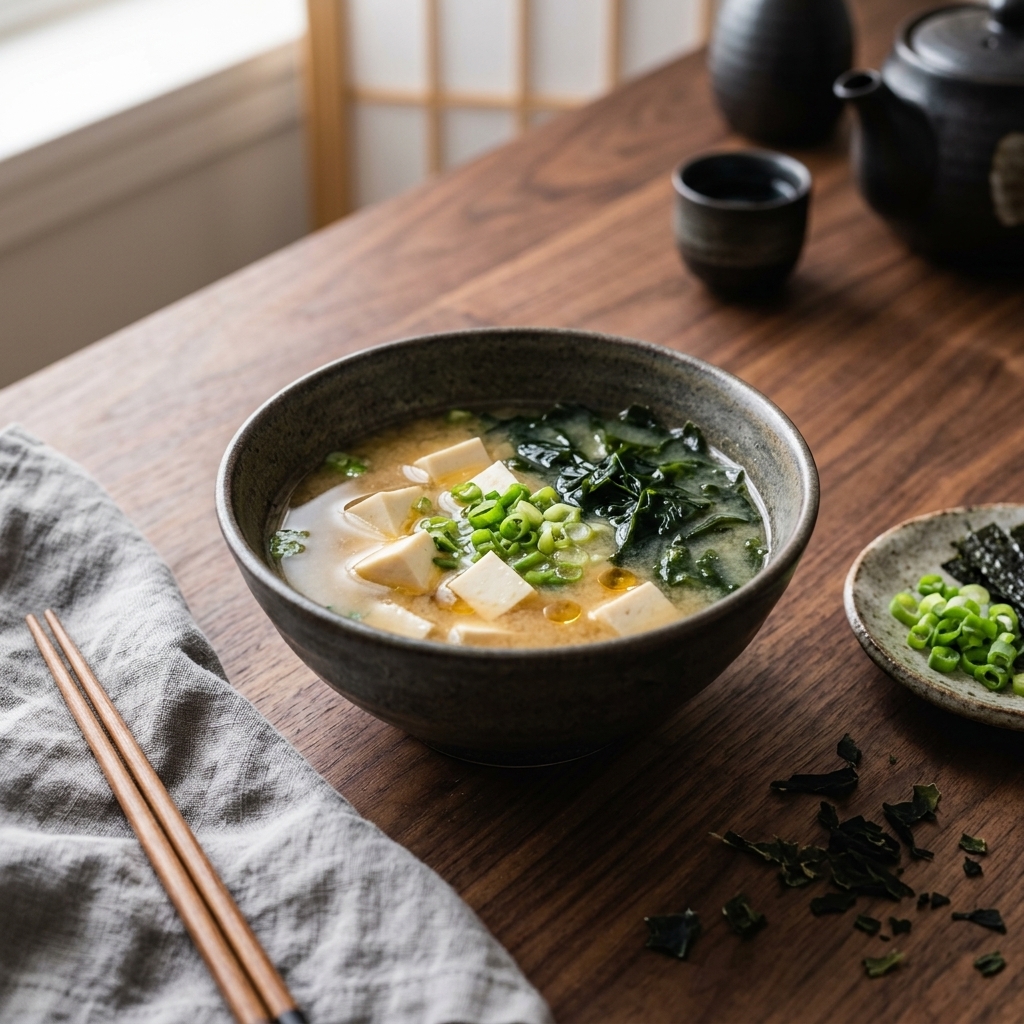
 Creamy Miso Soup with Tofu & Seaweed
A silky, umami-rich miso soup loaded with gut-friendly fermented miso paste, tofu, and mineral-rich seaweed.
 Probiotic
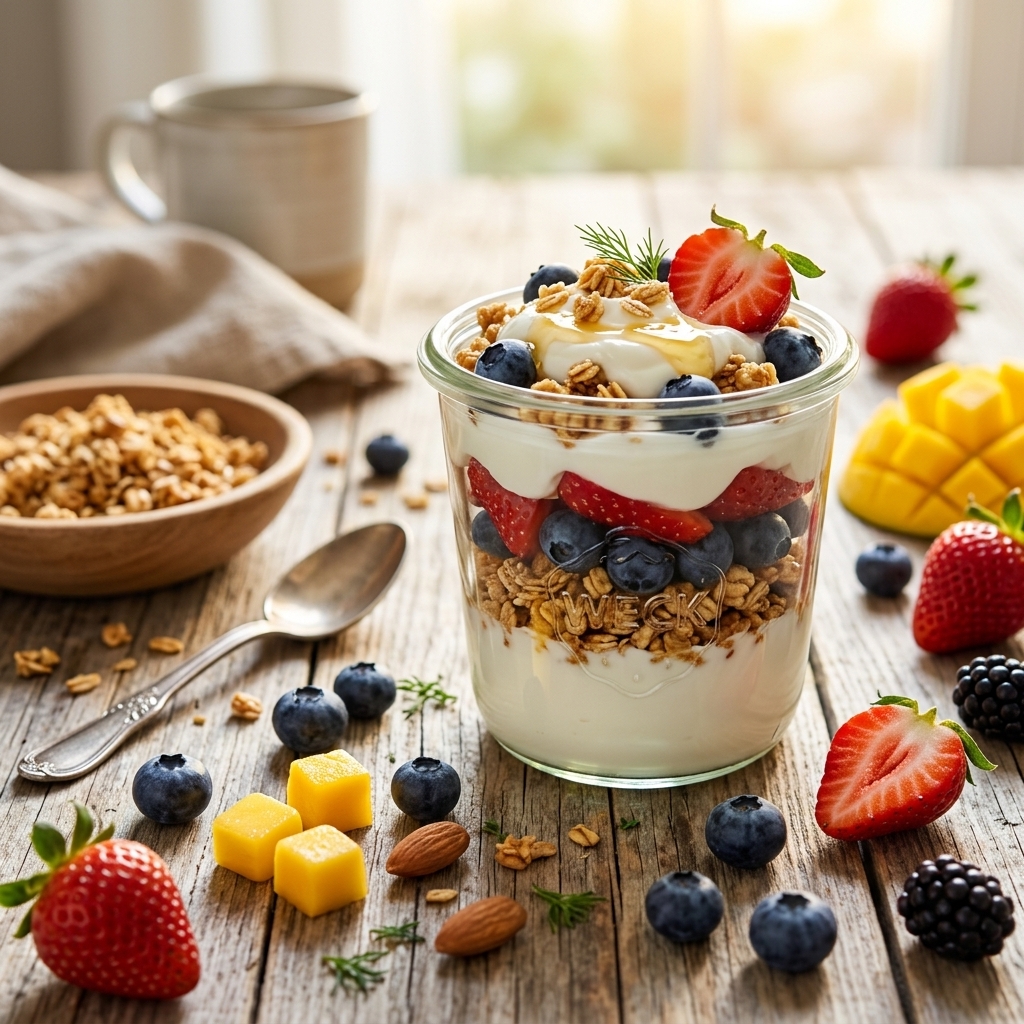
 Probiotic Yogurt Parfait with Granola
Layers of creamy probiotic yogurt, crunchy homemade granola, and fresh fruit. A beautiful, gut-healing breakfast in 10 minutes.