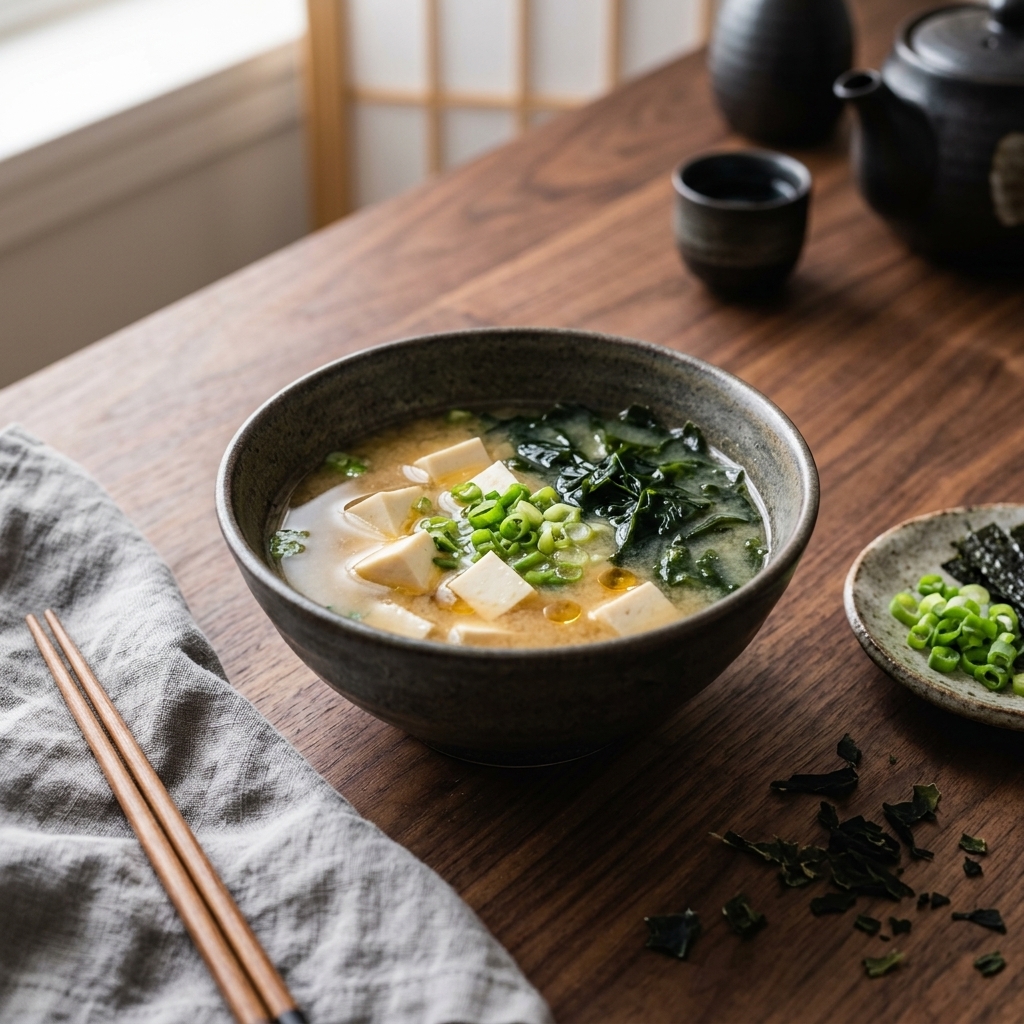
Creamy Miso Soup with Tofu & Seaweed
A silky, umami-rich miso soup loaded with gut-friendly fermented miso paste, tofu, and mineral-rich seaweed.
Gut Health Benefit
Miso paste is a fermented soybean product rich in probiotics, particularly Aspergillus oryzae. The fermentation process also produces enzymes that aid digestion. Seaweed provides prebiotic fiber.
Why This Recipe Is Great for Your Gut
Miso soup is one of the oldest and most revered gut-healing foods in the world. Consumed daily by millions of people across Japan — one of the longest-lived populations on Earth — this deceptively simple soup is a masterclass in probiotic nutrition. Every ingredient serves a specific digestive purpose, and when prepared correctly, it delivers a concentrated dose of live beneficial microorganisms directly to your gut.
The star of this recipe is miso paste — a fermented soybean product that has been cultured for anywhere from 3 months to 3 years. During this extended fermentation, the fungus Aspergillus oryzae breaks down the soybean proteins and starches into amino acids and simple sugars, while simultaneously producing a rich ecosystem of beneficial bacteria, primarily Tetragenococcus halophilus and various Lactobacillus species. These microorganisms produce enzymes that continue to aid digestion even after you consume the miso. Critically, the fermentation process also generates bioactive peptides that have been shown to reduce blood pressure and inhibit ACE (angiotensin-converting enzyme) activity.
The single most important technique in this entire recipe is the instruction to never boil the miso. Temperatures above 115°F (46°C) will kill the live probiotic bacteria in the paste. By dissolving the miso into warm (not hot) broth at the very end of cooking, you preserve the full spectrum of live cultures and enzymes. This is why traditional Japanese preparation always adds the miso as the final step, off the heat.
Wakame seaweed contributes a critical prebiotic element. It contains alginate and fucoidan — unique polysaccharides that cannot be digested by human enzymes but are readily fermented by colonic bacteria. This makes wakame a powerful prebiotic that selectively nourishes beneficial bacterial populations. The tofu adds easily digestible plant protein without taxing the digestive system, making this soup suitable even for people with sensitive stomachs or those recovering from digestive illness.
Key Ingredients for Gut Health
Miso Paste
Miso is a paste made from soybeans fermented with salt and the fungus Aspergillus oryzae (known as koji in Japanese). Fermentation duration ranges from a few weeks (for sweet white miso) to several years (for dark red or hatcho miso). Longer fermentation produces a more complex flavor and a higher concentration of beneficial bacteria and enzymes. White (shiro) miso is mildest and most approachable, while red (aka) miso has a deeper, more robust umami flavor. All varieties contain live probiotics when unpasteurized, along with all essential amino acids, B vitamins, and enzymes like protease and lipase that aid in protein and fat digestion.
Wakame Seaweed
Wakame is a brown sea vegetable commonly used in Japanese cuisine. It is remarkably low in calories (just 5 per serving) but rich in unique bioactive polysaccharides — particularly alginate and fucoidan. These compounds act as prebiotic fibers, selectively feeding beneficial Bacteroides and Bifidobacterium species in the colon. Wakame also provides iodine (essential for thyroid function), calcium, magnesium, and folate. Its mucilaginous texture when rehydrated is actually a sign of its high soluble fiber content, which soothes the digestive tract.
Tofu
Tofu is made from coagulated soy milk and is one of the most easily digestible plant protein sources available. The coagulation process partially breaks down soy proteins, reducing the amount of digestive work required. Firm tofu provides approximately 10 grams of protein per 100 grams with minimal fiber, making it an excellent protein addition that does not increase the digestive burden. For an extra probiotic boost, use silken fermented tofu (available at Asian markets), which contains its own population of live cultures.
Ingredients
- 4 cups dashi stock (or low-sodium vegetable broth)
- 3 tbsp white (shiro) miso paste
- 7 oz firm tofu, cut into 1/2-inch cubes
- 2 sheets dried wakame seaweed (about 1/4 oz)
- 2 green onions, thinly sliced
- 1 tsp soy sauce (optional, for depth)
Instructions
- Rehydrate the seaweed. Place the dried wakame in a small bowl of cold water. Let it soak for 5 minutes until it has fully expanded and softened. Drain and gently squeeze out any excess water. Cut into bite-sized pieces if the pieces are large.
- Heat the broth. Pour the dashi stock into a medium pot and heat over medium heat until it is hot but not boiling. You should see small bubbles forming at the edges — this is the ideal temperature (around 170–180°F / 75–80°C).
- Add the tofu and seaweed. Gently add the cubed tofu and rehydrated wakame to the warm broth. Simmer very gently for 3 minutes to allow the tofu to absorb the broth flavor. Do not stir aggressively — tofu is delicate and will break apart.
- Remove from heat. This is the most critical step. Take the pot completely off the burner and let it cool for approximately 1 minute. The broth temperature should drop below 115°F (46°C) before adding the miso.
- Dissolve the miso. Place the miso paste in a small bowl or ladle. Add 2–3 tablespoons of warm broth from the pot and whisk vigorously with chopsticks or a small whisk until the miso is completely smooth with no lumps. Pour this dissolved miso back into the pot and stir gently to incorporate. Never add miso paste directly to hot liquid — it will clump.
- Serve immediately. Ladle into individual bowls and garnish with thinly sliced green onions. Miso soup should be served right away — reheating will kill the probiotics.
Tips
- Never boil miso. This is the golden rule. High heat kills the living bacteria and enzymes that make miso a probiotic food. Always add miso paste to broth that has been removed from the heat.
- Use red miso for deeper flavor. Red (aka) miso has been fermented for 1–3 years and has a saltier, more complex, deeply umami taste. It is excellent in cold weather or when you want a more robust soup.
- Add mushrooms for extra fiber. Sliced shiitake or enoki mushrooms are traditional additions that contribute beta-glucan fiber and additional umami depth.
- Make your own dashi. Steep a 4-inch piece of kombu seaweed in 4 cups of water for 30 minutes, then bring to a gentle simmer. Remove the kombu and add a handful of bonito flakes. Steep for 5 minutes, then strain. Homemade dashi has much more depth than broth-based substitutes.
Variations & Substitutions
- Mushroom Miso Soup: Add 1 cup of sliced shiitake or mixed mushrooms to the broth. Simmer for 5 minutes before removing from heat and adding miso. The mushrooms add beta-glucan fiber and incredible umami depth.
- Miso Ramen Style: Cook ramen noodles separately, then ladle the miso broth over them. Top with a soft-boiled egg, corn kernels, sliced nori, and a drizzle of chili oil for a heartier meal.
- Red Miso & Root Vegetable: Use red miso paste and add cubed sweet potato, daikon radish, and carrots. Simmer the vegetables for 15 minutes until tender before adding the miso. This creates a thick, stew-like version common in rural Japanese cooking.
- Vegan Dashi Version: Substitute traditional dashi (which uses bonito flakes) with a kombu-and-shiitake-based broth. Steep kombu and dried shiitake mushrooms in cold water overnight for the richest umami flavor without any animal products.
Storage & Meal Prep
- Do not reheat miso soup. Reheating kills the live probiotics. For meal prep, store the broth with tofu and seaweed separately from the miso paste. When ready to eat, gently warm the broth to 170°F, then dissolve fresh miso paste into it.
- Refrigerator: If you must store leftover miso soup, it keeps for 2 days in the fridge. Accept that the probiotic benefit will be reduced upon reheating.
- Miso paste storage: An opened container of miso paste lasts for up to 1 year in the refrigerator. It may darken slightly over time — this is normal and actually indicates continued fermentation.
- Batch prep the broth: Make a large batch of dashi or vegetable broth and store it in the fridge for up to 5 days. Each morning, warm a cup of broth and dissolve a tablespoon of miso into it for a quick 2-minute probiotic breakfast.
Frequently Asked Questions
Is miso soup really a probiotic?
Yes — provided the miso paste is unpasteurized and is not boiled. Quality miso paste contains live cultures of beneficial bacteria and active enzymes produced during its extended fermentation process. The key is adding the miso to warm (not hot) broth after removing it from the heat. If you boil miso, you kill the live organisms and lose the probiotic benefit.
What is the difference between white and red miso?
White (shiro) miso is fermented for a shorter period (weeks to a few months) and has a sweet, mild flavor. Red (aka) miso is fermented for 1–3 years and has a strong, salty, deeply savory taste. Both contain probiotics, but red miso generally has a higher diversity of bacterial strains due to its longer fermentation. For beginners, white miso is more approachable. For maximum gut health benefit, red or mixed (awase) miso is preferred.
Can I drink miso soup every day?
Yes — daily miso soup consumption is common in Japan and is considered part of a healthy dietary pattern. Studies of Japanese populations have associated daily miso consumption with lower rates of stomach cancer, cardiovascular disease, and digestive disorders. However, miso is relatively high in sodium, so if you are on a sodium-restricted diet, limit yourself to 1 tablespoon of miso paste per serving and choose reduced-sodium varieties when available.
Is miso soup gluten-free?
Traditional miso paste is made from soybeans, salt, and koji culture — it is naturally gluten-free. However, some varieties of miso include barley (mugi miso) or wheat as a fermentation substrate. If you need strict gluten-free miso, look for labels that specify “rice miso” (kome miso) or “soybean miso” (hatcho miso), which use rice or soybeans exclusively.
What is dashi and can I substitute it?
Dashi is a Japanese stock made from kombu seaweed and dried bonito (skipjack tuna) flakes. It provides a clean, umami-rich base that complements the fermented flavor of miso. If you do not have dashi ingredients, low-sodium vegetable broth is the best substitute. Avoid chicken or beef broth, as their strong flavors compete with the delicate miso.
More Probiotic Recipes
 Probiotic
 Tangy Kefir Berry Smoothie
A thick, creamy smoothie packed with probiotic kefir, antioxidant-rich berries, and a hint of honey. Gut health in a glass.
 Probiotic
 Kimchi Fried Rice
A quick, probiotic-packed fried rice bursting with tangy kimchi flavor. Ready in just 20 minutes.
 Probiotic
 Probiotic Yogurt Parfait with Granola
Layers of creamy probiotic yogurt, crunchy homemade granola, and fresh fruit. A beautiful, gut-healing breakfast in 10 minutes.