Skip to content

Sheet-Pan Chicken with Artichokes & Olives

Crispy-skinned chicken thighs roasted alongside artichoke hearts, Kalamata olives, and lemon — a one-pan Mediterranean dinner loaded with prebiotic inulin fiber.

Jump to recipe
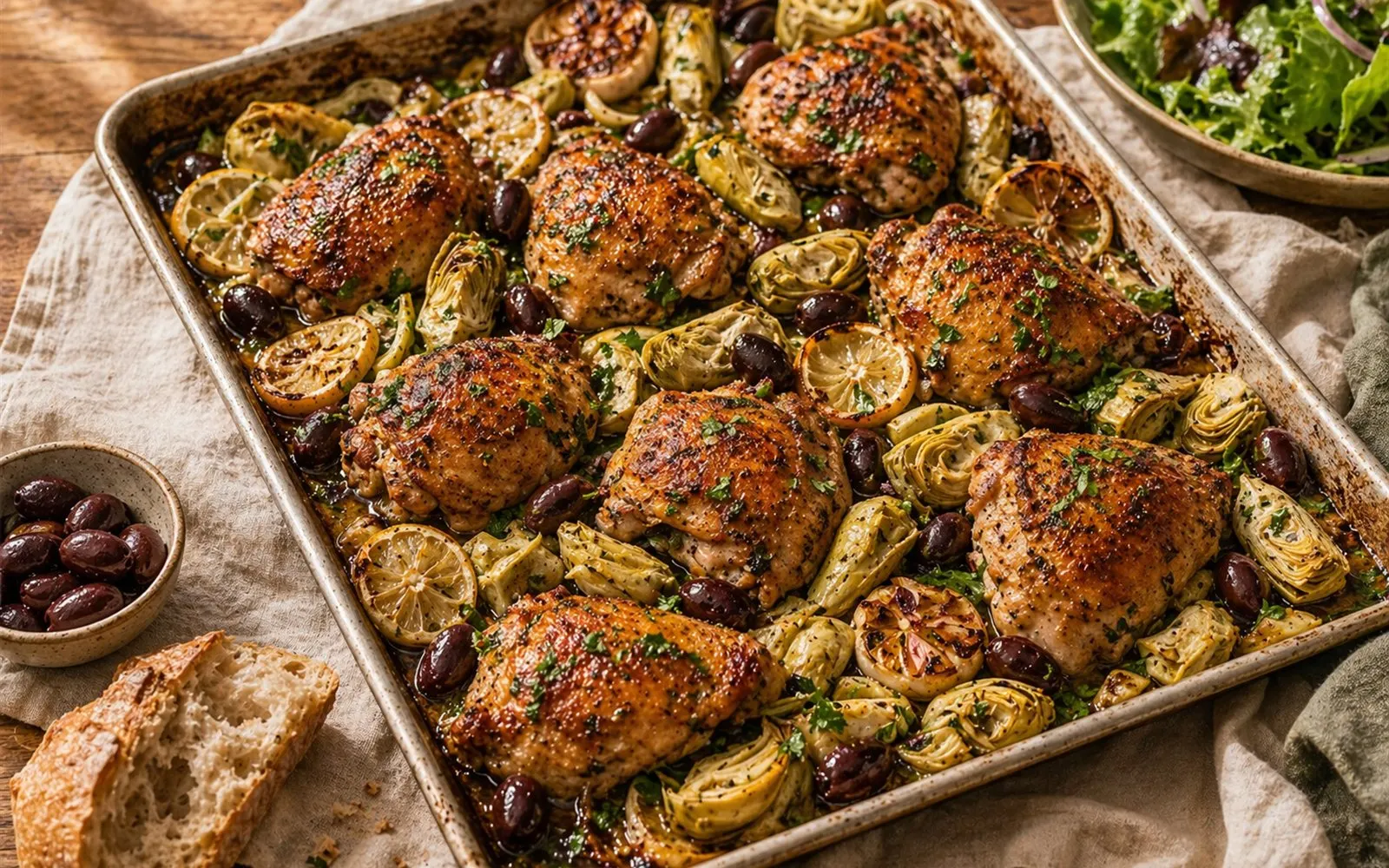
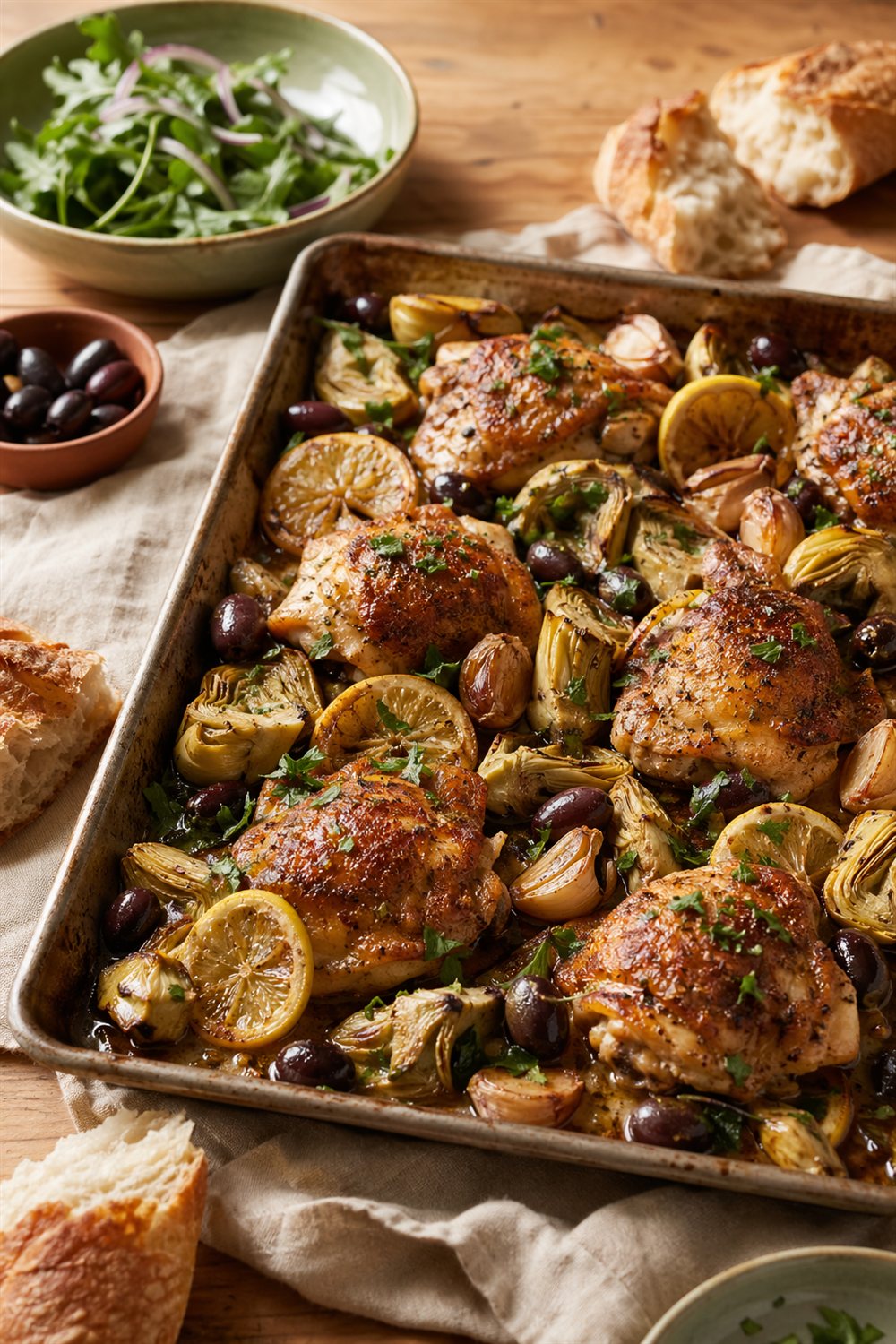
Sheet-Pan Chicken with Artichokes & Olives — GutPlate recipe photo
Prep
10 min
Cook
35 min
Total
45 min
Serves
4 servings

Why you'll love this recipe

  • One pan, minimal cleanup — everything roasts together.
  • Artichokes deliver inulin, one of the most potent prebiotic fibers studied.
  • Crispy chicken skin without frying — the oven does all the work.
  • Mediterranean flavors that taste like a restaurant dish for $4/serving.
  • 38g protein per serving from the chicken thighs.
  • Roasted lemon slices become edible candy — sweet, tart, and caramelized.

This is the kind of dinner that makes people ask what restaurant you ordered from. Eight chicken thighs, a can of artichoke hearts, a handful of olives, a sliced lemon, and 35 minutes in a hot oven — that’s it. The chicken skin crisps into something shattering and golden, the artichokes caramelize at the edges, the olives intensify, and the lemon slices transform into soft, sweet-tart coins you’ll eat whole.
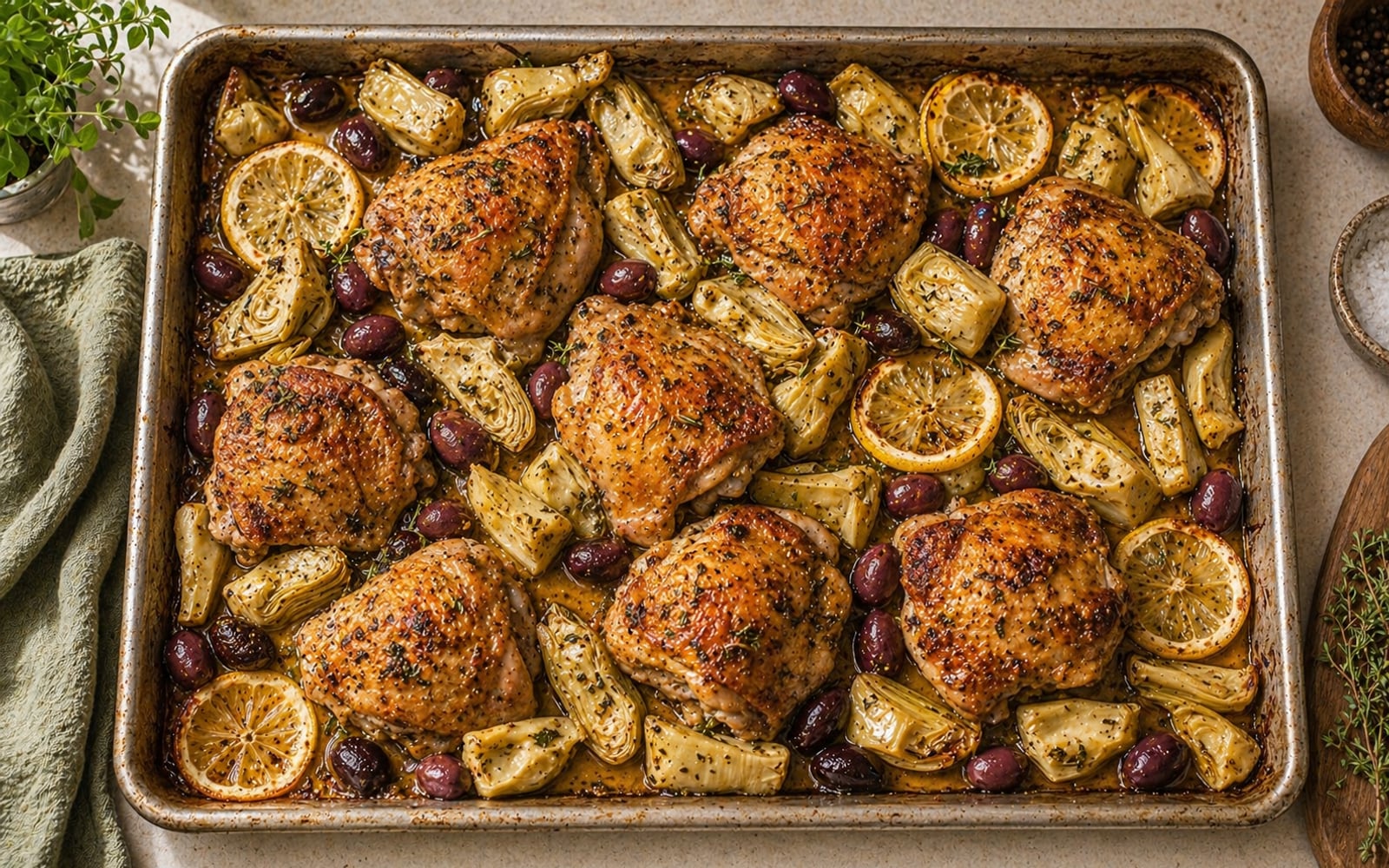
A sheet pan loaded with chicken thighs, artichoke hearts, kalamata olives, and lemon slices — everything golden and roasted, ready to serve.

Chicken thighs are the right cut here, and they’re non-negotiable. Bone-in, skin-on thighs have enough fat to stay juicy during the roast while the rendered fat drips down onto the vegetables underneath, basting them continuously. Breasts would dry out before the artichokes have time to caramelize. Thighs are also more forgiving — overshoot by five minutes and they’re still perfect.

The artichokes are the gut-health anchor. Canned artichoke hearts are already cooked, so they’re here for flavor and fiber, not texture. What they lack in crunch they make up in inulin — a prebiotic fructan that is one of the most well-studied substrates for growing Bifidobacterium in the human colon. One serving of artichokes delivers 3-4 grams of inulin, which is meaningful.

Kalamata olives do more than add salt and fat. Their polyphenols — oleuropein and hydroxytyrosol — have demonstrated anti-inflammatory effects in the gut, and because they’re poorly absorbed in the small intestine, they arrive in the colon where they can actually do their work. The roasting mellows their brininess and concentrates their flavor.

Serve this straight from the sheet pan with crusty bread to sop up the lemony, garlicky pan juices. Those juices are where all the rendered fat, caramelized vegetable sugars, and lemon acid pool together into something you’d pay $28 for at a restaurant.
Key ingredients

Why these ingredients

Artichoke hearts

One of the richest food sources of inulin — a prebiotic fructan that selectively feeds Bifidobacterium in the colon. A single serving of artichoke provides 3-4g of inulin. They also contain cynarin, a compound that stimulates bile production and may support fat digestion.

Kalamata olives

Rich in oleic acid (the same monounsaturated fat in olive oil) and polyphenols — particularly oleuropein and hydroxytyrosol, which have demonstrated anti-inflammatory effects in the gut lining.

Chicken thighs (skin-on)

Dark meat contains more iron, zinc, and B vitamins than breast meat. The skin renders fat during roasting that carries fat-soluble vitamins and bastes the artichokes below. The amino acid glutamine in poultry is the primary fuel source for small intestinal enterocytes.

Lemon (roasted whole slices)

Roasting softens the pith and rind, making them edible and releasing d-limonene — a terpene that has demonstrated gastroprotective effects, including reduced acid reflux and improved gastric motility in animal studies.

Garlic (roasted)

Roasted garlic is milder than raw but still contains S-allyl cysteine, a stable organosulfur compound with prebiotic effects. Roasting converts harsh allicin into gentler, sweeter compounds while preserving the prebiotic benefits.

Before you start

Equipment

  • Large sheet pan

    half-sheet (18×13 in) — don't crowd or the chicken steams

  • Paper towels

    for drying the chicken skin

  • Instant-read thermometer

    check for 165°F internal temp

Recipe card

Sheet-Pan Chicken with Artichokes & Olives

Prep
10 min
Cook
35 min
Total
45 min
Servings
4

Ingredients

Instructions

Notes

  • Dry the chicken skin thoroughly. Moisture is the enemy of crispy skin — pat with paper towels, then let sit uncovered in the fridge for 30 minutes if you have time.
  • Chicken thighs are forgiving — they stay juicy even if you overshoot by 5 minutes. Breasts would dry out.
  • The roasted lemon slices are edible — the rind softens and caramelizes, becoming almost marmalade-like.

Nutrition per serving

Estimated; see our disclaimer.

Cal
480 kcal
Protein
38 g
Carbs
12 g
Fat
32 g
Fiber
5 g
Sugar
2 g
Sat Fat
7 g
Sodium
720 mg
Calcium
55 mg
Iron
3 mg

From our test kitchen

Pro tips

Dry skin = crispy skin

The single most important step. Pat the chicken dry, season, then ideally leave uncovered on a rack in the fridge for 30 minutes (or up to overnight). Surface moisture is what prevents browning.

Chicken on top, vegetables underneath

The chicken fat renders down onto the artichokes and olives as it roasts, basting them and adding incredible flavor. Putting vegetables on top blocks the skin from crisping.

Don't skip the rest

5 minutes of resting lets the juices redistribute through the meat. Cut immediately and you lose those juices onto the cutting board.

When things go sideways

Troubleshooting

Chicken skin is flabby, not crispy.

The skin wasn't dry enough, the oven wasn't hot enough, or the pan was too crowded. Pat aggressively dry, roast at 425°F minimum, and use a big pan.

Artichokes are mushy.

Canned artichokes are already soft. If you want firmer texture, use frozen (thawed and patted dry) or drain canned ones thoroughly and give them extra space on the pan.

Everything is salty.

Olives, capers, and canned artichokes all bring salt. Next time, reduce the added salt to 1/2 teaspoon and skip the capers, or use low-sodium versions.

Pan juices burned on the sheet pan.

Your oven runs hot or the pan was too close to the bottom element. Move the rack to the middle position. A splash of white wine or broth on the pan at the 20-minute mark helps create a sauce instead of burnt drippings.

Keep it fresh

Storage & reheating

Make ahead

Season the chicken and prep the vegetables a day ahead. Store separately in the fridge. Assemble on the sheet pan and roast when ready.

Fridge

Keeps 4 days in an airtight container. The chicken reheats better with the skin exposed.

Freezer

Freeze chicken and vegetables separately for up to 2 months. Thaw overnight.

Reheat

Oven at 375°F for 12-15 minutes to re-crisp the skin. Microwave works for the meat but the skin goes soft.

Make it yours

Variations

Greek-style

Add halved cherry tomatoes and crumbled feta in the last 10 minutes of roasting. The tomatoes blister and the feta softens into creamy pockets.

Moroccan-spiced

Replace oregano and paprika with 1 tsp ras el hanout and 1/2 tsp cinnamon. Add dried apricots alongside the artichokes.

Italian

Add sun-dried tomatoes, fresh rosemary, and white beans (drained canned). The beans crisp up at the edges and add prebiotic fiber.

Pantry swaps

Ingredient substitutions

Instead of

Chicken thighs

Use

Salmon fillets (skin-on)

Reduce cook time to 15-18 minutes. Salmon with artichokes and olives is a classic Mediterranean pairing.

Instead of

Artichoke hearts

Use

Fennel wedges or asparagus

Fennel roasts beautifully and adds its own prebiotic inulin. Asparagus cooks faster — add halfway through.

Instead of

Kalamata olives

Use

Castelvetrano or green olives

Milder and less briny. Castelvetrano are buttery and kid-friendly.

Instead of

Capers

Use

Chopped pepperoncini

Same briny punch, different texture.

Plate it up

What to serve with it

The evidence

Why this is good for your gut

This recipe is built around artichoke hearts, which are one of the most concentrated dietary sources of inulin — a prebiotic fructan that has been extensively studied for its effects on the gut microbiome.

Inulin is a chain of fructose molecules linked by β(2→1) bonds that human digestive enzymes cannot cleave.[1] It passes intact through the stomach and small intestine, arriving in the colon where it becomes a highly selective substrate for *Bifidobacterium* species. A meta-analysis of 26 randomized controlled trials found that inulin supplementation consistently and significantly increased fecal *Bifidobacterium* counts, with effects observed at doses as low as 5g per day.[2] A single serving of artichoke hearts provides approximately 3-4g of inulin.

The selectivity of inulin is what makes it particularly interesting. Unlike broad-spectrum fibers that feed many bacterial taxa, inulin preferentially stimulates *Bifidobacterium* and *Lactobacillus* — genera strongly associated with gut health — while showing minimal stimulation of potentially pathogenic species like certain *Clostridium* clusters.[3]

Olives add polyphenols — particularly oleuropein and hydroxytyrosol — that have demonstrated anti-inflammatory effects in the gut mucosa. These compounds are poorly absorbed in the small intestine, meaning they reach the colon in significant concentrations where they exert selective antimicrobial activity against pathogenic bacteria while sparing beneficial species.[4] In this way, polyphenols act as a kind of microbial "gardener," shaping the composition of your gut ecosystem.

The chicken contributes glutamine, the most abundant amino acid in the body and the primary fuel source for enterocytes — the cells lining your small intestine. During periods of stress, infection, or intense exercise, glutamine demand in the gut increases, and dietary sources become more important for maintaining gut barrier integrity.[5]

The roasted lemon is a bonus. The rind contains d-limonene, a monoterpene that has gastroprotective effects — it increases the mucus layer that protects stomach cells from acid damage and has been shown to reduce heartburn symptoms in clinical trials.

Good questions

Frequently asked questions

Can I use chicken breasts?

You can, but reduce cook time to 22-25 minutes and watch carefully — breasts dry out fast without the thigh's extra fat. Bone-in, skin-on thighs are significantly more forgiving.

Can I use frozen artichoke hearts?

Yes. Thaw and pat dry first. Frozen artichokes are actually closer to fresh than canned — they have a firmer texture and slightly better flavor.

This seems like a lot of olives.

Olives shrink and intensify when roasted. Start with 1/4 cup if you're olive-cautious. They add salt, fat, and polyphenols — the gut-health trifecta.

Is this low-FODMAP?

Artichokes are very high in fructans (a key FODMAP). This recipe is great for gut health in general but NOT for the low-FODMAP elimination phase.

References

  1. Inulin-type fructans: structure, metabolism, and prebiotic function — British Journal of Nutrition↩ back
  2. Inulin and Bifidobacterium: meta-analysis of RCTs — American Journal of Clinical Nutrition↩ back
  3. Selectivity of prebiotic substrates for gut bacteria — Nutrients↩ back
  4. Olive polyphenols and gut microbiome modulation — Molecules↩ back
  5. Glutamine and intestinal barrier function — Current Opinion in Clinical Nutrition and Metabolic Care↩ back

Loved this recipe?

Save it to your Pinterest boards or share with a friend who needs more gut-friendly weeknight meals.

Newsletter

Weekly gut-friendly recipes, straight to your inbox.

One email every Sunday — new recipes, a practical gut-health tip, and zero spam. Unsubscribe anytime.

No spam 1-click unsubscribe

Signup coming soon. Follow us on Pinterest in the meantime.

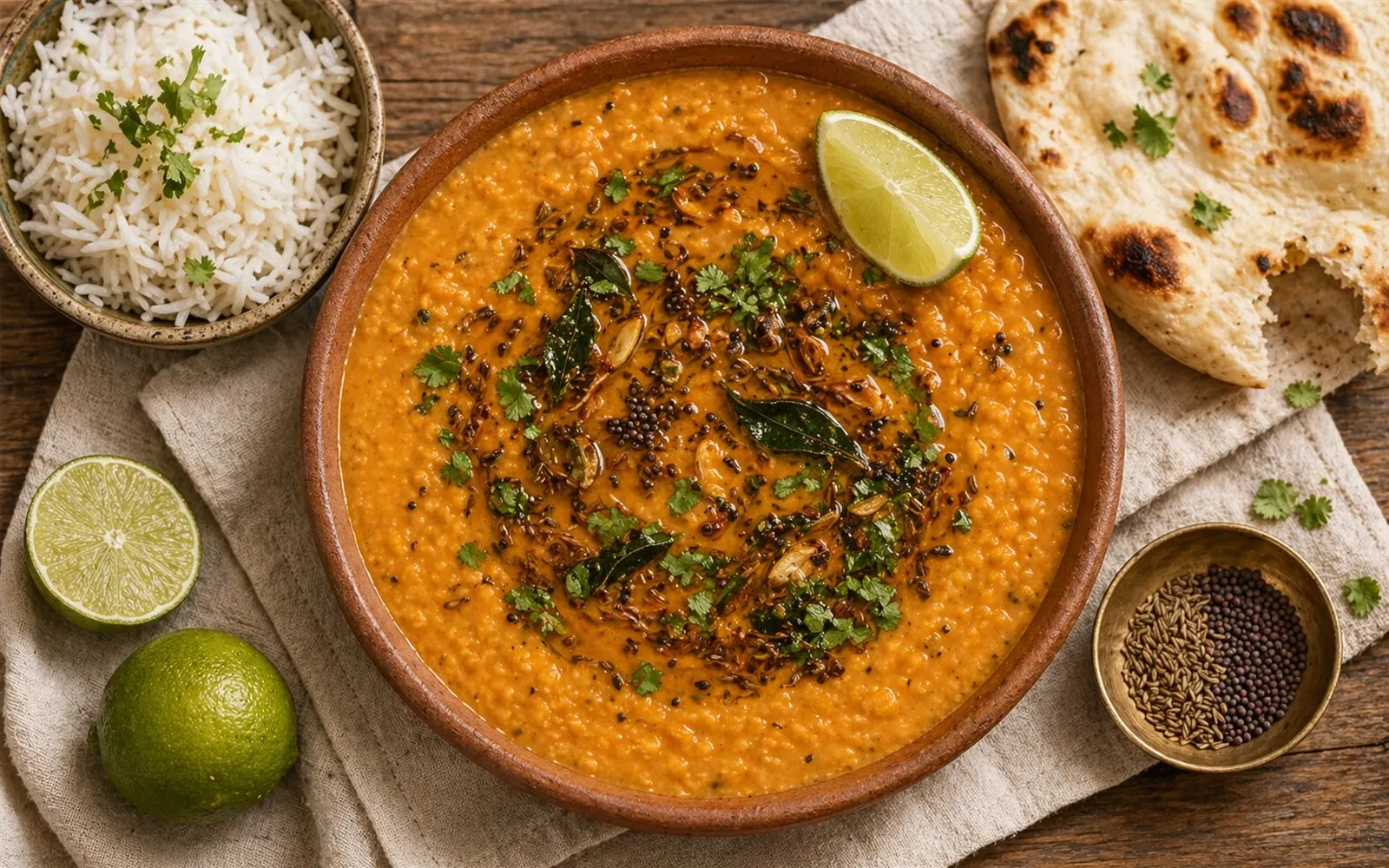
Coconut Red Lentil Dal — GutPlate recipe photo
dinner 35 min

Coconut Red Lentil Dal

A 30-minute one-pot dal with red lentils, coconut milk, turmeric, and a cumin-mustard seed tarka — creamy, warming, and loaded with prebiotic fiber.

4 servings View recipe
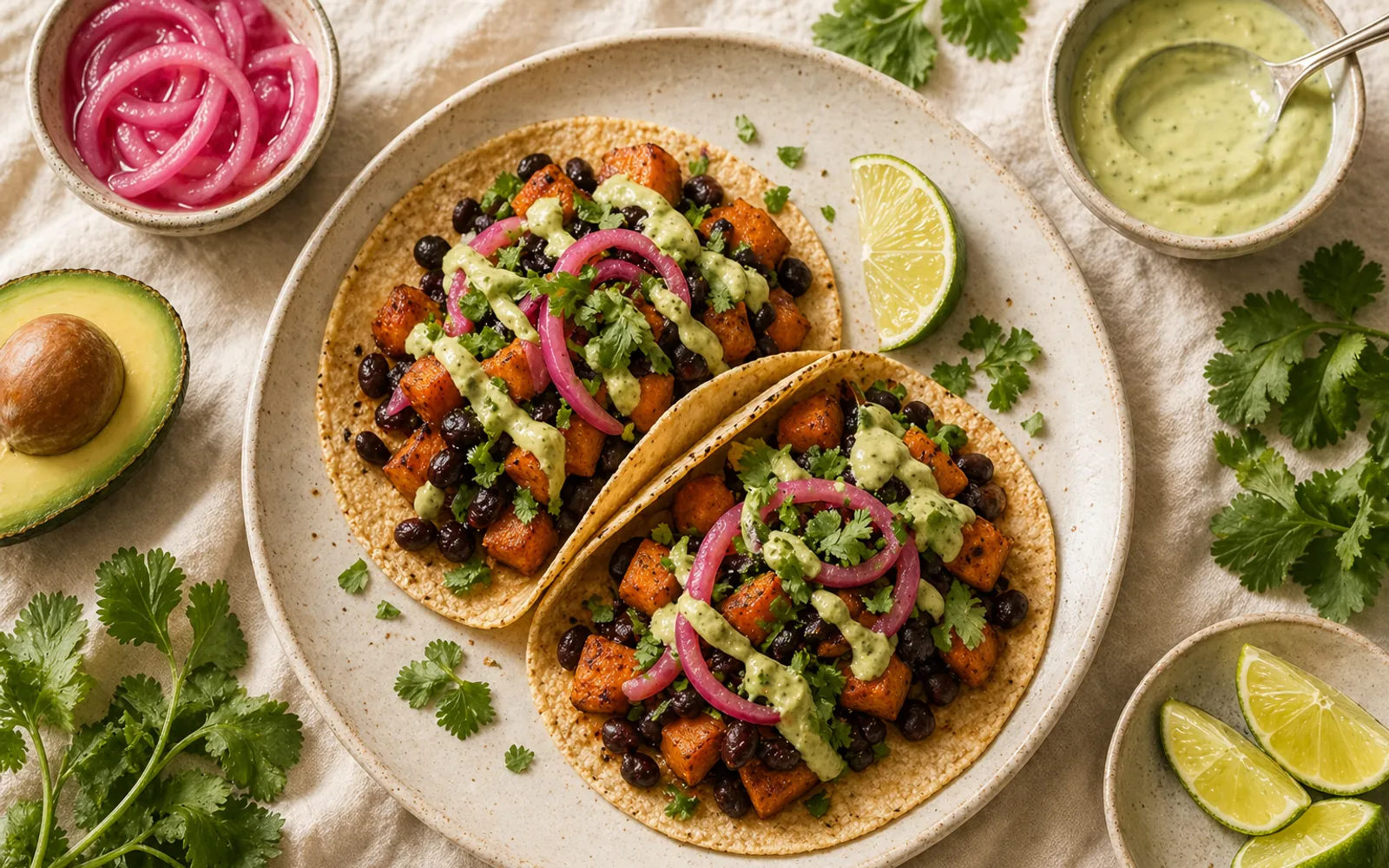
Black Bean & Sweet Potato Tacos — GutPlate recipe photo
dinner 35 min

Black Bean & Sweet Potato Tacos

Roasted sweet potato and seasoned black beans in warm tortillas with pickled red onion, avocado crema, and fresh cilantro — 14g of fiber and ready in 35 minutes.

4 servings View recipe
Garlic-Roasted Cauliflower with Tahini & Herbs — GutPlate recipe photo
sides 40 min

Garlic-Roasted Cauliflower with Tahini & Herbs

Whole cauliflower florets roasted until deeply golden, drizzled with lemon-tahini sauce and fresh herbs — a high-fiber side that feeds your gut bacteria as much as it feeds you.

4 servings View recipe