Skip to content

Coconut Red Lentil Dal

A 30-minute one-pot dal with red lentils, coconut milk, turmeric, and a cumin-mustard seed tarka — creamy, warming, and loaded with prebiotic fiber.

Jump to recipe
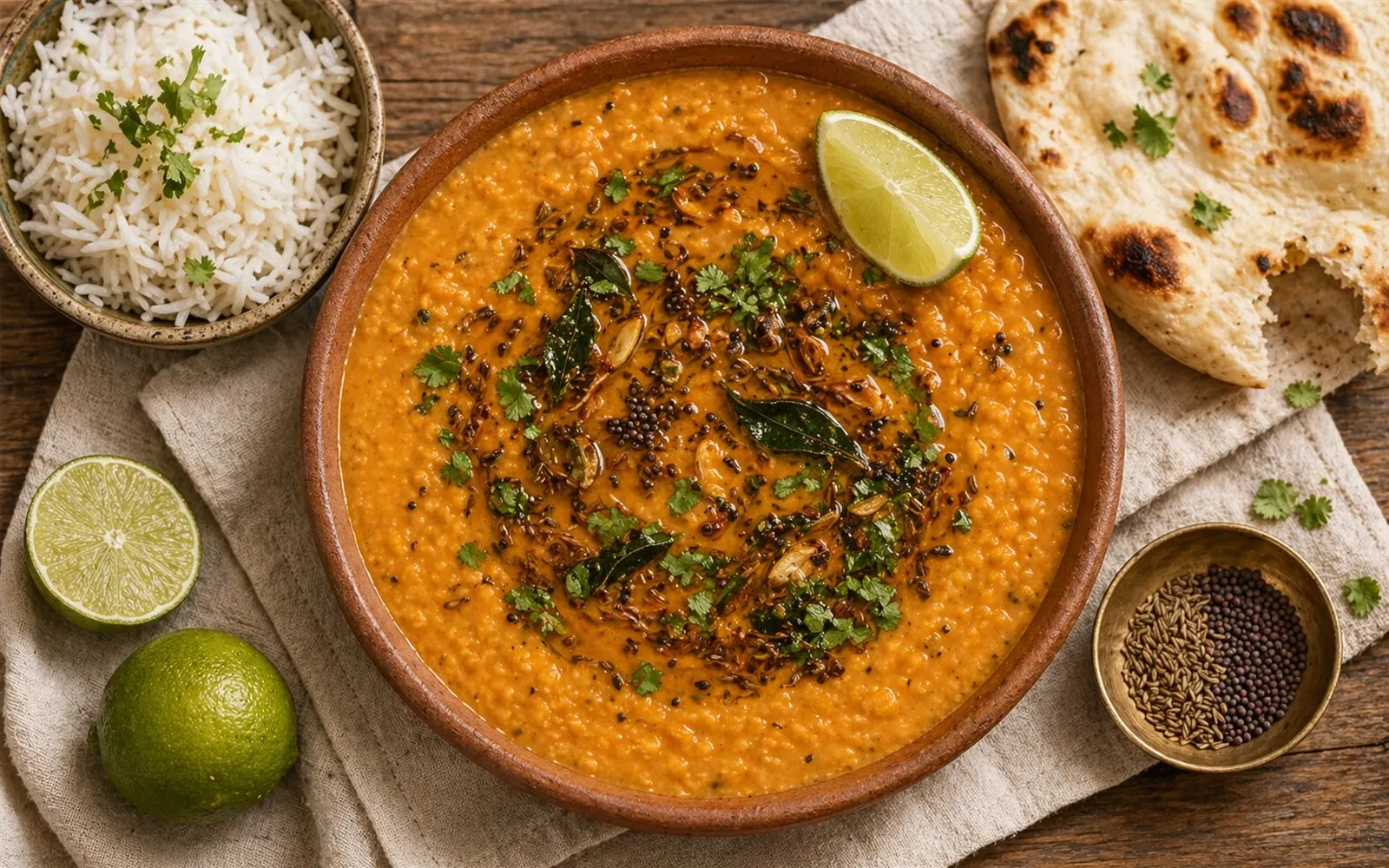
Coconut Red Lentil Dal — GutPlate recipe photo
Prep
10 min
Cook
25 min
Total
35 min
Serves
4 generous bowls

Why you'll love this recipe

  • One pot, 30 minutes — true weeknight speed with zero shortcuts on flavor.
  • 8g fiber per bowl from lentils alone — one of the best prebiotic delivery systems.
  • The tarka adds a restaurant-quality finish you won't find in most home dal recipes.
  • Naturally vegan and gluten-free — complete plant protein from the lentils.
  • $1.50 per serving — gut health shouldn't require a premium grocery budget.
  • Coconut milk makes it creamy without dairy.

Dal is the most democratic food in the world. A bag of red lentils costs less than two dollars, cooks in under 20 minutes without soaking, and transforms into a pot of creamy, deeply spiced comfort that rivals anything on a restaurant menu. This version leans into coconut milk for richness and finishes with a proper tarka — spiced oil poured sizzling over the top — because that’s what separates weeknight dal from really good weeknight dal.
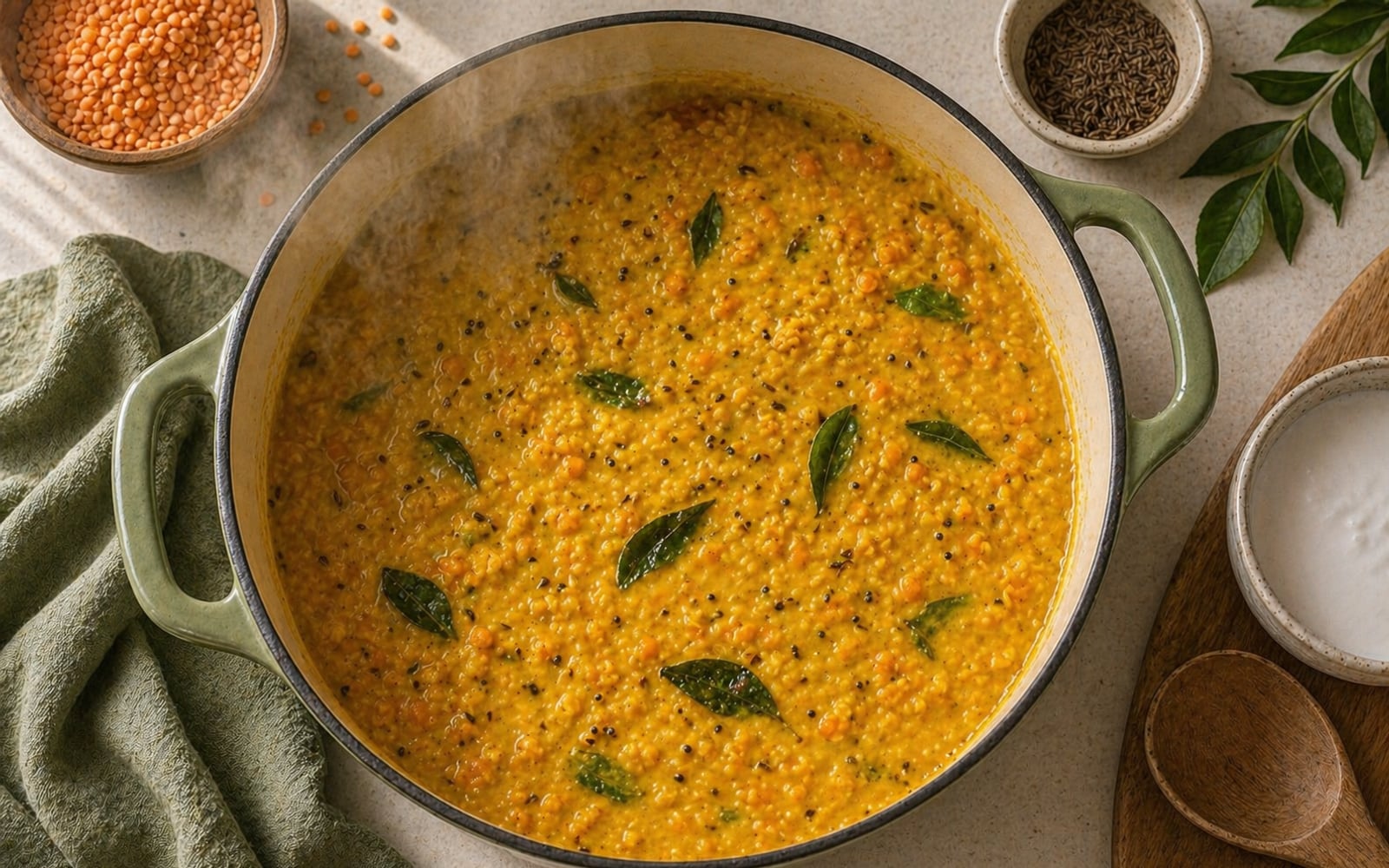
Red lentils simmering in a pot with coconut milk, turmeric-yellow and creamy, with whole spices and curry leaves visible on the surface.

The tarka is where the magic happens, and it takes 45 seconds. You heat ghee until it shimmers, drop in cumin and mustard seeds, and wait for the mustard seeds to pop — that crackling sound means the volatile oils are releasing. Add curry leaves if you have them (they’re worth seeking out), a pinch of red pepper flakes, and pour the whole thing directly into the pot of dal. The sizzle when it hits is the sound of about twelve flavor compounds infusing simultaneously into the surface of the lentils.

Red lentils don’t hold their shape — they melt into a thick porridge that’s halfway between a soup and a sauce. That’s exactly what you want. The texture should be thick enough to cling to a spoon but loose enough to pour over rice. If it gets too thick (it will if you let it sit), just thin with hot water.

The lime juice at the end is essential, not optional. Dal without acid tastes flat no matter how well you season it. That squeeze of lime opens up all the spice flavors and adds a brightness that makes the whole bowl sing. Taste after adding it and you’ll understand immediately.

This is the kind of recipe where the leftovers are arguably better than the original. The lentils continue to absorb the coconut milk and spices overnight, and the cooled starches retrograde into resistant starch — giving your gut bacteria an additional prebiotic boost when you reheat it the next day. Make the full batch on Sunday and eat all week.
Key ingredients

Why these ingredients

Red lentils

One of the richest affordable sources of prebiotic fiber, particularly galacto-oligosaccharides (GOS) that selectively feed Bifidobacterium. Also one of the few plant foods that deliver nearly complete protein (only slightly low in methionine).

Turmeric

Contains curcumin, which has demonstrated anti-inflammatory effects in the gut — specifically by inhibiting NF-κB, a key inflammatory pathway. The black pepper in the tarka increases curcumin bioavailability by up to 2,000%.

Coconut milk

Provides medium-chain triglycerides (MCTs) that are absorbed differently from long-chain fats — they travel directly to the liver rather than through the lymphatic system. MCTs have antimicrobial properties against certain pathogenic bacteria.

Cumin seeds (tarka)

Whole cumin seeds, when tempered in hot oil, release thymoquinone and cuminaldehyde — volatile compounds with carminative (gas-reducing) properties. This is why Indian cuisine traditionally tempers dal — it's not just flavor, it's functional.

Curry leaves

Contain carbazole alkaloids with demonstrated antimicrobial and anti-inflammatory properties. Fresh curry leaves lose most of their volatile oils when dried — use fresh if at all possible.

Before you start

Equipment

  • Large pot or Dutch oven

    3-quart minimum

  • Small skillet

    for the tarka — needs to be small so the oil pools deep enough to bloom the seeds

  • Fine mesh strainer

    for rinsing the lentils

Recipe card

Coconut Red Lentil Dal

Prep
10 min
Cook
25 min
Total
35 min
Servings
4

Ingredients

Dal

Tarka (tempered spice topping)

Finish

Instructions

Notes

  • Rinse the lentils until the water runs clear — this removes surface starch and reduces foaming during cooking.
  • Red lentils don't need soaking. They cook faster than any other legume.
  • The tarka is not optional garnish — it's the flavor finishing move. The hot oil blooms the spice compounds in a way that ground spices can't match.

Nutrition per serving

Estimated; see our disclaimer.

Cal
420 kcal
Protein
18 g
Carbs
44 g
Fat
20 g
Fiber
8 g
Sugar
5 g
Sat Fat
14 g
Sodium
590 mg
Calcium
60 mg
Iron
5 mg

From our test kitchen

Pro tips

Rinse until clear

Red lentils shed a lot of starch. Rinse them in a fine mesh strainer under cold water until the water below runs clear — usually 30-45 seconds. This prevents foaming and gives you a cleaner-tasting dal.

The tarka should scare you a little

When you pour hot spiced oil onto the dal, it should sizzle aggressively. If it doesn't, your oil wasn't hot enough. That sizzle is the sound of flavor compounds infusing into the surface of the dal.

Let it thicken overnight

Dal thickens dramatically in the fridge. This is a feature, not a bug — leftovers are almost like a lentil dip. Thin with water when reheating.

When things go sideways

Troubleshooting

Dal is too thin and soupy.

Simmer uncovered for 5-10 more minutes, stirring frequently. Red lentils continue to break down and thicken. Or mash a few spoonfuls against the side of the pot.

Dal is too thick and pasty.

Add hot water a quarter cup at a time until you reach your preferred consistency. Dal should be pourable but not watery.

Mustard seeds didn't pop during the tarka.

Your oil wasn't hot enough. The oil needs to shimmer before adding the seeds. Test with one seed first — it should sizzle immediately on contact.

It tastes flat.

Salt and acid. Add more salt (dal needs more than you think) and another generous squeeze of lime. Acid is what wakes up all the spice flavors.

Keep it fresh

Storage & reheating

Make ahead

This is one of the best meal-prep recipes on the site. Cook the full batch on Sunday, portion into jars, and reheat throughout the week. Make a fresh tarka each time for best results, or just drizzle with good olive oil.

Fridge

Keeps 5 days in an airtight container. Thickens significantly — thin with water when reheating.

Freezer

Freezes beautifully for up to 3 months in portion-size containers. The tarka should be made fresh when serving.

Reheat

Stovetop over medium-low with splashes of water, stirring often. Microwave works in a pinch — cover and stir halfway.

Make it yours

Variations

Spinach dal (palak dal)

Stir 2 cups of fresh spinach into the dal during the last 2 minutes of cooking. It wilts into the lentils and adds iron and folate.

Tomato dal

Add 1 can of diced tomatoes with the lentils. The acidity brightens the dal and adds lycopene. You may need an extra 5 minutes of simmering.

Extra-rich (restaurant style)

Stir 2 tablespoons of butter into the finished dal just before serving. This is how most Indian restaurants finish their dal — the butter adds richness that coconut milk alone can't match.

Pantry swaps

Ingredient substitutions

Instead of

Coconut milk

Use

Heavy cream or cashew cream

Heavy cream is richer but not vegan. Cashew cream keeps it plant-based with a neutral flavor.

Instead of

Ghee (for tarka)

Use

Coconut oil or avocado oil

For strict vegan. Ghee adds a nutty depth that's hard to replicate but either oil works functionally.

Instead of

Curry leaves

Use

Bay leaf + squeeze of lime

Not the same flavor profile, but adds a similar aromatic backbone. Remove bay leaf before serving.

Instead of

Red lentils

Use

Yellow split peas (moong dal)

Slightly longer cook time (25-30 min) but the same creamy result.

Plate it up

What to serve with it

The evidence

Why this is good for your gut

Lentils are one of the most studied foods in gut microbiome research, and for good reason — they deliver a combination of prebiotic fiber, resistant starch, and plant protein that few other foods can match at this price point.

The primary prebiotic compounds in lentils are galacto-oligosaccharides (GOS) — short chains of galactose molecules that human enzymes cannot digest.[1] These pass intact through the small intestine and arrive in the colon, where they become a preferred substrate for *Bifidobacterium* species. A 2019 randomized trial found that just 5g of GOS per day (roughly equivalent to one serving of lentils) significantly increased fecal *Bifidobacterium* counts within three weeks.[2]

The gas that some people experience from lentils is actually a sign that fermentation is happening — it's the hydrogen and methane produced as bacteria break down the GOS. This effect decreases with regular consumption as your microbiome adapts and the population of GOS-fermenting bacteria stabilizes.[3] If you're new to lentils, start with 1/4 cup cooked per serving and increase weekly.

Turmeric adds another dimension. Curcumin, its primary active compound, has demonstrated anti-inflammatory effects specifically in the gut — inhibiting the NF-κB pathway that drives intestinal inflammation.[4] Curcumin is notoriously poorly absorbed, but two factors in this recipe help: the fat from coconut milk improves absorption, and the piperine in black pepper (if you add it, or from the tarka) can increase curcumin bioavailability by up to 2,000%.

The tarka (tempered spice topping) isn't just tradition — it's functional food science. Cumin seeds contain thymoquinone, a compound with carminative properties that may reduce the gas and bloating from the lentils themselves.[5] Indian cuisine has been pairing cumin with legumes for millennia; modern research is just catching up to why it works.

Red lentils also form resistant starch as they cool — similar to the mechanism in cooled rice. If you meal-prep this dal and eat it reheated the next day, you're getting an additional prebiotic boost from the retrograded starch that wasn't present in the freshly cooked version.

Good questions

Frequently asked questions

Do I need to soak red lentils?

No. Red lentils are split and hulled, so they cook in 18-20 minutes without soaking. Just rinse them well to remove surface starch.

This made me gassy. Are lentils bad for gut health?

Lentils contain oligosaccharides (raffinose and stachyose) that cause gas in people who don't eat legumes regularly. Start with 1/4 cup of cooked lentils per serving and increase gradually over 2-3 weeks. Your gut bacteria adapt and the gas decreases significantly.

Can I use brown or green lentils?

They won't break down into a creamy dal — they hold their shape. If that's all you have, increase cook time to 35-40 minutes and expect a chunkier texture.

Is this low-FODMAP?

No. Lentils, onion, and garlic are all high-FODMAP. If you're in elimination, this is a great recipe for the reintroduction phase (lentils are one of the first foods tested during GOS reintroduction).

References

  1. Galacto-oligosaccharides and Bifidobacterium modulation — British Journal of Nutrition↩ back
  2. Prebiotic GOS supplementation and gut microbiota in healthy adults — Nutrients↩ back
  3. Adaptation of the human gut microbiota to habitual legume consumption — Journal of Nutrition↩ back
  4. Curcumin and intestinal inflammation: NF-κB pathway modulation — International Journal of Molecular Sciences↩ back
  5. Carminative effects of cumin (Cuminum cyminum) on gastrointestinal symptoms — Middle East Journal of Digestive Diseases↩ back

Loved this recipe?

Save it to your Pinterest boards or share with a friend who needs more gut-friendly weeknight meals.

Newsletter

Weekly gut-friendly recipes, straight to your inbox.

One email every Sunday — new recipes, a practical gut-health tip, and zero spam. Unsubscribe anytime.

No spam 1-click unsubscribe

Signup coming soon. Follow us on Pinterest in the meantime.

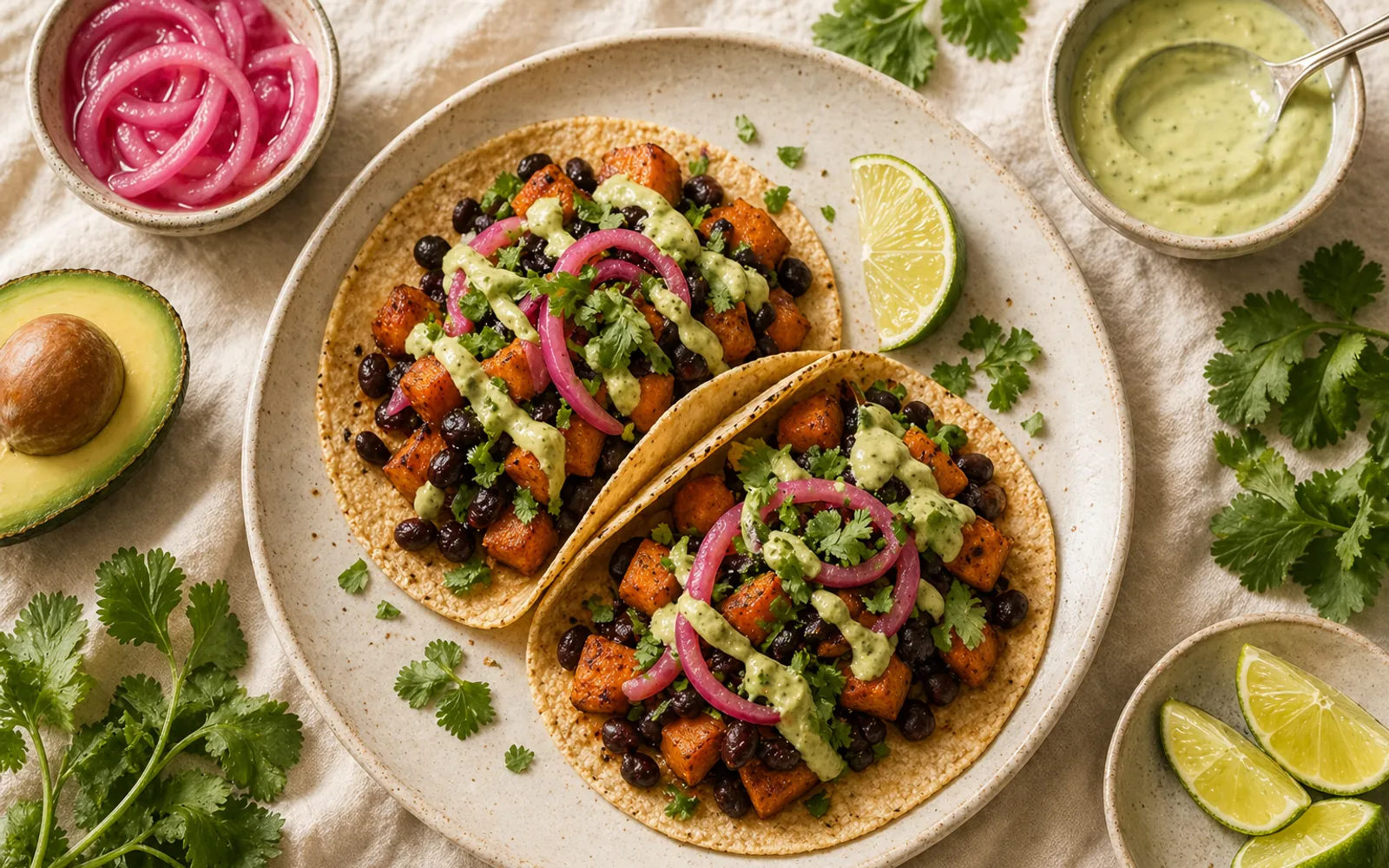
Black Bean & Sweet Potato Tacos — GutPlate recipe photo
dinner 35 min

Black Bean & Sweet Potato Tacos

Roasted sweet potato and seasoned black beans in warm tortillas with pickled red onion, avocado crema, and fresh cilantro — 14g of fiber and ready in 35 minutes.

4 servings View recipe
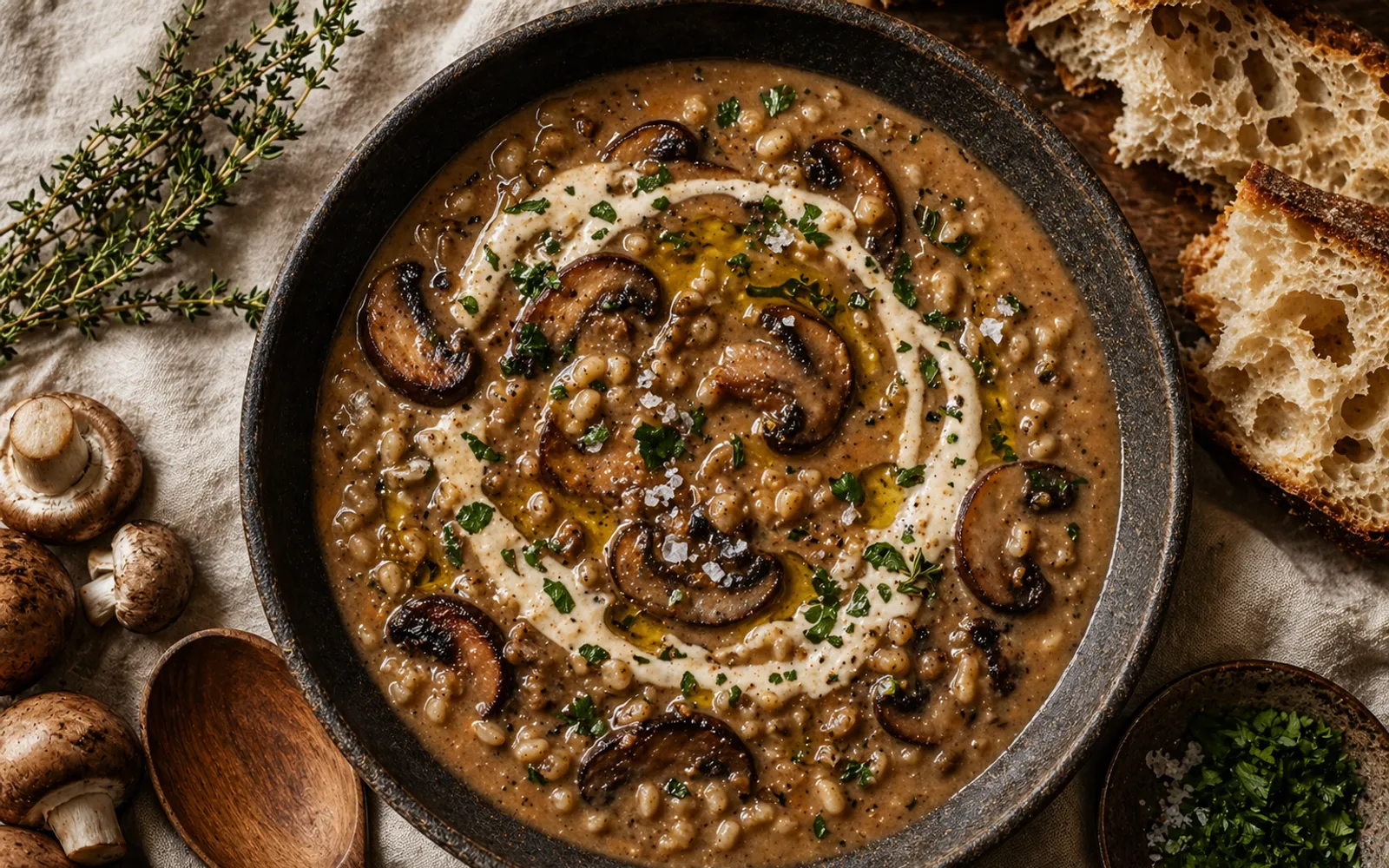
Creamy Mushroom & Barley Soup — GutPlate recipe photo
soups 55 min

Creamy Mushroom & Barley Soup

A hearty, earthy soup with mixed mushrooms, pearl barley, and thyme — rich in beta-glucan fiber from both mushrooms and barley, with a creamy finish from cashew cream.

6 servings View recipe
Garlic-Roasted Cauliflower with Tahini & Herbs — GutPlate recipe photo
sides 40 min

Garlic-Roasted Cauliflower with Tahini & Herbs

Whole cauliflower florets roasted until deeply golden, drizzled with lemon-tahini sauce and fresh herbs — a high-fiber side that feeds your gut bacteria as much as it feeds you.

4 servings View recipe