Skip to content

Creamy Mushroom & Barley Soup

A hearty, earthy soup with mixed mushrooms, pearl barley, and thyme — rich in beta-glucan fiber from both mushrooms and barley, with a creamy finish from cashew cream.

Jump to recipe
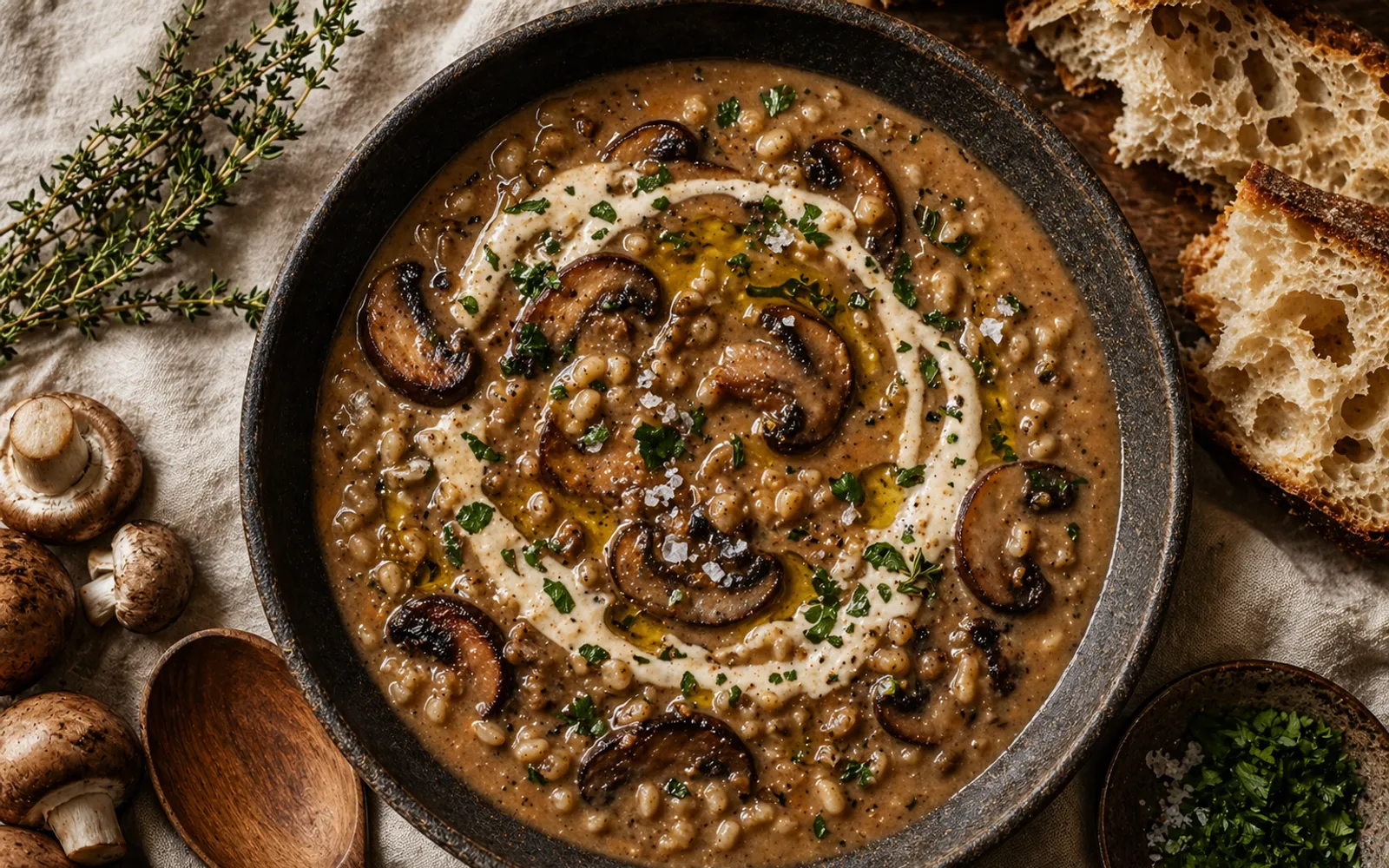
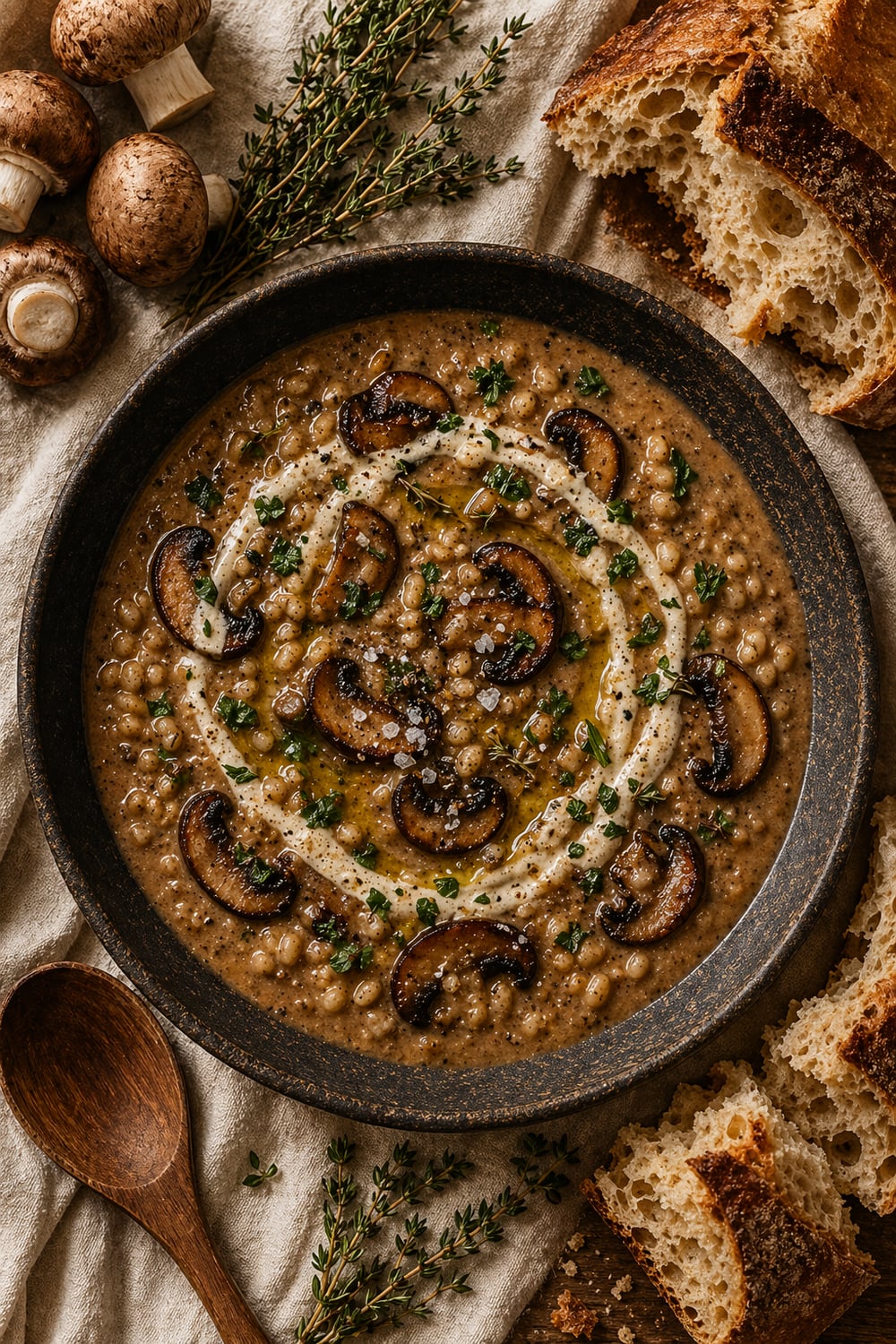
Creamy Mushroom & Barley Soup — GutPlate recipe photo
Prep
15 min
Cook
40 min
Total
55 min
Serves
6 generous bowls

Why you'll love this recipe

  • 8g fiber per bowl from barley and mushrooms — a warming prebiotic delivery system.
  • The cashew cream makes it rich and velvety without any dairy.
  • Deeply caramelized mushrooms give this soup a restaurant-quality depth.
  • One pot (plus a quick blender job for the cashew cream).
  • Gets better over 2-3 days as barley absorbs broth and flavors meld.
  • Freezes beautifully — make a double batch and stash half.

Mushroom soup that tastes like mushroom soup — not cream-of-something from a can, not a thin broth with a few sad slices floating in it, but a deeply savory, thyme-scented pot of properly caramelized mushrooms and tender pearl barley in a velvety cashew-cream base. The kind of soup you make on a Sunday and eat all week, and it’s genuinely better on Wednesday than it was on Sunday.
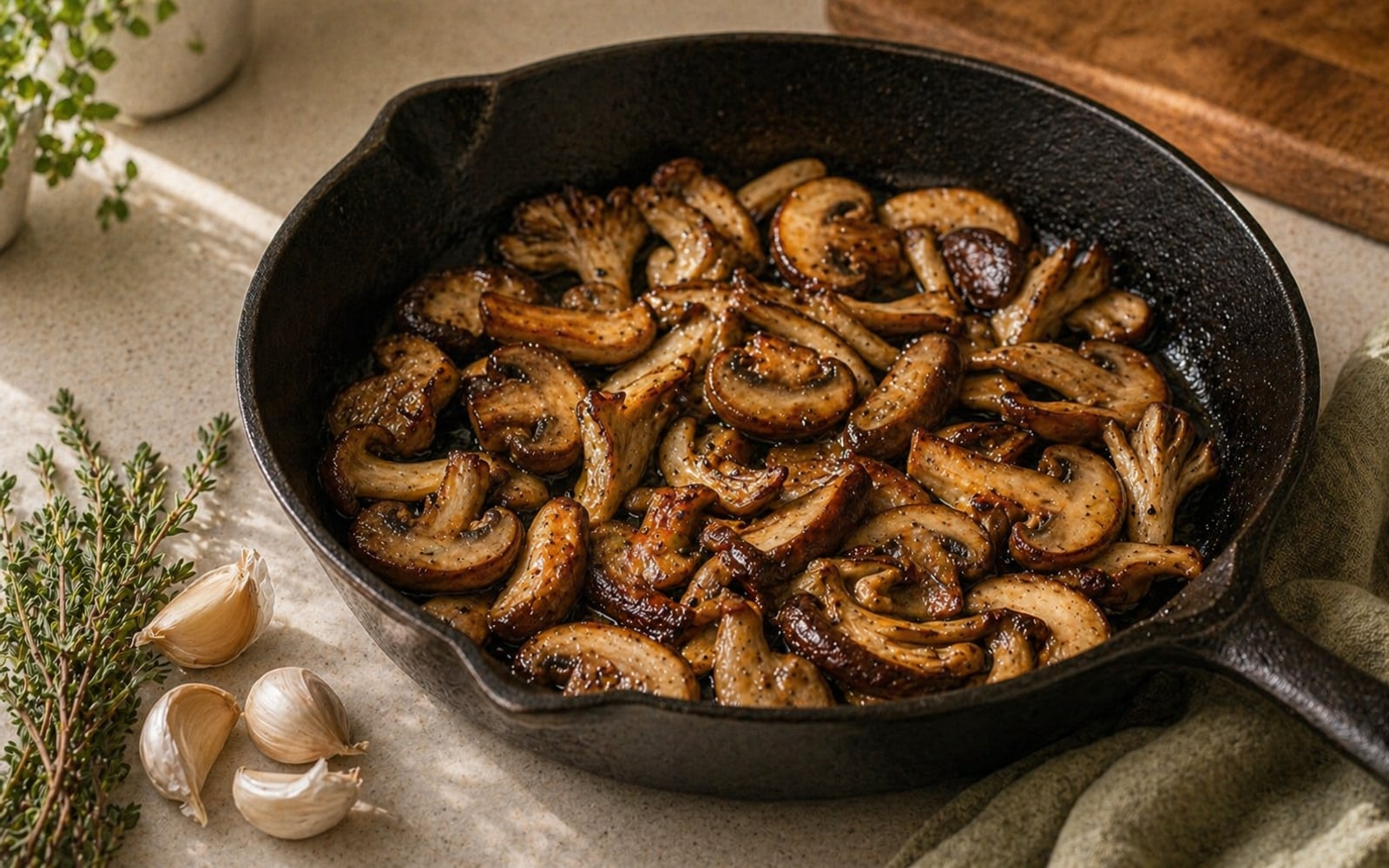
Sliced mushrooms searing in a hot cast-iron pan, deeply golden and caramelized, with thyme sprigs and garlic cloves nearby.

The secret is the mushroom sear. Mushrooms are 90% water, and if you dump them all into the pot at once, they release that water and steam instead of browning. You get grey, rubbery mushrooms and a soup that tastes like broth with filler. Instead: hot pan, butter and oil, mushrooms in a single layer, and don’t touch them for 4-5 minutes. The Maillard reaction kicks in and produces the deep, caramelized, umami-rich flavor that defines a great mushroom soup. Work in batches if you need to. This step is non-negotiable.

Pearl barley does double duty here — it’s a textural element (chewy, satisfying, substantial) and a thickening agent (it releases starch as it cooks, giving the broth body). After 30 minutes of simmering, the barley has expanded, the broth has thickened naturally, and the soup has the consistency of something that took all day.

The cashew cream is the plot twist. Instead of heavy cream (which would be delicious but heavy), soaked cashews blended with water and lemon juice produce a velvety, subtly rich cream that disappears into the soup. You’d never know it was there unless someone told you — it just makes everything smoother and more luxurious. If you’re not dairy-free, a swirl of heavy cream or a dollop of sour cream works beautifully too.
Key ingredients

Why these ingredients

Pearl barley

Contains the highest concentration of beta-glucan of any grain — even more than oats. Beta-glucan is a soluble fiber that forms a viscous gel in the gut, slowing glucose absorption and selectively feeding Bifidobacterium. It also directly activates immune cells (macrophages, natural killer cells) via the Dectin-1 receptor.

Mixed mushrooms

Mushrooms contain unique polysaccharides — lentinan (shiitake), pleuran (oyster), and various beta-glucans — that are distinct from grain beta-glucans. These fungal polysaccharides are potent immunomodulators, activating both innate and adaptive immune pathways. They also serve as prebiotic substrates for gut bacteria.

Thyme

Contains thymol and carvacrol — volatile compounds with broad-spectrum antimicrobial activity. In the gut, these compounds selectively inhibit pathogenic bacteria while leaving beneficial species largely unaffected. Thyme has been used medicinally for gastrointestinal complaints for over 2,000 years.

Cashews

Rich in oleic acid (the same anti-inflammatory fat in olive oil) and provide a creamy texture without dairy. The blended cashew cream also contributes copper and zinc — two minerals essential for immune function that many people are marginally deficient in.

Before you start

Equipment

  • Large Dutch oven or pot

    5-quart minimum

  • High-speed blender

    for cashew cream — or use an immersion blender

Recipe card

Creamy Mushroom & Barley Soup

Prep
15 min
Cook
40 min
Total
55 min
Servings
6

Ingredients

Soup

Creamy finish

Garnish

Instructions

Notes

  • Don't crowd the mushrooms. They need direct contact with the hot pan to caramelize. If you pile them in, they'll steam and turn grey instead of golden. Work in 2-3 batches.
  • If you don't have a high-speed blender for the cashew cream, boil the cashews for 15 minutes instead of soaking — they'll break down more easily.
  • Pearl barley is partially hulled and cooks faster. Hulled barley has more fiber but takes 50-60 minutes.

Nutrition per serving

Estimated; see our disclaimer.

Cal
310 kcal
Protein
11 g
Carbs
42 g
Fat
12 g
Fiber
8 g
Sugar
5 g
Sat Fat
3 g
Sodium
680 mg
Calcium
50 mg
Iron
3 mg

From our test kitchen

Pro tips

The mushroom sear

This is the single most important step. Mushrooms are 90% water — they need high heat and no crowding to brown instead of steam. Heat the pan until the butter foams, add mushrooms in a single layer, and don't touch them for 4-5 minutes. The Maillard reaction creates hundreds of flavor compounds that define the soup.

Season at the end

Barley absorbs salt as it cooks, so the soup may taste less salty after simmering than when you first seasoned it. Always re-taste and adjust salt just before serving.

Keep it fresh

Storage & reheating

Make ahead

One of the best soups for meal prep. The flavor improves dramatically on days 2-3 as the barley absorbs the mushroom broth.

Fridge

4-5 days. The barley absorbs broth as it sits — thin with water or additional broth when reheating.

Freezer

Up to 3 months. Freeze in portion-size containers. Thaw overnight in the fridge and reheat on the stove.

Reheat

Stovetop over medium-low, adding splashes of broth or water until the consistency is right. Microwave works but stir frequently.

Make it yours

Variations

Wild rice version

Replace barley with 1 cup wild rice. Increase broth to 7 cups and simmer 45-50 minutes. Wild rice adds a nutty, chewy texture and is naturally gluten-free.

Miso-mushroom soup

Skip the cashew cream. Instead, stir 2 tablespoons white miso paste into the finished soup (add off-heat to preserve the miso's live cultures). Adds a umami-probiotic dimension.

Loaded mushroom barley stew

Add 2 diced potatoes and 2 cups chopped kale in the last 15 minutes of cooking. This turns the soup into a one-pot stew that works as a standalone meal.

Pantry swaps

Ingredient substitutions

Instead of

Pearl barley

Use

Farro or brown rice

Farro has a similar chewy texture (also contains gluten). Brown rice is GF but softer. Both cook in roughly the same time.

Instead of

Cashew cream

Use

Heavy cream, coconut cream, or sour cream

Heavy cream is the most traditional. Coconut cream adds a subtle sweetness. A dollop of sour cream stirred in at the end is the Eastern European approach.

Instead of

Fresh mushrooms

Use

1 oz dried porcini or mixed dried mushrooms

Rehydrate in 1 cup hot water for 20 minutes. Use the soaking liquid as part of the broth — it's intensely flavored. Dried mushrooms have a more concentrated umami.

Plate it up

What to serve with it

The evidence

Why this is good for your gut

This soup delivers a double beta-glucan hit — from both the barley and the mushrooms — targeting the gut microbiome and the immune system simultaneously through distinct mechanisms.

Barley beta-glucan is a soluble fiber with a (1→3)(1→4)-beta-D-glucan linkage structure that forms a highly viscous gel in the small intestine.[1] This gel slows gastric emptying and glucose absorption (improving postprandial glycemia), then arrives in the colon largely intact where it becomes a preferred substrate for *Bifidobacterium* and certain *Roseburia* species. The fermentation of barley beta-glucan produces primarily propionate and butyrate — two short-chain fatty acids with distinct benefits. Propionate travels to the liver where it modulates cholesterol synthesis. Butyrate fuels colonocytes and has anti-inflammatory effects.

Mushroom beta-glucans are structurally different — they have (1→3)(1→6)-beta-D-glucan linkages that are recognized by the Dectin-1 receptor on macrophages, dendritic cells, and neutrophils.[2] This receptor binding directly activates the innate immune system — it's one of the few dietary compounds with documented immunomodulatory effects. Lentinan from shiitake mushrooms and pleuran from oyster mushrooms are the most studied. These fungal beta-glucans also function as prebiotics, feeding different bacterial species than the grain-derived beta-glucans in the barley.

The cashew cream adds oleic acid — the same monounsaturated fat found in olive oil — which enhances absorption of fat-soluble compounds from the mushrooms and provides anti-inflammatory effects on the gut epithelium.[3]

By combining grain beta-glucans (barley) with fungal beta-glucans (mushrooms) in a single bowl, this soup feeds the microbiome through two complementary prebiotic pathways while simultaneously activating immune surveillance — a combination that neither ingredient achieves alone.

Good questions

Frequently asked questions

Can I use cream instead of cashew cream?

Absolutely. Replace the cashew cream with 1/2 cup heavy cream or half-and-half, stirred in at the end. The soup will be richer and more traditional.

Is barley gluten-free?

No. Barley contains gluten. For a gluten-free version, replace pearl barley with farro (also contains gluten), or use brown rice or sorghum (both GF). Rice will need about 25 minutes; sorghum needs 40-50 minutes.

What mushrooms work best?

A mix is ideal. Cremini (baby bella) for meaty texture, shiitake for umami depth, and oyster for delicate earthiness. In a pinch, all cremini works fine — they're the most widely available.

Can I make this in a slow cooker?

Yes. Sauté the mushrooms on the stove first (this step can't be skipped — slow cookers don't get hot enough to caramelize). Then transfer everything to the slow cooker. Cook on low 6-8 hours or high 3-4 hours. Add the cashew cream in the last 30 minutes.

References

  1. Barley beta-glucan: prebiotic effects and SCFA production — Nutrition Reviews↩ back
  2. Immunomodulatory properties of mushroom beta-glucans and the Dectin-1 pathway — Journal of Leukocyte Biology↩ back
  3. Oleic acid and gut barrier integrity — Nutrients↩ back

Loved this recipe?

Save it to your Pinterest boards or share with a friend who needs more gut-friendly weeknight meals.

Newsletter

Weekly gut-friendly recipes, straight to your inbox.

One email every Sunday — new recipes, a practical gut-health tip, and zero spam. Unsubscribe anytime.

No spam 1-click unsubscribe

Signup coming soon. Follow us on Pinterest in the meantime.

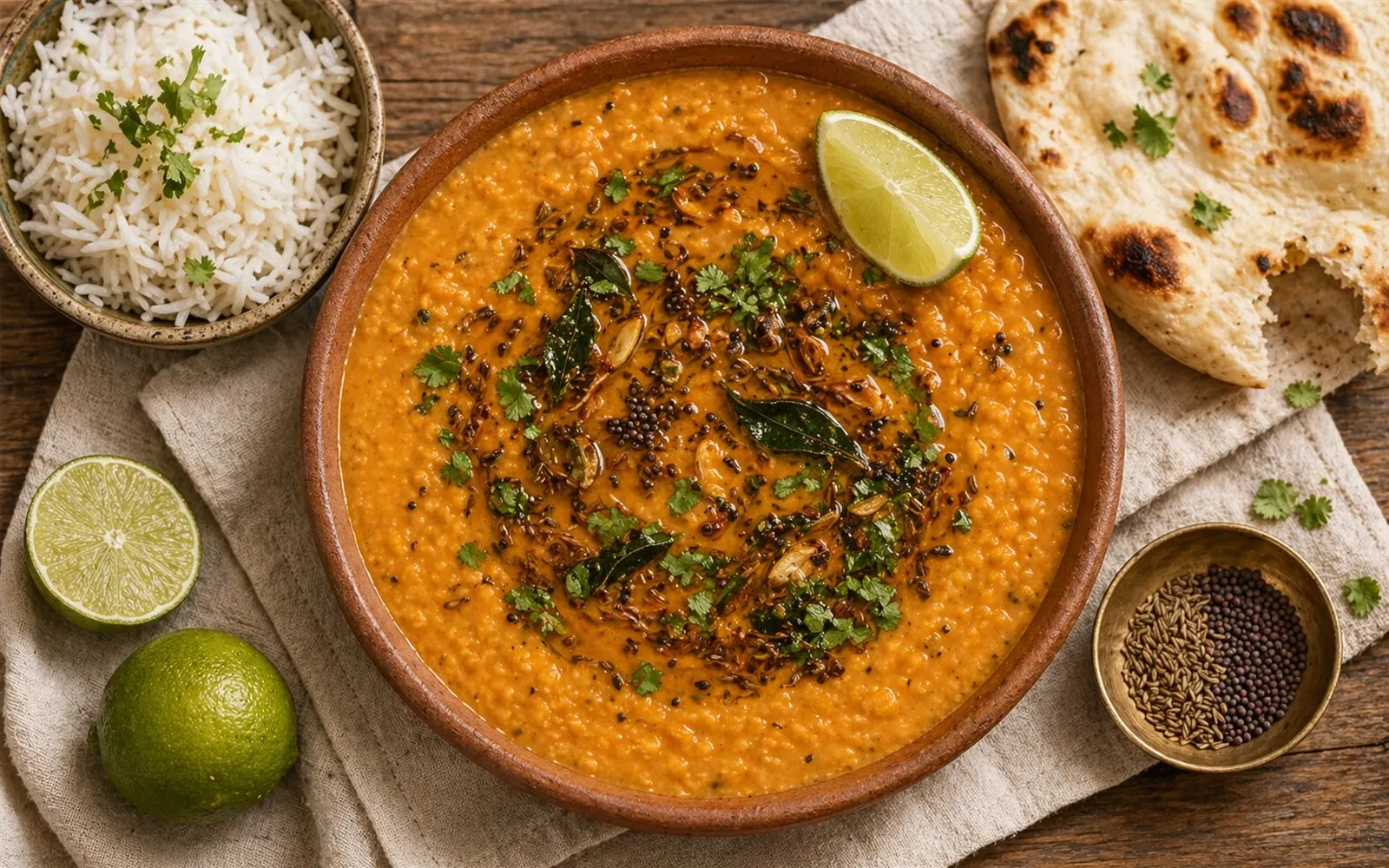
Coconut Red Lentil Dal — GutPlate recipe photo
dinner 35 min

Coconut Red Lentil Dal

A 30-minute one-pot dal with red lentils, coconut milk, turmeric, and a cumin-mustard seed tarka — creamy, warming, and loaded with prebiotic fiber.

4 servings View recipe
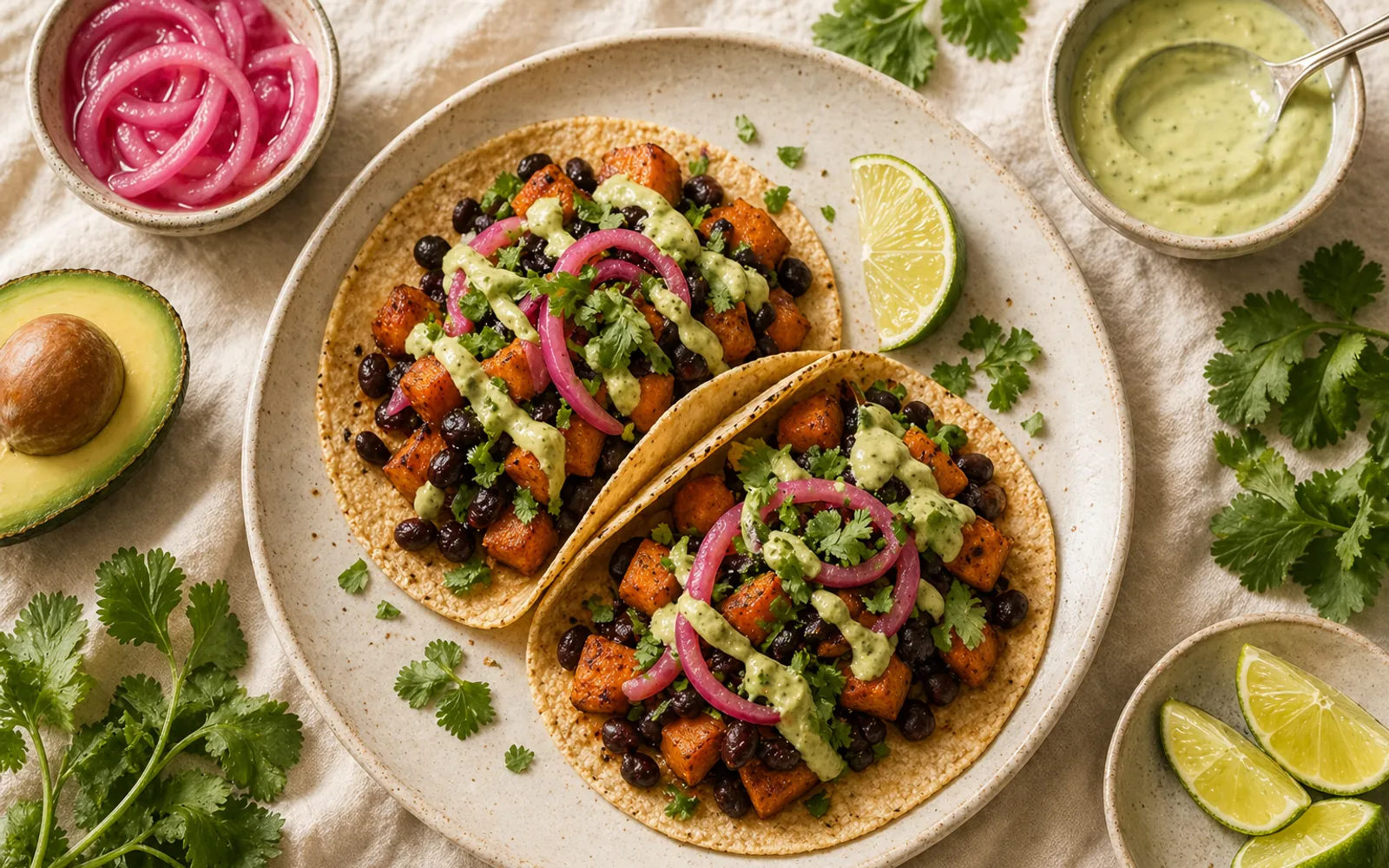
Black Bean & Sweet Potato Tacos — GutPlate recipe photo
dinner 35 min

Black Bean & Sweet Potato Tacos

Roasted sweet potato and seasoned black beans in warm tortillas with pickled red onion, avocado crema, and fresh cilantro — 14g of fiber and ready in 35 minutes.

4 servings View recipe
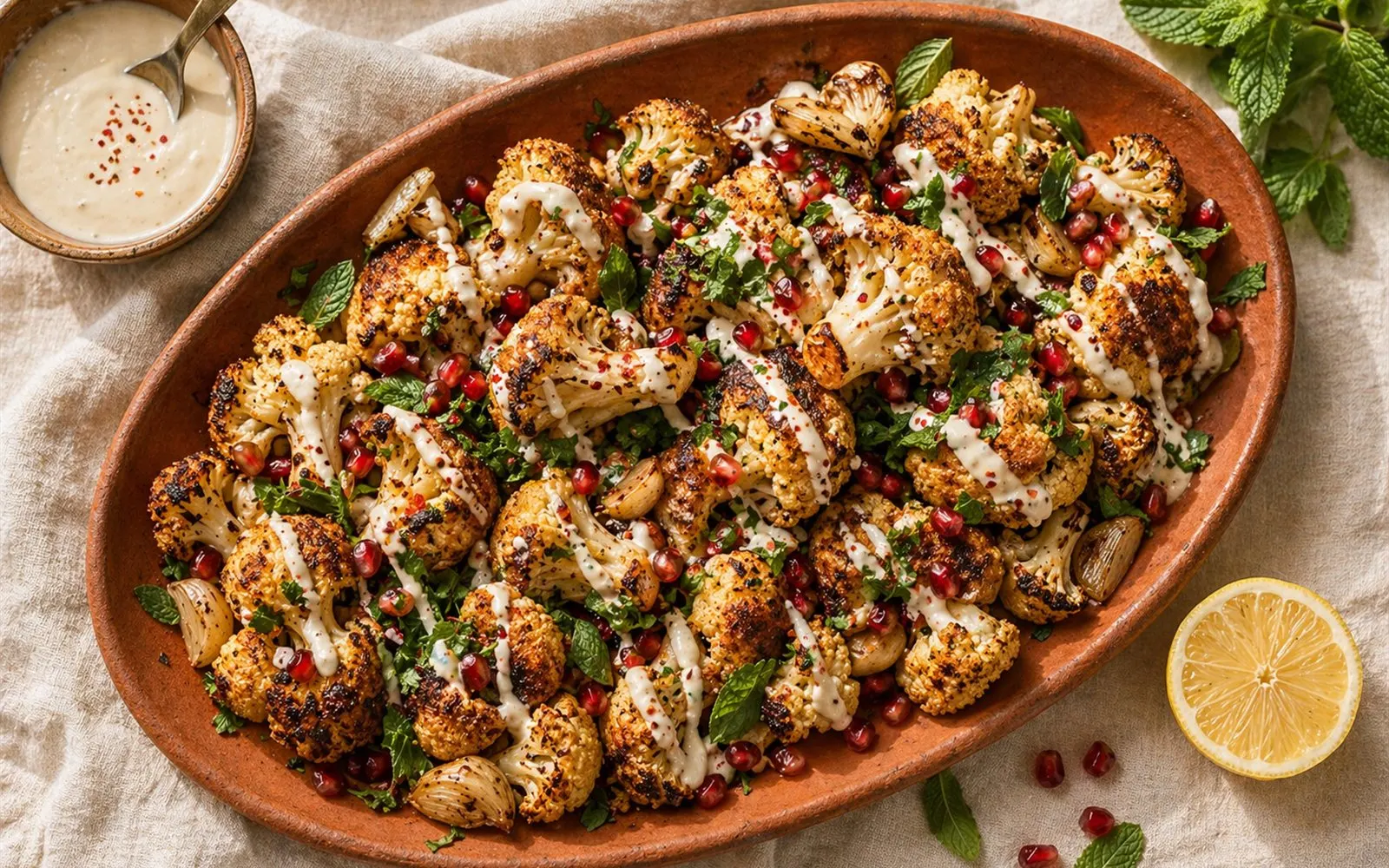
Garlic-Roasted Cauliflower with Tahini & Herbs — GutPlate recipe photo
sides 40 min

Garlic-Roasted Cauliflower with Tahini & Herbs

Whole cauliflower florets roasted until deeply golden, drizzled with lemon-tahini sauce and fresh herbs — a high-fiber side that feeds your gut bacteria as much as it feeds you.

4 servings View recipe