Skip to content

Turmeric Bone Broth

A long-simmered chicken bone broth brightened with turmeric, ginger, and black pepper — sippable, collagen-rich, and gut-soothing.

Jump to recipe
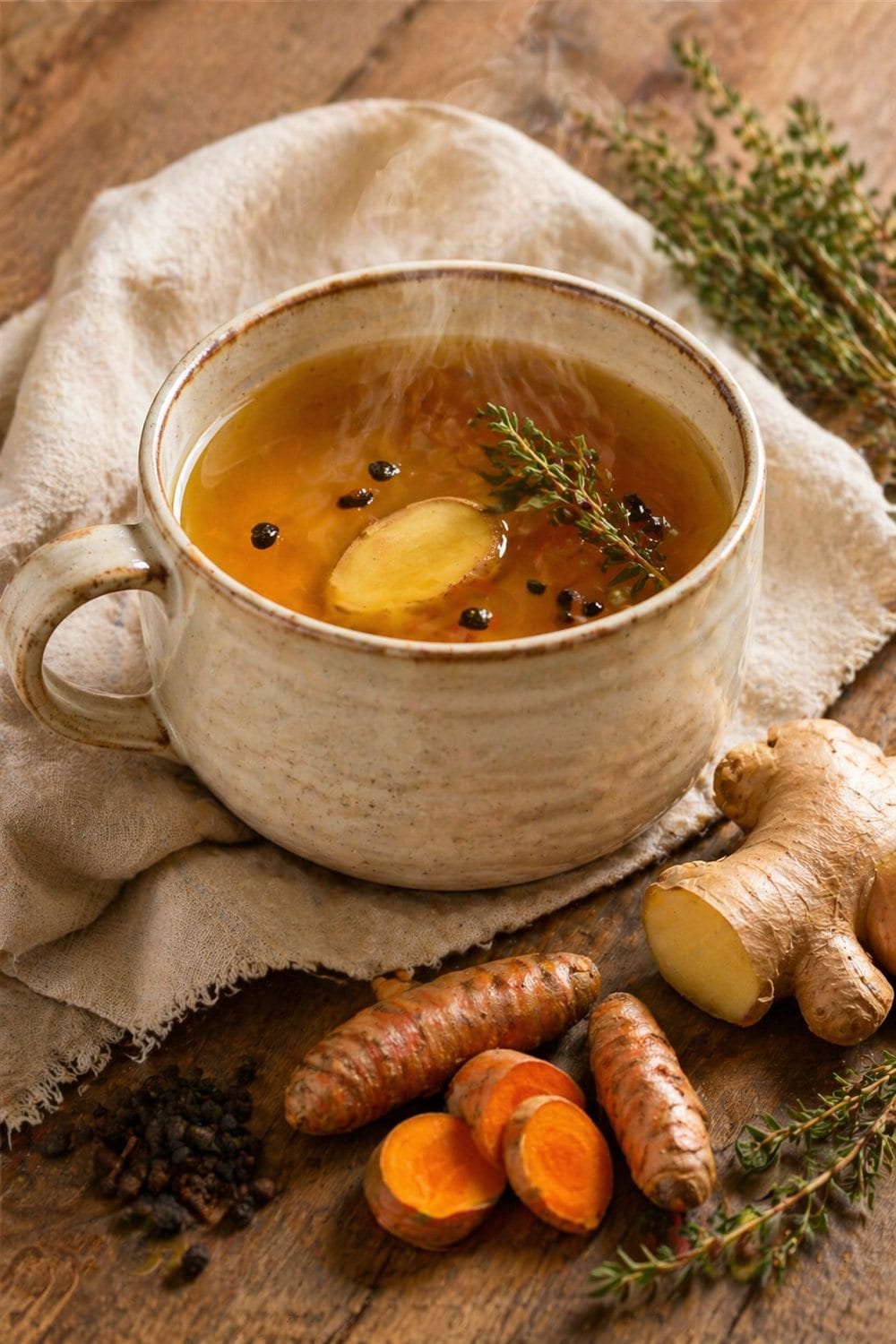
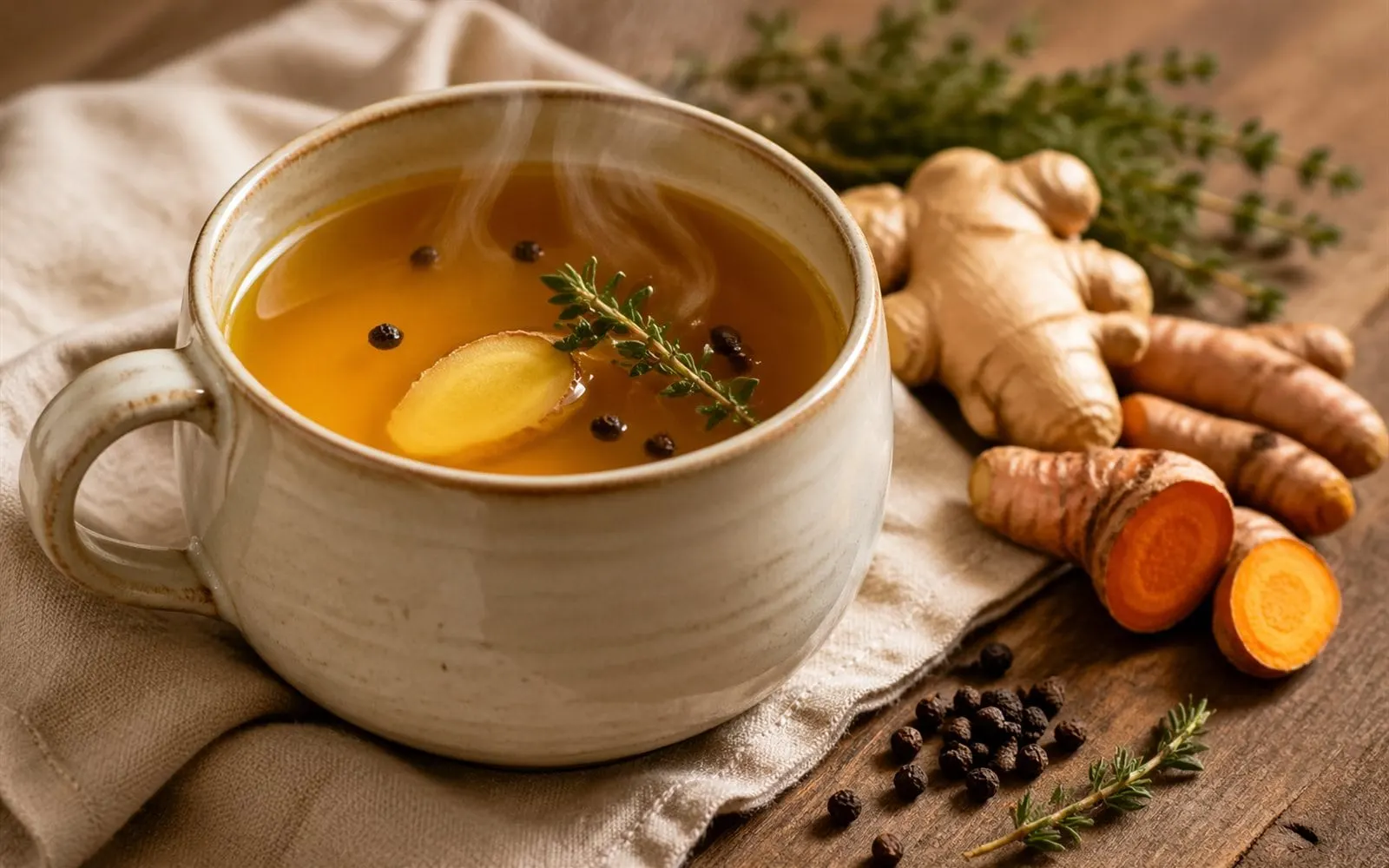
Turmeric Bone Broth — GutPlate recipe photo
Prep
10 min
Cook
6 h
Total
6 h 10 min
Serves
about 2 quarts

Why you'll love this recipe

  • Gut-lining support from gelatin, glutamine, and glycine — the amino acid trifecta for intestinal repair.
  • Anti-inflammatory turmeric + black pepper, in the combination research shows actually works.
  • Near-zero calories, near-zero cost. Bones are often free from the butcher.
  • Low-FODMAP, gluten-free, dairy-free — works for almost every elimination protocol.
  • Freezes for 3 months in portion-sized containers. A freezer stocked with broth is a kitchen superpower.
  • A quiet, warming drink for cold evenings, sick days, or the first hour after waking up.

Bone broth earned its reputation the old-fashioned way: long, low simmers that extract gelatin, glycosaminoglycans, and free amino acids from connective tissue. Glycine and glutamine in particular are building blocks for the mucus layer that protects your gut lining — the glutamine especially, which is the preferred fuel for the cells lining your small intestine. Add turmeric for its anti-inflammatory curcumin and a generous amount of black pepper (which dramatically increases curcumin absorption, by a documented 2,000% in the classic bioavailability study) and you have a mug that tastes like a quiet restorative afternoon.

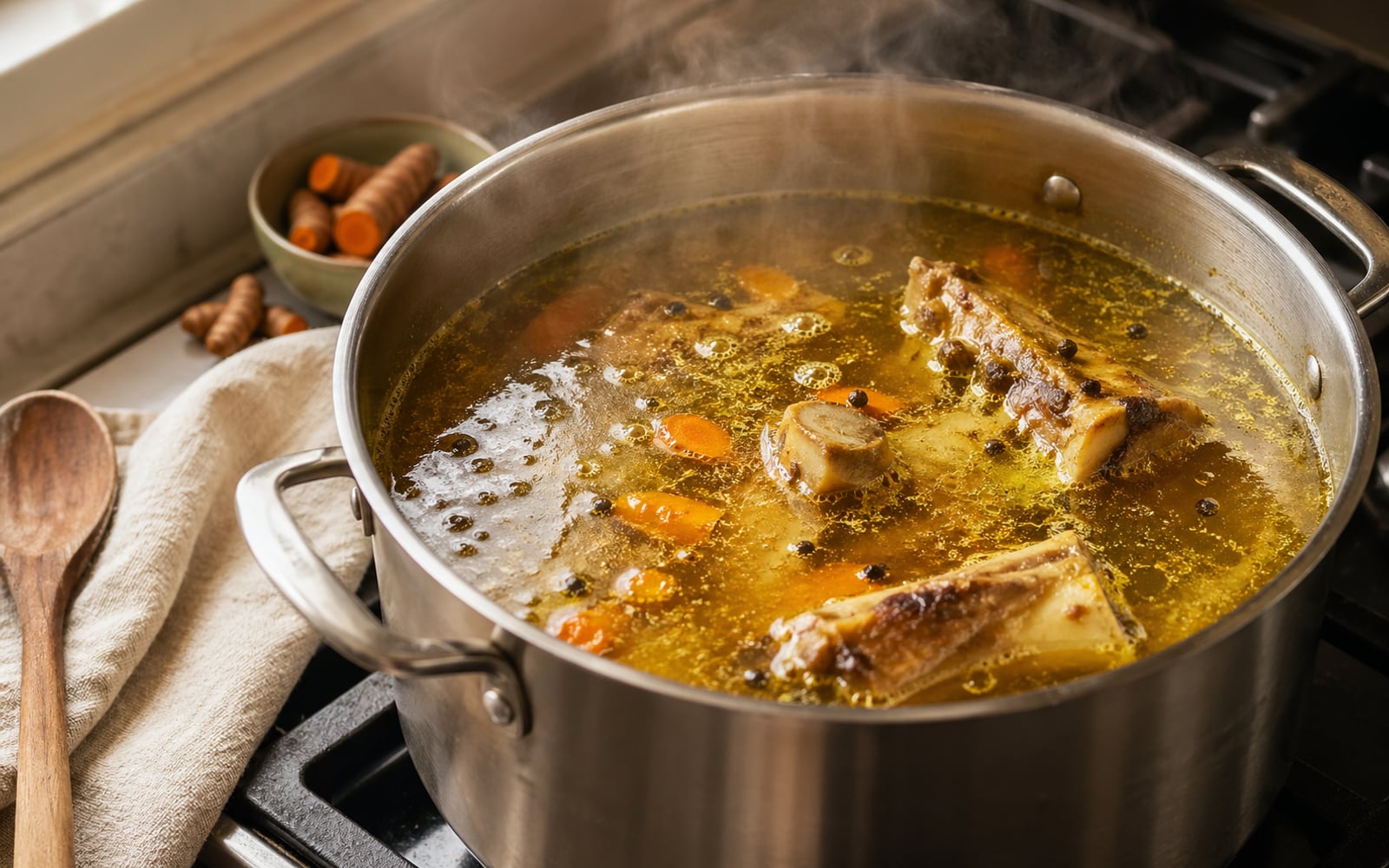
A large stockpot of golden turmeric bone broth simmering on the stove, with roasted bones, turmeric root, and black peppercorns visible.

Two details matter more than any recipe: roast the bones first, and do not let the broth boil. Roasting at 425°F for 30 minutes deepens the flavor from pale to deeply golden in a way no amount of simmering can replicate — it’s where half the eventual richness comes from. A bare simmer (one bubble every 2–3 seconds, not a rolling boil) keeps the gelatin intact, prevents cloudiness, and gives you that gorgeous jelly-when-chilled texture that signals a broth done right. If your broth doesn’t gel in the fridge, something went wrong in one of these two steps — usually the temperature.

You can sip this broth on its own (try a soft-boiled egg in a mug of it for breakfast), use it as the base for soups and risottos, or stir it into grains while they cook for extra depth. A freezer stocked with one-cup portions is one of the best small kitchen investments you can make for a gut-friendly home. Every time you roast a chicken, save the bones; every couple of months, run a batch. It’s one of those kitchen rituals that rewards the person who plans ahead — and the person they’re feeding.

Key ingredients

Why these ingredients

Chicken bones (especially feet and backs)

Feet contain the highest concentration of collagen in the chicken — the protein that breaks down into gelatin during long cooking. Backs have the marrow and cartilage that release glutamine and proline, amino acids particularly important for gut-lining repair. Skip feet and the broth won't gel; include them and it turns to jelly in the fridge.

Apple cider vinegar

The 30-minute acidic soak before simmering helps draw out minerals and collagen from the bones. Only about 1 tablespoon for 12 cups of water — you don't taste it in the final broth, but without it you're leaving significant nutrients in the bones.

Fresh turmeric (or 1 tablespoon ground)

Curcumin, turmeric's active compound, is one of the most-studied anti-inflammatory plant compounds in human nutrition. Used alone, curcumin is poorly absorbed. Combined with black pepper (piperine) and the fats naturally in the broth, absorption increases dramatically.

Black peppercorns (whole)

Piperine in black pepper increases curcumin bioavailability by up to 2,000%, according to the classic Shoba et al. 1998 study. Whole peppercorns release piperine slowly during the long simmer, pairing perfectly with the turmeric.

Fresh ginger

Gingerol supports digestive motility and has independent anti-inflammatory effects at the gut mucosa. Ginger + turmeric is a pair that shows up across global traditional medicine for digestive complaints, and modern research confirms why — they work on different but complementary pathways.

Leek (instead of onion)

Yellow onions are high-FODMAP; leek whites and light greens are low-FODMAP in reasonable portions. Leeks still deliver the sweet allium backbone of classic stocks without triggering IBS symptoms. A small but important swap.

Before you start

Equipment

  • Large stockpot (8-quart minimum)

    needs room for bones + vegetables + 12 cups of water

  • Rimmed sheet pan

    for roasting the bones — rimmed so the fat doesn't drip

  • Fine-mesh sieve

    essential for a clear strain; line with cheesecloth for crystal-clear broth

  • Storage containers or ice cube trays

    for freezing portioned broth

  • Patience

    6 hours of passive simmering; set a timer and walk away

Recipe card

Turmeric Bone Broth

Prep
10 min
Cook
360 min
Total
370 min
Servings
6

Ingredients

Instructions

Notes

  • Chicken feet are the gelatin goldmine. Two feet in a 3-pound mix will give you broth that sets to a firm jelly when chilled. Ask your butcher — usually inexpensive or free.
  • Apple cider vinegar helps the acidic environment draw minerals (calcium, magnesium, phosphorus) and collagen out of the bones. Don't skip it.
  • A properly gelled broth will wobble like soft jelly when chilled — that's the sign you nailed the extraction. Watery broth = too much water or too hot a simmer.

Nutrition per serving

Estimated; see our disclaimer.

Cal
45 kcal
Protein
7 g
Carbs
2 g
Fat
1 g
Fiber
0 g
Sugar
1 g
Sat Fat
0 g
Sodium
340 mg
Calcium
15 mg
Iron
1 mg

From our test kitchen

Pro tips

Roast the bones deeply

The difference between anemic-pale broth and rich golden broth is how dark you roast the bones. Aim for dark brown, almost mahogany at the edges — not burnt, but deeply Maillard-browned. The extra 10 minutes at 425°F is the most impactful change you can make.

Bare simmer, never boil

A hard boil agitates the fat and proteins into a cloudy emulsion, and breaks down gelatin into less-functional fragments. The ideal is a single bubble every 2–3 seconds. If you can see rolling motion, your heat is too high.

Vinegar in cold water, before heating

Adding the acid before the water heats allows it to penetrate the bones for 10–15 minutes before the high heat denatures proteins. Small detail, real difference in mineral extraction.

Don't salt too much at the start

Broth reduces during cooking (even at a simmer, some evaporation happens). Salt conservatively at the start — 1 teaspoon for the whole pot — and adjust at serving. Over-salted broth is very hard to rescue.

Store in 1-cup portions

Portioning into 1-cup containers (or silicon molds) means you can thaw exactly what you need. A quart jar in the freezer is a mess to thaw; individual cubes or 1-cup freezer bags are effortless.

When things go sideways

Troubleshooting

Broth didn't gel when chilled.

Not enough collagen. Next time: include chicken feet and backs (not just wings). Also check your water-to-bone ratio — too much water dilutes the gelatin. And keep the heat lower; hard boiling breaks gelatin down.

Broth is cloudy.

You boiled it too hard at some point. Fix: let it sit in the fridge overnight — much of the cloudiness will sink. Strain through cheesecloth-lined sieve. Next time, keep the heat on the absolute lowest setting.

Broth tastes bitter.

Either you burned the roasted bones (too long at 425°F) or you added vinegar after the simmer started. The vinegar needs to go in cold, and the bones should be deeply golden but not charred.

Yellow fat cap is too thick.

Normal — chicken bones release a lot of fat. Lift off after chilling and save it (schmaltz is great for roasting vegetables). Leave a thin layer for mouthfeel when reheating.

Not strong enough flavor.

Simmered 6 hours, not 8. For the strongest broth, simmer longer and use more bones relative to water (4 lb bones + 10 cups water gives you the most intense result).

Turmeric stained everything yellow.

Turmeric is a powerful dye. Use a dark-colored cutting board for the fresh root, wash hands immediately, and avoid white utensils. Ground turmeric is slightly less staining but still leaves marks.

Keep it fresh

Storage & reheating

Make ahead

Designed for make-ahead. One 8-hour session yields enough broth for 6 meals. Sunday afternoon investment = week of convenience. Stock your freezer for sick days.

Fridge

Keeps 5 days refrigerated in a sealed container. The fat cap on top actually protects the broth — leave it in place until using. Broth will be a firm jelly when cold; it liquefies on reheating.

Freezer

Up to 3 months. Freeze in 1-cup portions (or silicon molds, then transfer to bags). Don't fill glass jars to the top — broth expands ~10% when frozen. Leave 1 inch of headspace.

Reheat

Stovetop: warm over medium-low for 3–5 minutes until steaming but not boiling. Microwave works for single cups: 60 seconds on medium power, stir, 30 more seconds. Don't microwave on high — splattering is inevitable and it overcooks the edges.

Make it yours

Variations

Beef version

Swap chicken bones for 3 lb beef bones (mix of marrow, knuckle, and oxtail). Roast 45 minutes. Simmer 10–12 hours. Broth is richer, darker, more gamey — perfect for soups and braises.

Vegetarian 'bone' broth

No real substitute, but a shiitake mushroom + seaweed + vegetable broth approximates the umami depth. Simmer 2 lb shiitakes + 1 strip kombu + the recipe's vegetables + 1 tablespoon miso for 2 hours. Gelatin-free but collagenous in feel.

Spicy Asian riff

Add 1 whole star anise, 1 cinnamon stick, and 2 dried red chiles during the simmer. Strain and serve with a splash of fish sauce and fresh cilantro. Tastes like the base of great Vietnamese pho.

Garlic-heavy (for non-FODMAP)

If you tolerate garlic, add 1 whole head of garlic (halved horizontally) during the last 2 hours. Adds beautiful depth; excludes this recipe from low-FODMAP eligibility.

Miso finish

Stir 1 teaspoon of white miso paste into each cup of warm broth off-heat. Adds umami + probiotic bonus. Don't boil the miso — cultures die above 115°F.

Pantry swaps

Ingredient substitutions

Instead of

Chicken bones

Use

Beef bones (for richer broth), turkey carcass (leftover from Thanksgiving), or fish bones (for faster, lighter broth)

Fish broth simmers only 1 hour — don't overcook or it turns bitter.

Instead of

Leek

Use

1 yellow onion (not low-FODMAP), 3 shallots, or skip entirely

Broth without onion/leek is still good but less complex. Add an extra stalk of celery if skipping.

Instead of

Fresh turmeric

Use

1 tablespoon ground turmeric or 2 teaspoons curcumin powder

Fresh turmeric is brighter; ground turmeric is stronger per volume. Both work.

Instead of

Apple cider vinegar

Use

White wine vinegar, rice vinegar, or lemon juice

Any acidic liquid works. You only need 1 tablespoon — it doesn't affect taste.

Instead of

Ginger

Use

Galangal (Thai ginger), a whole lemongrass stalk, or skip

Galangal is more citrusy. Skip if you don't like ginger, but you lose an anti-inflammatory compound.

Instead of

Carrot and celery

Use

Parsnip, fennel stems, or mushroom stems

Parsnip adds sweetness; mushroom stems add umami; fennel adds an anise note.

Plate it up

What to serve with it

  • A soft-boiled egg in a mug

    Pour hot broth over a 6.5-minute egg. Break the yolk into the broth for silky richness. Breakfast or a restorative snack.

  • A few torn greens

    Fresh spinach, arugula, or baby bok choy wilted in the hot broth for 30 seconds. Adds color and fiber to an otherwise broth-only meal.

  • Cooked rice noodles or sliced ramen

    Pho-style. Top with scallions, fresh cilantro, and a wedge of lime for a 5-minute noodle soup.

  • Miso finish (off-heat)

    Stir a teaspoon of white miso into your cup right before drinking. Adds probiotics without killing them — miso dissolves at the right temperature.

  • Use as the base for risotto

    A classic: substitute bone broth for the usual chicken stock in any risotto recipe. The collagen gives it extra body.

  • Related: Roasted Sweet Potato & Lentil Soup

    Use bone broth in place of vegetable broth in the lentil soup for deeper flavor + gut-lining support.

The evidence

Why this is good for your gut

Bone broth has been prepared by humans for at least 10,000 years — archaeological evidence of long-cooked bone liquids predates most other cooking techniques. The reason it earned its reputation isn't folklore: it contains specific compounds that are uniquely useful for gut lining repair. Modern research has caught up with what grandmothers already knew.

The gut-lining amino acid trio: glutamine, glycine, proline. When collagen-rich bones simmer for hours, the collagen protein (especially from connective tissue and cartilage) breaks down into its component amino acids. Three are particularly relevant to the gut:

- Glutamine is the preferred fuel for enterocytes (small intestine cells). During stress, illness, or intestinal inflammation, glutamine demand outstrips what the body can synthesize, and dietary intake becomes limiting. A cup of bone broth contains roughly 2g of glutamine — meaningful when you consider that the gut requires about 4–5g daily for maintenance.[1]

- Glycine (one of the most abundant amino acids in collagen) is a precursor for glutathione, the gut's primary antioxidant. Glycine also acts as an inhibitory neurotransmitter, contributing to the subjective calming effect many people report from bone broth.[2]

- Proline (along with hydroxyproline) is essential for synthesizing new collagen in your own body — including the collagen that forms part of the gut mucus layer. Dietary proline is spared metabolic conversion when present in adequate amounts.[3]

The turmeric + black pepper combination. Curcumin, the active compound in turmeric, has been studied extensively for its anti-inflammatory effects at the intestinal mucosa — particularly in inflammatory bowel disease and IBS.[4] The problem is that curcumin has notoriously poor bioavailability when eaten alone; most of what you swallow passes through unchanged. Piperine (from black pepper) inhibits the liver enzymes that break down curcumin, increasing its bioavailability by roughly 2,000% in the landmark Shoba et al. 1998 study.[5] The broth's simmer extracts both compounds into the fat-containing liquid, where they're readily absorbed.

The role of gelatin in gut barrier repair. When bone-broth gelatin reaches the small intestine, it's broken down by proteolytic enzymes into short peptides. Some of these peptides have been shown in vitro and in animal studies to strengthen tight junctions between intestinal epithelial cells — essentially tightening up "leaky gut" at the cellular level.[6] The clinical research in humans is more limited, but emerging evidence is consistent with the traditional use of bone broth for people recovering from GI inflammation.

What bone broth is NOT. It's important to set realistic expectations. Bone broth is a rich source of specific gut-supportive amino acids and bioactive compounds, but it's not a magic cure. It doesn't directly populate your gut with bacteria (it's not probiotic), it doesn't treat serious diseases on its own, and the research on its effects is still maturing. It's best thought of as a genuinely useful nutritional tool alongside — not instead of — a diverse, plant-forward diet and medical care when needed.

For most people, a cup a day during periods of digestive distress, illness, or recovery is a reasonable inclusion. The amino acids, the anti-inflammatory compounds, and the sheer warmth of a mug of broth add up to something more than the sum of their parts — but they're not replacing anything. They're a quiet supporting actor in a larger nutritional story.

Good questions

Frequently asked questions

Why include black pepper?

Piperine, the active compound in black pepper, boosts the absorption of curcumin (the active compound in turmeric) by up to 2,000% in controlled studies. Without piperine, most of the curcumin you eat passes right through. Black pepper is non-negotiable if you want the anti-inflammatory benefit of turmeric.

Can I use beef bones?

Yes. Beef bones (marrow bones, knuckles, and oxtail) make a richer, darker broth. Roast for 45 minutes and simmer for 10–12 hours. Expect more unusual flavors and more richness — beef broth is meatier, chicken broth is cleaner.

My broth didn't gel — what went wrong?

Most common causes: (1) water-to-bone ratio too high — use 12 cups for 3 lb; (2) temperature too hot — a hard boil breaks down gelatin; (3) no chicken feet in the mix. Also, if you store it too long without freezing, the gel weakens. It's still nutritious; it just won't have that collagen-rich wobble.

Is this low-FODMAP?

Yes when made as written — leek whites/light greens are low-FODMAP at these quantities, and garlic/onion are skipped entirely. Chicken bones, celery, carrot, ginger, and turmeric are all low-FODMAP. An ideal broth for IBS recovery.

Can I use a slow cooker or pressure cooker?

Yes. Slow cooker: low for 8–12 hours. Instant Pot: 2 hours on high pressure with natural release. Both skip the oven roast, so you lose some depth — do the roast step first for best flavor regardless of cooker.

How much should I drink per day?

A cup (8oz) a day is a reasonable routine; 1–2 cups per day during illness or digestive issues. More isn't necessarily better — the benefits plateau around 2 cups daily in most research.

Why the turmeric and ginger?

Turmeric's curcumin has documented anti-inflammatory effects at the intestinal mucosa. Ginger's gingerol supports motility and has additional anti-inflammatory properties. Together they turn a simple broth into an anti-inflammatory drink.

References

  1. Glutamine and the gut: a clinical review — Nutrition Reviews↩ back
  2. Glycine metabolism and gut health — Journal of Amino Acids↩ back
  3. Collagen and gut barrier function — Nutrients↩ back
  4. Curcumin in gastrointestinal inflammation: a comprehensive review — AAPS Journal↩ back
  5. Influence of piperine on curcumin bioavailability — Planta Medica (Shoba et al. 1998)↩ back
  6. Gelatin-derived peptides and intestinal tight junctions — Food & Function↩ back

Loved this recipe?

Save it to your Pinterest boards or share with a friend who needs more gut-friendly weeknight meals.

Newsletter

Weekly gut-friendly recipes, straight to your inbox.

One email every Sunday — new recipes, a practical gut-health tip, and zero spam. Unsubscribe anytime.

No spam 1-click unsubscribe

Signup coming soon. Follow us on Pinterest in the meantime.

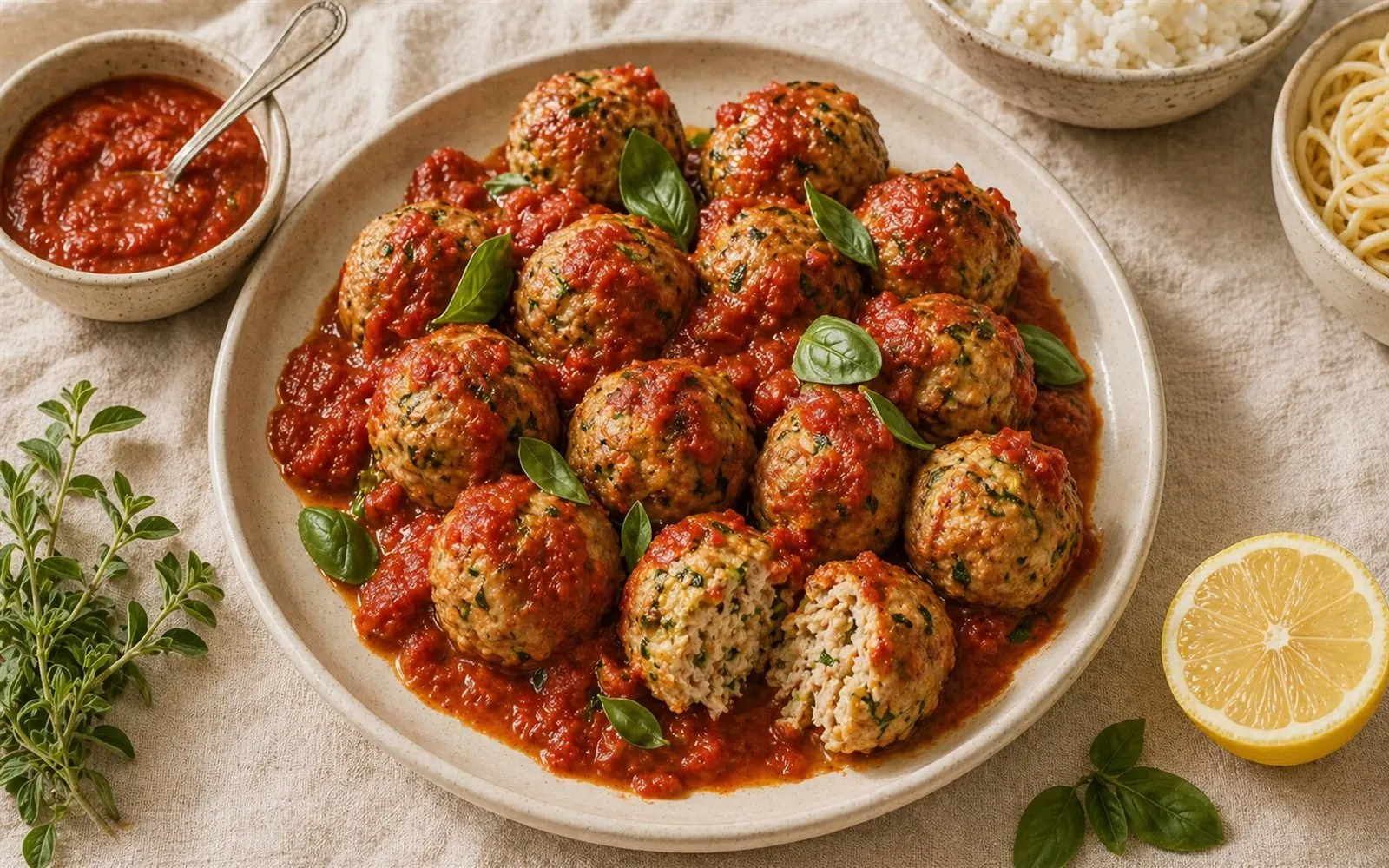
Low-FODMAP Turkey & Zucchini Meatballs — GutPlate recipe photo
dinner 35 min

Low-FODMAP Turkey & Zucchini Meatballs

Tender baked turkey meatballs with shredded zucchini and Italian herbs — garlic-free, onion-free, and gentle enough for an elimination diet without tasting like one.

4 servings View recipe
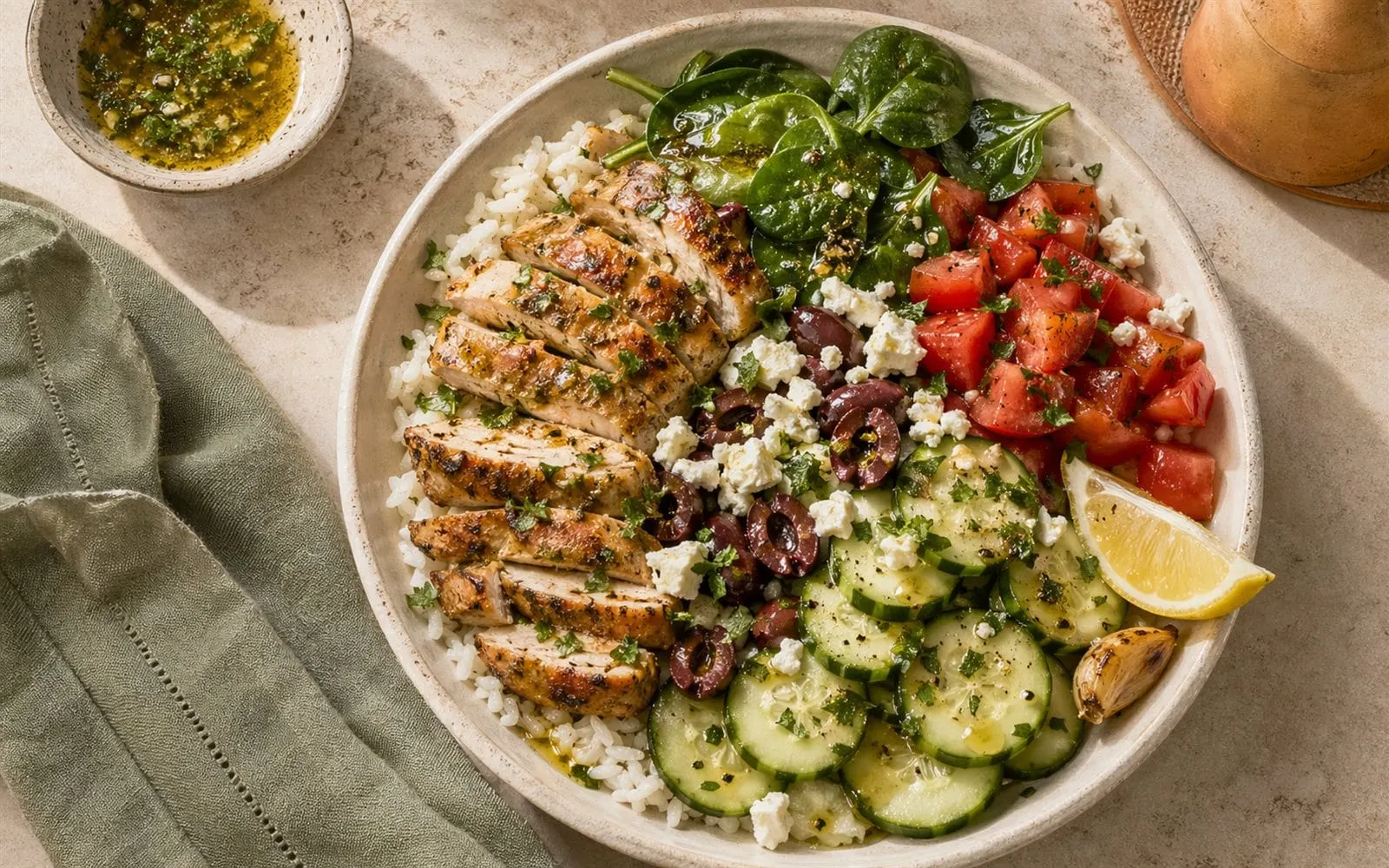
Low-FODMAP Chicken & Rice Bowl — GutPlate recipe photo
dinner 35 min

Low-FODMAP Chicken & Rice Bowl

A gentle, herb-forward bowl built for the elimination phase of low-FODMAP — garlic-free, onion-free, and deeply flavorful thanks to infused oil.

2 servings View recipe
Roasted Sweet Potato & Lentil Soup — GutPlate recipe photo
soups 45 min

Roasted Sweet Potato & Lentil Soup

A creamy, high-fiber blender soup built on roasted sweet potatoes, red lentils, and warm spices — gentle on digestion and batch-friendly.

4 servings View recipe