Skip to content

Low-FODMAP Chicken & Rice Bowl

A gentle, herb-forward bowl built for the elimination phase of low-FODMAP — garlic-free, onion-free, and deeply flavorful thanks to infused oil.

Jump to recipe
Low-FODMAP Chicken & Rice Bowl — GutPlate recipe photo
Prep
15 min
Cook
20 min
Total
35 min
Serves
2 bowls

Why you'll love this recipe

  • Full garlic flavor, zero fructans — the infused-oil trick lets low-FODMAP eaters have deeply savory food again.
  • 35 minutes start to finish, including the garlic oil.
  • 34g of protein per bowl — substantial enough to skip the afternoon snack.
  • Gluten-free, IBS-friendly, and meal-prep-ready.
  • Works in elimination phase AND as a base recipe to reintroduce ingredients as you stabilize.
  • Mediterranean flavors, so it doesn't taste like a 'restricted diet' — it tastes like dinner.

If you have been around the low-FODMAP world, you know the frustration of missing garlic and onion. The good news is that the flavor shortcut is genuinely clever — fructans, the FODMAP carbohydrates in alliums, are water-soluble but not fat-soluble. Warm whole cloves of garlic gently in olive oil, remove the solids, and you are left with a gloriously garlic-y oil that is safely low-FODMAP. This bowl leans on that infused oil twice: once to sear the chicken and build a golden crust, and once as the base of a bright lemon dressing for the finished bowl. The result tastes like a real meal — not like you’re on an elimination diet.
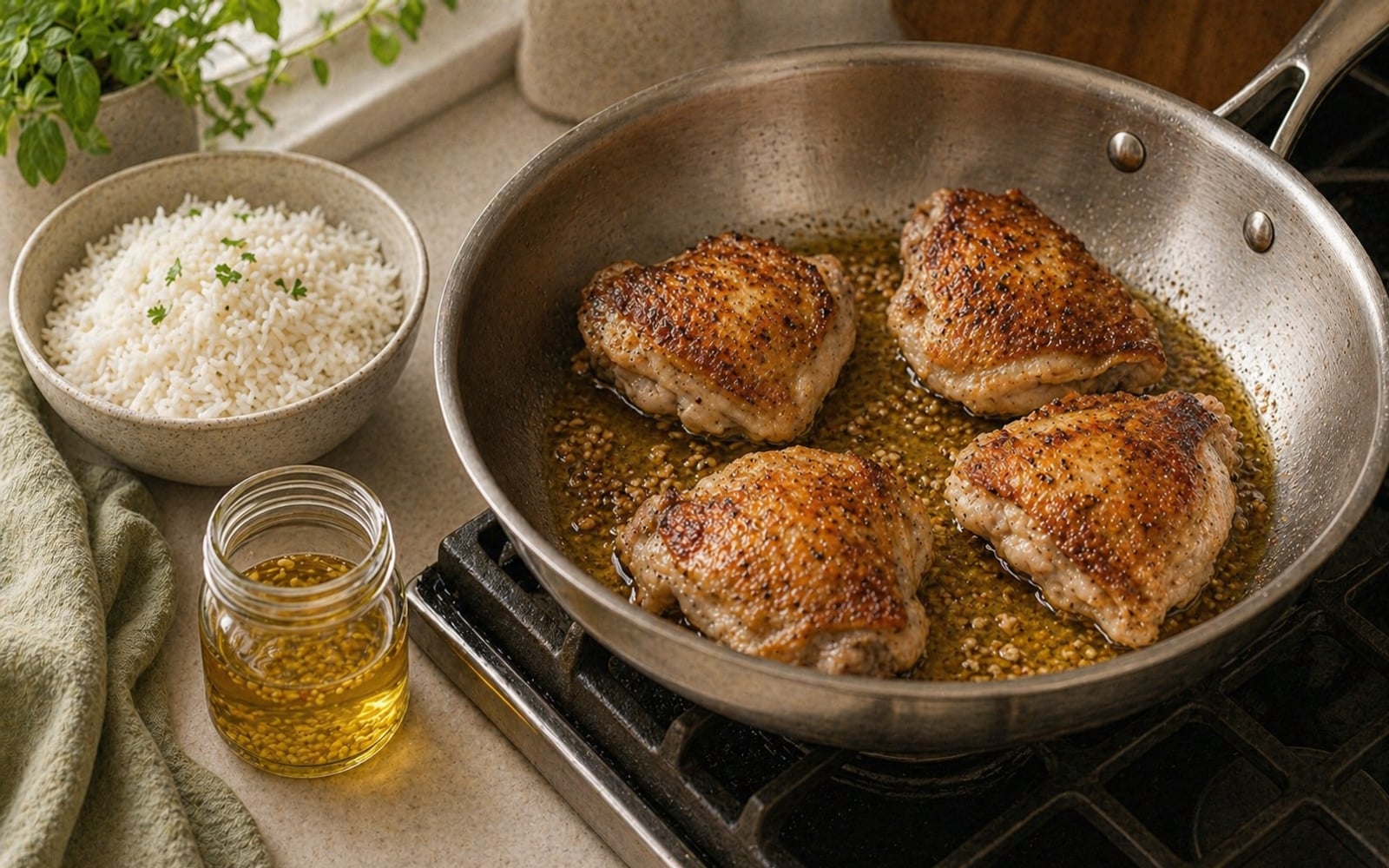
Chicken thighs searing in garlic-infused olive oil, golden-crusted, in a stainless steel pan beside a bowl of jasmine rice.

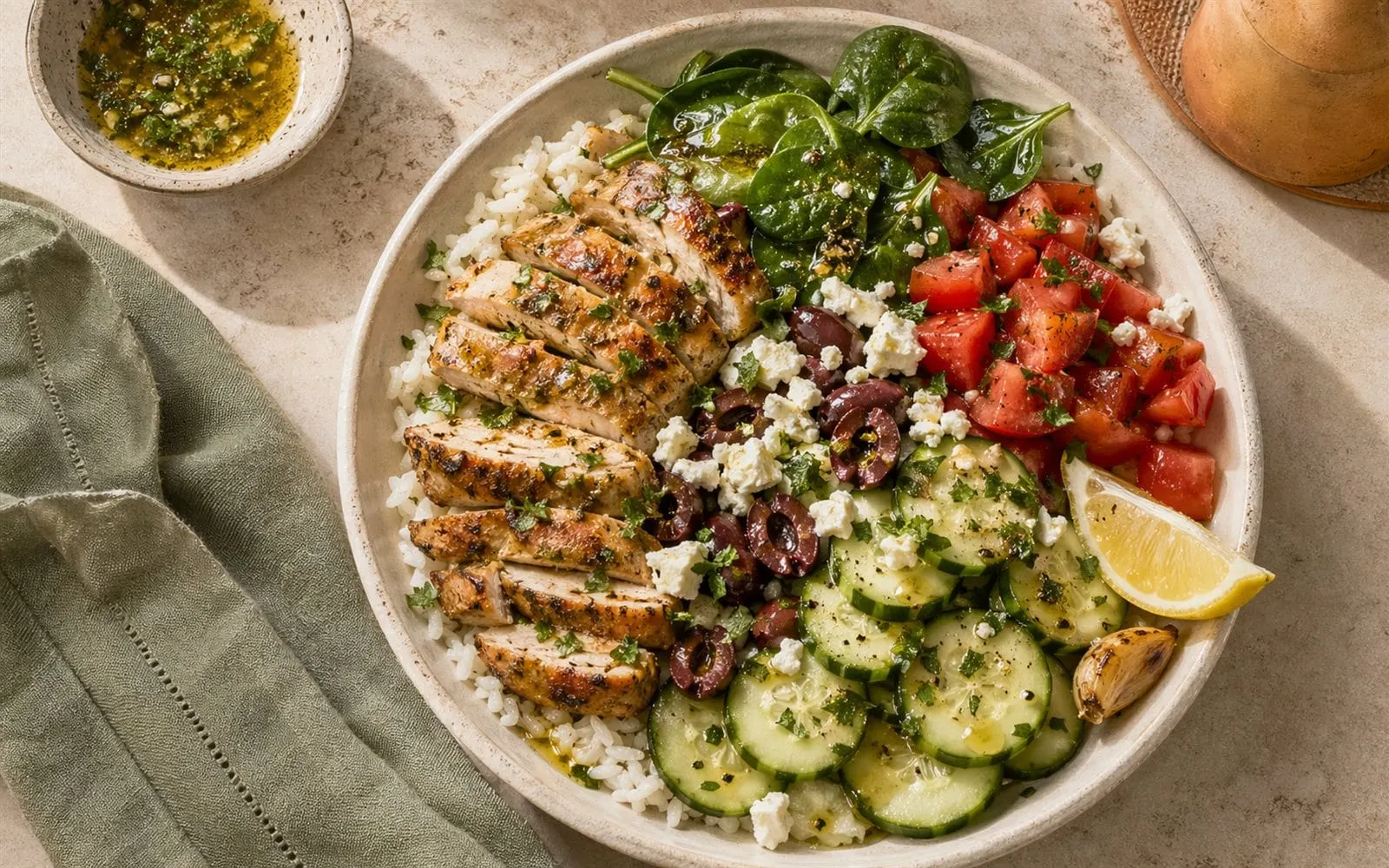
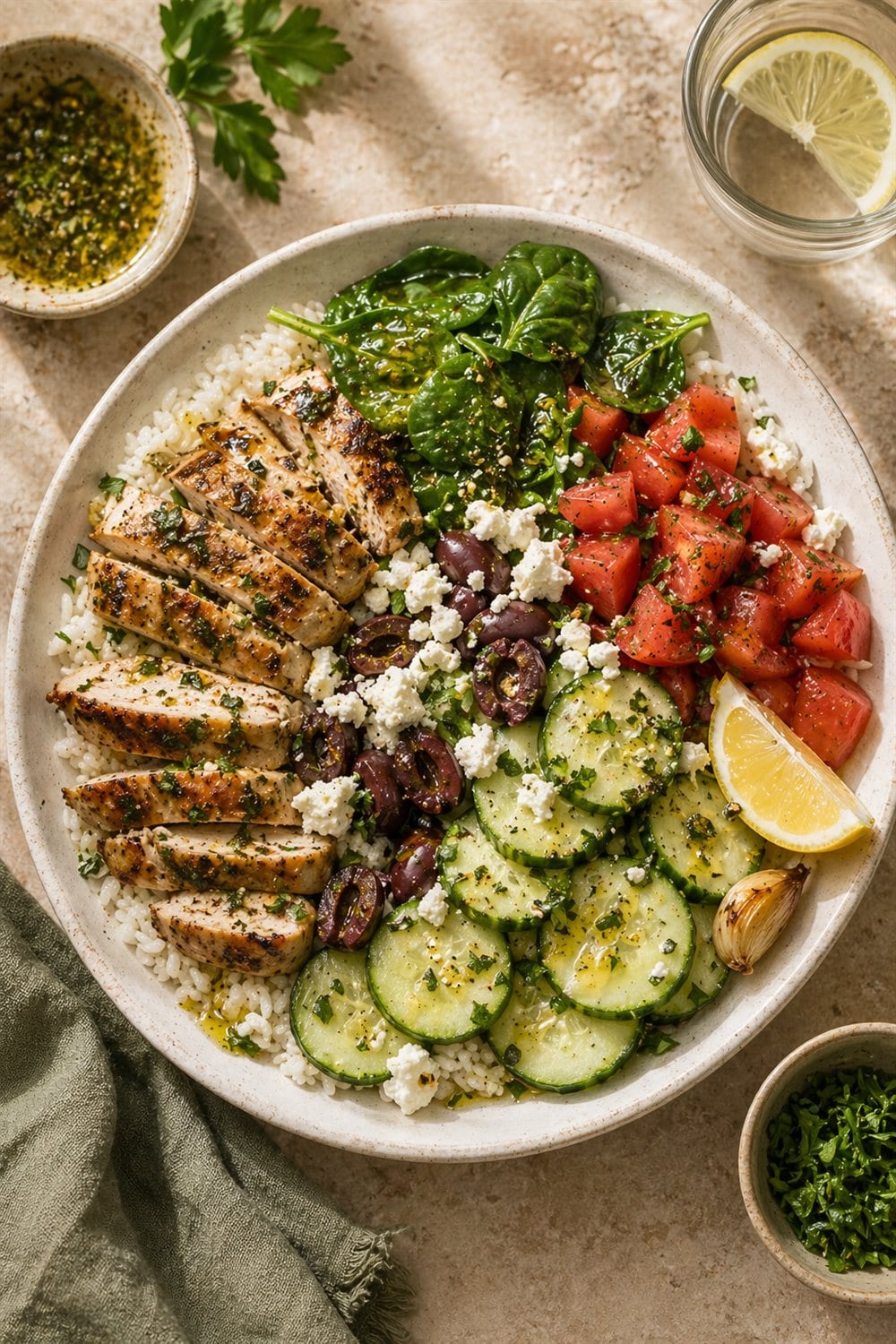
The toppings are the usual Mediterranean suspects — tomato, cucumber, olives, feta, parsley — chosen because they stay within low-FODMAP-tested portions at one bowl per person. Jasmine rice stands in for grains like couscous or bulgur that are less kind during elimination. Chicken thighs anchor the bowl with protein and are more forgiving than breast if you overcook them slightly. The whole thing comes together in about thirty-five minutes, including the time the garlic oil spends infusing.

If you are stable and in the reintroduction phase, the same bowl welcomes a minced garlic clove (left in the pan this time), a spoonful of diced red onion sautéed with the chicken, or a tablespoon of sauerkraut on top to test fermented foods. One variable per week, tracked against symptoms, is how you rebuild your dietary range. This recipe is designed to work identically in both phases.
Key ingredients

Why these ingredients

Garlic-infused olive oil

The single most useful technique in low-FODMAP cooking. Fructans (the FODMAP in garlic and onion) are water-soluble — they stay in the solids. Fat-soluble flavor compounds (allicin derivatives) transfer to the oil. Result: all the savory depth, none of the GI distress.

Chicken thighs

Thighs are more forgiving than breast because they have more collagen — they stay juicy even if overcooked by a minute or two. They're also higher in iron and zinc, minerals that matter when IBS limits your food variety.

Jasmine rice

White rice is one of the most gut-gentle grains available. Low-FODMAP at 1 cup cooked, easy to digest, and unlikely to trigger flares. The trade-off vs brown rice is less fiber, but during elimination the reduced load is often a feature, not a bug.

Kalamata olives

Rich in oleic acid and polyphenols that support a healthy gut lining. Also naturally fermented (most olives are cured in brine), giving you a small hit of lactic acid without the FODMAP load of cabbage ferments.

Fresh parsley

Flat-leaf parsley isn't just garnish — it's a concentrated source of vitamin K, folate, and apigenin (a polyphenol with anti-inflammatory effects at the gut mucosa). Parsley is also one of the few herbs where a full 1/4 cup per serving stays low-FODMAP.

Before you start

Equipment

  • Small skillet (6–8 inch)

    for making the garlic oil — size matters so the oil covers the cloves

  • Large skillet (10–12 inch)

    for searing the chicken

  • Meat thermometer

    essential for chicken — 165°F is the number

  • Sharp knife for dicing

    dull knives crush Roma tomatoes

Recipe card

Low-FODMAP Chicken & Rice Bowl

Prep
15 min
Cook
20 min
Total
35 min
Servings
2

Ingredients

Garlic-infused oil

Bowl

Instructions

Notes

  • Garlic and onion are the most common IBS triggers in Western diets. Infusing oil with garlic lets you keep the flavor without the FODMAPs, because fructans are water-soluble, not fat-soluble.
  • Chicken thighs are more forgiving than breast — they stay juicy even if you slightly overcook them. Breast works but needs more attention.
  • Feta is one of the few cheeses naturally low-lactose and low-FODMAP (up to 40g per serving per Monash). Skip or swap if you're strictly dairy-free.

Nutrition per serving

Estimated; see our disclaimer.

Cal
520 kcal
Protein
34 g
Carbs
38 g
Fat
26 g
Fiber
4 g
Sugar
3 g
Sat Fat
5 g
Sodium
780 mg
Calcium
120 mg
Iron
3 mg

From our test kitchen

Pro tips

Low and slow for the oil

The oil should never sizzle or smoke. If you see bubbles, the heat is too high. A fat-infusion happens gently — 5 minutes at the lowest heat your burner offers is perfect.

Dry the chicken aggressively

Wet chicken steams instead of sears. Pat it with paper towels for a full 30 seconds per side before seasoning. Golden crust = dry surface hit by hot oil.

Don't flip too early

The chicken will release from the pan when the crust is ready. If you try to flip and it sticks, wait another 30 seconds. Forcing it shreds the crust you worked for.

Dress at the table

If this is a meal-prep lunch, pack the dressing in a small separate container. Dressed bowls go limp within 4 hours; undressed ones keep 3 days.

When things go sideways

Troubleshooting

Garlic turned brown in the oil.

Your heat was too high. Brown garlic = bitter oil. Start over with fresh cloves and fresh oil — don't try to salvage. Set your burner to the absolute lowest setting and watch carefully.

Chicken thighs are rubbery.

Overcooked. Use a meat thermometer — pull at exactly 165°F internal. Rubbery chicken has cooked past about 175°F. Next time, set a timer for 4 minutes on the first side and check with a thermometer.

Chicken stuck to the pan.

You flipped too early or the pan wasn't hot enough. Heat the pan fully before adding oil, then let the oil shimmer before adding chicken. Don't touch it for at least 4 minutes — it'll release when the crust is set.

Bowl tastes bland despite all the components.

Almost always under-salted. Low-FODMAP recipes lean on salt because they can't lean on garlic and onion. Taste the dressing and add more salt if it tastes flat; a pinch on the rice goes a long way.

I had IBS symptoms after eating this.

Check portions. Feta ≤40g, olives ≤15, tomato ≤1 Roma, rice ≤1 cup. Also consider the timing: some people are sensitive to large meals even with low-FODMAP ingredients. Try two smaller portions 3 hours apart.

Keep it fresh

Storage & reheating

Make ahead

Perfect Sunday prep. Make the garlic oil, cook the chicken and rice, dice the vegetables — store each separately for 3 days. Assembly takes 2 minutes at mealtime.

Fridge

Keeps 3 days in separated components: chicken + rice in one container, vegetables in another, dressing in a third. Assembly-style fridge storage keeps everything fresh.

Freezer

Freeze the garlic oil in an ice cube tray (thaw as needed) for up to 3 months. The chicken freezes fine for 2 months. Don't freeze the assembled bowl — vegetables go mushy.

Reheat

Reheat rice + chicken together, gently (45 seconds microwave or 3 minutes in a small pan with a splash of water). Dress fresh with the chilled garlic oil dressing — don't heat the dressing.

Make it yours

Variations

Reintroduction phase

If you've stabilized and are testing garlic, add 1 minced garlic clove to the pan with the chicken (don't discard). If you tolerated, try 1/4 cup of diced red onion next time. Work up one variable per week.

Vegetarian

Swap chicken for 10 oz of firm tofu, pressed and pan-seared in the garlic oil. Cook 3 minutes per side in the same way. Tofu is low-FODMAP up to 170g per serving.

Salmon version

Swap chicken thighs for two 5-oz salmon fillets. Skin-side-down first, 4 minutes, then 2 minutes skin-up. Omega-3s meet Mediterranean — and salmon is naturally low-FODMAP.

Grain bowl with quinoa

Swap jasmine rice for 1 cup cooked quinoa. Quinoa is low-FODMAP at 1 cup cooked and adds more protein (8g vs 4g for rice). Slightly nuttier, same gut-gentle character.

Cold version for lunch

Cook and cool the chicken + rice. Pack the vegetables, olives, and dressing separately. Assemble at lunchtime with chilled components — basically a low-FODMAP Mediterranean grain bowl.

Pantry swaps

Ingredient substitutions

Instead of

Garlic cloves

Use

1 tablespoon of pre-made garlic-infused oil or asafoetida (hing) powder (1/4 tsp)

Hing is the Indian alternative for allium flavor, also low-FODMAP. FODY and Garlic Gold make store-bought infused oils.

Instead of

Chicken thighs

Use

Chicken breast (adjust timing — 4 min/side) or firm tofu

Breast cooks faster; watch it. Tofu for vegetarian — low-FODMAP up to 170g.

Instead of

Jasmine rice

Use

Basmati rice, quinoa, or 1 cup cooked white potatoes

All low-FODMAP. Quinoa adds protein, potatoes add potassium.

Instead of

Feta

Use

A dairy-free feta (Violife), or skip

Many dairy-free fetas are coconut-based and low-FODMAP. Check the label for garlic/onion.

Instead of

Kalamata olives

Use

Green olives, capers, or diced sun-dried tomato

All deliver similar brininess. Capers are tested low-FODMAP in small portions.

Instead of

Fresh parsley

Use

Fresh basil, chives (dark green tops only), or mint

Keep it fresh and green — dried herbs don't pop the same way.

Plate it up

What to serve with it

The evidence

Why this is good for your gut

The low-FODMAP diet is one of the best-validated dietary interventions for IBS, with roughly 70–75% of people seeing meaningful symptom reduction on a proper elimination phase.[1] Understanding *why* it works — and why a recipe like this one can be flavorful while still low-FODMAP — is useful.

FODMAPs stands for Fermentable Oligosaccharides, Disaccharides, Monosaccharides, and Polyols — a family of short-chain carbohydrates that are poorly absorbed in the small intestine. In a healthy gut, that's fine: they pass to the colon where bacteria ferment them, and fermentation is a normal and beneficial process. In an irritable gut, the rapid fermentation produces gas and draws water into the colon too quickly, resulting in the pain, bloating, and bowel urgency that defines IBS.[2]

Garlic and onion are two of the highest-FODMAP foods in a Western diet, specifically because of their fructan content (a type of fermentable oligosaccharide). The problem is that in non-FODMAP-savvy cooking, they're everywhere — stocks, sauces, sautéed bases, dressings. That's why many people feel better instantly when they eliminate them, and why finding a low-FODMAP flavor replacement is the difference between sticking to the protocol and giving up.

The clever chemistry of garlic-infused oil is that fructans are water-soluble (they dissolve in water) but not fat-soluble (they don't dissolve in oil). Meanwhile, the flavor compounds responsible for garlic's savory punch — sulfur compounds like diallyl disulfide — are fat-soluble. So warming garlic in oil gently, then removing the solids, gives you a condiment that tastes like garlic but contains no fructans.[3] Monash University has tested commercial garlic-infused oils and confirmed they are safely low-FODMAP for elimination-phase use.

The rest of this bowl is built around low-FODMAP-tested ingredients at Monash-tested serving sizes. Jasmine rice (low-FODMAP at 1 cup cooked), chicken (naturally FODMAP-free, like all meat), Roma tomato (1 per serving), cucumber (1/2 per serving), Kalamata olives (≤15 per serving), and feta (≤40g per serving) all fall within safe thresholds. Fresh parsley and oregano are low-FODMAP at reasonable culinary amounts.

What you're giving up in exchange for symptom relief is some dietary diversity, which matters for microbial diversity. That's why strict low-FODMAP is designed as a temporary elimination phase (6–8 weeks), followed by structured reintroduction.[4] The goal isn't to stay low-FODMAP forever — it's to identify your personal triggers so you can build a sustainable diet that's as varied as possible while keeping symptoms quiet. This bowl works in both phases: strict low-FODMAP as written, or progressively enriched with garlic, onion, and fiber as you reintroduce.

Good questions

Frequently asked questions

Can I add onion?

Use only the dark green tops of scallions or chives — they give you allium flavor without the fructans (which live in the white/bulb portion). Red, yellow, and white onions are strictly off during elimination phase. Scallion green tops are tested low-FODMAP at 1/4 cup per serving.

Is this bowl low-FODMAP for the whole recipe?

Yes, at the portions listed per serving. Watch the feta (stay ≤40g per serving), olives (≤15 pitted Kalamatas), tomato (1 Roma is well within limits), and rice (1 cup cooked is safe). Going above these on any single ingredient can push you into high-FODMAP territory.

What rice is best?

Jasmine and basmati are both low-FODMAP at a 1-cup cooked serving. Both are naturally gluten-free. Avoid pilafs that start with sautéed onion and garlic — the fructans leach into the rice.

Can I make this ahead for lunches?

Yes. Cook the chicken, rice, and garlic oil in advance. Assemble without the spinach (which wilts) and dressing (which makes everything soggy). Add both fresh at the moment you eat. Keeps 3 days refrigerated.

Can I reintroduce garlic if I've passed elimination?

Absolutely — this recipe becomes even better. Add 1 minced garlic clove to the oil (don't discard it) and sauté with the chicken. Most people tolerate 1 small clove per serving once they've stabilized.

What about onion powder or dried garlic?

Both contain high concentrations of fructans and are strictly off during elimination. Don't use 'garlic salt' or 'onion powder' labels as shortcuts — they're worse than fresh garlic for FODMAP sensitivity. Garlic-infused oil is the clean workaround.

References

  1. The low-FODMAP diet for irritable bowel syndrome — Gastroenterology & Hepatology↩ back
  2. Mechanisms of FODMAP-induced gastrointestinal symptoms — Journal of Gastroenterology and Hepatology↩ back
  3. Garlic-infused oil and FODMAP content: technical validation — Monash University FODMAP Team↩ back
  4. Reintroduction phase of the low-FODMAP diet — Nutrients↩ back

Loved this recipe?

Save it to your Pinterest boards or share with a friend who needs more gut-friendly weeknight meals.

Newsletter

Weekly gut-friendly recipes, straight to your inbox.

One email every Sunday — new recipes, a practical gut-health tip, and zero spam. Unsubscribe anytime.

No spam 1-click unsubscribe

Signup coming soon. Follow us on Pinterest in the meantime.

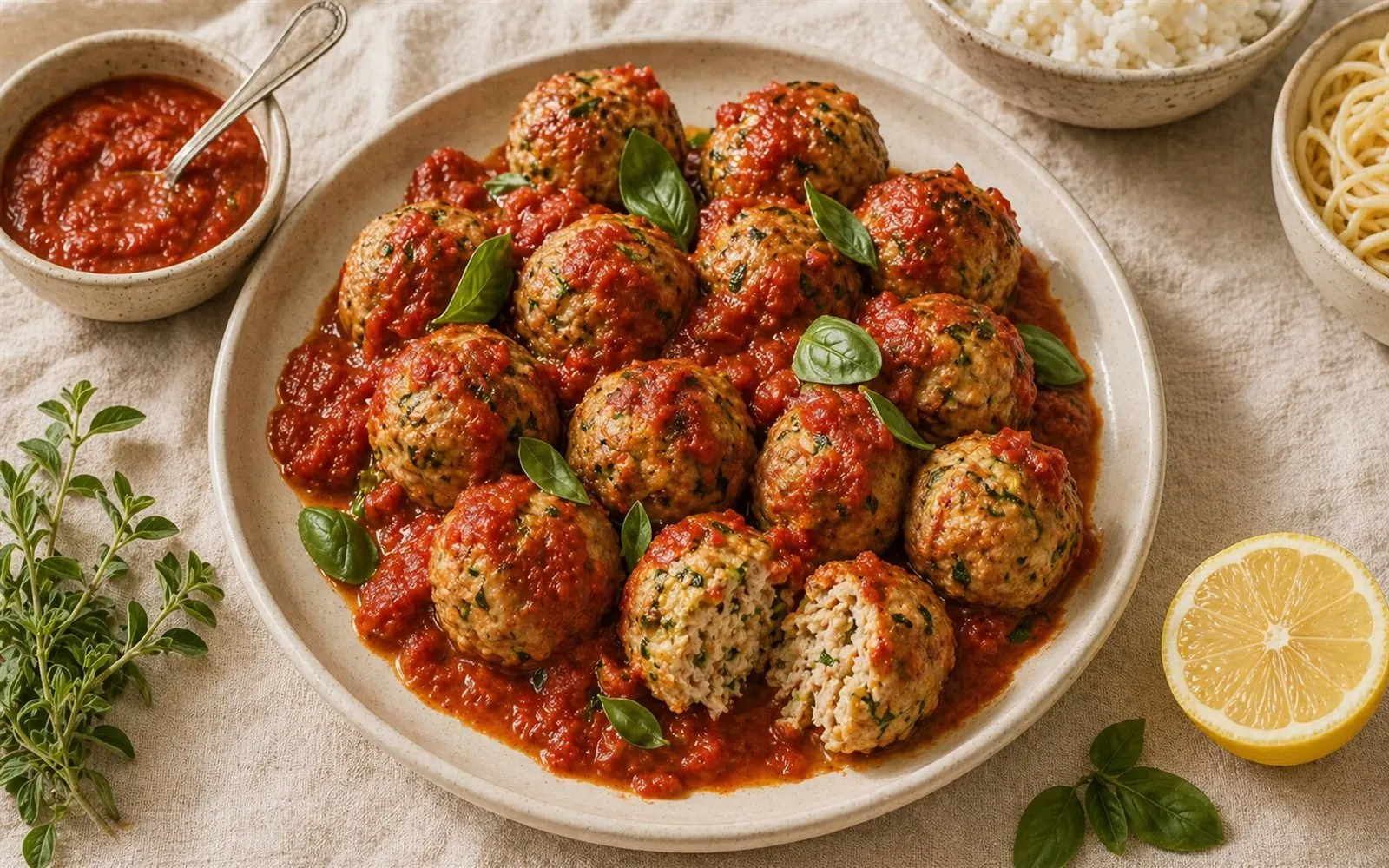
Low-FODMAP Turkey & Zucchini Meatballs — GutPlate recipe photo
dinner 35 min

Low-FODMAP Turkey & Zucchini Meatballs

Tender baked turkey meatballs with shredded zucchini and Italian herbs — garlic-free, onion-free, and gentle enough for an elimination diet without tasting like one.

4 servings View recipe
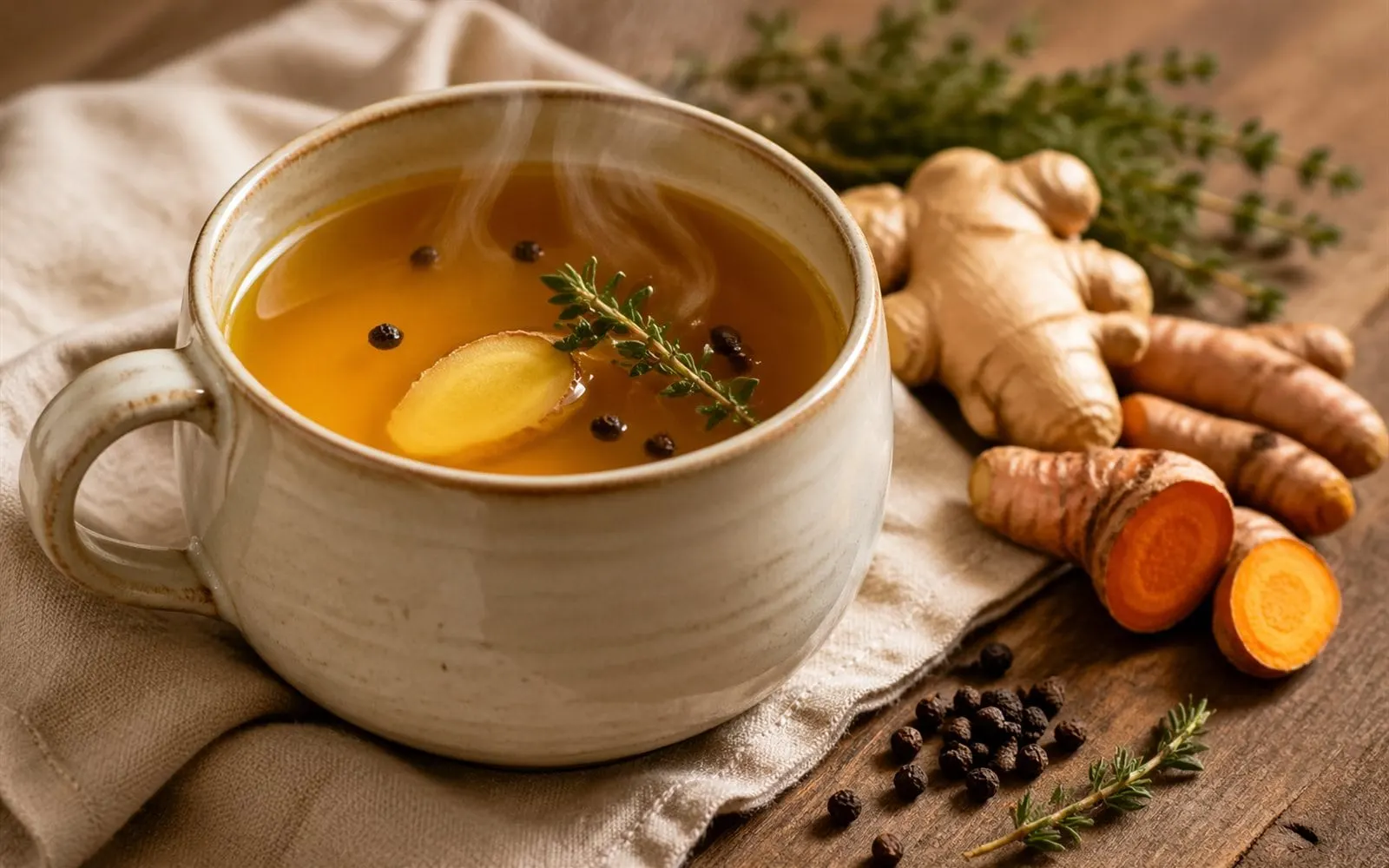
Turmeric Bone Broth — GutPlate recipe photo
soups 6 h 10 min

Turmeric Bone Broth

A long-simmered chicken bone broth brightened with turmeric, ginger, and black pepper — sippable, collagen-rich, and gut-soothing.

6 servings View recipe
Coconut Red Lentil Dal — GutPlate recipe photo
dinner 35 min

Coconut Red Lentil Dal

A 30-minute one-pot dal with red lentils, coconut milk, turmeric, and a cumin-mustard seed tarka — creamy, warming, and loaded with prebiotic fiber.

4 servings View recipe