Skip to content

Miso-Ginger Salmon Bowl

A 25-minute sheet-pan salmon bowl glazed with fermented miso and fresh ginger, served over brown rice with quick-pickled vegetables.

Jump to recipe
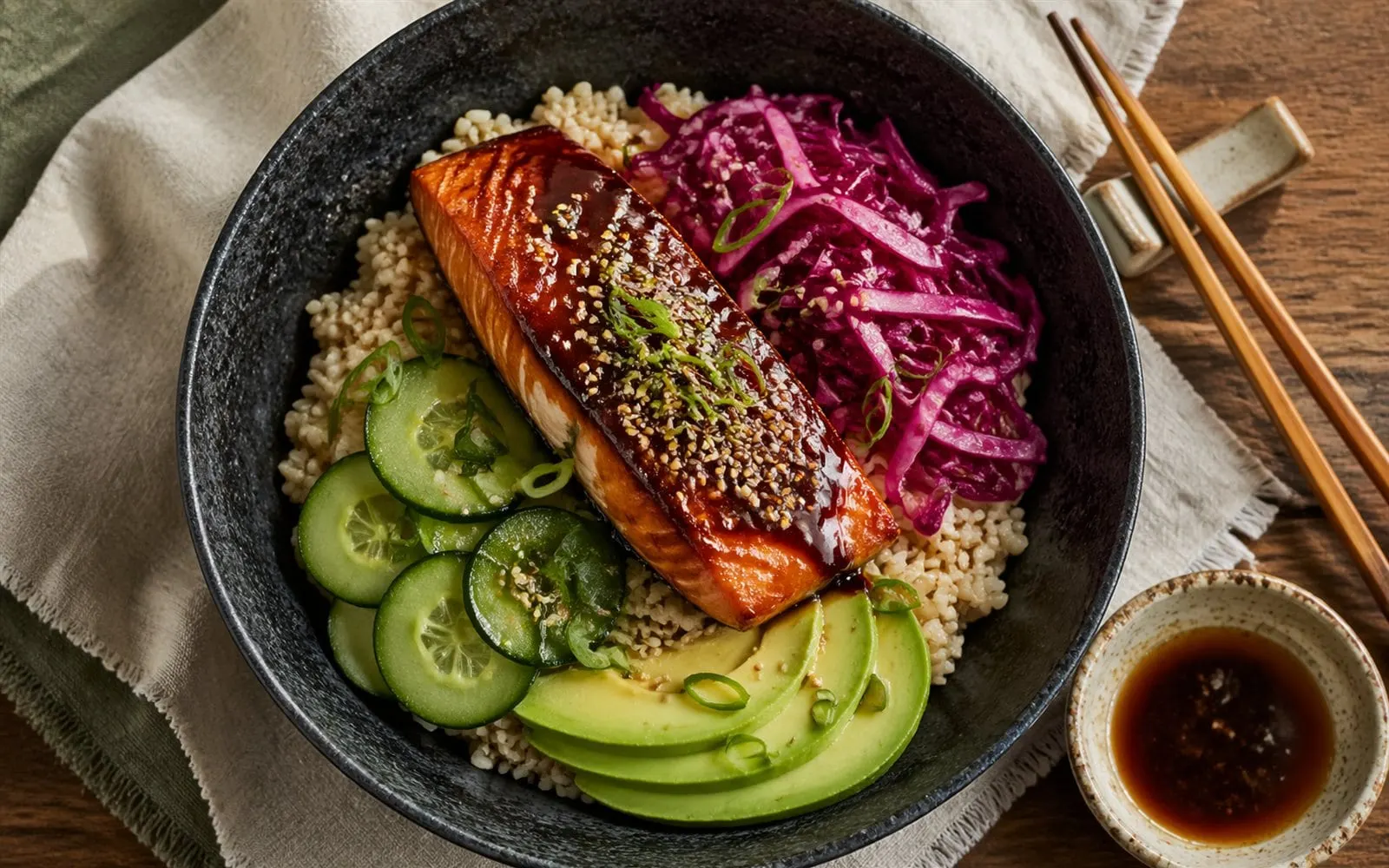
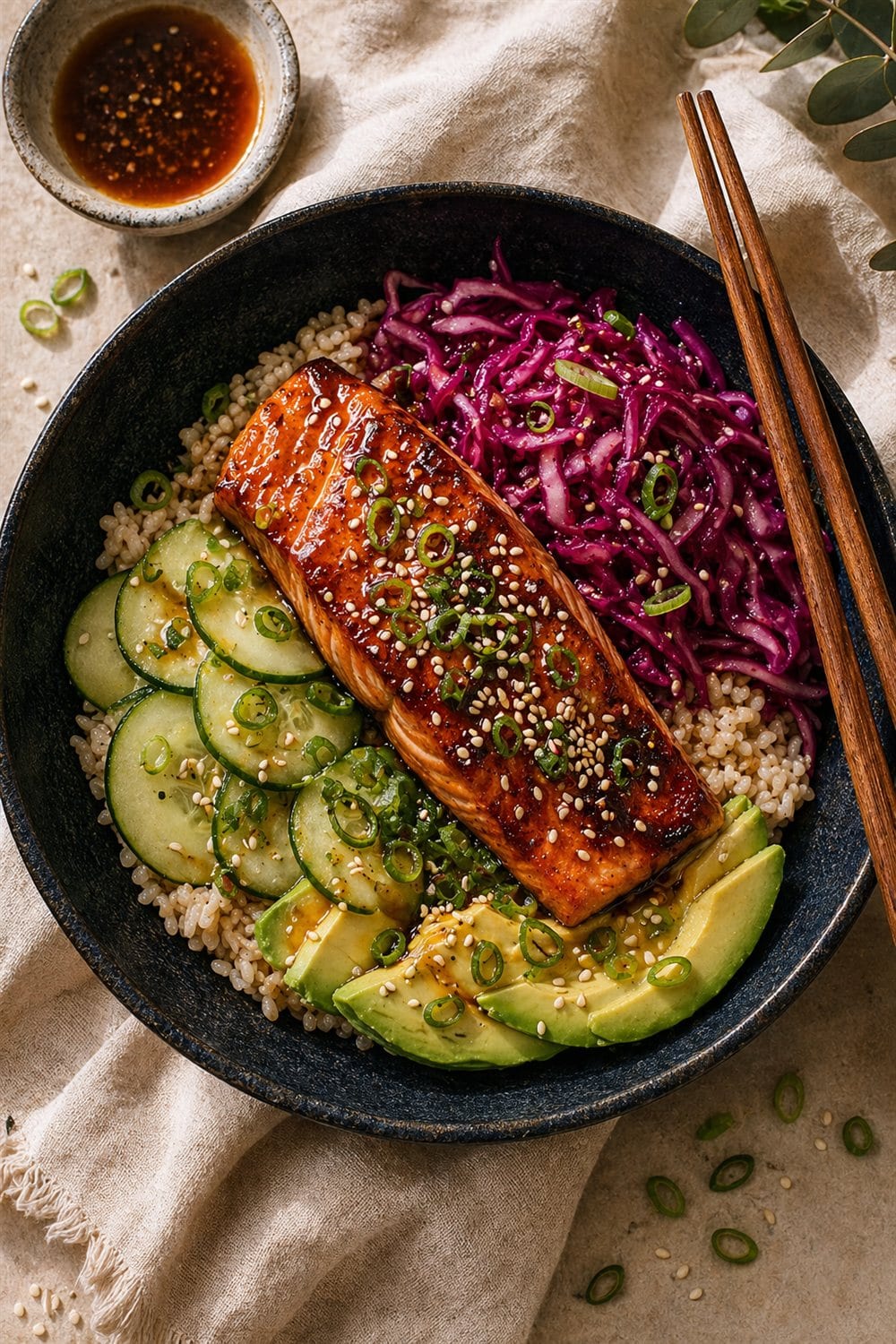
Miso-Ginger Salmon Bowl — GutPlate recipe photo
Prep
10 min
Cook
15 min
Total
25 min
Serves
2 bowls

Why you'll love this recipe

  • 25 minutes, one sheet pan — the fastest weeknight salmon you'll cook.
  • Two-stage miso: cooked for glaze, raw for live cultures. Best of both worlds.
  • 36g of protein + 2g of omega-3s per bowl — anti-inflammatory by design.
  • Sheet-pan salmon is foolproof compared to stovetop (no flipping, no sticking).
  • Easy gluten-free with tamari; naturally dairy-free; low-FODMAP with two small tweaks.
  • The glaze doubles as a pantry staple — works on tofu, chicken, eggs, grain bowls.

Fermented miso is one of the most under-used gut-supportive pantry items in Western kitchens. A spoonful of white miso brings umami depth, a rounded saltiness, and — when used off-heat — live koji cultures that most of us simply do not get elsewhere in our diets. Japanese people average multiple daily servings of miso, and the epidemiological data on their rates of inflammatory gut disease is part of why researchers keep coming back to fermented soy as a potential microbiome lever. In this bowl we brush a thin miso-ginger glaze onto salmon before roasting, then drizzle a second raw portion at the table so you get both the caramelized savory flavor and the probiotic benefit. The split is the whole trick.
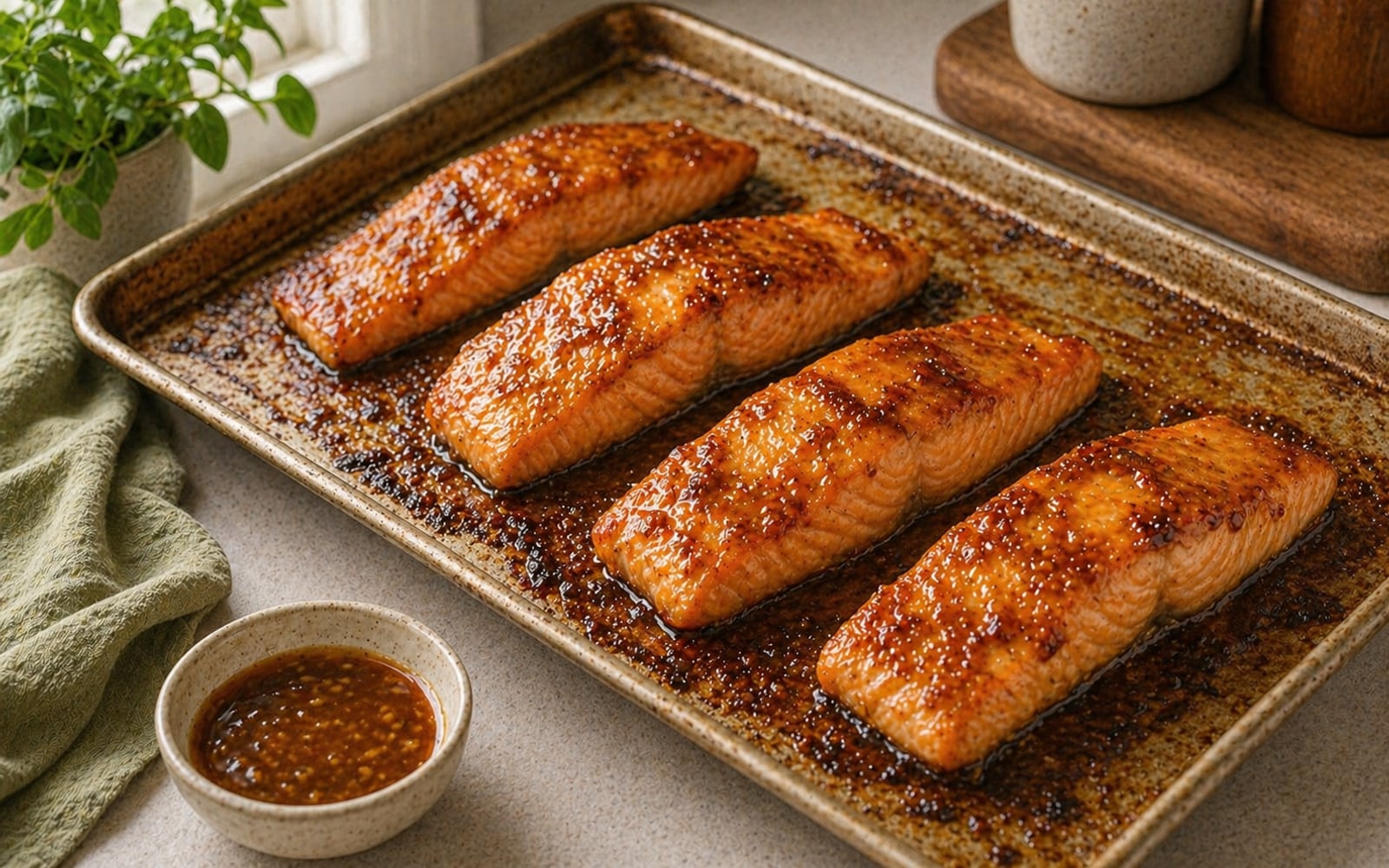
Salmon fillets glazed with miso-ginger paste on a sheet pan, caramelized and golden, fresh from the broiler.

The whole bowl comes together in about 25 minutes. Sheet-pan salmon is the fastest weeknight protein we know — no flipping, no sticking, no over-steamed broiled-fish texture. A pile of shredded red cabbage lightly pickled in the same glaze gives you the crunchy contrast that makes bowls feel like a meal and not a lunch. Brown rice anchors the dish and keeps the fiber count high; quinoa, cauliflower rice, or even sushi rice swap in without complaint. Ripe avocado on top isn’t negotiable — it’s the creamy element that ties the whole plate together.

What makes this bowl genuinely useful as a gut-health recipe rather than just a good weeknight dinner is the pairing of three distinct mechanisms: live cultures from the raw miso, EPA and DHA from the salmon, and polyphenols from the cabbage and ginger. Eat it once a week and you’re getting dietary coverage most probiotic supplements can’t match. Keep leftovers refrigerated for up to two days — flake the salmon into a quick grain salad with more raw miso glaze, and lunch is done.
Key ingredients

Why these ingredients

White miso paste (shiro miso)

Made from soybeans fermented with koji (Aspergillus oryzae mold) for 1–3 months, white miso is mild, sweet, and packed with umami. The koji produces enzymes that pre-digest proteins and starches — one reason fermented foods are easier on sensitive guts than unfermented versions of the same foods.

Wild salmon

One of the highest-omega-3 foods you can buy. A 6oz fillet delivers roughly 2g of EPA + DHA — the marine omega-3s directly associated with lower colonic inflammation and improved gut barrier function. Wild salmon has a better omega-3 profile than farmed, but both are excellent.

Fresh ginger (microplane-grated)

Gingerol is ginger's primary active compound, and it's both anti-inflammatory and motility-enhancing (helps speed gastric emptying, reducing bloating). Microplaning releases far more gingerol than dicing, so you get more impact from less ginger.

Red cabbage

Raw red cabbage is one of the highest-polyphenol vegetables, thanks to its deep anthocyanin content. Those polyphenols selectively feed Akkermansia muciniphila — a bacterium associated with a healthy mucus layer. Bonus: cabbage is also a mild prebiotic.

Toasted sesame oil (added raw at the table)

Sesame oil's flavor compounds are heat-sensitive. Using it as a finisher, not a cooking fat, preserves the nutty aroma and gives you the most flavor per calorie. The toasting happens before the oil is pressed, not in your pan.

Avocado

Monounsaturated fats slow digestion and improve absorption of fat-soluble compounds like the omega-3s in salmon. Avocado also adds 9g of fiber per fruit — most of it the soluble kind that feeds gut bacteria.

Before you start

Equipment

  • Sheet pan

    rimmed, 12x18 inch; parchment-lined

  • Small whisk and bowl

    for the glaze

  • Microplane

    for grating ginger cleanly

  • Meat thermometer

    takes the guesswork out of salmon — pull at 125°F

  • Sharp chef's knife

    for avocado, cucumber, cabbage

Recipe card

Miso-Ginger Salmon Bowl

Prep
10 min
Cook
15 min
Total
25 min
Servings
2

Ingredients

Glaze

Bowl

Instructions

Notes

  • Miso loses most of its live cultures above 115°F (46°C). The half-cooked / half-raw glaze split is the trick that preserves the probiotics — always finish with a raw drizzle.
  • Brown rice gives the most fiber (3g vs 0.5g for white). Swap for quinoa, cauliflower rice, or even sushi rice based on preference.
  • Skin-on salmon crisps up in the oven and makes it easier to lift the fillets off the pan. Don't remove the skin.

Nutrition per serving

Estimated; see our disclaimer.

Cal
560 kcal
Protein
36 g
Carbs
46 g
Fat
24 g
Fiber
8 g
Sugar
8 g
Sat Fat
4 g
Sodium
920 mg
Calcium
90 mg
Iron
2 mg

From our test kitchen

Pro tips

Split the glaze, split the benefit

Half the glaze gets cooked onto the salmon — that's flavor caramelization. The other half stays raw and goes on at serving — that's where the live cultures are. Mix them and you lose the probiotics.

Pull early, rest briefly

Salmon continues to cook by ~5°F after it leaves the oven. Pull at 125°F internal and let it rest 2 minutes on the sheet pan. Perfect medium every time.

Shred cabbage thin

Thick-shredded cabbage stays stiff even after the glaze hits. Slice as thin as you can — 1/8 inch — or use the slicing blade of a food processor. It'll wilt into silky-magenta ribbons in 5 minutes.

Microplane the ginger

Microplaning releases the most gingerol and gives you a fluffy, even distribution. Diced ginger creates hot-and-cold spots; grated ginger disappears into the glaze.

When things go sideways

Troubleshooting

Salmon is dry and overcooked.

Most common mistake. Salmon is done at 125°F medium or 130°F medium-well — pull from the oven by those temperatures with a meat thermometer. Carryover adds another 5°F. Without a thermometer, pull when the edges are opaque but the center still looks translucent.

The glaze burned on top of the salmon.

Maple syrup can burn at 425°F if the glaze is too thick. Make sure the glaze is fluid when you brush it on. If your oven runs hot, drop to 400°F and add 2 minutes.

Skin stuck to the pan.

Parchment paper is the answer. Never roast salmon directly on an unlined pan — skin always sticks. If you don't have parchment, oil the pan generously.

Cabbage is too crunchy / hasn't pickled.

Either you shredded too thick or you didn't let it sit long enough. Slice thinner (1/8 inch) and give it the full 5 minutes in the glaze. If still too crunchy, massage it with clean hands for 30 seconds to break down the fibers.

Miso was too salty.

Miso brands vary wildly. If yours is salty, reduce to 1.5 tablespoons and skip the tamari. Taste the glaze before brushing and adjust with a splash more maple syrup or lemon juice.

Keep it fresh

Storage & reheating

Make ahead

Glaze can be made 5 days ahead. Rice can be cooked 3 days ahead. Vegetables chopped 1 day ahead. Assembly + salmon cooking at dinnertime = 20 minutes, most of it passive.

Fridge

Cooked salmon keeps 2 days in the fridge. Flake it into a grain salad or wrap for lunch. The cabbage pickle keeps 3 days. Store each component separately for best texture.

Freezer

The glaze (any extra) freezes in an ice cube tray for up to 3 months — pop a cube whenever you want to dress fish or tofu. Salmon itself freezes for 1 month cooked, 3 months raw.

Reheat

Gently. Reheat salmon in a 300°F oven for 8 minutes, or flake it cold into a rice bowl. Never microwave — it turns fibrous. Always re-dress with fresh raw glaze for the probiotic benefit.

Make it yours

Variations

Sheet-pan vegetables

Toss 2 cups of broccoli florets and 1 cup of sliced carrots with 1 tablespoon of the glaze. Spread around the salmon on the sheet pan. Roast together — vegetables 15 min, salmon 11–13 min (start vegetables first).

Vegan (tofu version)

Swap salmon for 12 oz of extra-firm tofu, pressed 20 min and cut into 1-inch cubes. Toss with glaze, roast 20 minutes tossing once. Same finishing drizzle.

Low-FODMAP

Skip red cabbage, use only green scallion tops, and limit miso to 2 tablespoons total. Stick to 1 cup of cooked rice per serving. Falls within Monash thresholds.

Poke-style cold bowl

Roast the salmon, cool it completely, then flake into chunks. Assemble in the bowl with cold rice, cucumber, avocado, and the cabbage-pickle. Summer-friendly version of the same bowl.

Soy-free

Use coconut aminos instead of tamari (sweeter, less salty — cut the maple syrup by half). Use chickpea miso instead of soybean miso (also fermented, also probiotic when raw).

Pantry swaps

Ingredient substitutions

Instead of

White miso paste

Use

Yellow miso, chickpea miso (for soy-free), or red miso (more intense)

Chickpea miso is surprisingly close in flavor and fermented the same way. Red miso is stronger — use 1 tablespoon instead of 2.

Instead of

Salmon

Use

Steelhead trout, Arctic char, cod, halibut, or extra-firm tofu

Steelhead is the closest swap. Cod and halibut cook faster and drier.

Instead of

Brown rice

Use

Sushi rice, jasmine rice, quinoa, or cauliflower rice

Brown rice is highest in fiber. Sushi rice is the most classic Japanese pairing.

Instead of

Red cabbage

Use

Green cabbage, napa cabbage, or shredded carrots

Red cabbage has the most polyphenols but any shredded crunchy vegetable works.

Instead of

Tamari

Use

Soy sauce, coconut aminos, or liquid aminos

Coconut aminos are gluten-free, lower-sodium, and sweeter.

Instead of

Fresh ginger

Use

1 teaspoon ground ginger or 1 tablespoon ginger paste

Fresh is noticeably better. Ginger paste is a decent shortcut; ground ginger lacks the brightness.

Plate it up

What to serve with it

The evidence

Why this is good for your gut

This bowl combines two distinct gut-health mechanisms in one meal — fermented foods from the miso and anti-inflammatory omega-3s from the salmon. Both are well-supported by clinical evidence, and they work on different parts of the gut ecosystem.

White miso is a fermented soybean paste produced by inoculating cooked soybeans (and usually rice or barley) with koji — the mold *Aspergillus oryzae* — then letting the mixture ferment for 1 to 12 months. During fermentation, koji's enzymes break down the proteins and starches in the soybeans, producing amino acids (glutamate, the source of umami), organic acids (lactic and acetic), and bioactive peptides. Unpasteurized miso retains live *Aspergillus oryzae*, *Tetragenococcus halophilus*, and various *Lactobacillus* species.[1] Regular miso consumption has been associated in Japanese population studies with reduced markers of intestinal inflammation and improved gut barrier function.[2] Crucially, miso's probiotics are heat-sensitive above about 115°F (46°C), which is why the recipe uses a two-stage glaze — cooking half for caramelized flavor, leaving half raw as a finishing drizzle for the live cultures.

Salmon delivers the other half of the gut benefit via omega-3 fatty acids — specifically EPA (eicosapentaenoic acid) and DHA (docosahexaenoic acid). A 6-ounce fillet of wild salmon contains roughly 2 grams of combined EPA+DHA. These long-chain omega-3s are incorporated into cell membranes throughout the body, including the colonic mucosa, where they suppress the production of pro-inflammatory cytokines and support gut barrier integrity.[3] Randomized trials of omega-3 supplementation in people with inflammatory bowel disease have shown modest but measurable reductions in intestinal inflammation markers, and observational studies consistently link higher omega-3 intake to lower risk of colorectal inflammation.[4]

The fresh ginger in the glaze contributes a third mechanism. Gingerol (ginger's primary bioactive compound) has been shown to enhance gastrointestinal motility, reduce nausea, and suppress pro-inflammatory signaling at the colonic mucosa.[5] It's the reason ginger has been used for digestive complaints across traditional medicine systems for millennia.

The red cabbage and avocado round out the microbial support. Cabbage's anthocyanins (the polyphenols that give red cabbage its color) selectively feed *Akkermansia muciniphila*, a bacterium associated with a healthy colonic mucus layer.[6] Avocado contributes 9g of fiber per fruit, most of it the soluble kind that your gut bacteria ferment into short-chain fatty acids like butyrate.

Stack all of this together, and what you have is a recipe that delivers probiotics (from miso), prebiotic fiber (from cabbage, avocado, rice), anti-inflammatory omega-3s (from salmon), and motility-enhancing compounds (from ginger) — all in one bowl, all consumed simultaneously. That simultaneity matters: bacteria and their fuel reach the colon together when eaten in the same meal, which consistently produces better outcomes than eating them separately.

Good questions

Frequently asked questions

Is all miso probiotic?

Only unpasteurized miso (usually found refrigerated at Japanese markets or health-food stores). Shelf-stable miso in the pantry aisle is often pasteurized and has lost most live cultures, though it still delivers the umami flavor and fermented-food enzymes. Look for 'unpasteurized' or 'live' on the label.

Can I make this low-FODMAP?

Mostly yes. Skip the red cabbage (moderate-FODMAP above 1/2 cup shredded) and swap scallion for just the dark green tops. Keep miso at 2 tablespoons total (1 per serving) to stay within tested thresholds. Tamari is low-FODMAP; avoid soy sauce made with wheat if gluten-sensitive.

What side pairs well?

A simple miso broth with wakame and tofu rounds out the meal in 5 minutes. Pickled ginger is a traditional pairing with salmon. A green side like blanched broccoli or wilted spinach adds fiber and color.

Can I substitute a different fish?

Yes. Steelhead trout cooks identically. Arctic char is even better (sustainable and similar in fat content). Cod and halibut work but are leaner — they dry out past 11 minutes, so cook to 120°F and check early.

How do I know the salmon is done?

Best method: a meat thermometer to 125°F (52°C) for medium, 135°F for well-done. Without a thermometer, press the top with a fork — if the flesh flakes easily but still looks slightly translucent in the middle, it's perfect. Pull from the oven and let it rest 2 minutes; carryover cooking finishes it.

Does this freeze?

The cooked salmon freezes okay for 1 month (flake into a salad or rice bowl after thawing). Don't freeze the assembled bowl — rice and avocado don't survive.

References

  1. Miso: a traditional functional food with health benefits — Journal of Traditional and Complementary Medicine↩ back
  2. Fermented soy products and gastrointestinal health — Nutrients↩ back
  3. Omega-3 fatty acids and the gut microbiome — Scientific Reports↩ back
  4. Fish oil supplementation and colonic inflammation: a meta-analysis — Nutrients↩ back
  5. Gingerol and gastrointestinal motility — European Journal of Gastroenterology & Hepatology↩ back
  6. Anthocyanins and Akkermansia muciniphila — Journal of Nutritional Biochemistry↩ back

Loved this recipe?

Save it to your Pinterest boards or share with a friend who needs more gut-friendly weeknight meals.

Newsletter

Weekly gut-friendly recipes, straight to your inbox.

One email every Sunday — new recipes, a practical gut-health tip, and zero spam. Unsubscribe anytime.

No spam 1-click unsubscribe

Signup coming soon. Follow us on Pinterest in the meantime.

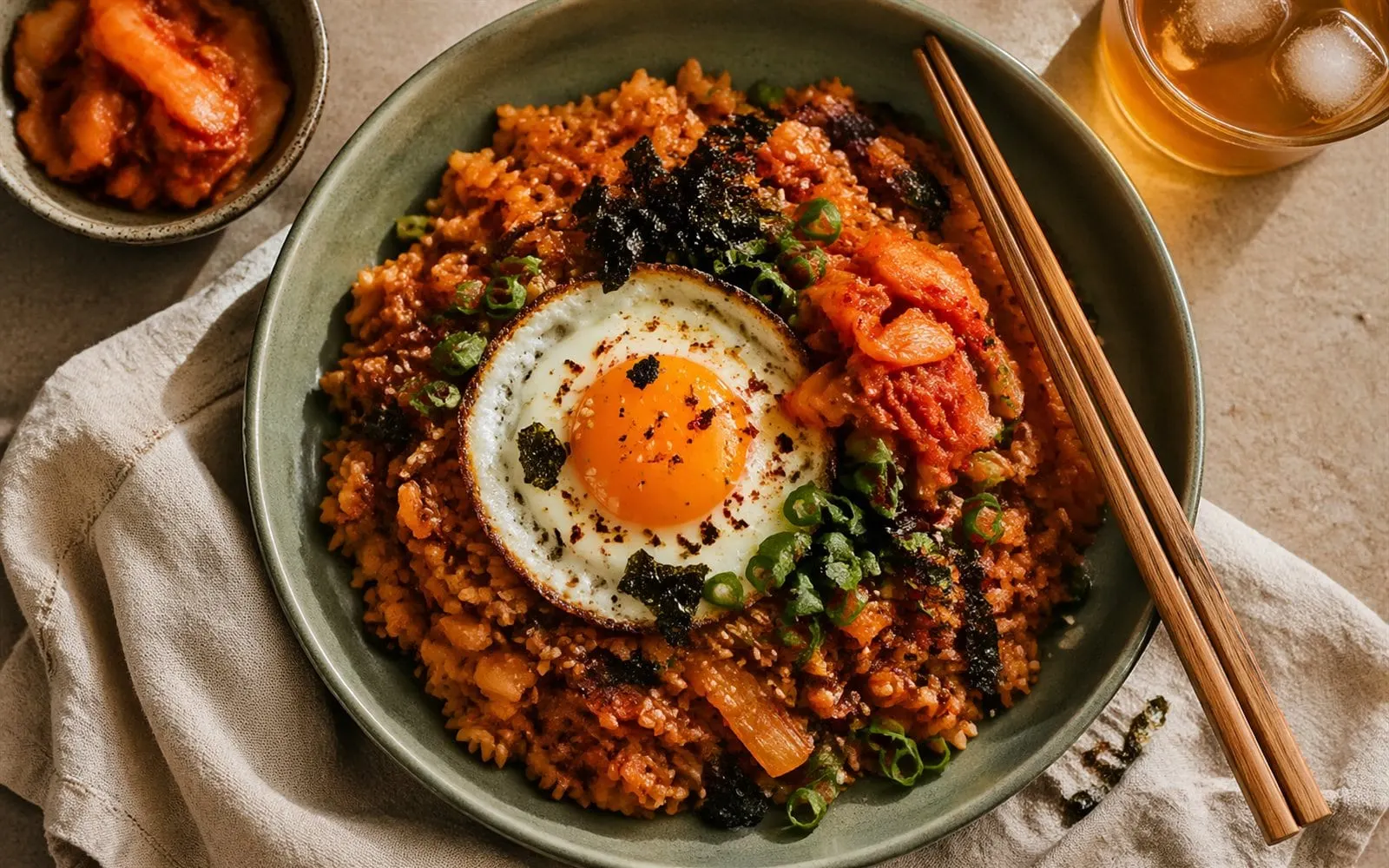
Kimchi Fried Rice — GutPlate recipe photo
dinner 15 min

Kimchi Fried Rice

A 15-minute weeknight fried rice that marries caramelized kimchi with day-old rice, a jammy egg on top, and a finishing spoon of raw kimchi for live cultures.

2 servings View recipe
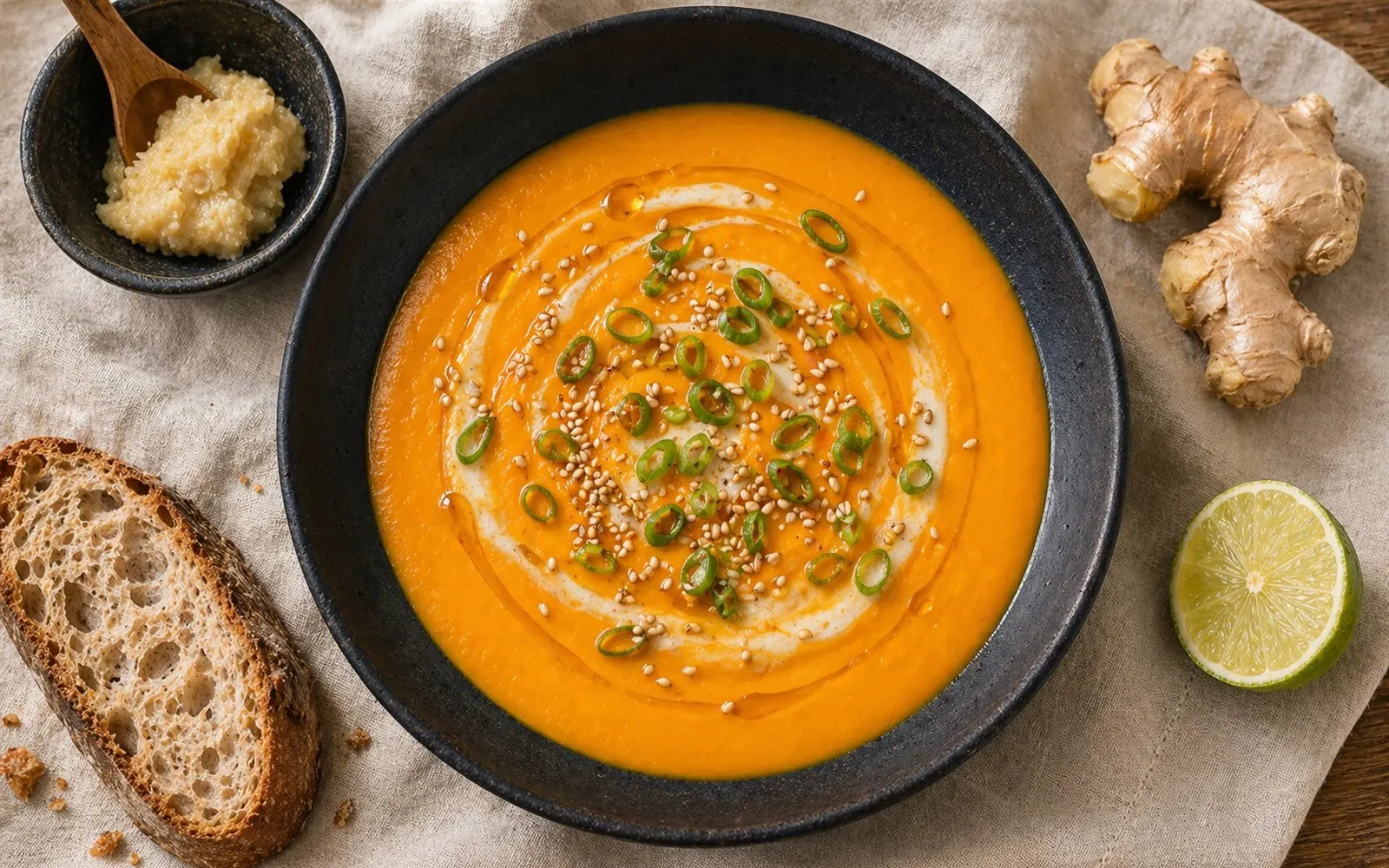
Ginger-Carrot Miso Soup — GutPlate recipe photo
soups 40 min

Ginger-Carrot Miso Soup

A silky blended soup of roasted carrots, fresh ginger, and white miso — fermented umami meets sweet root vegetables in a bowl that soothes and nourishes.

4 servings View recipe
Sourdough Avocado Toast with Sauerkraut — GutPlate recipe photo
breakfast 8 min

Sourdough Avocado Toast with Sauerkraut

Crispy sourdough topped with smashed avocado, a generous spoonful of raw sauerkraut, everything bagel seasoning, and a squeeze of lemon — fermented meets fiber in 5 minutes.

1 serving View recipe