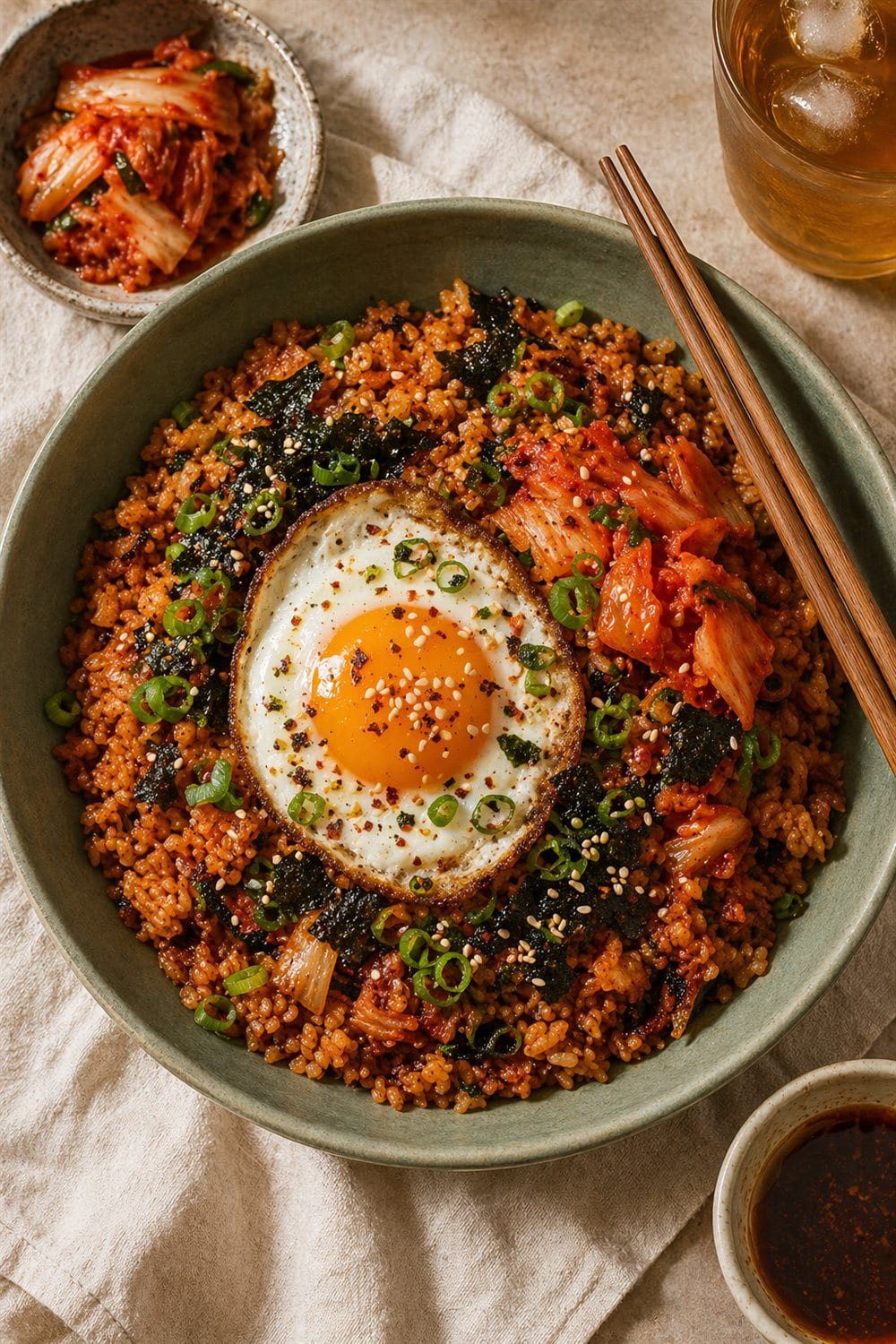
Some of the best weeknight dinners hide in plain sight. Kimchi fried rice is one of them: a jar of kimchi that’s been open a few weeks, cold rice from last night’s takeout, a couple of eggs, and fifteen minutes is all it takes. The Korean tradition of turning leftovers into dinner doesn’t need explanation if you grew up with it — and if you didn’t, this is an excellent way in.
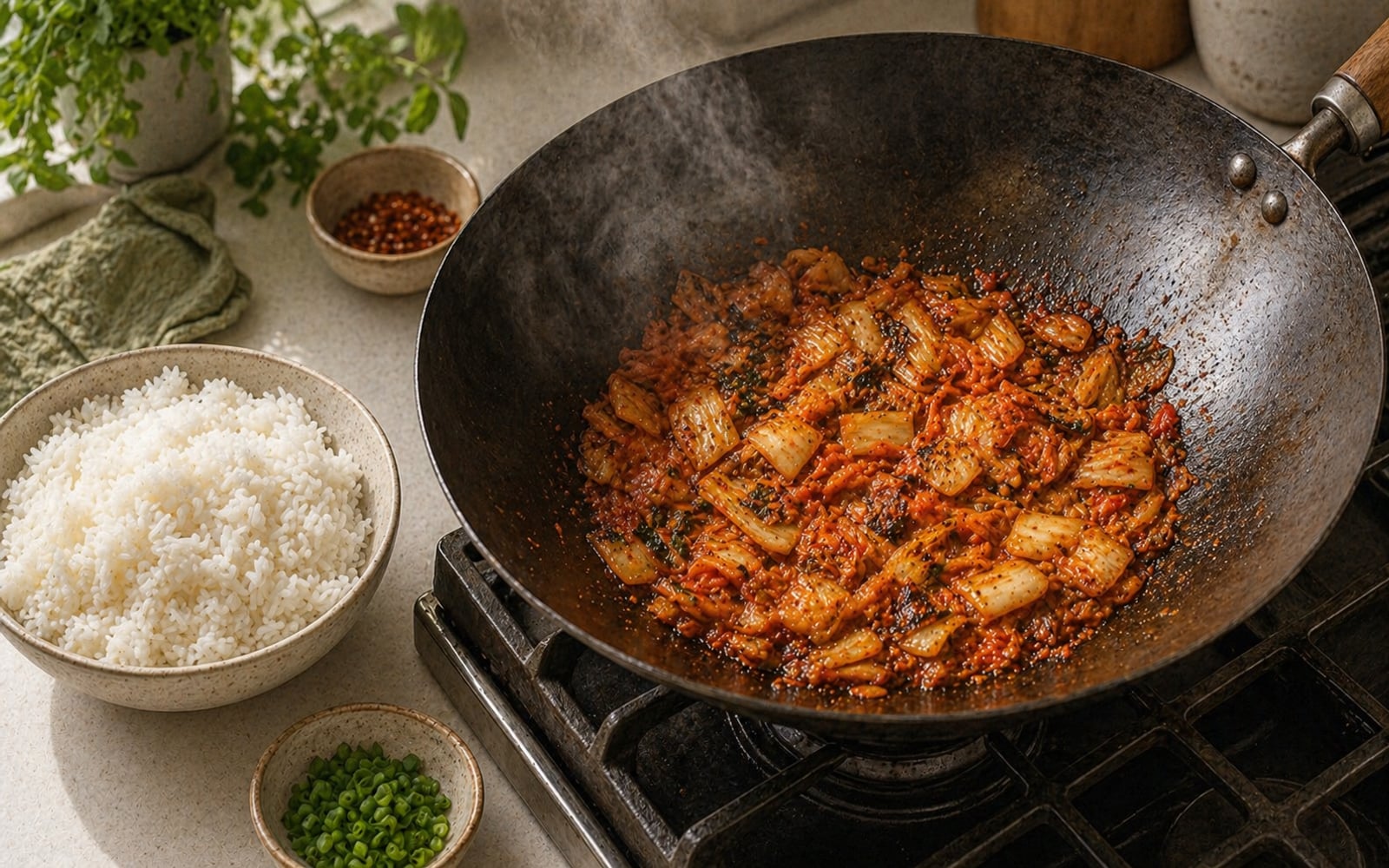
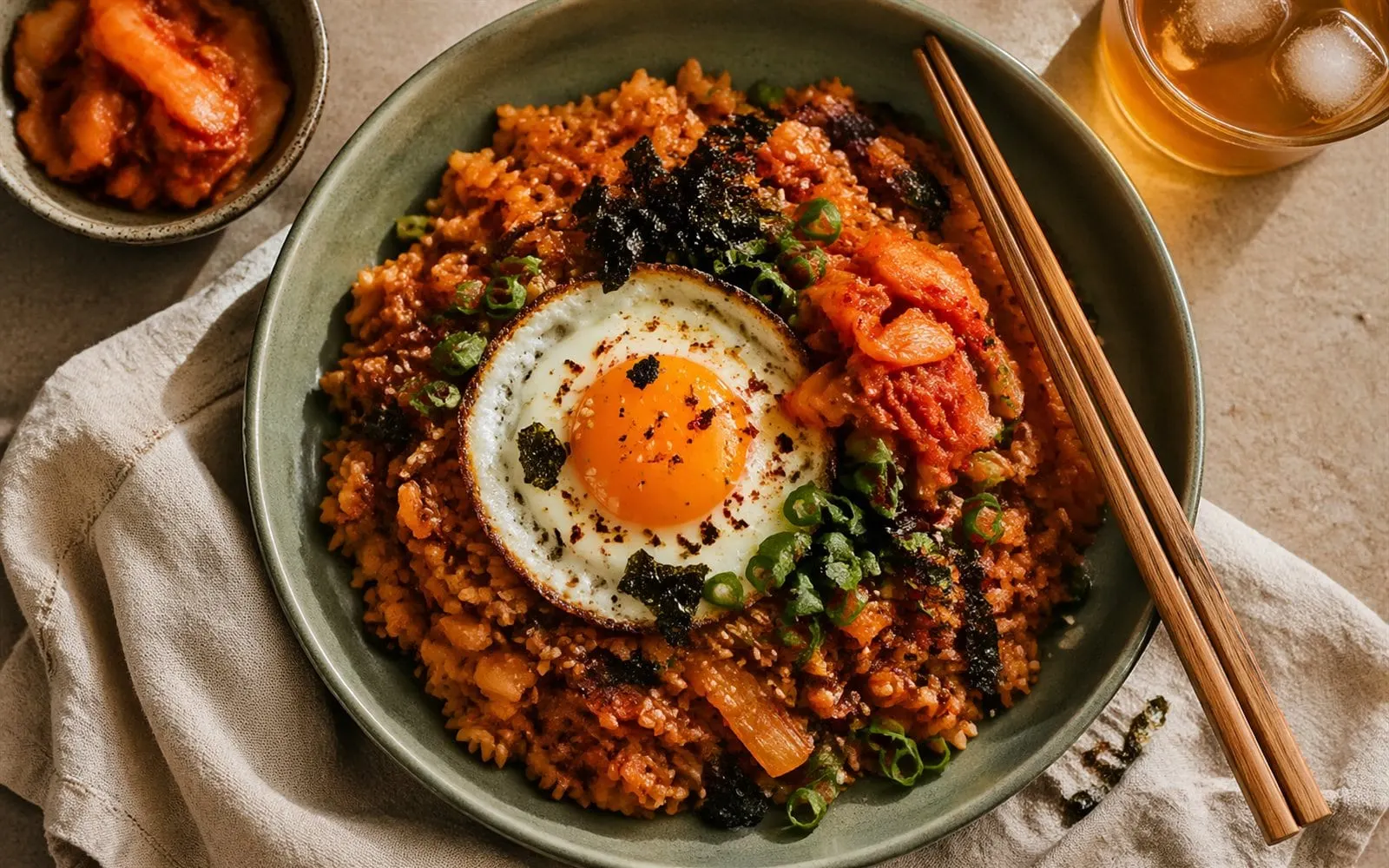
What makes this version earn its place on a gut-health site, rather than just any weeknight recipe blog, is a small but important cooking decision: the kimchi gets used twice. Most of it gets pressed into a hot pan until it caramelizes into something almost smoky and sweet, releasing everything that makes kimchi taste like kimchi — the umami, the deep tang, the gentle heat. But a separate, unheated spoonful goes on top of the finished bowl. That raw spoon is where the live cultures live. Without it, you’d have a great-tasting dinner but no probiotics on your plate.
The rice matters too. Rice that has been cooked, cooled in the refrigerator, and then reheated has undergone a chemical shift called starch retrogradation — some of its digestible starch has reorganized into a form your small intestine can no longer break down. That “resistant starch” makes it all the way to your colon, where your gut bacteria ferment it into short-chain fatty acids like butyrate. The takeaway is simple: day-old rice isn’t just easier to crisp in a pan (though it is), it’s also better for your gut. If you don’t have cold rice, spreading hot rice in a thin layer on a sheet pan and chilling it in the fridge for twenty minutes gets you most of the way there.
Top each bowl with a fried egg, a generous spoonful of that raw kimchi, thinly sliced scallions, sesame seeds, and crumbled nori. Break the yolk, mix everything together, and you have comfort dinner that is also — quietly, in the background — doing real gut-health work.