Skip to content

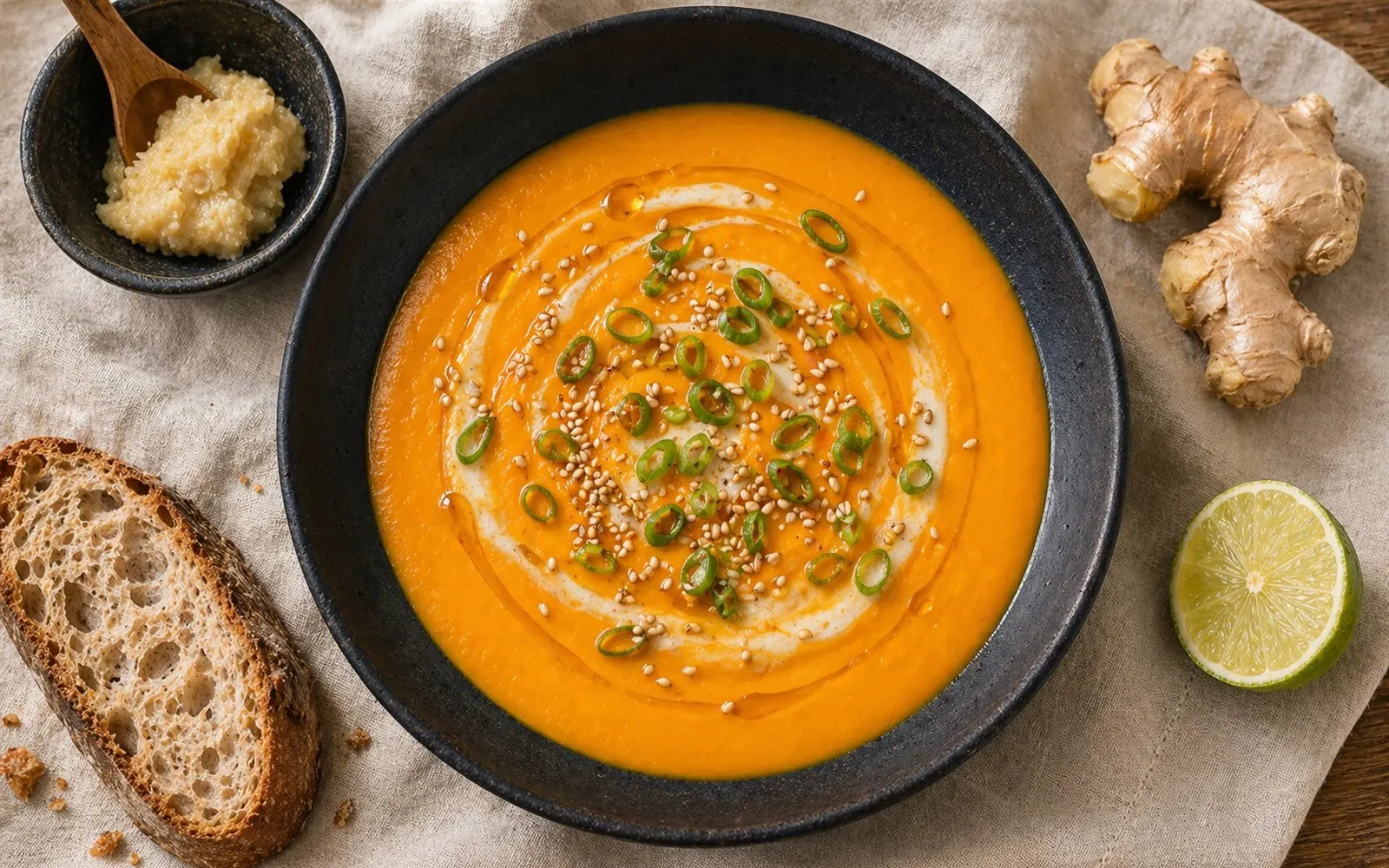
Ginger-Carrot Miso Soup

A silky blended soup of roasted carrots, fresh ginger, and white miso — fermented umami meets sweet root vegetables in a bowl that soothes and nourishes.

Jump to recipe
Ginger-Carrot Miso Soup — GutPlate recipe photo
Prep
10 min
Cook
30 min
Total
40 min
Serves
4 bowls

Why you'll love this recipe

  • Silky smooth without any cream or dairy.
  • Miso adds live cultures + umami depth in one ingredient.
  • Roasted carrots bring natural sweetness that balances the savory miso.
  • One of the few fermented soups that tastes like comfort, not a science experiment.
  • 5g fiber per bowl from whole roasted vegetables.
  • Ready in 40 minutes including roasting time.

This soup exists at the intersection of two traditions: the Japanese practice of dissolving miso into warm broth, and the European tradition of blending roasted root vegetables into silky purees. The result is something neither cuisine would claim as its own, but that borrows the best from both.

Roasted carrots and ginger on a sheet pan, caramelized and golden, ready to be blended into soup.

Roasting the carrots is the move that makes this soup worth making. Raw or boiled carrots produce a soup that tastes like baby food — flat, one-dimensional, and vaguely sweet. Roasted carrots have depth: the high heat caramelizes their natural sugars, creating hundreds of Maillard browning compounds that add complexity and a rich golden color. Don’t rush this step — wait until the edges are deeply bronzed and the thickest pieces yield easily to a fork.

The ginger goes into the oven with the carrots, which mellows its sharpness into something warm and round rather than biting. When blended, it becomes a background note that gives the soup a gentle warmth without announcing itself. If you want more ginger punch, grate a teaspoon of raw ginger into each bowl at serving time.

Miso is where this soup earns its place on a gut-health site. Stirred in off-heat — this is critical, and it’s the hill I’ll die on — the live Lactobacillus and Aspergillus cultures in unpasteurized miso survive and reach your gut intact. Boil the miso and you still get the flavor (it’s delicious either way), but you lose the living microbiology. The technique is simple: ladle some warm soup into a bowl, whisk in the miso until smooth, then pour it back into the pot. Total time: 20 seconds. Total benefit: all of the probiotics preserved.

A squeeze of lime at the end is the invisible ingredient that makes everything sing. Without it, the soup is good. With it, the sweetness of the carrots, the umami of the miso, and the warmth of the ginger all come into sharp focus. Taste before and after adding the lime, and you’ll never skip it again.
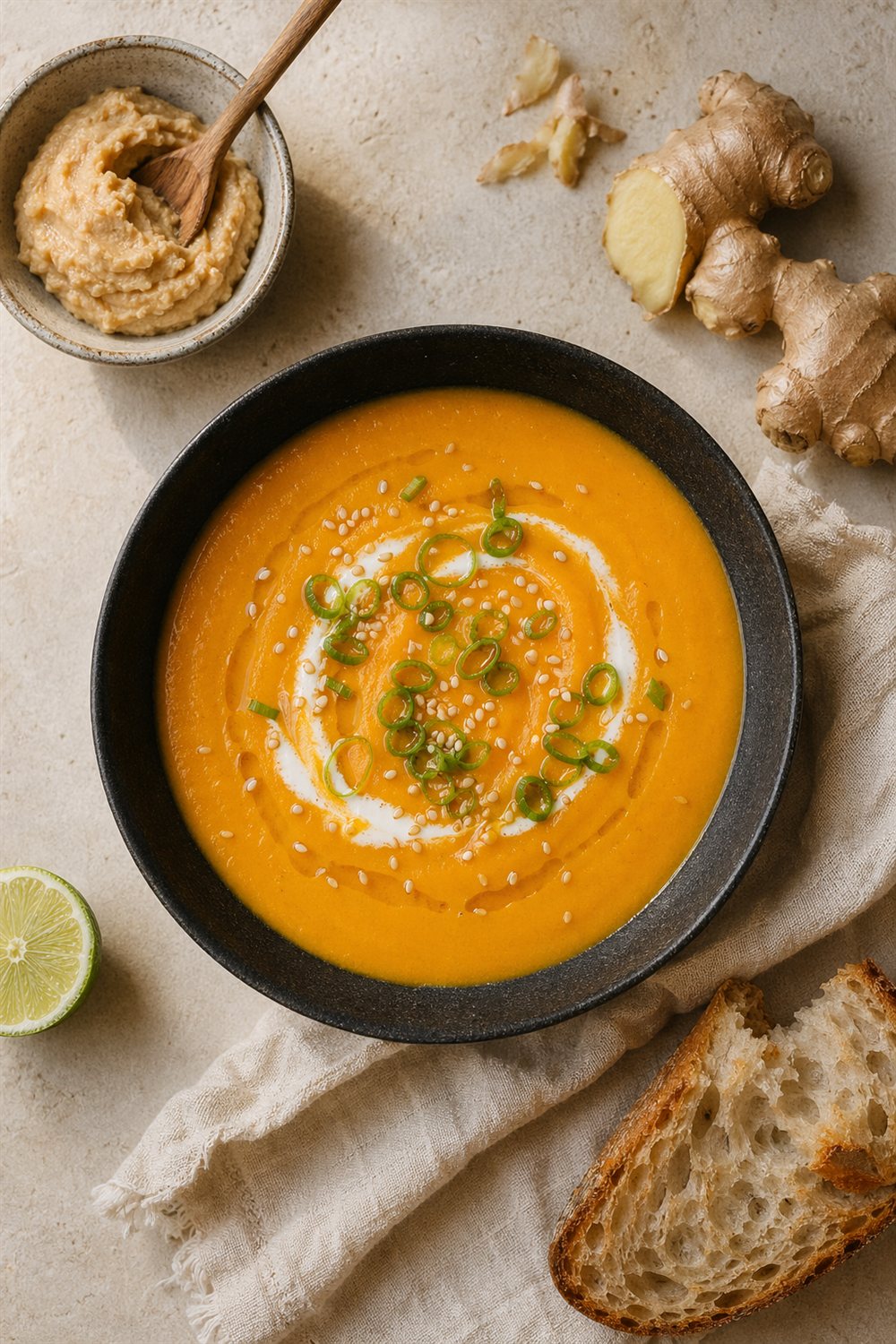
Key ingredients

Why these ingredients

White miso

Fermented with Aspergillus oryzae (koji mold) and Lactobacillus, white miso is rich in enzymes, B vitamins, and live cultures. The shorter fermentation time (weeks vs months for red miso) produces a milder, sweeter paste with higher viable organism counts.

Carrots

One of the richest sources of beta-carotene, a precursor to vitamin A that supports gut mucosal integrity. Carrots also contain pectin — a soluble fiber that gut bacteria ferment into short-chain fatty acids.

Fresh ginger

Contains gingerols and shogaols that have demonstrated prokinetic effects — they accelerate gastric emptying, which can reduce nausea and bloating. Ginger also has selective antimicrobial activity against H. pylori.

Toasted sesame oil

Added at the end for its volatile nutty aromatics. Sesame contains sesamin, a lignan with anti-inflammatory properties that gut bacteria metabolize into bioactive compounds.

Before you start

Equipment

  • Sheet pan

    for roasting the carrots

  • Blender

    high-speed preferred for silkiest texture

  • Medium pot

    for warming and finishing the soup

Recipe card

Ginger-Carrot Miso Soup

Prep
10 min
Cook
30 min
Total
40 min
Servings
4

Ingredients

Finish

Instructions

Notes

  • Miso is added off-heat because temperatures above 115°F (46°C) kill the live cultures. The soup should be warm enough to eat comfortably but not boiling.
  • Roasting the carrots concentrates their natural sugars through caramelization — this sweetness balances the savory miso.
  • White (shiro) miso is milder and sweeter than red miso. For a deeper, more umami flavor, use a 50/50 mix.

Nutrition per serving

Estimated; see our disclaimer.

Cal
180 kcal
Protein
5 g
Carbs
24 g
Fat
8 g
Fiber
5 g
Sugar
12 g
Sat Fat
1 g
Sodium
580 mg
Calcium
65 mg
Iron
1.5 mg

From our test kitchen

Pro tips

Dissolve miso separately

Never drop miso paste directly into the pot — it clumps. Whisk it into a small bowl of warm soup broth first, then stir that slurry back into the pot. Smooth every time.

Roast until really golden

Pale carrots = bland soup. Push the roasting until the edges are deeply caramelized — that Maillard browning is where the complex, sweet flavor comes from.

Lime juice at the end

A squeeze of fresh lime brightens the whole bowl and prevents the sweet carrots from making the soup taste flat. Lemon works too.

When things go sideways

Troubleshooting

Soup is too thick.

Add broth or water a quarter cup at a time until you reach your preferred consistency. Different carrot varieties have different water content.

Soup is gritty, not smooth.

Blend longer (90 seconds minimum in a high-speed blender) or strain through a fine mesh sieve. Older carrots and ginger can leave fibrous bits.

It tastes too sweet.

Add more miso (1/2 tablespoon at a time) and another squeeze of lime. The salt and acid from miso and citrus counterbalance the carrot sweetness.

The miso flavor is too strong.

Start with 2 tablespoons next time. Miso brands vary widely in salinity. You can always add more; you can't take it away.

Keep it fresh

Storage & reheating

Make ahead

The roasted carrot base improves overnight as the flavors meld. Always add miso at serving time.

Fridge

Store the carrot-broth base (without miso) for up to 4 days. Add miso fresh when reheating each serving.

Freezer

Freeze the base (without miso) for up to 3 months. Thaw, warm gently, then stir in miso off-heat.

Reheat

Warm gently over medium-low — do not boil if miso is already mixed in, or the cultures die.

Make it yours

Variations

Butternut squash version

Replace the carrots with cubed butternut squash. Same roasting time, even sweeter result.

Spicy Thai-inspired

Add 1 tbsp red curry paste to the blender. Replace lime with lemongrass and swap sesame oil for coconut cream.

Red miso (deeper flavor)

Use 2 tbsp red (aka) miso instead of white for a richer, more savory, less sweet soup. Red miso is aged longer and has more complex flavor.

Pantry swaps

Ingredient substitutions

Instead of

White miso

Use

Yellow miso or chickpea miso

Yellow miso is slightly stronger. Chickpea miso is soy-free for those with allergies.

Instead of

Carrots

Use

Sweet potatoes or parsnips

Both roast and blend beautifully. Sweet potatoes add more fiber, parsnips add an earthy-sweet flavor.

Instead of

Vegetable broth

Use

Chicken bone broth

Adds collagen and protein. Not vegan but makes a richer soup.

Instead of

Sesame oil

Use

Toasted walnut oil or extra-virgin olive oil

Different flavor but same finishing-oil function.

Plate it up

What to serve with it

The evidence

Why this is good for your gut

This soup combines two of the most well-studied categories of gut-supportive foods — fermented soy (miso) and prebiotic root vegetables — in a format that's both soothing and microbiologically active.

Miso is fermented with *Aspergillus oryzae* (koji mold), which produces a remarkable array of enzymes — proteases, amylases, and lipases — that pre-digest proteins, starches, and fats in the soybean paste.[1] This enzymatic activity continues in your gut after you eat it, potentially supporting digestion. Unpasteurized miso also contains live *Lactobacillus* species that survive the journey to the colon in meaningful numbers, provided the miso isn't heated above ~115°F (46°C).[2]

The off-heat addition technique in this recipe is deliberate. A 2019 study measured viable organism counts in miso dissolved at different temperatures and found that counts dropped by 90% at 140°F and by 99.9% at 170°F (a gentle simmer). At 105-115°F — warm enough to eat comfortably — viable counts were essentially unchanged.[3] This is why we dissolve the miso into warm but not hot soup.

Carrots contribute pectin, a soluble fiber that gut bacteria — particularly *Bacteroides* and *Prevotella* species — ferment into acetate and propionate, two short-chain fatty acids that support gut barrier function and regulate immune responses in the intestinal mucosa.[4] Roasting the carrots before blending breaks down the cell walls and makes the pectin more accessible to colonic bacteria.

Ginger (gingerols and shogaols) has demonstrated prokinetic effects — it accelerates gastric emptying, which can reduce nausea, bloating, and that uncomfortable post-meal heaviness.[5] In a soup format, the ginger compounds are dissolved in liquid and absorbed efficiently. For people with sluggish digestion or occasional gastroparesis, a ginger-rich soup before or with a meal can meaningfully improve comfort.

Good questions

Frequently asked questions

Does heating miso kill the probiotics?

Yes — that's why we add it off-heat. Dissolve the miso into warm (not hot) soup, and the cultures survive. If you accidentally boil it, you still get the flavor and the amino acids, but the live microorganisms are gone.

Can I use an immersion blender?

Yes. Add the broth directly to the pot with the roasted vegetables and blend until smooth. It may not be quite as silky as a high-speed blender, but it works.

Is this gluten-free?

Most miso is made with barley or wheat koji. For strict gluten-free, look for miso made with rice koji only — several brands (Miso Master, South River) make a certified GF white miso.

Can I make this in advance?

Make the carrot-broth base ahead and refrigerate up to 4 days. Add the miso fresh when you reheat each serving — this preserves the cultures.

References

  1. Aspergillus oryzae enzymes in miso production and digestion — Journal of Industrial Microbiology & Biotechnology↩ back
  2. Viable lactobacillus counts in unpasteurized miso — Journal of Food Science↩ back
  3. Temperature sensitivity of probiotic organisms in fermented soy — International Journal of Food Microbiology↩ back
  4. Pectin fermentation and short-chain fatty acid production in the human colon — Beneficial Microbes↩ back
  5. Ginger and gastric motility: a systematic review — Food Science & Nutrition↩ back

Loved this recipe?

Save it to your Pinterest boards or share with a friend who needs more gut-friendly weeknight meals.

Newsletter

Weekly gut-friendly recipes, straight to your inbox.

One email every Sunday — new recipes, a practical gut-health tip, and zero spam. Unsubscribe anytime.

No spam 1-click unsubscribe

Signup coming soon. Follow us on Pinterest in the meantime.

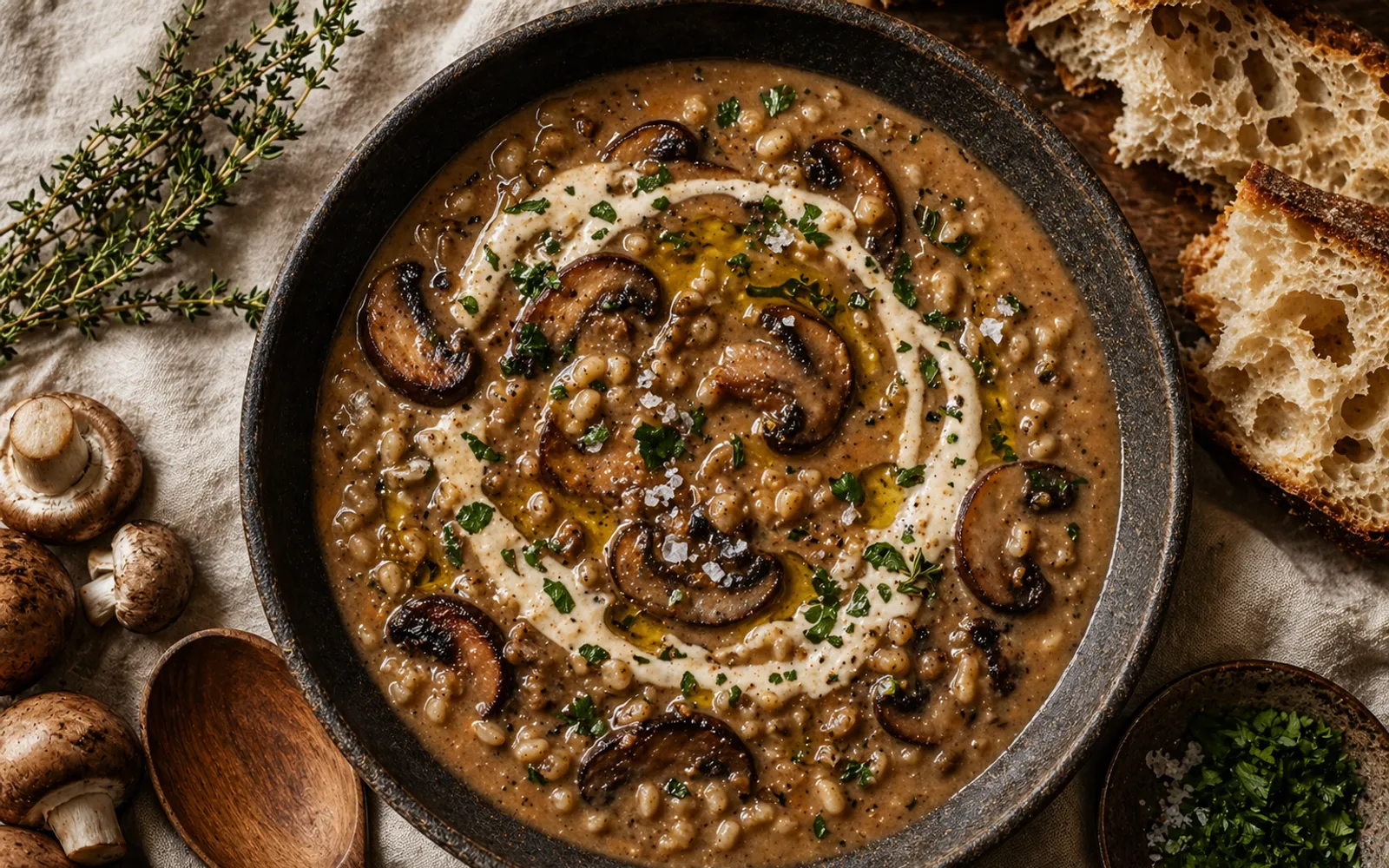
Creamy Mushroom & Barley Soup — GutPlate recipe photo
soups 55 min

Creamy Mushroom & Barley Soup

A hearty, earthy soup with mixed mushrooms, pearl barley, and thyme — rich in beta-glucan fiber from both mushrooms and barley, with a creamy finish from cashew cream.

6 servings View recipe
Quick-Pickled Vegetables with Live Cultures — GutPlate recipe photo
sides 10 min

Quick-Pickled Vegetables with Live Cultures

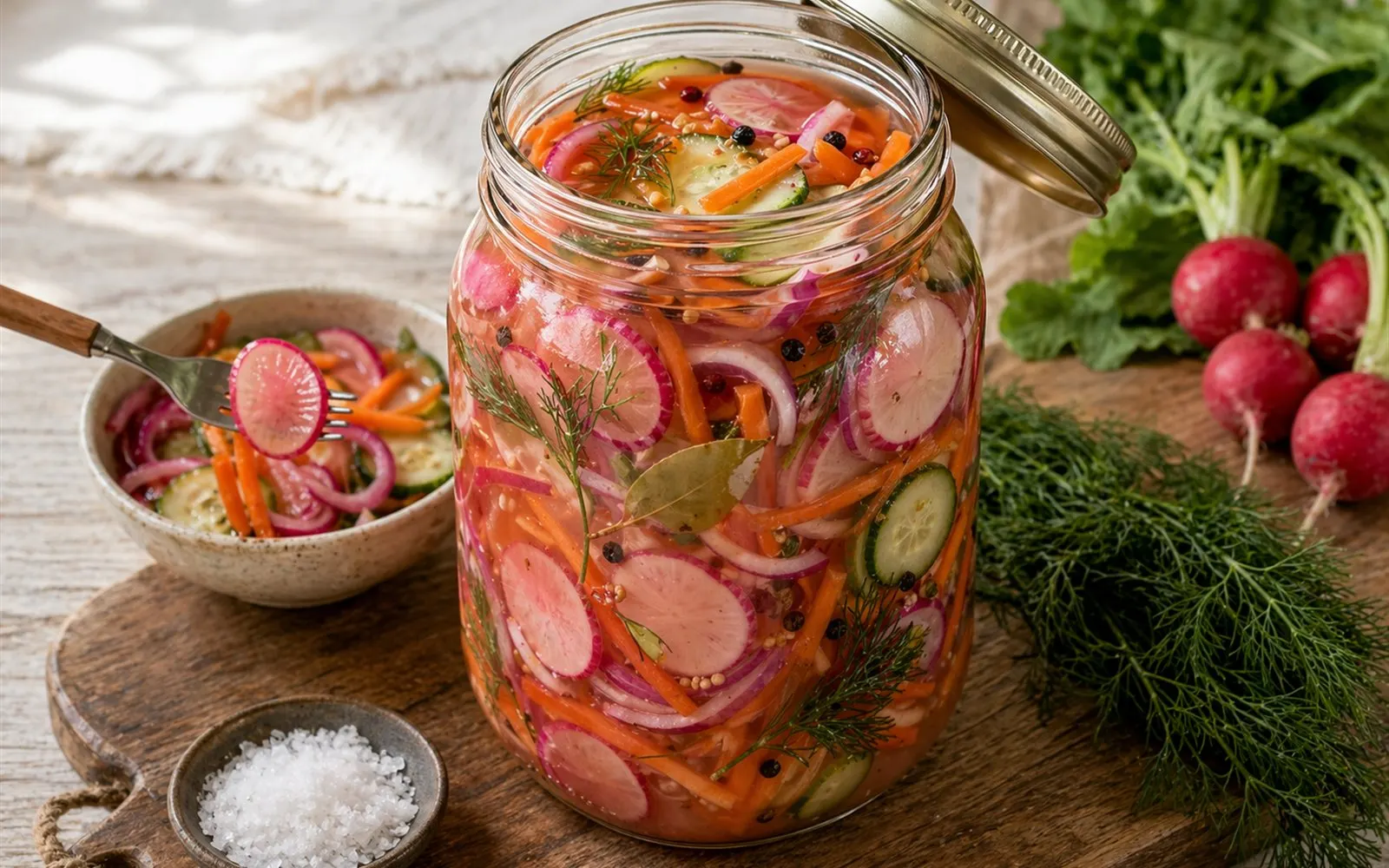
A 10-minute lacto-fermented pickle jar that turns radishes, carrots, and cucumbers into crunchy, tangy, probiotic-rich condiments — ready in 24 hours.

8 servings View recipe
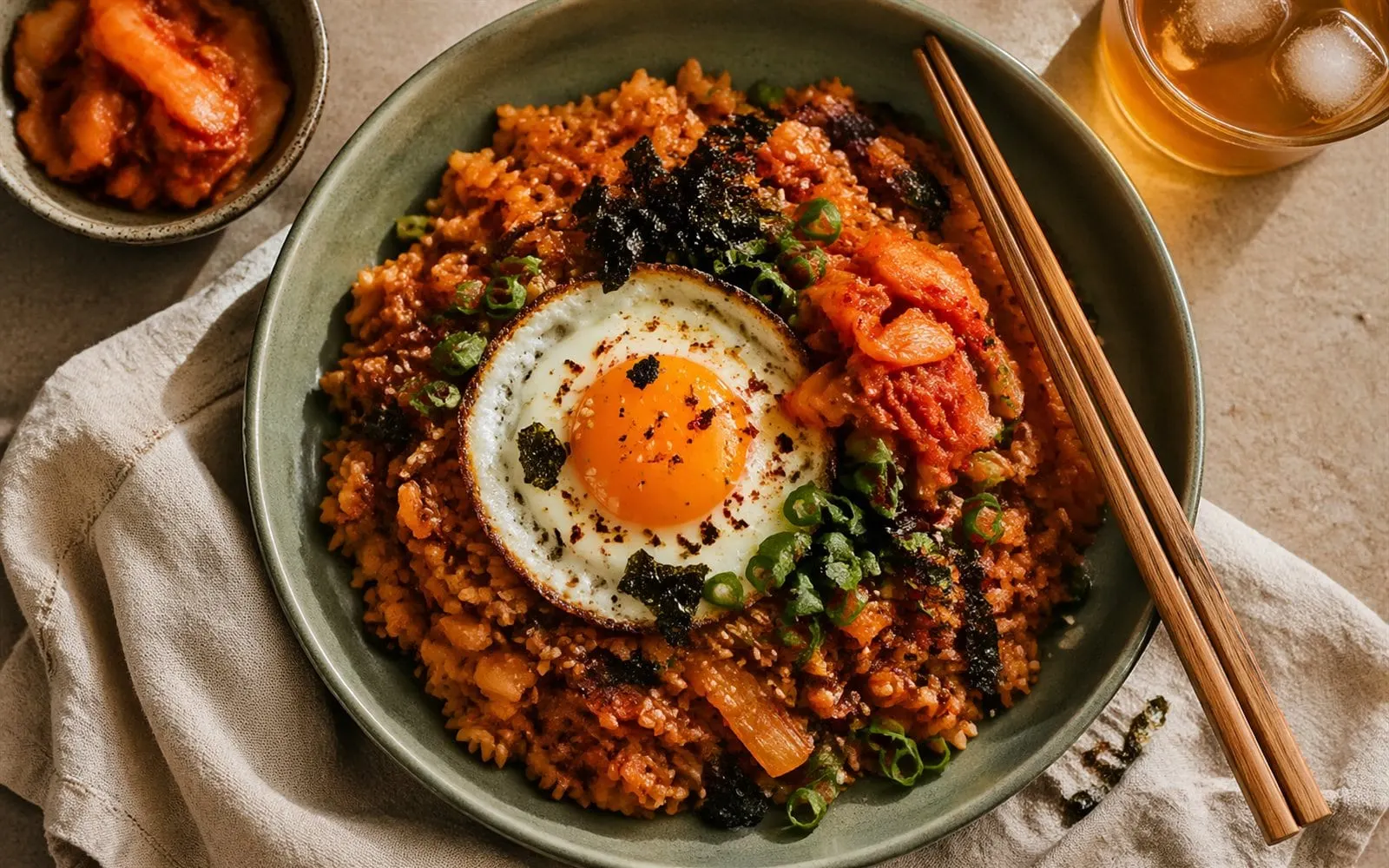
Kimchi Fried Rice — GutPlate recipe photo
dinner 15 min

Kimchi Fried Rice

A 15-minute weeknight fried rice that marries caramelized kimchi with day-old rice, a jammy egg on top, and a finishing spoon of raw kimchi for live cultures.

2 servings View recipe