
Skip to content

Quick-Pickled Vegetables with Live Cultures

A 10-minute lacto-fermented pickle jar that turns radishes, carrots, and cucumbers into crunchy, tangy, probiotic-rich condiments — ready in 24 hours.

Jump to recipe
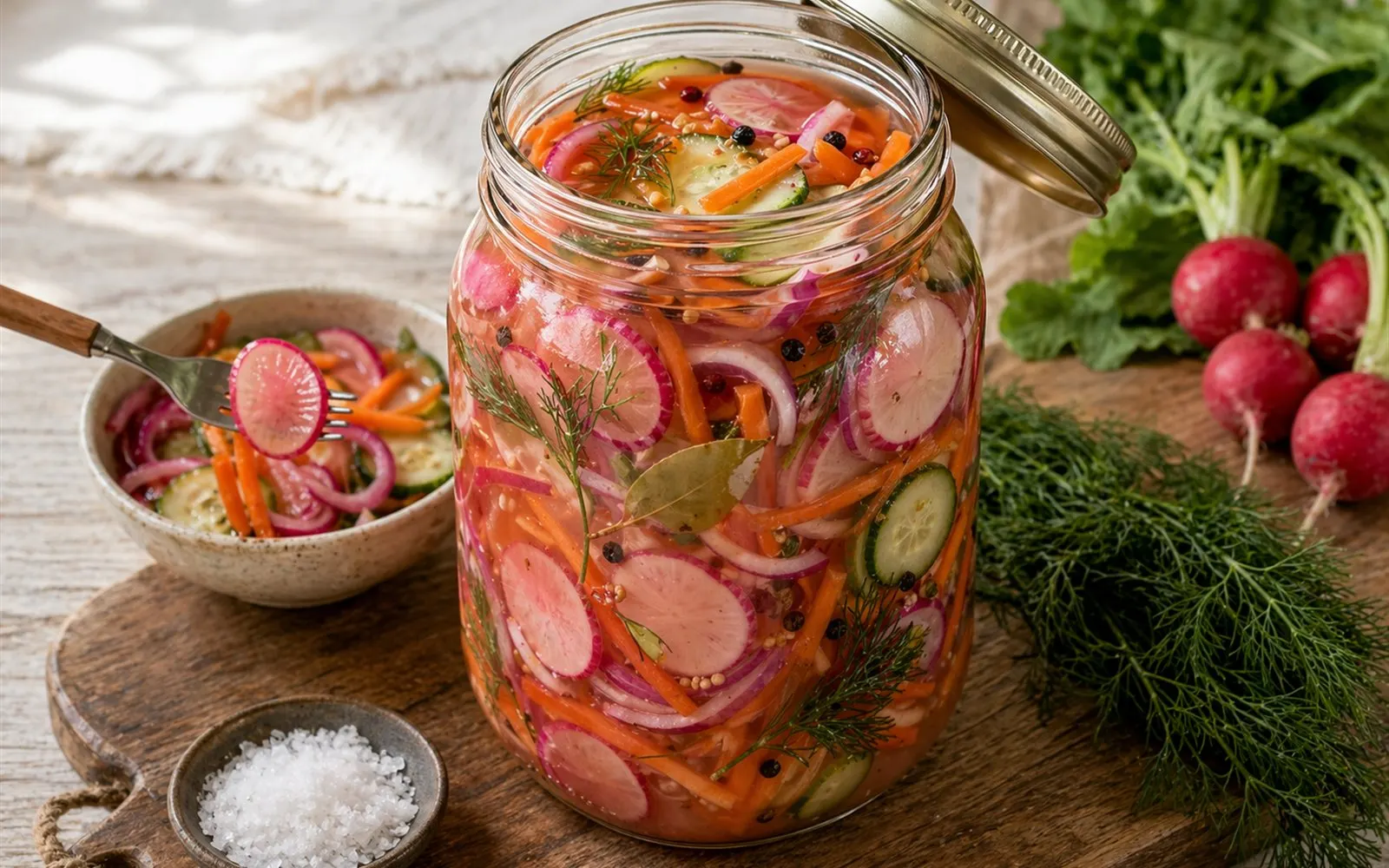
Quick-Pickled Vegetables with Live Cultures — GutPlate recipe photo
Prep
10 min
Cook
Total
10 min
Serves
1 quart jar

Why you'll love this recipe

  • 10 minutes of work — bacteria do the rest.
  • Live probiotic cultures in every bite, unlike vinegar-pickled store-bought.
  • Infinitely customizable — use whatever vegetables are in season.
  • Zero cooking required — raw fermentation preserves enzymes and vitamins.
  • 15 calories per serving — add gut-health benefits to any meal with no caloric burden.
  • A gateway ferment — easier than sauerkraut or kimchi, ready in a day.

Most “pickled vegetables” in grocery stores are a lie — at least from a gut-health perspective. They’re vegetables sitting in vinegar, pasteurized and shelf-stable, with exactly zero live cultures. Real fermented pickles are different: the sour flavor comes from lactic acid produced by living bacteria, and those bacteria are still alive when you eat them.
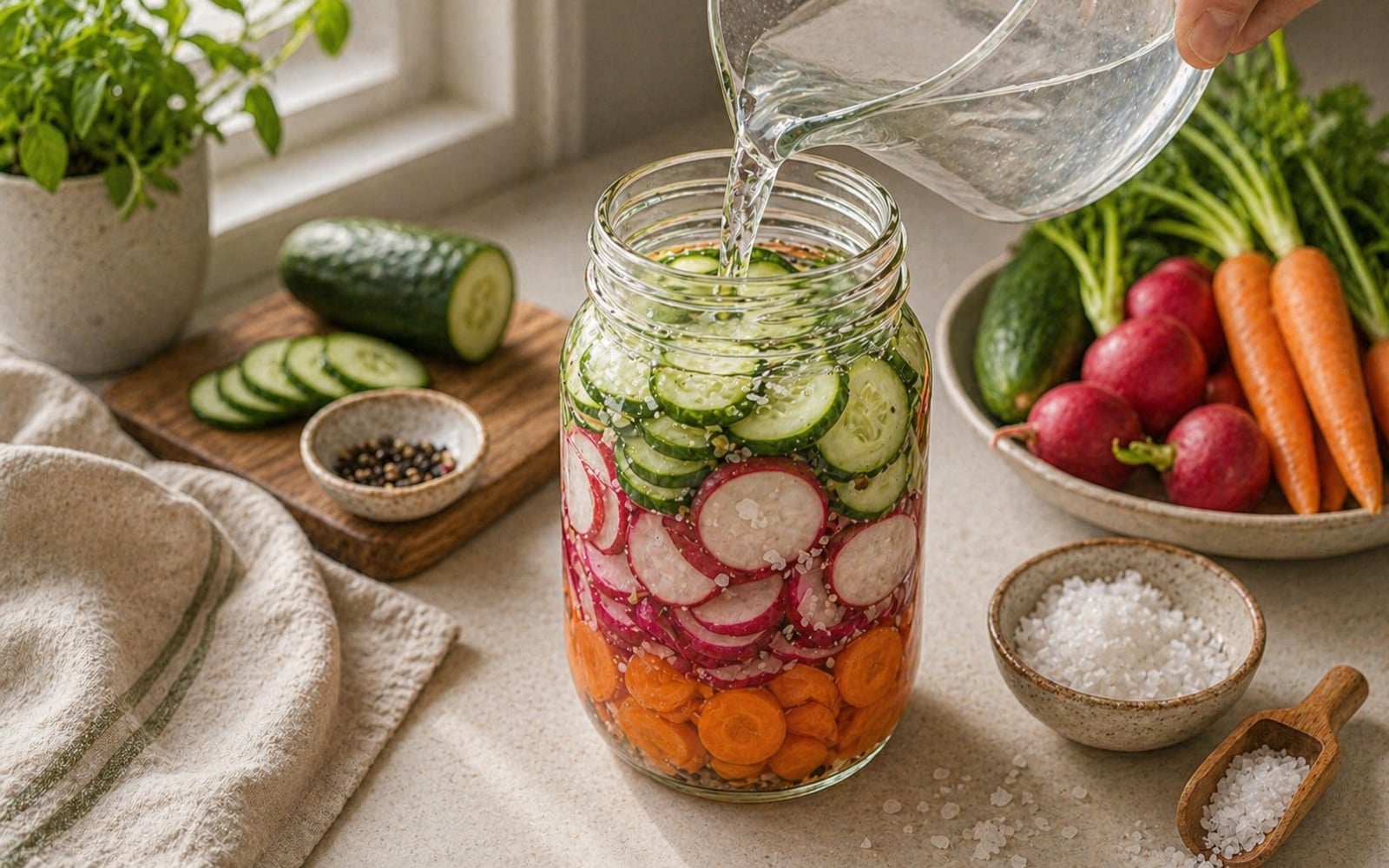
Sliced vegetables — carrots, radishes, and cucumbers — packed into a glass jar with a salt brine being poured over them.

The process is almost absurdly simple. You slice vegetables, dissolve salt in water, pour the brine over the vegetables, and wait. The Lactobacillus bacteria that are naturally present on the surface of every raw vegetable do all the work — converting sugars into lactic acid over 24-48 hours, progressively acidifying the brine until it’s too sour for harmful bacteria to survive. You don’t need a starter culture, a special crock, or any equipment beyond a mason jar.

Two things matter and they’re non-negotiable: filtered water (chlorine in tap water kills the very bacteria you’re trying to cultivate) and non-iodized salt (iodine is antimicrobial and will stall the fermentation). Get these two right and the process is essentially foolproof.

Start tasting after 24 hours. At that point you’ll have a mild tang and a satisfying crunch. By 48 hours the sourness intensifies. By 72 hours you’re in full-sour territory. Move the jar to the fridge whenever it tastes right to you — cold temperatures slow fermentation to a near-halt, locking in your preferred level of tang.

Keep these in the fridge door and add a forkful to everything: grain bowls, tacos, sandwiches, cheese boards, or just straight from the jar as a mid-afternoon snack that happens to deliver a dose of live cultures.
Key ingredients

Why these ingredients

Sea salt (brine)

Salt creates a selective environment. At 2-3% salinity, Lactobacillus bacteria thrive while most harmful microbes cannot survive. The salt also draws water out of the vegetables via osmosis, creating a natural brine that becomes the fermentation medium.

Radishes

Rich in glucosinolates — sulfur-containing compounds that break down into isothiocyanates with antimicrobial properties. Fermented radishes retain these compounds and gain the additional benefit of lactic acid bacteria.

Garlic (in brine)

Allicin from garlic has broad antimicrobial activity against pathogenic bacteria while sparing lactobacillus — it acts as a selective pressure that shapes the ferment toward beneficial species.

Mustard seeds

Contain tannins that help keep the vegetables crisp during fermentation by inhibiting pectinase enzymes that would otherwise soften them. They also add a mild peppery flavor that develops over time.

Before you start

Equipment

  • Quart-size mason jar

    wide-mouth is easier to pack

  • Fermentation weight

    or a small ziploc bag filled with brine to keep vegetables submerged

  • Mandoline or sharp knife

    for even, thin slices

Recipe card

Quick-Pickled Vegetables with Live Cultures

Prep
10 min
Cook
0 min
Total
10 min
Servings
8

Ingredients

Brine

Instructions

Notes

  • Use filtered or spring water. Chlorinated tap water inhibits the lactobacillus bacteria that drive fermentation.
  • Non-iodized salt only. Iodine is antimicrobial and will slow or kill the fermentation.
  • Submerge everything. Any vegetable above the brine line will grow mold. Below the brine, the anaerobic environment protects the ferment.

Nutrition per serving

Estimated; see our disclaimer.

Cal
15 kcal
Protein
1 g
Carbs
3 g
Fat
0 g
Fiber
1 g
Sugar
2 g
Sat Fat
0 g
Sodium
290 mg
Calcium
15 mg
Iron
0.3 mg

From our test kitchen

Pro tips

Temperature matters

65-75°F is the sweet spot for lacto-fermentation. Below 60°F, fermentation slows to a crawl. Above 80°F, it can go too fast and produce off flavors. Room temperature in most homes is perfect.

Taste daily

Start tasting after 24 hours. The moment they hit your preferred tanginess, move the jar to the fridge. You can always ferment longer, but you can't undo over-fermentation.

Save the brine

When the vegetables are gone, the brine is loaded with lactic acid bacteria. Use it as a starter for your next batch (add 2 tablespoons to the new brine) or drink a shot straight — it's a probiotic tonic.

When things go sideways

Troubleshooting

No bubbles after 48 hours.

Most likely chlorinated water or iodized salt inhibited the bacteria. Restart with filtered water and non-iodized salt. Also ensure your kitchen isn't below 60°F.

Vegetables went mushy.

Fermented too long at too high a temperature. Next time, move to the fridge earlier (24-36 hours at room temp). Adding grape leaves or mustard seeds helps preserve crunch (their tannins inhibit pectinase).

Foul smell (not just sour).

A sour, tangy, slightly funky smell is normal. A smell like rotting garbage or nail polish remover means something went wrong — discard the batch. This usually happens when vegetables weren't fully submerged.

Too salty.

Your salt ratio was too high. Target 1 tablespoon per 2 cups of water (about 2-3% by weight). If the current batch is too salty, drain the brine and make a fresh weaker brine at 1/2 tablespoon per 2 cups.

Keep it fresh

Storage & reheating

Make ahead

This IS a make-ahead recipe. Start it 24-48 hours before you need it.

Fridge

Keeps 4-6 weeks in the sealed jar, fully submerged in brine. Flavor will continue to develop slowly.

Freezer

Not recommended — freezing kills most of the live cultures and ruins the texture.

Reheat

N/A — serve cold or at room temperature.

Make it yours

Variations

Spicy Korean-style

Add 1 tbsp gochugaru (Korean chili flakes) and 1 tsp grated ginger to the brine. Skip the dill and mustard seeds.

Mediterranean

Use cauliflower florets, green beans, and pepperoncini. Add oregano, thyme, and a strip of lemon zest to the brine.

Curtido (Salvadoran)

Shred cabbage and carrots, add sliced jalapeño and dried oregano. This Central American fermented slaw is ready in 24 hours and is traditionally served with pupusas.

Pantry swaps

Ingredient substitutions

Instead of

Radishes

Use

Turnips, daikon, or jicama

All crisp root vegetables ferment well. Daikon is especially traditional in Asian ferments.

Instead of

Carrots

Use

Green beans or asparagus

Cut to jar length. Green beans stay crunchier than carrots.

Instead of

Cucumber

Use

Zucchini or celery

Zucchini softens more; celery stays crisp.

Instead of

Sea salt

Use

Kosher salt (not iodized table salt)

Measure by weight if switching — kosher salt is fluffier so you need more by volume. Target 2% of water weight.

Plate it up

What to serve with it

The evidence

Why this is good for your gut

Lacto-fermentation is one of the oldest food preservation techniques on Earth, and it produces some of the most well-characterized probiotic foods in the human diet.

The process is driven by Lactobacillus species — bacteria that are naturally present on the surface of raw vegetables.[1] When you submerge vegetables in salt brine, you create an anaerobic, high-salinity environment that most harmful bacteria cannot survive, but where lactobacillus thrives. These bacteria convert the natural sugars in the vegetables into lactic acid, which progressively lowers the pH of the brine. By the time the pH drops below 4.6, the environment is essentially self-sterilizing — even Clostridium botulinum (the organism responsible for botulism) cannot survive at that acidity.[2]

The result is a food product that contains 10^6 to 10^9 colony-forming units per gram of beneficial bacteria — comparable to many commercial probiotic supplements, but in a food matrix that also delivers fiber, vitamins, and minerals. The lactic acid itself has demonstrated benefits: it can lower colonic pH (which inhibits pathogenic bacteria), serve as an energy source for colonocytes, and enhance mineral absorption.[3]

What makes these fermented vegetables different from vinegar pickles is fundamental. Vinegar pickles are preserved by external acid — they're dead, microbiologically speaking. Lacto-fermented pickles are preserved by acid that living bacteria produce — and those bacteria come along for the ride when you eat them. While the transit of these exogenous bacteria through the gut is typically transient (they don't colonize permanently), their passage has been associated with modest increases in microbial diversity and decreases in markers of intestinal inflammation.[4]

The diversity of vegetables in this recipe matters too. Different plant fibers feed different bacterial species. Carrots contribute pectin (feeds *Bacteroides*), radishes contribute glucosinolates (which have antimicrobial selectivity), and cucumber skin contributes cellulose. By fermenting a mix, you're creating a more microbiologically diverse product than single-vegetable ferments.[5]

Good questions

Frequently asked questions

Is this the same as store-bought pickled vegetables?

No. Most store-bought pickles use vinegar, not fermentation, so they have no live cultures. These are lacto-fermented — the sour flavor comes from lactic acid produced by Lactobacillus bacteria, and the pickles are alive with probiotics.

I see bubbles — is that normal?

Yes! Bubbles mean the lactobacillus bacteria are active and producing CO2. That's exactly what should happen. If there are no bubbles after 48 hours, your salt ratio may be too high or the water was chlorinated.

There's a white film on top — is it mold?

Probably not. A thin white film is likely kahm yeast, which is harmless but can taste off. Skim it off and ensure vegetables stay submerged. Fuzzy growth in green, blue, or black IS mold — discard the batch.

How sour will these get?

At room temperature: noticeably tangy after 24 hours, quite sour by 48-72 hours. Refrigeration dramatically slows fermentation. Most people prefer 24-36 hours at room temp, then refrigerate.

References

  1. Lactic acid fermentation of vegetables — a review — Critical Reviews in Food Science and Nutrition↩ back
  2. Safety of lacto-fermented vegetables — International Journal of Food Microbiology↩ back
  3. Lactic acid and gut health: mechanisms of action — Nutrients↩ back
  4. Fermented foods, gut microbiome diversity, and inflammatory markers — Cell↩ back
  5. Microbial diversity in mixed-vegetable fermentations — Applied and Environmental Microbiology↩ back

Loved this recipe?

Save it to your Pinterest boards or share with a friend who needs more gut-friendly weeknight meals.

Newsletter

Weekly gut-friendly recipes, straight to your inbox.

One email every Sunday — new recipes, a practical gut-health tip, and zero spam. Unsubscribe anytime.

No spam 1-click unsubscribe

Signup coming soon. Follow us on Pinterest in the meantime.

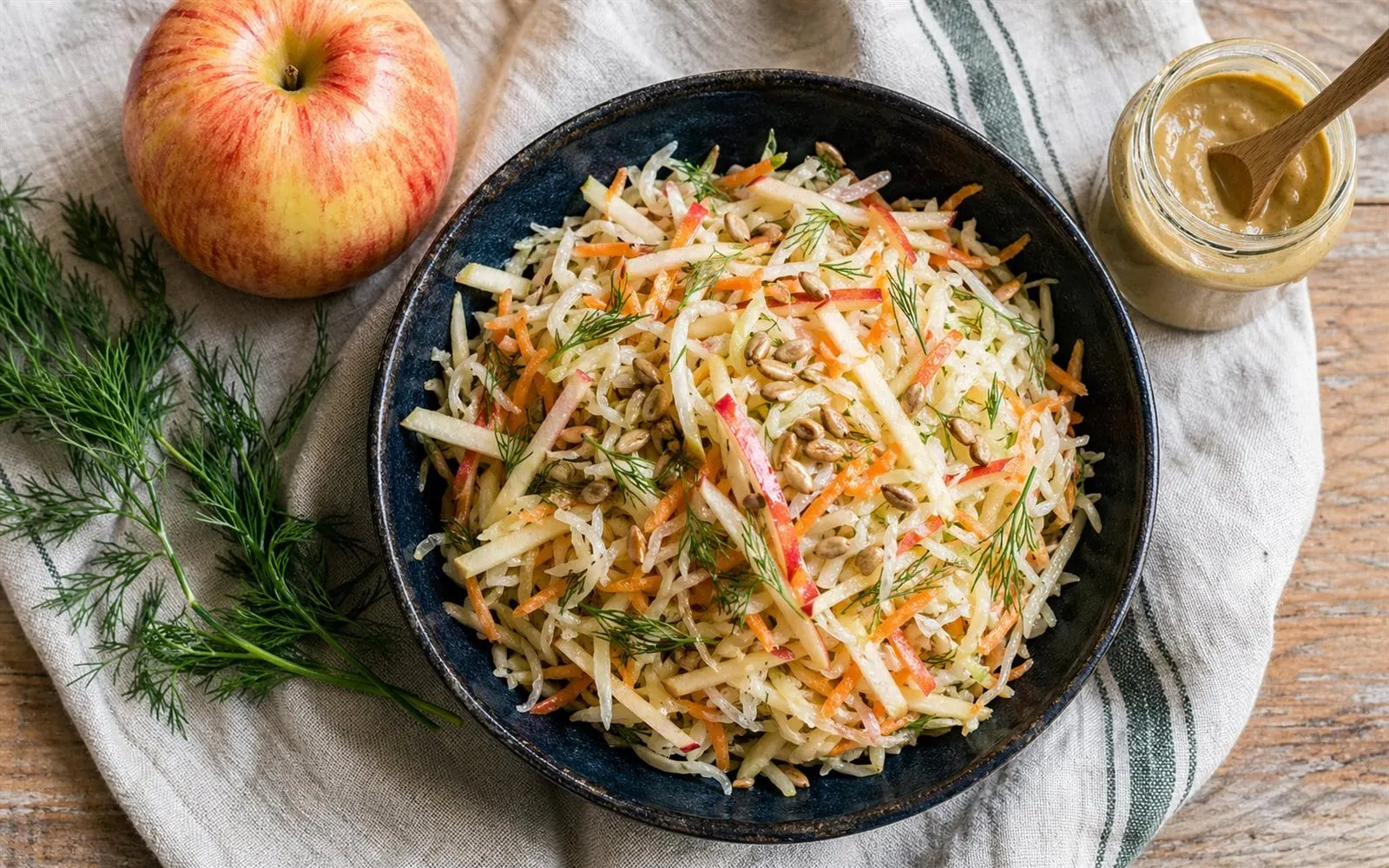
Sauerkraut & Apple Slaw — GutPlate recipe photo
sides 10 min

Sauerkraut & Apple Slaw

A 10-minute raw slaw that layers live sauerkraut with crisp apple, carrot, and a bright lemon-olive oil dressing — no cooking required.

4 servings View recipe
Garlic-Roasted Cauliflower with Tahini & Herbs — GutPlate recipe photo
sides 40 min

Garlic-Roasted Cauliflower with Tahini & Herbs

Whole cauliflower florets roasted until deeply golden, drizzled with lemon-tahini sauce and fresh herbs — a high-fiber side that feeds your gut bacteria as much as it feeds you.

4 servings View recipe
Berry-Coconut Probiotic Popsicles — GutPlate recipe photo
snacks 10 min

Berry-Coconut Probiotic Popsicles

Creamy kefir popsicles swirled with mixed berries and coconut milk — a frozen snack loaded with live probiotic cultures and antioxidant polyphenols.

6 servings View recipe