Skip to content

Berry-Coconut Probiotic Popsicles

Creamy kefir popsicles swirled with mixed berries and coconut milk — a frozen snack loaded with live probiotic cultures and antioxidant polyphenols.

Jump to recipe
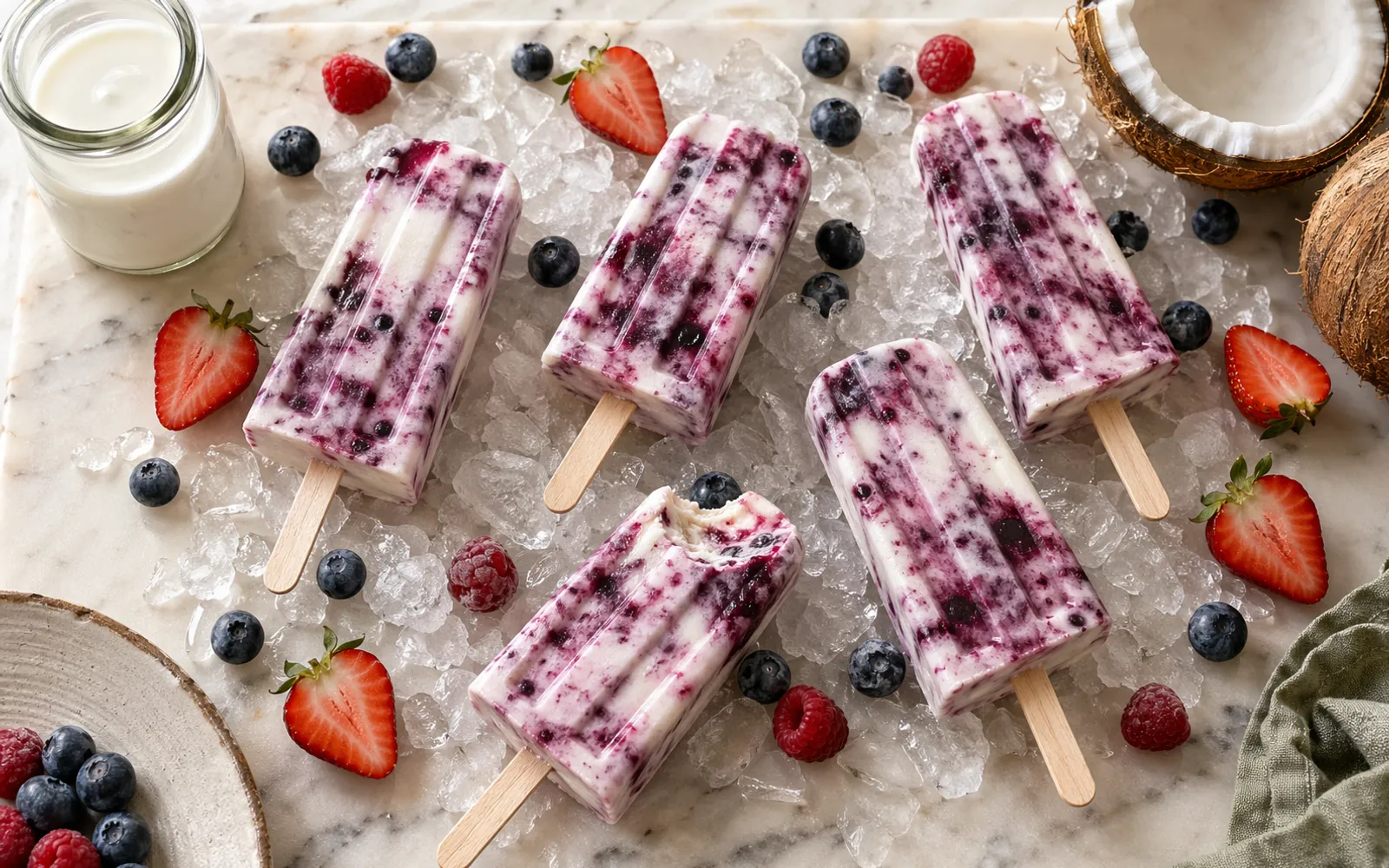
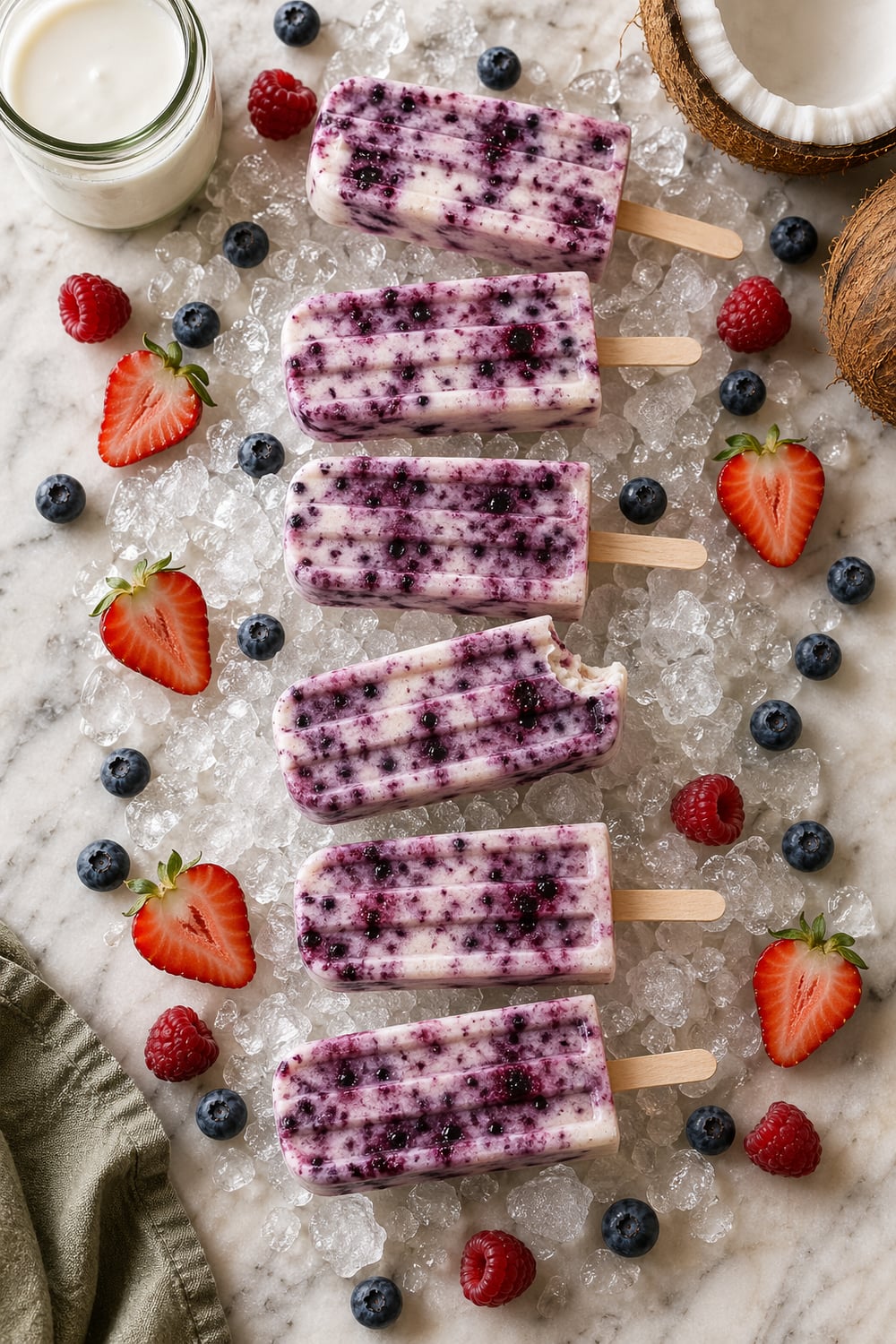
Berry-Coconut Probiotic Popsicles — GutPlate recipe photo
Prep
10 min
Cook
Total
10 min
Serves
6 popsicles

Why you'll love this recipe

  • 10 minutes hands-on — the freezer does all the work.
  • Delivers billions of live probiotic cultures in a dessert format.
  • Beautiful berry-cream swirl that looks like an artisan ice pop.
  • Only 130 calories per popsicle with real, whole ingredients.
  • Kid-approved — the easiest way to get probiotics into picky eaters.
  • Naturally gluten-free with no artificial anything.

The best gut-health snack is one you actually want to eat, and it turns out that a frozen kefir pop with swirls of crushed berries clears that bar effortlessly. These taste like a creamy, tangy version of a berry ice cream bar — the kind of thing you reach for on a hot afternoon without once thinking about probiotics or polyphenols or any of the other reasons they’re good for you.
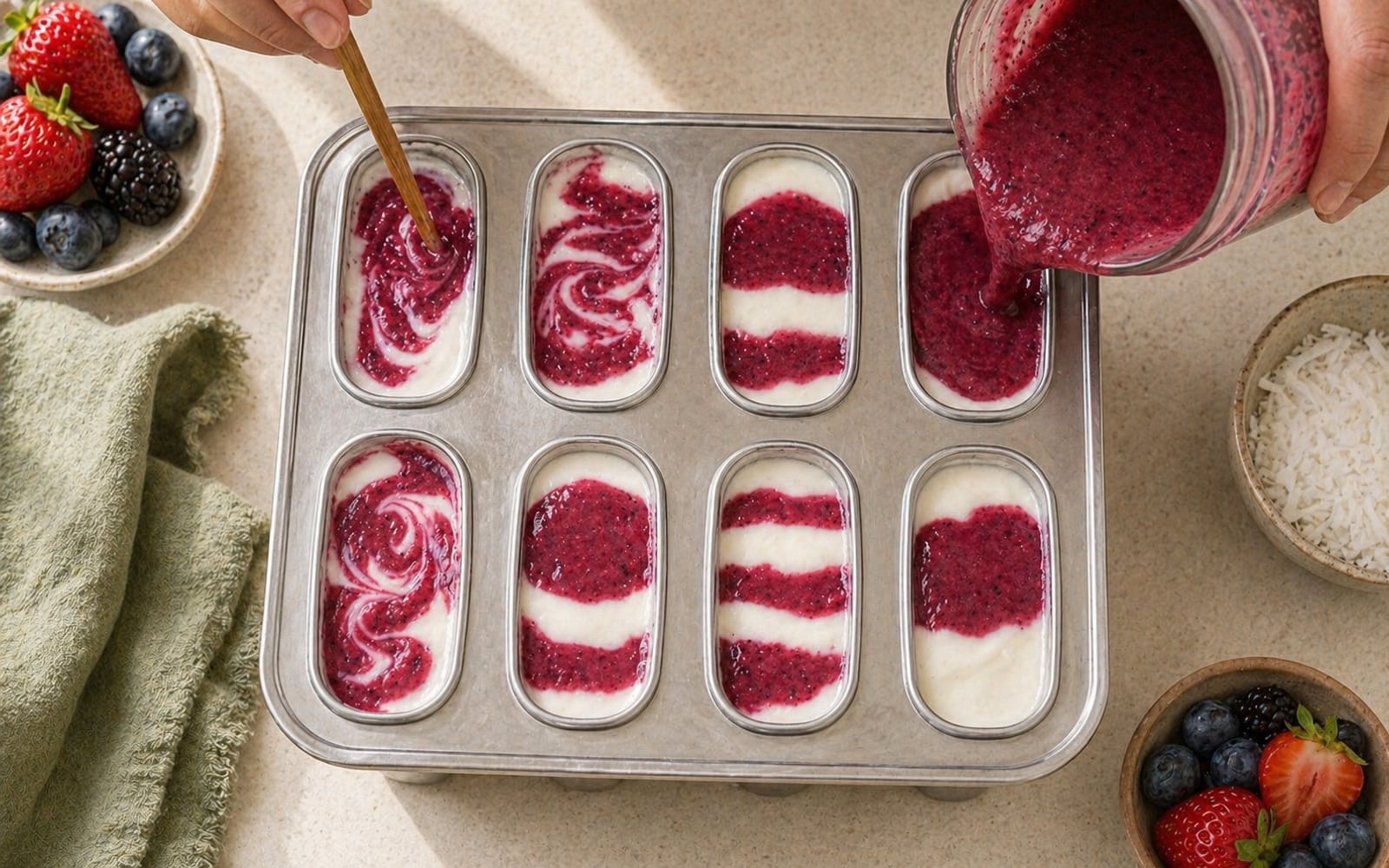
Berry-kefir mixture being poured into popsicle molds in alternating layers with the coconut-kefir base, creating a swirl pattern.

The technique is dead simple: whisk kefir with coconut milk and a touch of honey, mash berries separately, and layer them into molds with a chopstick swirl. The swirl is what makes these look like something from a specialty ice pop shop — ribbons of deep purple-red berry against creamy white. One pass with the chopstick is all you need; over-swirling turns it muddy.

The kefir does the heavy lifting on the probiotic front. Unlike yogurt, which typically contains 5-7 bacterial strains, kefir delivers 30+ species of bacteria and yeast — and they survive freezing. The cultures go dormant in the freezer and reactivate when they hit your body temperature. You’re essentially eating a frozen probiotic delivery system that tastes like dessert.

Kids love these. If you’re trying to get live cultures into a picky eater, this is the path of least resistance. They’ll eat three and ask for more, and you won’t have to negotiate over a single spoonful of sauerkraut.
Key ingredients

Why these ingredients

Kefir

Contains 30+ species of bacteria and yeast — far more diverse than yogurt. The polysaccharide matrix (kefiran) produced by kefir grains has demonstrated anti-inflammatory and immunomodulatory properties in multiple studies.

Mixed berries

Blueberries, raspberries, and strawberries are among the richest dietary sources of anthocyanins — polyphenols that selectively promote the growth of Akkermansia muciniphila, a keystone gut species linked to reduced inflammation and healthy mucus layer maintenance.

Raw honey

Contains fructo-oligosaccharides (FOS) that function as prebiotics, plus hydrogen peroxide and bee defensin-1 with antimicrobial properties. Using it raw preserves the enzymatic activity that pasteurization destroys.

Before you start

Equipment

  • Popsicle molds

    6-cavity silicone or plastic molds

  • Chopstick or skewer

    for swirling layers

Recipe card

Berry-Coconut Probiotic Popsicles

Prep
10 min
Cook
0 min
Total
10 min
Servings
6

Ingredients

Popsicle base

Berry swirl

Optional toppings (before freezing)

Instructions

Notes

  • Kefir cultures survive freezing. Research shows that frozen kefir retains viable probiotic organisms — they enter a dormant state and reactivate at body temperature.
  • For a lower-sugar version, use only 1 tablespoon of honey total and rely on the natural sweetness of ripe berries.
  • If you don't have popsicle molds, small paper cups and wooden craft sticks work perfectly.

Nutrition per serving

Estimated; see our disclaimer.

Cal
130 kcal
Protein
4 g
Carbs
16 g
Fat
6 g
Fiber
2 g
Sugar
13 g
Sat Fat
4 g
Sodium
45 mg
Calcium
110 mg
Iron
0.5 mg

From our test kitchen

Pro tips

The swirl technique

Insert a chopstick to the bottom of the mold and draw it up in a single spiral motion. One pass is enough — over-swirling turns the layers muddy. You want distinct ribbons of white and purple.

Warm berries release more juice

If using frozen berries, let them thaw for 10 minutes before mashing. The released juice creates a more vibrant swirl and distributes the flavor better.

Keep it fresh

Storage & reheating

Freezer

Up to 2 months in molds or wrapped individually in parchment and stored in a freezer bag.

Reheat

N/A — these are eaten frozen. Let sit at room temperature for 2-3 minutes if they're too hard to bite.

Make it yours

Variations

Tropical probiotic pops

Replace berries with 1 cup diced mango and 1/4 cup passion fruit pulp. Add a pinch of turmeric to the kefir base for color and anti-inflammatory benefit.

Chocolate-banana probiotic pops

Blend 1 ripe banana and 2 tablespoons cocoa powder into the kefir base. Skip the berry layer. Drizzle melted dark chocolate into the molds before freezing.

Green smoothie pops

Blend 1 cup spinach and 1 banana into the kefir base for a green pop. Layer with mashed kiwi fruit instead of berries.

Pantry swaps

Ingredient substitutions

Instead of

Kefir

Use

Plain full-fat yogurt

Fewer probiotic strains but still effective. Greek yogurt makes a thicker, more ice-cream-like pop.

Instead of

Coconut milk

Use

Heavy cream or oat milk

Heavy cream is richer. Oat milk works but produces a slightly icier texture.

Instead of

Honey

Use

Maple syrup or date syrup

For vegan version. Date syrup adds a caramel note that pairs beautifully with berries.

The evidence

Why this is good for your gut

These popsicles deliver a two-pronged gut health benefit: live probiotic organisms from the kefir and prebiotic polyphenols from the berries.

Kefir is one of the most microbiologically complex fermented foods available. A single serving typically contains 30+ species of bacteria and yeast, including *Lactobacillus kefiri*, *Lactobacillus kefiranofaciens*, and several *Bifidobacterium* species that are well-documented to survive gastric transit and transiently colonize the colon.[1] Crucially, research published in the *Journal of Dairy Science* demonstrated that freezing kefir reduces viable CFU counts by only 10-20% — the organisms enter a dormant state and reactivate at body temperature.[2]

Berry polyphenols — particularly the anthocyanins that give blueberries and raspberries their color — are poorly absorbed in the small intestine. About 90% of ingested anthocyanins reach the colon intact, where they become substrates for bacterial metabolism.[3] This isn't a flaw; it's a feature. Colonic bacteria convert anthocyanins into bioactive metabolites (protocatechuic acid, gallic acid) that have anti-inflammatory effects on the intestinal epithelium. Multiple studies have shown that berry consumption specifically increases the abundance of *Akkermansia muciniphila* — a keystone species that maintains the gut mucus layer.

The coconut milk provides medium-chain triglycerides (MCTs) that enhance absorption of fat-soluble polyphenol metabolites. And the small amount of honey contributes fructo-oligosaccharides — a well-documented prebiotic fiber — making this a true synbiotic snack (probiotics + prebiotics in one food).

Good questions

Frequently asked questions

Do the probiotics survive freezing?

Yes. Multiple studies show that Lactobacillus and Bifidobacterium species in kefir survive the freezing process. CFU counts drop slightly (about 10-20%) but billions of viable organisms remain. They reactivate when they reach body temperature in your gut.

Can I use yogurt instead of kefir?

Yes. Full-fat plain yogurt with live cultures works well. Kefir has more diverse strains (typically 30+ species vs yogurt's 5-7) and produces a slightly tangier, creamier result.

How long do these keep in the freezer?

Up to 2 months in a sealed container. After that, ice crystals start to form on the surface and texture suffers.

References

  1. Kefir: a complex probiotic — Food Science and Technology Bulletin: Functional Foods↩ back
  2. Survival of lactic acid bacteria in frozen kefir — Journal of Dairy Science↩ back
  3. Berry anthocyanins as novel antioxidants in human health and disease prevention — Molecular Nutrition & Food Research↩ back

Loved this recipe?

Save it to your Pinterest boards or share with a friend who needs more gut-friendly weeknight meals.

Newsletter

Weekly gut-friendly recipes, straight to your inbox.

One email every Sunday — new recipes, a practical gut-health tip, and zero spam. Unsubscribe anytime.

No spam 1-click unsubscribe

Signup coming soon. Follow us on Pinterest in the meantime.

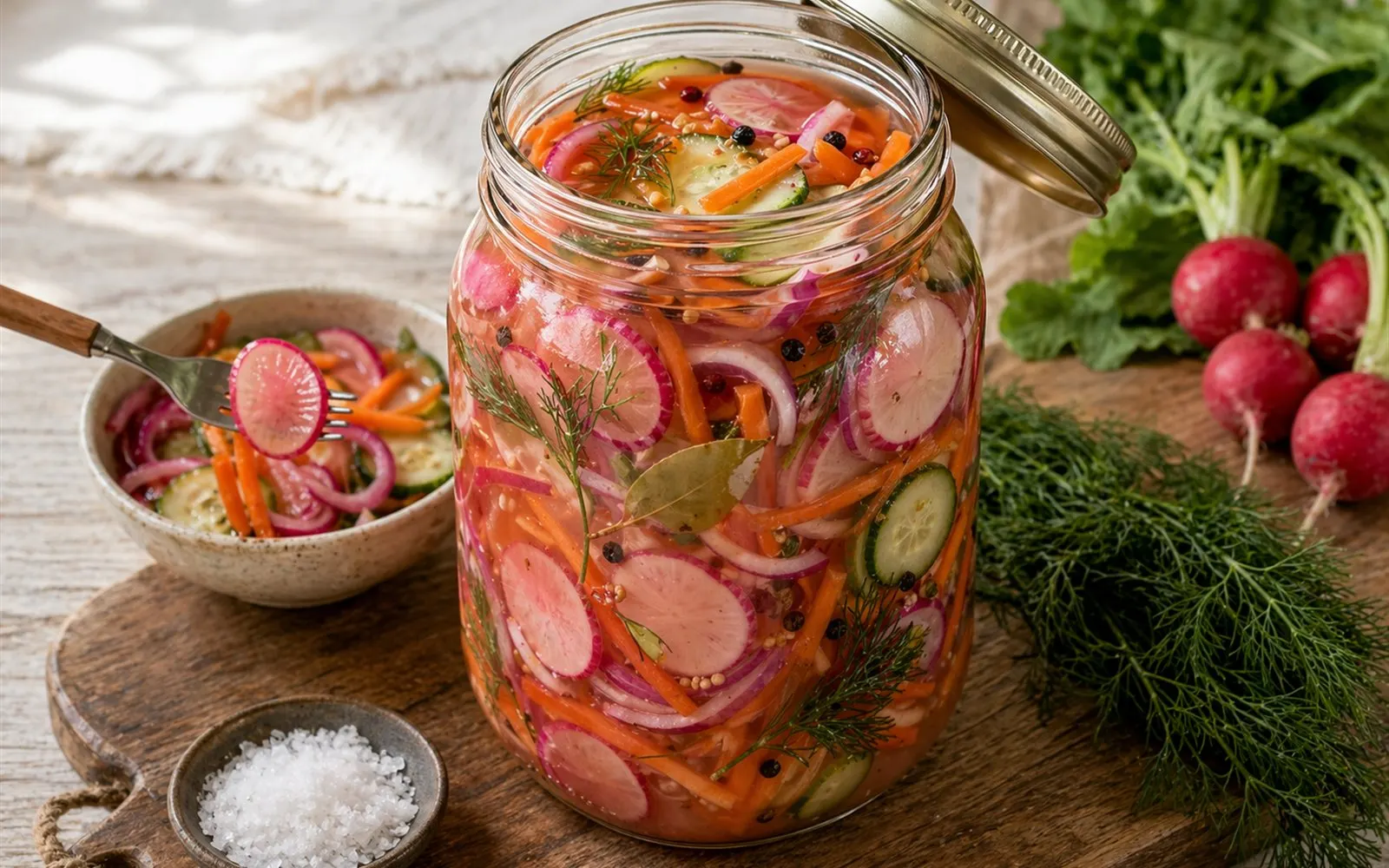
Quick-Pickled Vegetables with Live Cultures — GutPlate recipe photo
sides 10 min

Quick-Pickled Vegetables with Live Cultures

A 10-minute lacto-fermented pickle jar that turns radishes, carrots, and cucumbers into crunchy, tangy, probiotic-rich condiments — ready in 24 hours.

8 servings View recipe
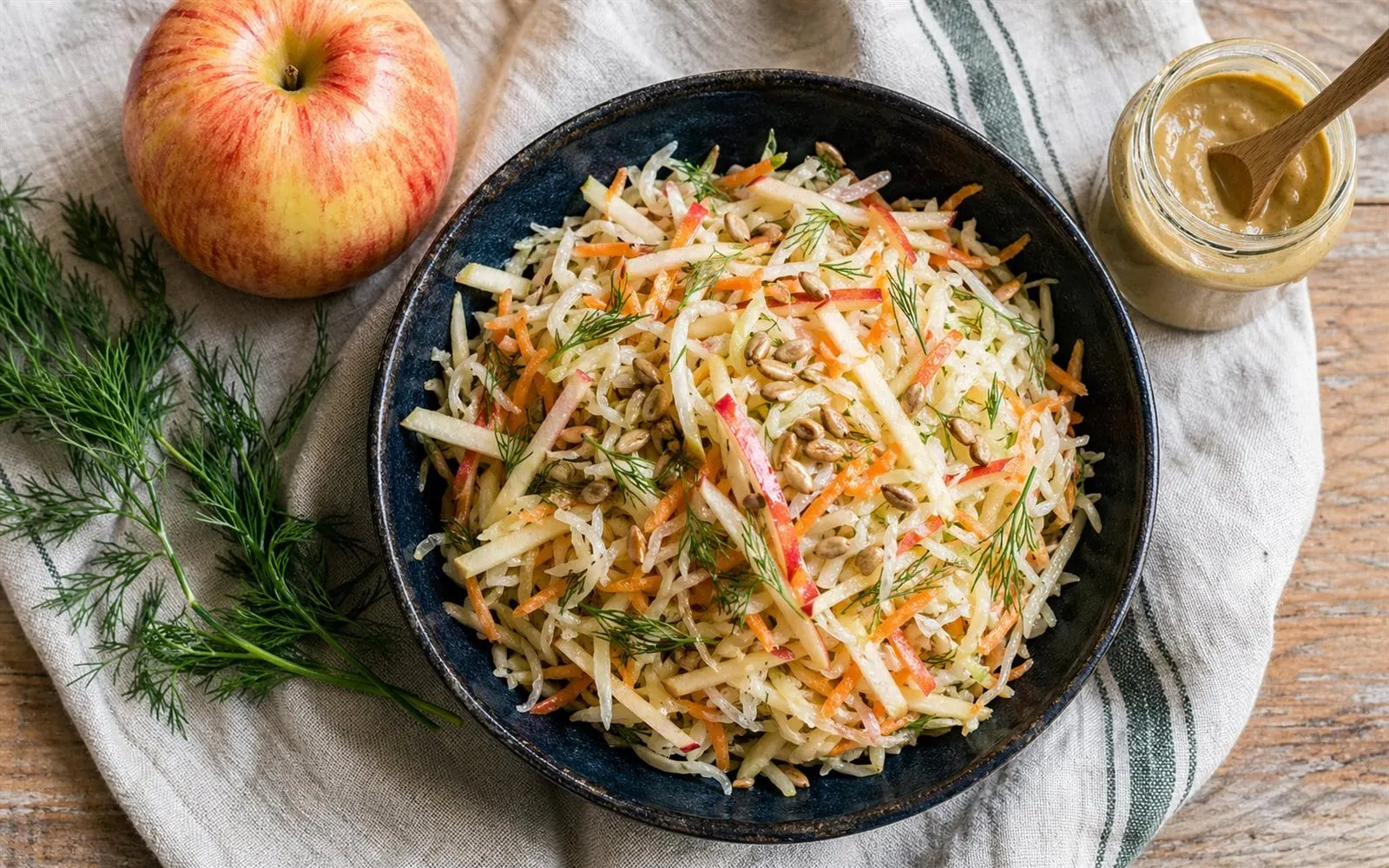
Sauerkraut & Apple Slaw — GutPlate recipe photo
sides 10 min

Sauerkraut & Apple Slaw

A 10-minute raw slaw that layers live sauerkraut with crisp apple, carrot, and a bright lemon-olive oil dressing — no cooking required.

4 servings View recipe
Green Goddess Gut Smoothie — GutPlate recipe photo
smoothies 5 min

Green Goddess Gut Smoothie

A creamy spinach-avocado smoothie with banana, kefir, and a spoonful of flaxseed — blends in 2 minutes and delivers prebiotics, probiotics, and omega-3s in one glass.

1 serving View recipe