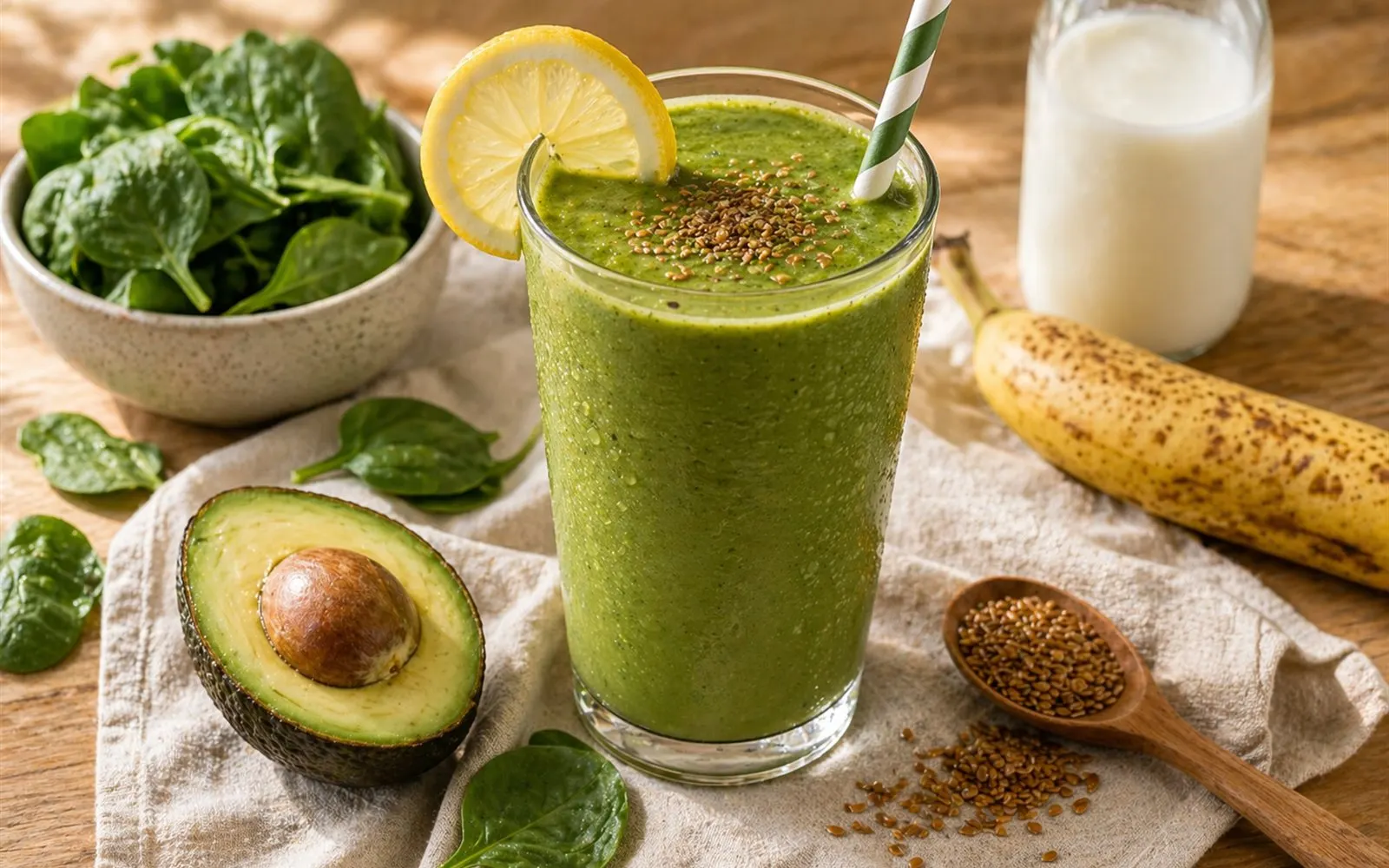
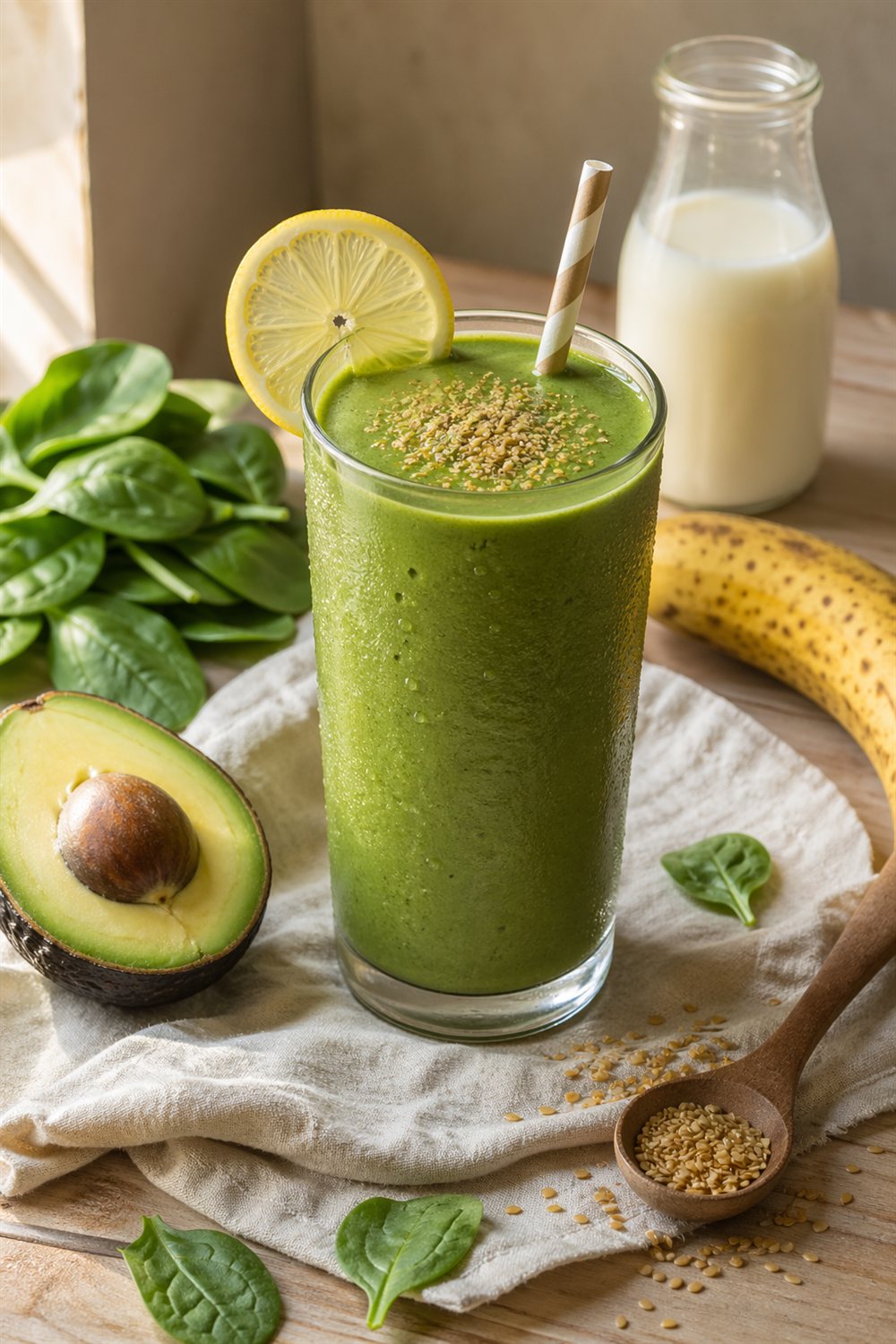
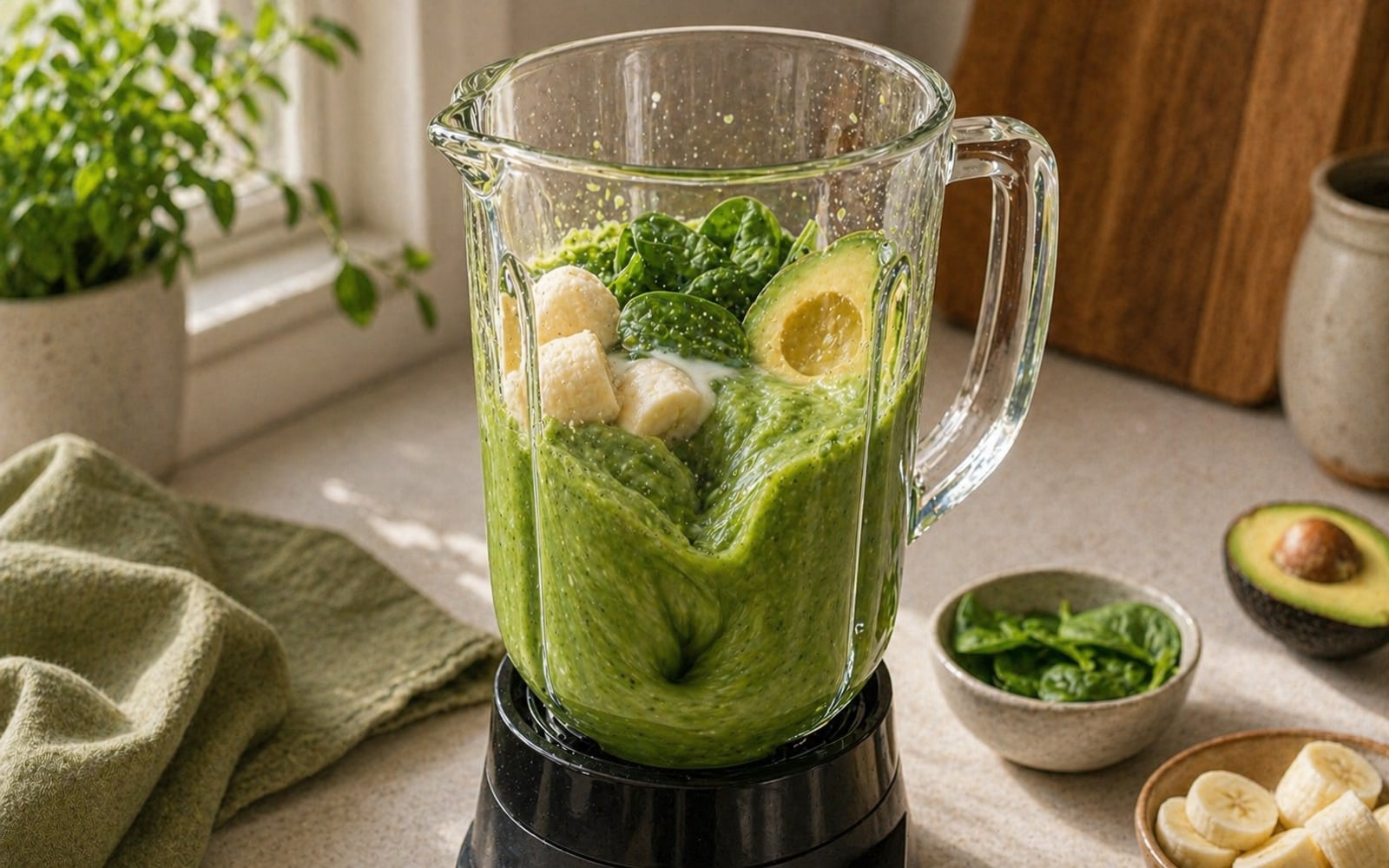
This smoothie works because it stacks three complementary gut-health mechanisms in a single glass — and understanding the science helps you see why the combination matters more than any single ingredient.
Probiotics from kefir. Kefir is fermented by a complex symbiotic culture of bacteria and yeasts (often called kefir grains) that produces a remarkably diverse microbial community — typically 12 to 30+ distinct strains, including species of *Lactobacillus*, *Lactococcus*, *Leuconostoc*, and the yeast *Saccharomyces*.[1] This is 3-5x more diversity than most commercial yogurts. The fermentation also produces bioactive peptides and exopolysaccharides that have demonstrated anti-inflammatory effects in cell culture studies.[2]
Prebiotic fiber from flaxseed and banana. Ground flaxseed contains mucilage — a soluble gel-forming fiber that is selectively fermented by *Bifidobacterium* and *Roseburia* in the colon, producing short-chain fatty acids (primarily butyrate and propionate).[3] The ripe banana adds fructooligosaccharides (FOS), another well-characterized prebiotic that stimulates the same beneficial genera. Together, you're providing roughly 9 grams of fiber — about a third of the daily recommended intake — in formats that your gut bacteria can actually use.
Polyphenols from spinach. Spinach contains flavonoids (mainly kaempferol and quercetin) and hydroxycinnamic acids that are poorly absorbed in the small intestine — which is actually a good thing for your microbiome, because they reach the colon largely intact and act as selective growth substrates for beneficial bacteria.[4] A 2020 study found that regular green leafy vegetable consumption was associated with significantly higher populations of *Faecalibacterium prausnitzii*, one of the most important anti-inflammatory commensals in the human gut.
The avocado adds one more layer. A randomized controlled trial at the University of Illinois found that daily avocado consumption increased microbial diversity, increased the relative abundance of fiber-fermenting bacteria, and increased fecal concentrations of short-chain fatty acids compared to a control group — effects attributed to avocado's combination of fiber and monounsaturated fat.[5]
The net effect is a smoothie that delivers live microbes (from the kefir), fuel for those microbes (from the flax and banana fiber), and polyphenols that shape which microbes thrive (from the spinach and avocado). This three-layer approach — seed, feed, and shape — is more effective than any single probiotic supplement, and it takes two minutes to make.