Skip to content

Banana-Kefir Smoothie

A 3-minute probiotic smoothie with ripe banana, plain kefir, ground flax, and almond butter — your easiest daily gut support.

Jump to recipe
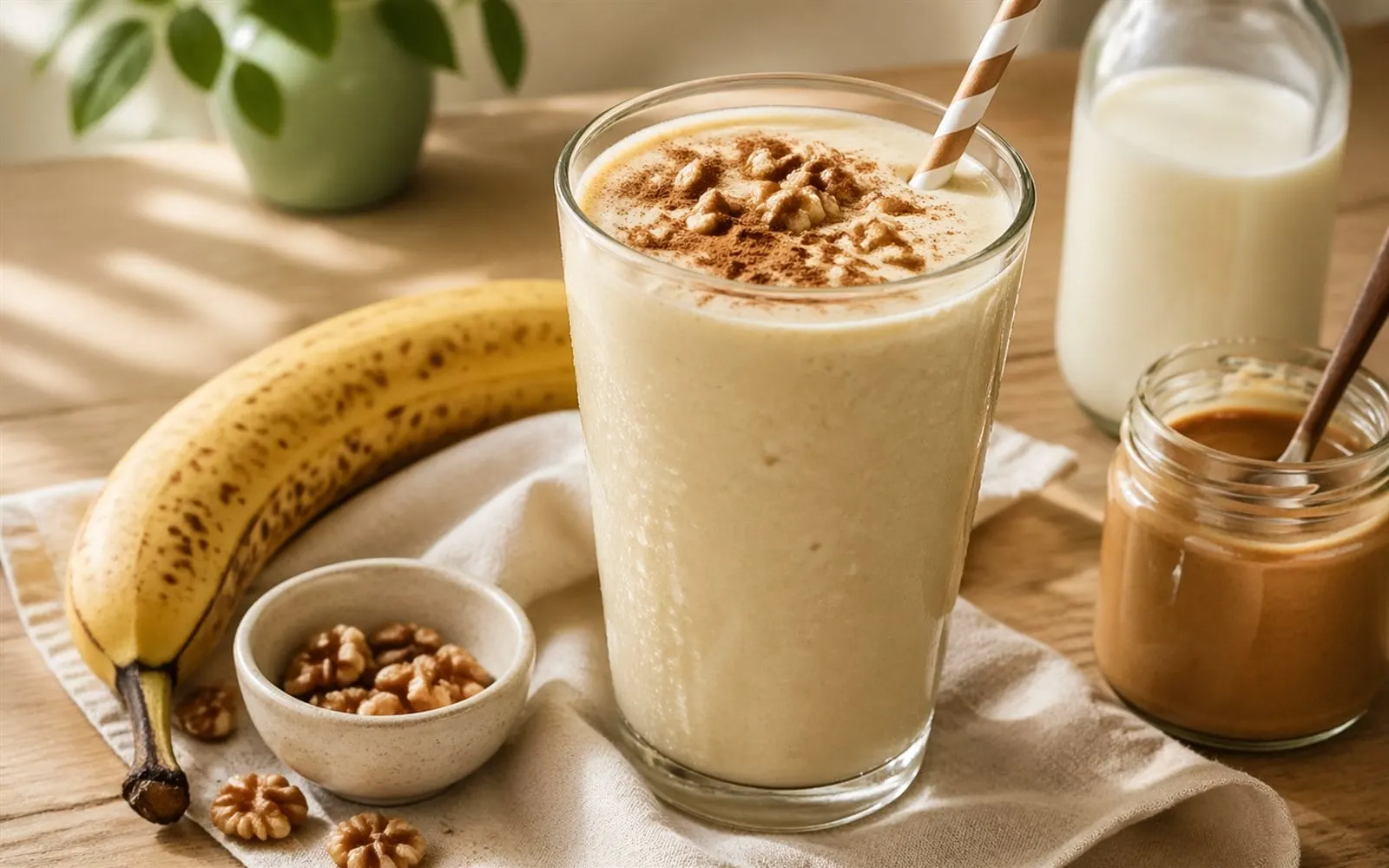
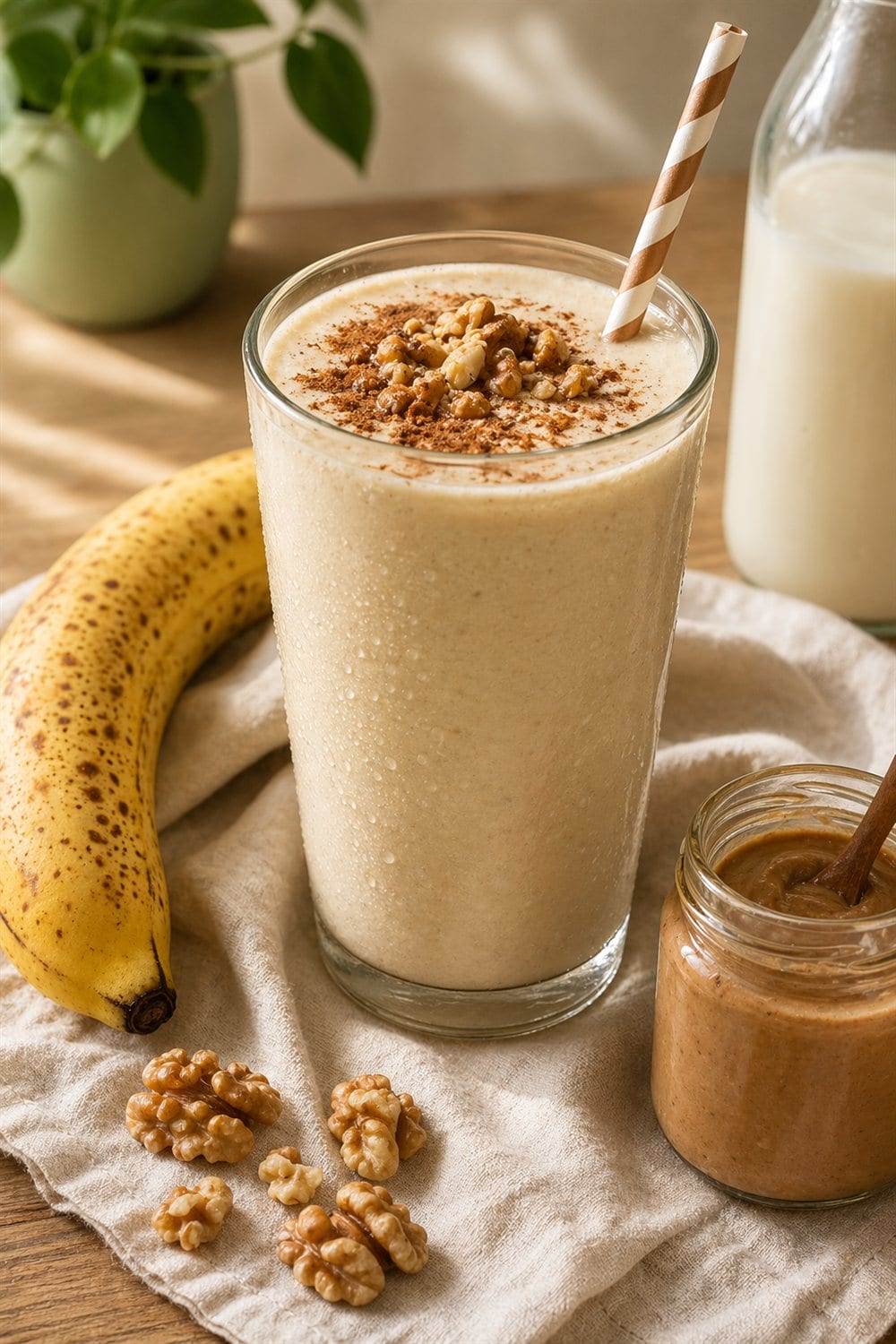
Banana-Kefir Smoothie — GutPlate recipe photo
Prep
3 min
Cook
Total
3 min
Serves
1 tall glass

Why you'll love this recipe

  • Three minutes start to finish, one pan to wash (the blender).
  • A single glass delivers 10+ strains of probiotic cultures from kefir.
  • Natural inulin from the banana is fuel for the probiotics — prebiotic + probiotic in one drink.
  • 6g of fiber from flax alone, without gritty texture.
  • Works as breakfast, a post-workout drink, or an afternoon substitute for snacking.
  • Easily swappable — frozen berries instead of banana, any nut butter, any spice.

If overnight oats feel like too much of a project on a Monday morning, a banana-kefir smoothie gets you most of the same gut-healthy ingredients in under five minutes. Kefir pulls double duty as both the liquid and the probiotic; the banana brings natural sweetness and inulin (a prebiotic fiber that feeds your beneficial bacteria); ground flax adds soluble fiber and plant-based omega-3s. What makes this a genuine gut-health recipe rather than just another fruit smoothie is the combination — the inulin from the banana is exactly the kind of fiber the bacteria in the kefir want to eat, so you’re not just swallowing probiotics, you’re sending them lunch.
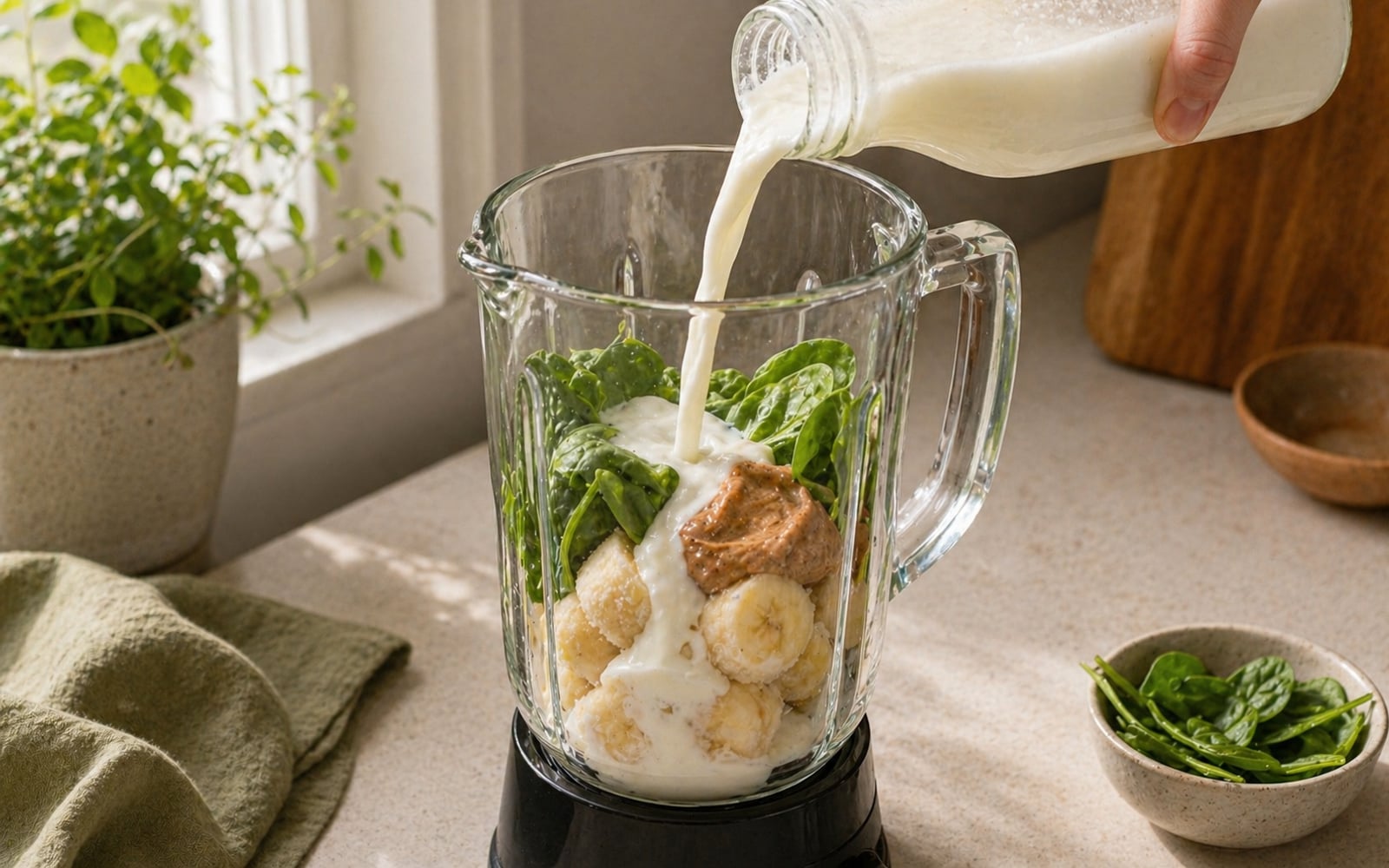
Kefir being poured into a blender with frozen banana chunks, spinach, and a spoonful of almond butter.

Two small habits keep this smoothie working hard. Freeze your bananas when they’re spotty-ripe, sliced into chunks in a zip bag — they’ll be sweeter and creamier than a just-yellow banana, and they skip the need for ice (which dilutes flavor). Second, buy kefir from the refrigerated aisle with a label that lists specific strains, not just a vague “contains live cultures.” Shelf-stable drinks marketed as “kefir” have been pasteurized and have already lost most of their organisms — you might as well be drinking sweetened milk.

Drink it cold and immediately. The longer kefir sits after blending, the warmer it gets and the more the texture breaks down, and — marginally — the faster the cultures lose activity. If you’re sensitive to high-FODMAP fruit, a smaller or firmer banana keeps you within the Monash-tested range, and lactose-free kefir is widely available and works identically in flavor and probiotic count.
Key ingredients

Why these ingredients

Plain kefir

Kefir grains are a symbiotic culture of 10–30 species of bacteria and yeast — far more diverse than yogurt's 2–3 strains. That diversity is what makes kefir the best single-food probiotic source in the refrigerator aisle. Look for brands that list specific strains, not just 'contains live cultures.'

Ripe frozen banana

As bananas ripen, their resistant starch converts to simple sugars and inulin — a prebiotic fiber. A spotty-brown banana has more inulin than a green one and is dramatically sweeter, which is why freezing ripe bananas is the single best prep habit for smoothies.

Ground flaxseed

Two powers in one tablespoon: 2g of soluble fiber that feeds gut bacteria, and lignans that get converted into anti-inflammatory enterolignans in the colon. Whole flax passes through undigested — grinding is essential.

Almond butter

Adds creaminess and healthy fat that slow sugar absorption, so this smoothie doesn't spike blood sugar the way a plain fruit-and-juice version would. Also sneaks in magnesium and vitamin E.

Cinnamon

Just a half teaspoon meaningfully slows gastric emptying, extending satiety. It also masks any mild tang from the kefir that first-timers sometimes find off-putting.

Before you start

Equipment

  • High-speed blender

    Vitamix, Ninja, or NutriBullet all work; cheap blenders leave flax gritty

  • Tall glass (16oz)

    Chilled in the freezer for 5 minutes keeps the smoothie cold longer

  • Freezer bag or container

    for pre-portioning banana chunks for the week

Recipe card

Banana-Kefir Smoothie

Prep
3 min
Cook
0 min
Total
3 min
Servings
1

Ingredients

Instructions

Notes

  • Freeze very ripe, spotty bananas in chunks — they're sweetest, creamiest, and highest in natural inulin at this stage.
  • Use refrigerated kefir with live cultures clearly listed on the label. Shelf-stable 'kefir drinks' are pasteurized and have lost most of their organisms.
  • For an extra fiber boost, stir in a teaspoon of psyllium husk after blending.

Nutrition per serving

Estimated; see our disclaimer.

Cal
330 kcal
Protein
12 g
Carbs
38 g
Fat
14 g
Fiber
6 g
Sugar
22 g
Sat Fat
3 g
Sodium
220 mg
Calcium
320 mg
Iron
1 mg

From our test kitchen

Pro tips

Freeze banana chunks, not whole

Pre-slice ripe bananas into 1-inch pieces and freeze flat on a tray, then transfer to a bag. Easier on the blender and no need to wait for them to soften.

Cold glass, cold smoothie

Stick your serving glass in the freezer when you start assembling. The 3-minute wait keeps the smoothie at peak texture and temperature — and the probiotics happier.

Salt unlocks the flavor

A tiny pinch of salt is the difference between a smoothie that tastes flat and one that tastes like itself. It amplifies the banana's sweetness and the cinnamon's warmth without making anything taste salty.

Sip, don't chug

This is a meal replacement, not a shot. Drink it across 10 minutes while eating a piece of toast or fruit. Your brain needs time to register the calories, and the slow sip extends satiety.

When things go sideways

Troubleshooting

Smoothie is too thin / watery.

Your banana probably wasn't frozen. Add 4–6 ice cubes and blend again, or freeze the whole mixture for 10 minutes before drinking. For next time: always freeze banana in advance.

Smoothie is grainy from the flax.

Pre-ground flax can still be coarse. Blend for a full 60 seconds on high, and make sure your blender is at least a NutriBullet-level high-speed model. Cheap immersion blenders won't fully break down seeds.

Tastes too tangy / sour.

Either your kefir is very aged (close to the expiration date tastes sharper) or your banana wasn't ripe enough. Fix now: add a pitted date or 1 teaspoon of honey. Next time: use a ripe spotty banana.

Separated in the fridge after blending.

Normal — kefir and almond butter separate within 30 minutes. Give it a hard shake or re-blend for 10 seconds. Best practice is to blend fresh.

Gives me bloating I didn't expect.

Bananas + kefir together are moderate-FODMAP for some people. Try switching to lactose-free kefir first, then if still an issue, swap banana for strawberries. Introduce fermented foods gradually if you're new to them.

Keep it fresh

Storage & reheating

Make ahead

The night before: measure all dry ingredients and almond butter into the blender jar, cover, and refrigerate. Add kefir and blend in the morning. Gets you from wakeup to first sip in 90 seconds.

Fridge

Best fresh. Will keep 8 hours in the fridge in a sealed bottle but separates and thins. Re-blend or shake vigorously before drinking.

Freezer

Pre-portion all ingredients (banana chunks, flax, almond butter, cinnamon) into freezer bags. Dump contents + 1 cup kefir into the blender each morning.

Reheat

Don't. Heat destroys the probiotic cultures. If you want a warm version, this isn't the recipe — try our Apple-Cinnamon Steel-Cut Oats instead.

Make it yours

Variations

Low-FODMAP (elimination-phase)

Swap the banana for 1 cup of frozen strawberries and use lactose-free kefir. Add 1/2 teaspoon of maple syrup for sweetness. Tested within FODMAP thresholds per Monash guidelines.

Green (hidden spinach)

Add 1 large handful of baby spinach to the blender. Changes the color to pale green but not the flavor. Adds folate, magnesium, and vitamin K with zero effort.

Chocolate-peanut butter

Swap almond butter for peanut butter and add 1 tablespoon of unsweetened cocoa powder. Tastes like a milkshake, feeds your microbiome anyway.

Higher-protein

Add a scoop (~25g) of vanilla or unflavored protein powder. Bumps protein to ~37g per glass — a legitimate post-workout recovery drink.

Coffee-banana

Replace 1/4 cup of the kefir with 1/4 cup of cold-brew coffee concentrate. Caffeine + probiotics + fiber = the best morning drink that isn't a cappuccino.

Pantry swaps

Ingredient substitutions

Instead of

Plain kefir

Use

Lactose-free kefir, coconut kefir, or 3/4 cup plain Greek yogurt + 1/4 cup milk

Greek yogurt thins out when blended and works surprisingly well. Coconut kefir for dairy-free.

Instead of

Ripe banana

Use

1 cup frozen mango, 1 cup strawberries, or 1/2 cup cooked-and-cooled sweet potato

Sweet potato sounds strange but makes a very thick, creamy base.

Instead of

Almond butter

Use

Peanut butter, cashew butter, tahini, or sunflower seed butter

Sunflower is nut-free for school drinks. Tahini gives a more savory, interesting flavor.

Instead of

Ground flaxseed

Use

Ground chia seeds or hemp hearts

Chia thickens more. Hemp adds slight grassy note and more protein.

Instead of

Cinnamon

Use

Cardamom, pumpkin pie spice, or a grating of fresh nutmeg

Cardamom + banana is particularly elegant.

Plate it up

What to serve with it

The evidence

Why this is good for your gut

A single glass of this smoothie pulls off something that's genuinely hard to achieve with breakfast: it's both probiotic *and* prebiotic, in useful quantities, without tasting like a supplement. Understanding why gives you leverage to adapt it.

The probiotic half comes from kefir. Traditional milk kefir is fermented using a kefir grain — a mother culture containing 10 to 30 species of lactic-acid bacteria and yeasts living symbiotically. A typical 1-cup serving of commercial kefir carries 10^9 to 10^10 colony-forming units across strains including *Lactobacillus kefiri*, *Lactobacillus acidophilus*, *Leuconostoc mesenteroides*, *Saccharomyces kefir*, and several *Streptococcus thermophilus* varieties.[1] That diversity matters: randomized trials have shown that kefir consumption increases gut microbial diversity and reduces inflammation markers more effectively than single-strain probiotic supplements at comparable doses.[2] One 6-week study of people with functional GI complaints found 56% symptom improvement on daily kefir vs 22% on placebo.[3]

The prebiotic half comes from the ripe banana and ground flax. A medium ripe banana contains roughly 2g of inulin and fructooligosaccharides (FOS) — fermentable fibers that selectively promote growth of *Bifidobacterium* species in the colon.[4] Crucially, inulin content increases as the banana ripens: a green banana is richer in resistant starch, a spotty-ripe one is richer in inulin. Both are beneficial, but the spotty one blends into a better-tasting smoothie. Ground flaxseed adds another 2g of soluble fiber per tablespoon, plus lignans that gut bacteria convert into enterolignans — compounds with measurable anti-inflammatory effects at the colonic mucosa.[5]

The real value of pairing them is synergy. Probiotics without prebiotic fuel tend to pass through the gut without establishing much of a foothold; prebiotics without probiotics feed whatever bacteria are already there, good or bad. Drinking them together — what the microbiome research community calls a synbiotic — is consistently associated with better outcomes than either alone.[6]

One practical implication: the smoothie works harder if you drink it alongside a fiber-rich meal rather than on an empty stomach. The delivered bacteria and the inulin are more likely to reach the colon together if they're traveling with a bulk of other plant material. Which is why pairing this with a slice of whole-grain toast, or drinking it 20 minutes into a bowl of fruit and nuts, is a small but meaningful optimization.

Good questions

Frequently asked questions

Why kefir instead of yogurt?

Kefir typically carries 10–30 strains of bacteria and yeast, versus 2–3 in most yogurts — a much broader probiotic profile. Its naturally thin consistency also blends cleaner into smoothies, so you don't need to add as much liquid.

Is this smoothie low-FODMAP?

A ripe banana is moderate-FODMAP. For strict elimination, use a small firm banana (under 100g / 3.5oz) or swap in 1/2 cup strawberries + 1/2 cup frozen pineapple. Lactose-free kefir is also widely available if dairy is the issue.

Can I add greens?

A large handful of baby spinach blends in cleanly — you'll see the color shift but barely taste it. Frozen kale is more assertive; pre-steamed and frozen is milder than raw.

Does freezing kefir kill the probiotics?

Slowing down, not killing. Lactobacillus survives freezing fine; the issue is heat. Frozen kefir smoothie bases lose maybe 10–15% of their CFU count, which is negligible compared to a pasteurized alternative.

Can I make it ahead?

Assemble everything in the blender jar the night before and keep in the fridge, then blend in the morning. Don't pre-blend — it separates and loses its texture within an hour.

My kefir tastes very tangy. Will the smoothie be sour?

Ripe banana + 1/2 teaspoon cinnamon balance a tangy kefir beautifully. If yours is very acidic, add a single pitted Medjool date or a teaspoon of maple syrup to round it out.

References

  1. Kefir: A microbiota-targeted functional food — Frontiers in Microbiology↩ back
  2. Fermented-food diet increases microbiome diversity, decreases inflammatory proteins — Cell↩ back
  3. Effects of kefir on the symptoms of functional gastrointestinal disorders — Nutrients↩ back
  4. Bananas, fructans and the gut microbiota — Food & Function↩ back
  5. Flaxseed lignans and gut microbial conversion to enterolignans — Journal of Functional Foods↩ back
  6. Synbiotic supplementation and gut microbiota outcomes — Advances in Nutrition↩ back

Loved this recipe?

Save it to your Pinterest boards or share with a friend who needs more gut-friendly weeknight meals.

Newsletter

Weekly gut-friendly recipes, straight to your inbox.

One email every Sunday — new recipes, a practical gut-health tip, and zero spam. Unsubscribe anytime.

No spam 1-click unsubscribe

Signup coming soon. Follow us on Pinterest in the meantime.

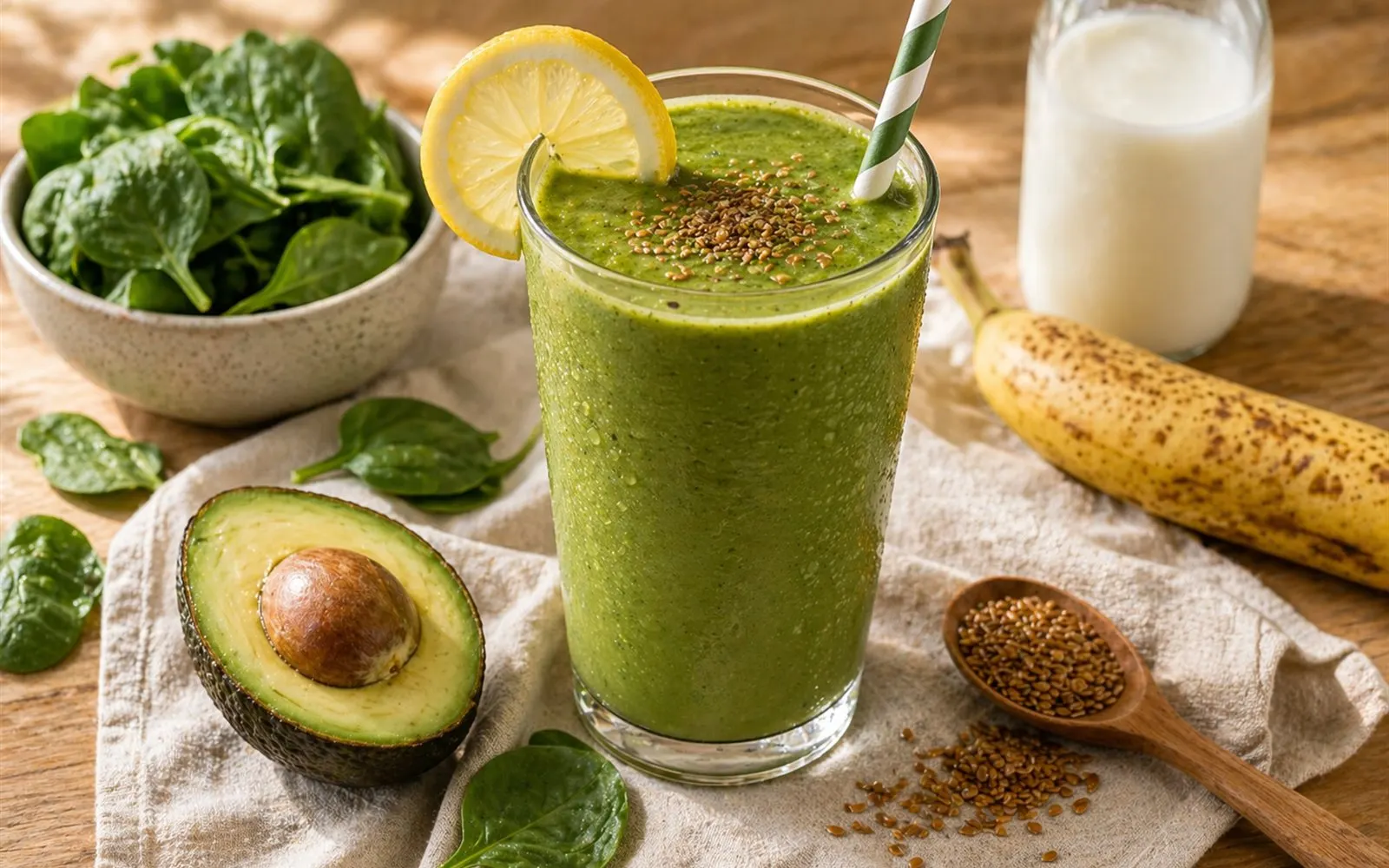
Green Goddess Gut Smoothie — GutPlate recipe photo
smoothies 5 min

Green Goddess Gut Smoothie

A creamy spinach-avocado smoothie with banana, kefir, and a spoonful of flaxseed — blends in 2 minutes and delivers prebiotics, probiotics, and omega-3s in one glass.

1 serving View recipe
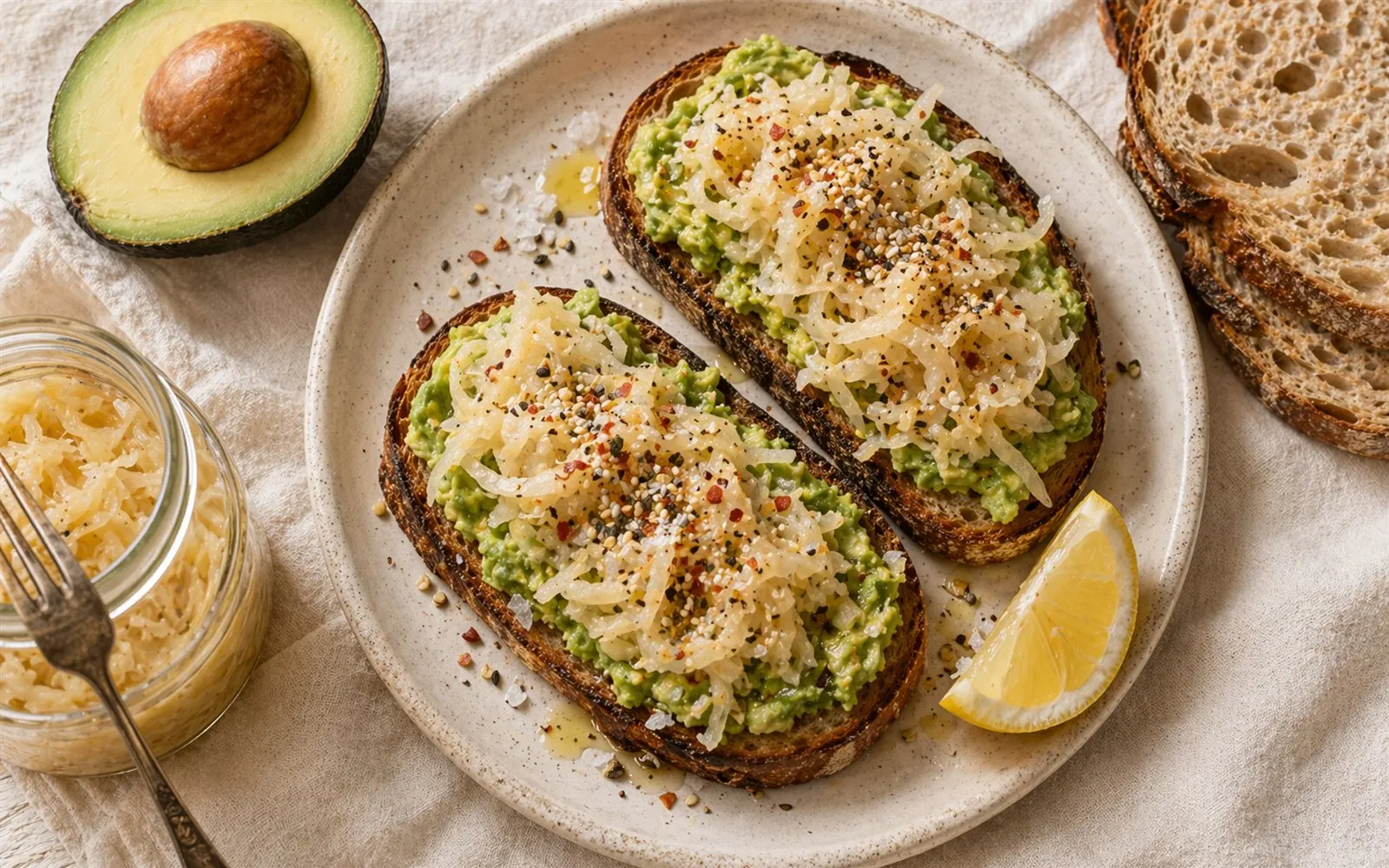
Sourdough Avocado Toast with Sauerkraut — GutPlate recipe photo
breakfast 8 min

Sourdough Avocado Toast with Sauerkraut

Crispy sourdough topped with smashed avocado, a generous spoonful of raw sauerkraut, everything bagel seasoning, and a squeeze of lemon — fermented meets fiber in 5 minutes.

1 serving View recipe
Overnight Oats with Kefir & Berries — GutPlate recipe photo
breakfast 5 min

Overnight Oats with Kefir & Berries

A no-cook gut-friendly breakfast that pairs probiotic kefir with prebiotic oats and antioxidant-rich berries. Ready in 5 minutes the night before.

1 serving View recipe