Skip to content

Overnight Oats with Kefir & Berries

A no-cook gut-friendly breakfast that pairs probiotic kefir with prebiotic oats and antioxidant-rich berries. Ready in 5 minutes the night before.

Jump to recipe
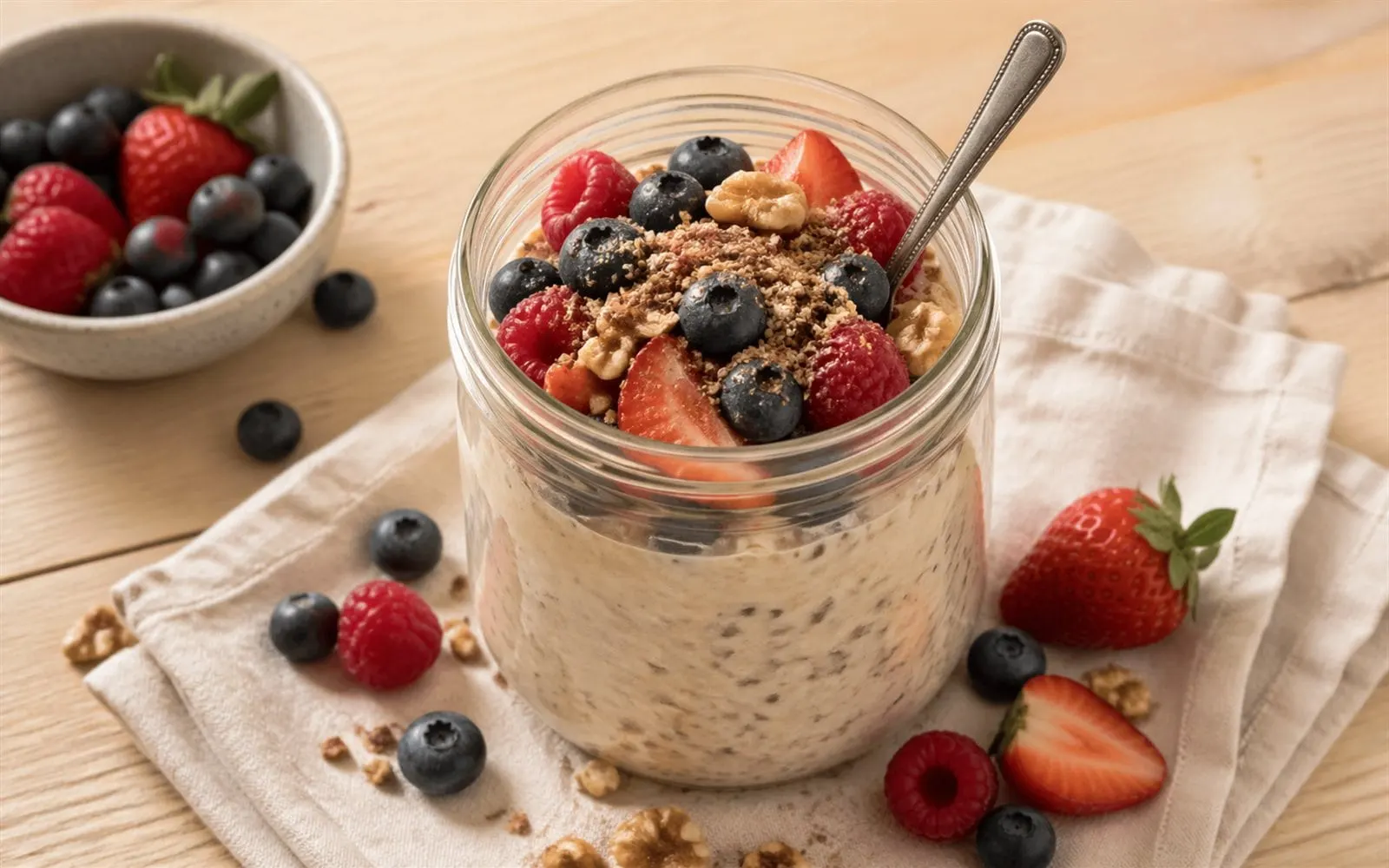
Overnight Oats with Kefir & Berries — GutPlate recipe photo
Prep
5 min
Cook
Total
5 min
Serves
1 jar

Why you'll love this recipe

  • 5 minutes the night before — breakfast is done before you've brushed your teeth.
  • A true synbiotic: probiotic kefir + prebiotic oats in one jar.
  • 18g of protein and 10g of fiber — the unicorn combination for real satiety.
  • Scales to the whole week. Make 4 jars Sunday night.
  • No cooking, no cleanup — perfect for summer mornings when you don't want the stove on.
  • Endlessly customizable — any fruit, any nut, any seed.

If you are looking for a low-effort breakfast that actively supports your gut, overnight oats with kefir are as close to a one-jar wonder as it gets. Kefir delivers a broader mix of live bacterial and yeast strains than most yogurts, while rolled oats bring beta-glucan — a fermentable fiber that acts as fuel for those bacteria once they reach your colon. The chia seeds add omega-3s and soluble fiber that gels overnight, giving you the pudding-like texture that makes this breakfast feel indulgent. The berries contribute polyphenols that encourage beneficial bacteria, and the walnuts and flax add plant omega-3s and anti-inflammatory lignans. Pound for pound, there’s not much else on a breakfast table that’s doing more for your gut while asking less of your morning.
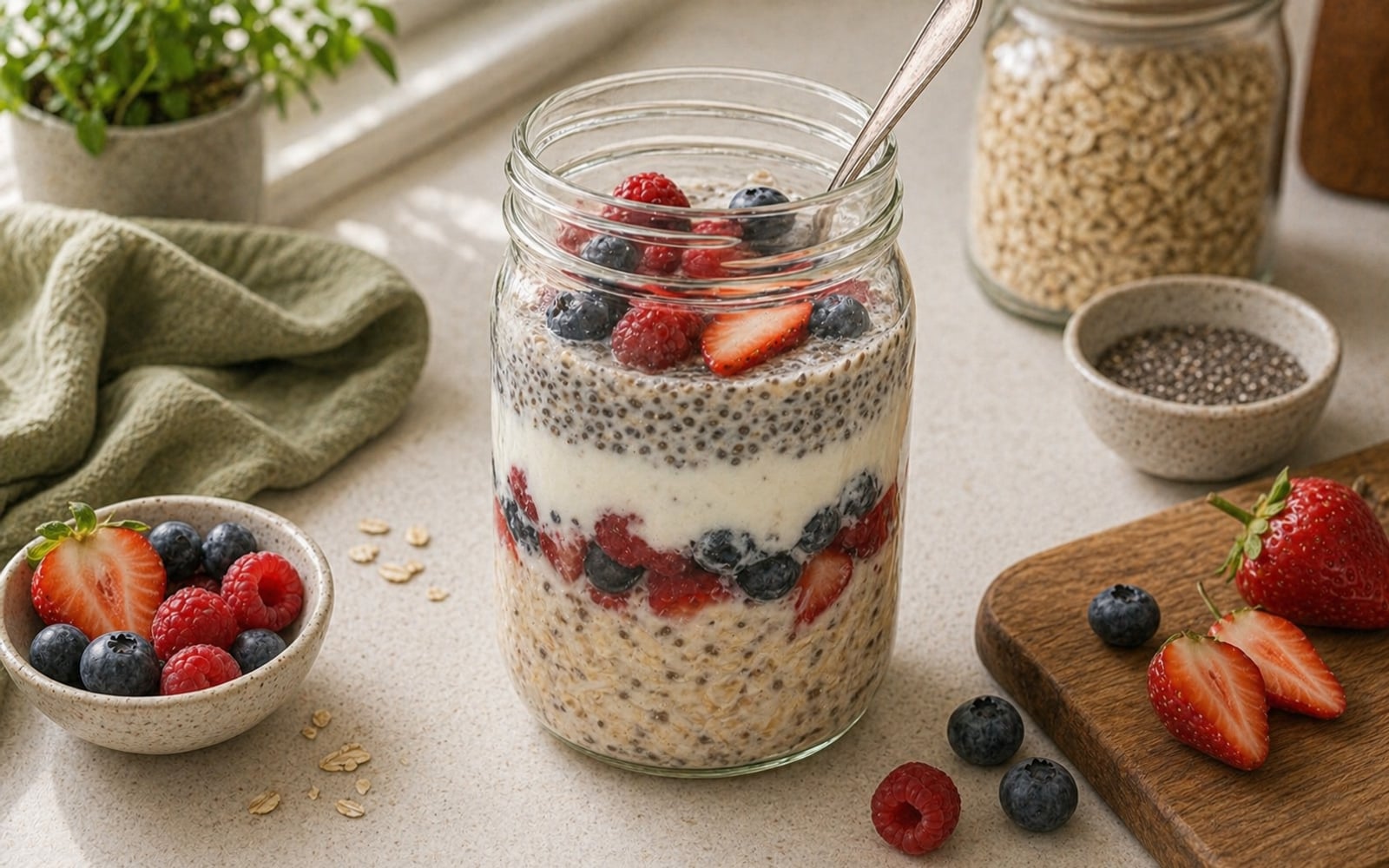
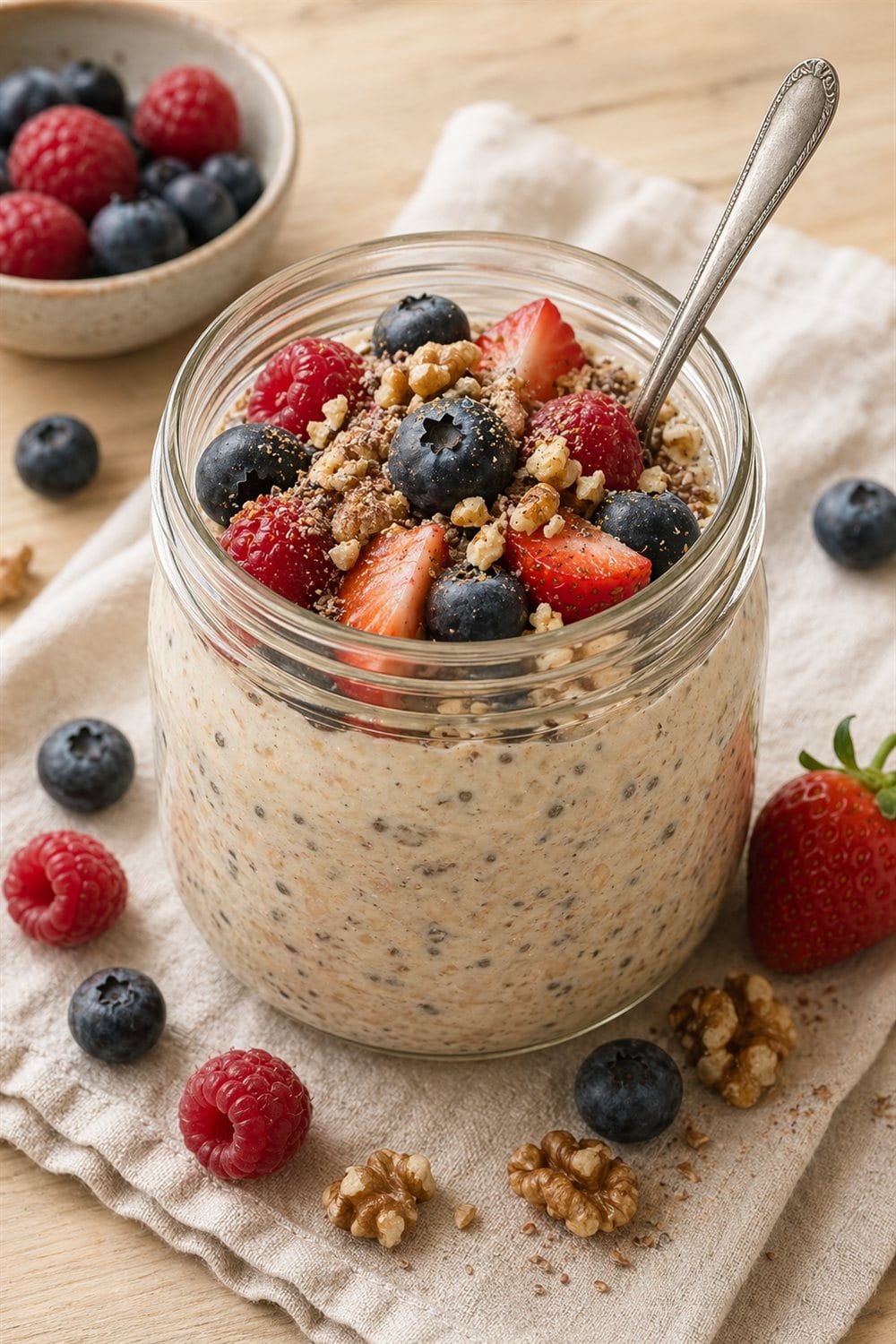
A glass jar layered with overnight oats, kefir, chia seeds, and mixed berries — the layers visible through the glass, ready for the fridge.

The recipe is written for a single 12-ounce jar, but it scales cleanly. Stir up three or four jars on Sunday night and you have grab-and-go breakfasts that hold for up to three days. Add the fresh toppings in the morning so the berries stay bright and the walnuts stay crunchy. Five minutes of prep on Sunday saves you twenty-five minutes of morning decisions over the week — and removes any chance of breakfast being a bowl of something less useful.

One small note on timing: live cultures do their best work when they are not heat-shocked, so keep this breakfast refrigerated until you serve it. If you prefer warm oats on a cold morning, reserve kefir for a side glass (sipping a small glass of cold kefir alongside warm oats gets you much of the same benefit) and make a separate cooked oat porridge instead. You still get the beta-glucan from the warm oats; you just preserve the probiotics in the drink.
Key ingredients

Why these ingredients

Plain whole-milk kefir

Kefir carries 10+ strains of bacteria and yeast versus 2–3 in most yogurts. The whole-milk version is worth the extra fat — it slows sugar absorption from the oats and keeps you fuller, longer. Look for brands that list specific strains on the label.

Rolled oats

Rolled oats are a rich source of beta-glucan, a soluble fiber that forms a gel in your gut and feeds Bifidobacterium and Roseburia — two of the most beneficial bacteria in a healthy microbiome. The gel also keeps blood sugar steady, which is why oat breakfasts don't give you a 10am crash.

Chia seeds

Chia's mucilage absorbs liquid overnight and gives overnight oats their pudding-like texture. More importantly, it adds 4g of mostly-soluble fiber per tablespoon — prebiotic fuel that your probiotic bacteria in the kefir will ferment into short-chain fatty acids.

Fresh berries

Berries are among the highest-polyphenol foods you can eat. Polyphenols selectively encourage beneficial bacteria (especially Akkermansia and Bifidobacterium) and have measurable anti-inflammatory effects. The colors aren't just pretty — they're biomarkers of the compounds doing the work.

Walnuts and ground flax

Added at serving for crunch and extra nutrition. Walnuts bring alpha-linolenic acid (plant omega-3s) and polyphenols. Flax adds lignans — compounds your gut bacteria convert into anti-inflammatory enterolignans.

Before you start

Equipment

  • Pint-size glass jar with lid

    12oz minimum, wider is easier to stir

  • Spoon or small whisk

    for the initial stir

  • Measuring cup

    1/2 cup for oats, 3/4 cup for kefir — accuracy matters for texture

Recipe card

Overnight Oats with Kefir & Berries

Prep
5 min
Cook
0 min
Total
5 min
Servings
1

Ingredients

Base

Toppings

Instructions

Notes

  • Use refrigerated kefir with live cultures clearly listed on the label — ultra-pasteurized brands have lost most of their probiotic value.
  • Rolled oats (old-fashioned) are essential. Steel-cut oats stay too firm overnight; quick-cooking oats go to mush.
  • The recipe scales cleanly — make 3–4 jars at once for the week, add toppings each morning.

Nutrition per serving

Estimated; see our disclaimer.

Cal
430 kcal
Protein
18 g
Carbs
58 g
Fat
14 g
Fiber
10 g
Sugar
16 g
Sat Fat
3 g
Sodium
260 mg
Calcium
340 mg
Iron
3 mg

From our test kitchen

Pro tips

Shake don't stir

Screw on the jar lid tight and shake vigorously for 10 seconds instead of stirring. Easier, faster, and it dislodges any dry oats at the bottom better than a spoon.

Whole-milk kefir is worth it

Skim and 1% kefirs have less fat, which means less satiety and faster sugar absorption. Splurge on whole-milk — you'll feel fuller longer, and the fat doesn't spike cholesterol when you're eating real kefir.

Freeze-thaw berries if fresh aren't in season

Frozen berries released into the oats overnight turn the whole jar pretty pink-purple and infuse the kefir with their flavor. Not as fresh-tasting as summer berries, but great in the middle of winter.

Chia at the start, flax at the end

Chia needs the overnight hydration to gel. Flax, added at the last minute, stays more nutritionally intact (fresh-ground means fresher omega-3s on your tongue).

When things go sideways

Troubleshooting

Oats are too thick / gluey in the morning.

Chia absorbed more liquid than expected. Stir in 2–3 tablespoons of extra kefir or milk until it's scoopable. Next time, use 1 cup liquid instead of 3/4 cup.

Oats are still too liquid / soupy.

Either your chia was old (lost gelling power) or you used instant oats that don't absorb the same way. Stir in another teaspoon of chia and refrigerate another 2 hours.

Tastes too sour.

Your kefir is close to expiration — more acidic with age. Add 1 extra teaspoon of maple syrup and a generous pinch of cinnamon to balance. Or use a fresher kefir next time.

Dry clumps of oats at the bottom.

You didn't stir well enough before refrigerating. Always shake the jar for 10 seconds with the lid on after mixing to make sure every oat is coated in liquid.

Oats taste bland / flat.

Probably no salt. A pinch of fine sea salt amplifies the oats' own nuttiness and the berries' sweetness. Add a tiny pinch now and stir.

Kefir separated from the oats overnight.

Normal — a thin whey layer can form on top. Just stir it back in. If it's very watery, it means your kefir was close to expiration and breaking down.

Keep it fresh

Storage & reheating

Make ahead

Built for it. 5 minutes of prep Sunday night = 3–4 mornings sorted. Make multiple jars simultaneously, store without toppings, finish each morning with whatever fruit you have.

Fridge

Plain oats keep 3 days in a sealed jar. Add toppings only when you serve. After 3 days the oats turn mushy and the kefir loses its bright tang.

Freezer

Not recommended. Kefir's texture breaks down after freeze-thaw, and the oats go grainy. This is a fridge-only recipe.

Reheat

Don't. Heat above 115°F (46°C) kills the probiotic cultures. Eat cold — the texture is better anyway.

Make it yours

Variations

Peanut butter banana

Swap the berries for 1/2 sliced banana and stir 1 tablespoon of peanut butter into the base. Top with cacao nibs. Tastes like a peanut butter cup for breakfast.

Cinnamon-apple

Add 1/2 teaspoon of cinnamon to the base and stir in 1/2 of a grated apple (peel on). Top with toasted pecans. Fall comfort food, no cooking required.

Low-FODMAP (elimination phase)

Use lactose-free kefir, swap berries for 1/2 cup strawberries only (not mixed), skip the maple syrup, and keep oats to 1/2 cup. Tested within Monash thresholds.

Savory miso oats

Skip all sweeteners. Stir 1 teaspoon of white miso paste into the kefir, top with a 6.5-minute egg, sliced scallion, and toasted sesame seeds. Unexpectedly amazing.

Tropical coconut

Replace 1/4 cup of the kefir with 1/4 cup canned coconut milk. Top with diced mango, toasted coconut flakes, and lime zest. Vacation in a jar.

Pantry swaps

Ingredient substitutions

Instead of

Plain whole-milk kefir

Use

Lactose-free kefir, coconut kefir, or 1/2 cup Greek yogurt + 1/4 cup milk

Coconut kefir for dairy-free — make sure it's the refrigerated kind with live cultures.

Instead of

Rolled oats

Use

Quinoa flakes or rolled buckwheat

Both are gluten-free by nature. Quinoa flakes are fluffier; buckwheat slightly nuttier.

Instead of

Chia seeds

Use

Ground flaxseed (double the amount — 2 tbsp) or basil seeds

Flax-only version is less pudding-like, more porridge-like.

Instead of

Maple syrup

Use

Honey, 1/2 teaspoon stevia, or skip entirely if berries are sweet

Ripe summer berries are sweet enough to skip all added sugar.

Instead of

Mixed berries

Use

Diced apple, pear, peach, stone fruit, or pomegranate arils

Any fresh fruit works. Avoid watery fruits (watermelon, citrus) that thin the oats.

Instead of

Walnuts

Use

Pecans, almonds, hazelnuts, or toasted pumpkin seeds

Pumpkin seeds for nut-free, pecans for the most dessert-like vibe.

Plate it up

What to serve with it

The evidence

Why this is good for your gut

This recipe is one of the clearest examples of a synbiotic in everyday cooking — a food that combines live probiotic cultures with the prebiotic fibers those bacteria prefer to eat. Understanding why the combination matters more than the sum of its parts is the core idea.

Probiotics alone (isolated bacteria from a pill, say) tend to pass through the gut without establishing a long-term foothold. They can still have transient benefits, but the bacteria you're swallowing today are mostly gone within a couple of weeks.[1] Prebiotics alone (fiber supplements) feed whatever bacteria are already there — helpful if your baseline microbiome is good, but less useful if it isn't. Putting them together dramatically improves outcomes. Randomized trials of synbiotic interventions in people with functional GI symptoms have shown significantly better results than either probiotics or prebiotics alone.[2]

The kefir half delivers 10^9 to 10^10 colony-forming units per cup, spread across 10–30 species including *Lactobacillus kefiri*, *Lactobacillus acidophilus*, *Leuconostoc mesenteroides*, and several beneficial yeast strains like *Saccharomyces kefir*.[3] That diversity is the critical point: single-strain probiotic supplements can only do what one strain does, while a complex fermented food exposes your gut to a whole community of organisms that interact with each other and with your existing microbiome.

The oats half delivers the prebiotic fuel, principally through beta-glucan. A half-cup of rolled oats contains roughly 2g of beta-glucan, a soluble fiber that preferentially feeds *Bifidobacterium* and *Roseburia* — two of the most abundant beneficial bacteria in a healthy Western microbiome. Those bacteria ferment beta-glucan into short-chain fatty acids, especially butyrate, which fuels colonocytes and maintains the colonic mucus layer.[4]

The chia seeds add a second prebiotic: their soluble mucilage is fermented along a similar pathway but by slightly different bacterial groups, which means stacking chia on top of oats broadens the range of bacteria you're feeding. The berries layer on polyphenols, particularly anthocyanins, which selectively promote *Akkermansia muciniphila* — a bacterium associated with a healthy gut mucus layer and improved metabolic markers.[5] And the walnuts and ground flax deliver polyphenols, plant omega-3s, and lignans that gut bacteria convert into anti-inflammatory enterolignans.

Stacked together in one jar, this is roughly the microbiome equivalent of a full-spectrum supplement regimen — except it's real food, it tastes good, and eating it regularly is associated with measurable shifts in microbial diversity within 8–10 weeks in controlled trials.[6]

Good questions

Frequently asked questions

Can I use Greek yogurt instead of kefir?

Yes, but thin it with 3 tablespoons of milk so the oats soften properly. Greek yogurt provides some probiotics (usually 2–3 strains vs kefir's 10+) and thicker protein. It's a reasonable substitute, just lower on the probiotic side.

Is this recipe suitable during an elimination diet?

Standard dairy kefir is not low-FODMAP for most elimination-phase people. Use lactose-free kefir and stick with strawberries or blueberries (both low-FODMAP per Monash at the 1/2-cup serving). Skip the maple syrup and you're well within safe ranges.

Do I need to heat it?

No. Kefir's live cultures are heat-sensitive, so this breakfast is served cold. If you prefer warm oats on a winter morning, cook a separate pot of oatmeal and drink the kefir on the side.

Can I use frozen berries?

Yes, and they thaw overnight into the oats if you add them at the start — gives you a pretty pink-purple pudding. Fresh on top is crunchier and prettier; mixed-in is juicier. Your call.

Why do the oats taste sour?

That's just kefir's natural tang. If it's unpleasant, your kefir may be close to expiration (tangier with age). Use a younger kefir, or add a little more maple syrup and extra cinnamon to balance.

How long do they keep?

Plain oats (no toppings) keep 3 days in the fridge. After that the oats turn mushy and the kefir loses some flavor brightness. Fresh is best; always add fruit and nuts the morning you eat.

References

  1. Kefir: A microbiota-targeted functional food — Frontiers in Microbiology↩ back
  2. Synbiotic supplementation and gut microbiota outcomes — Advances in Nutrition↩ back
  3. The microbial diversity of traditional kefir grains — International Journal of Food Microbiology↩ back
  4. Beta-glucans, Roseburia, and butyrate production — Journal of Nutrition↩ back
  5. Berry polyphenols and Akkermansia muciniphila — Journal of Nutritional Biochemistry↩ back
  6. Fermented-food diet increases microbiome diversity — Cell↩ back

Loved this recipe?

Save it to your Pinterest boards or share with a friend who needs more gut-friendly weeknight meals.

Newsletter

Weekly gut-friendly recipes, straight to your inbox.

One email every Sunday — new recipes, a practical gut-health tip, and zero spam. Unsubscribe anytime.

No spam 1-click unsubscribe

Signup coming soon. Follow us on Pinterest in the meantime.

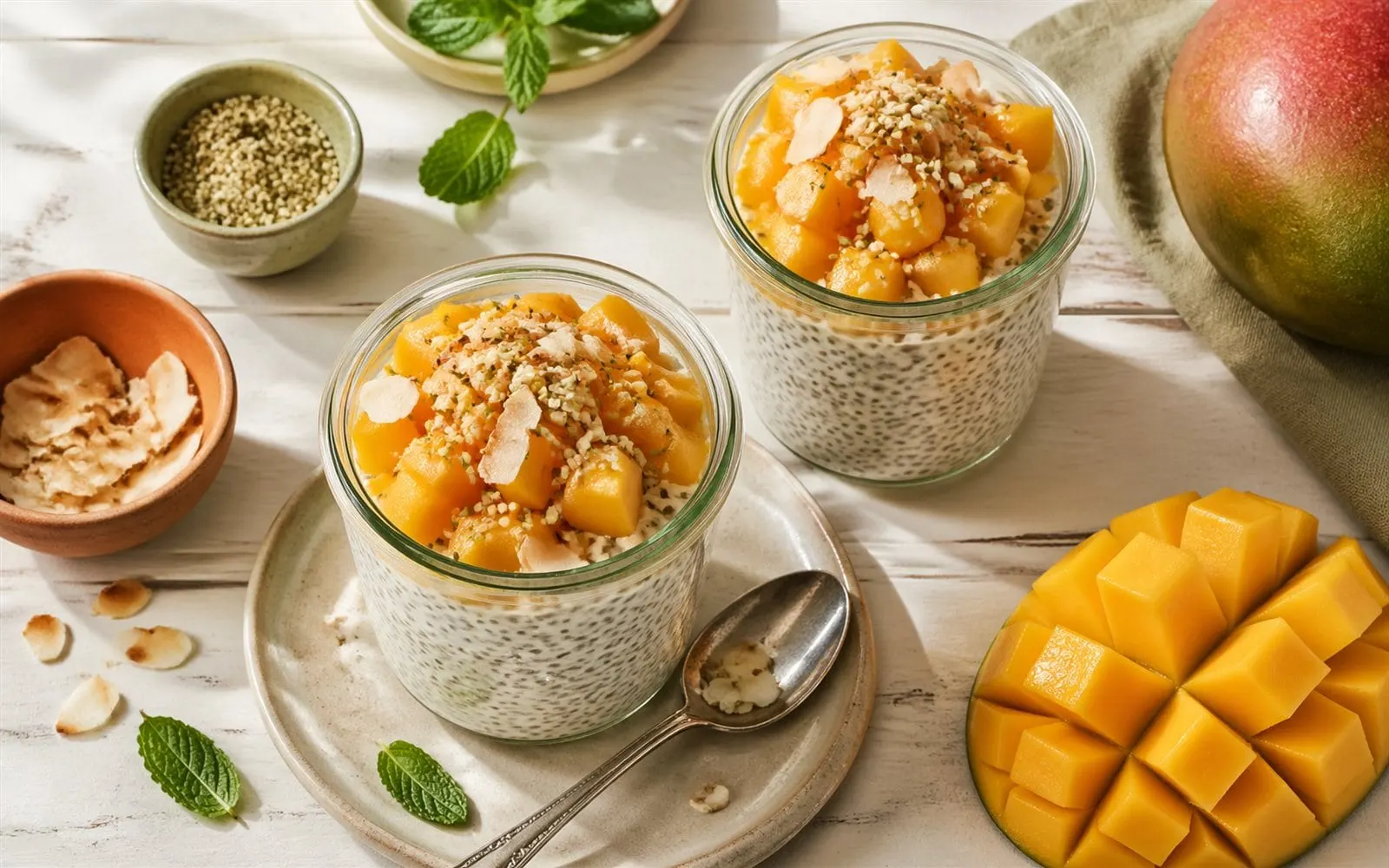
Chia-Flax Pudding with Mango — GutPlate recipe photo
breakfast 5 min

Chia-Flax Pudding with Mango

A thick, pudding-like breakfast layered with ground flax, chia, coconut milk, and fresh mango — make-ahead and packed with soluble fiber.

2 servings View recipe
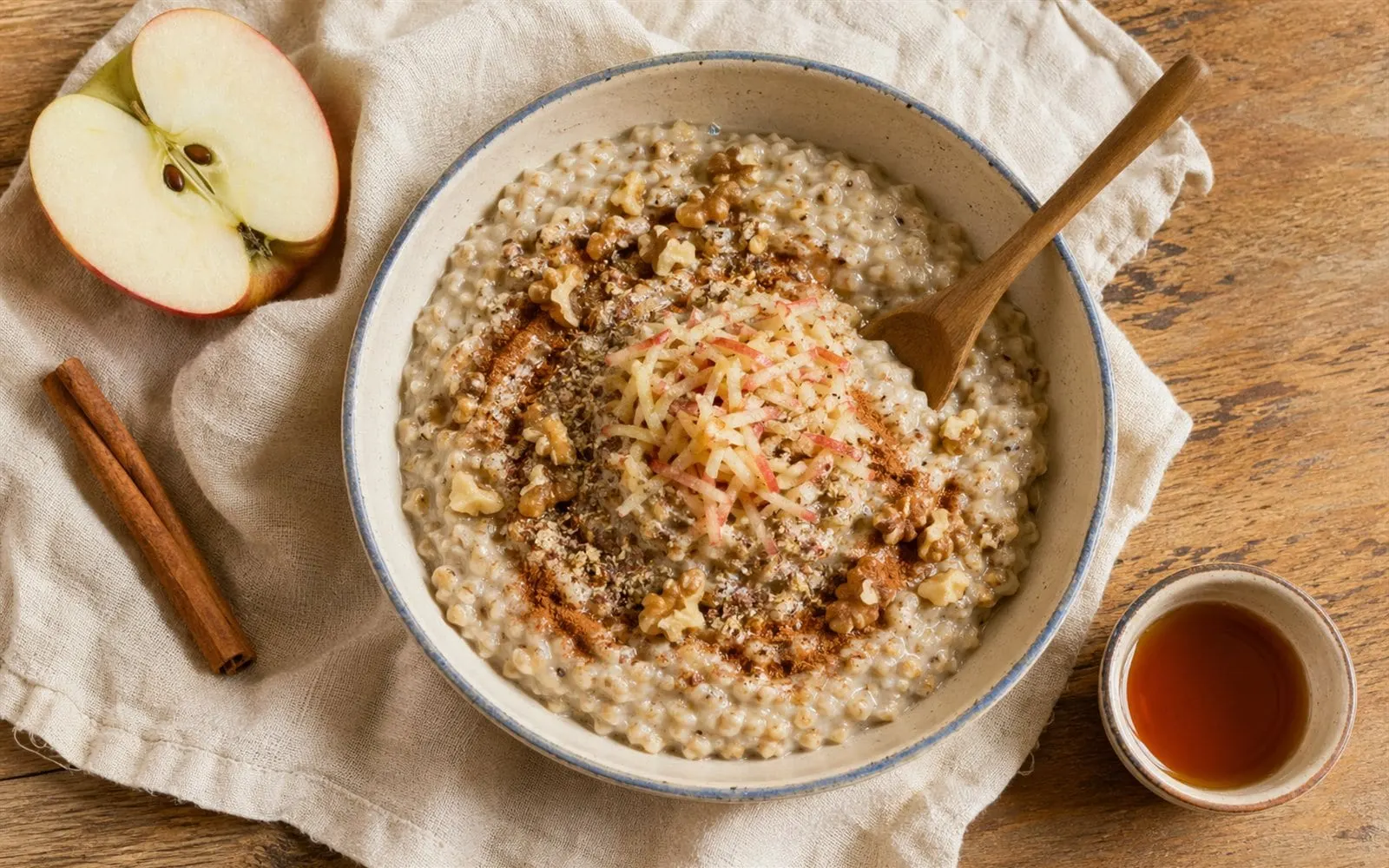
Apple-Cinnamon Steel-Cut Oats — GutPlate recipe photo
breakfast 30 min

Apple-Cinnamon Steel-Cut Oats

Slow-cooked steel-cut oats with grated apple, warm cinnamon, and toasted walnuts — a high-fiber breakfast that holds you till lunch.

4 servings View recipe
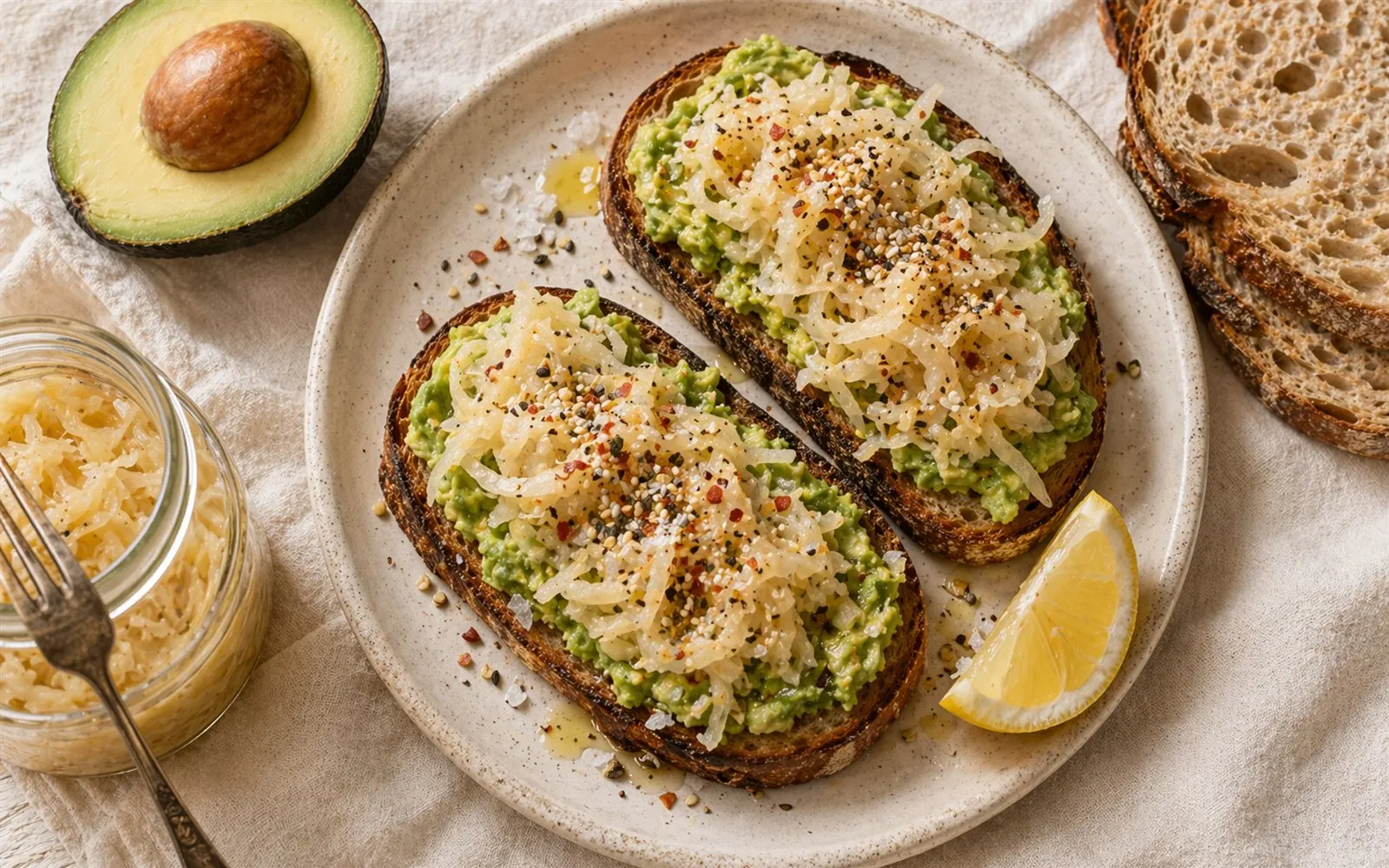
Sourdough Avocado Toast with Sauerkraut — GutPlate recipe photo
breakfast 8 min

Sourdough Avocado Toast with Sauerkraut

Crispy sourdough topped with smashed avocado, a generous spoonful of raw sauerkraut, everything bagel seasoning, and a squeeze of lemon — fermented meets fiber in 5 minutes.

1 serving View recipe