
Skip to content

Apple-Cinnamon Steel-Cut Oats

Slow-cooked steel-cut oats with grated apple, warm cinnamon, and toasted walnuts — a high-fiber breakfast that holds you till lunch.

Jump to recipe
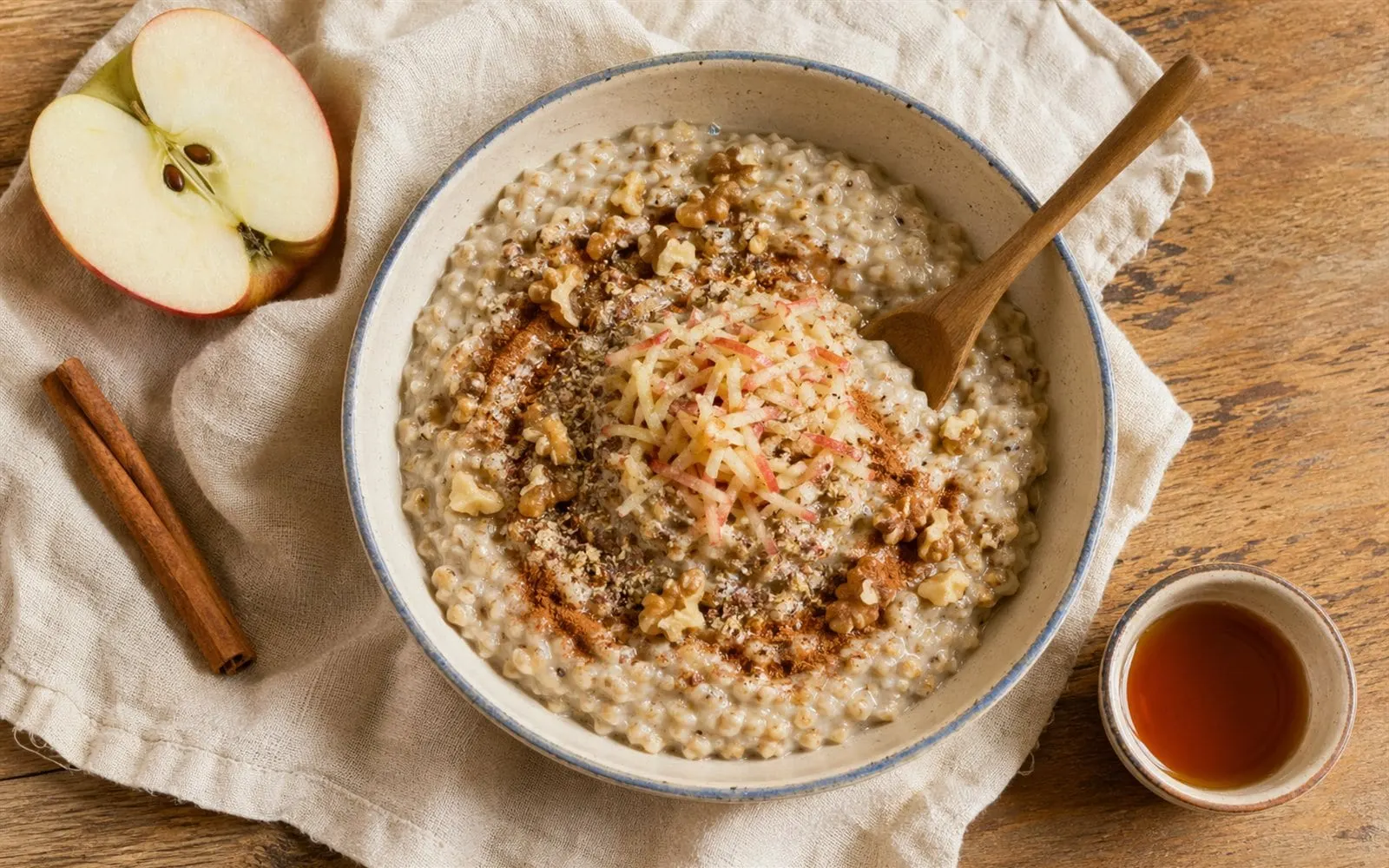
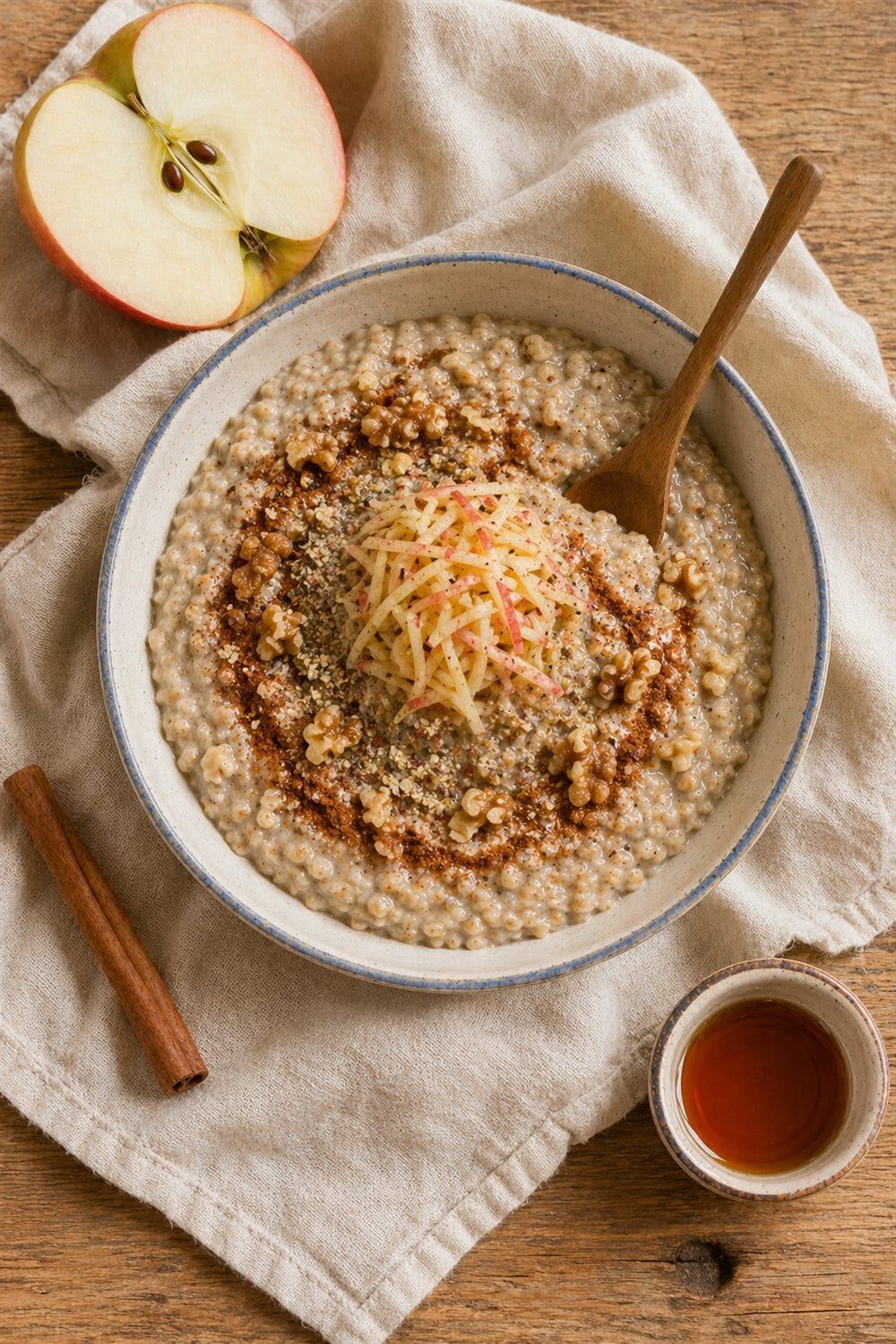
Apple-Cinnamon Steel-Cut Oats — GutPlate recipe photo
Prep
5 min
Cook
25 min
Total
30 min
Serves
4 bowls

Why you'll love this recipe

  • 9 grams of fiber per bowl — more than 30% of your daily target before 8am.
  • Three complementary prebiotics in one bowl: beta-glucan, resistant starch, and apple pectin.
  • Naturally sweetened by grated apple — just one tablespoon of maple syrup total.
  • Batch-cook once, eat for four mornings. Reheats in 2 minutes with a splash of milk.
  • Vegan and gluten-free if you use certified GF oats.
  • Keeps you full until lunch without the mid-morning crash of sugary cereal.

If rolled oats are the lazy Sunday breakfast, steel-cut oats are the weekday workhorse. They take longer to cook, but they have a chewy, porridge-y texture that rolled oats cannot match, and they release energy more slowly — which means they keep you comfortably full until lunch without the late-morning crash. On a gut-health site, they earn their place for a different reason: steel-cut oats carry more resistant starch and more beta-glucan fiber than almost any other grain you’d eat for breakfast. Stack those alongside the pectin in a grated apple, and you have a bowl that’s quietly feeding three different families of beneficial gut bacteria before you’ve finished your coffee.
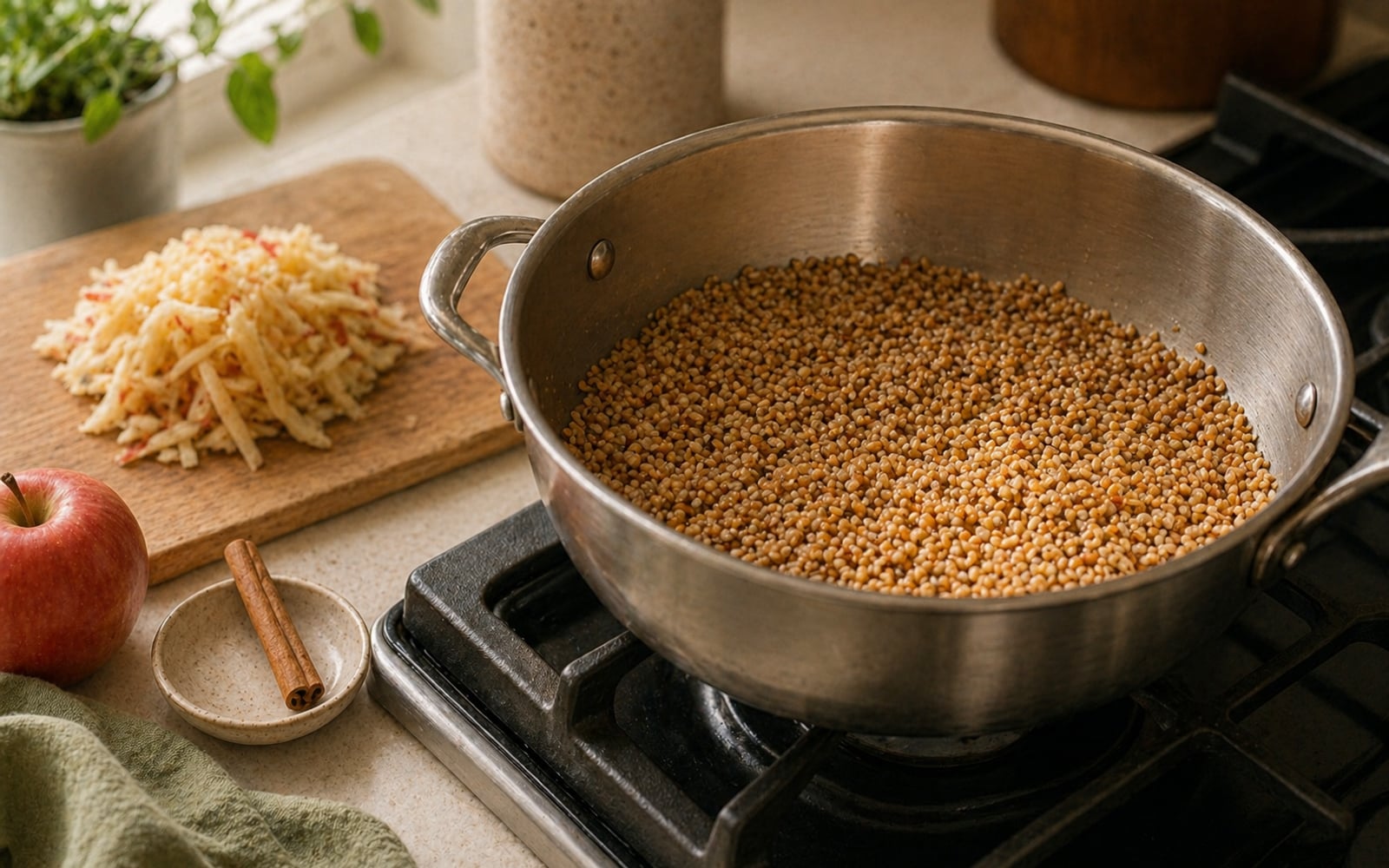
Steel-cut oats toasting in a dry saucepan, golden and fragrant, with a grated apple and cinnamon stick on the cutting board beside the stove.

The single change that makes these oats taste twice as good is toasting them dry in the pan for two minutes before you add liquid. It costs you nothing, and it gives them a warm, nutty background flavor that runs through the whole pot. Grating an apple (peel on, for the pectin) directly into the cooking oats dissolves the sweetness evenly, and a generous shake of cinnamon amplifies the feeling of dessert for breakfast. You’ll need surprisingly little maple syrup once the apple has melted into the pot.

The recipe is also built for meal prep. Twenty-five minutes on a Sunday afternoon gives you four mornings sorted, and — thanks to starch retrogradation — the reheated leftovers are arguably better for your gut than the just-cooked version. Cook once, portion into jars, and add fresh toppings each morning. Your 11am self will thank you.

Key ingredients

Why these ingredients

Steel-cut oats

Unlike rolled oats, steel-cut oats are the whole groat chopped into pieces rather than steamed and flattened. That minimal processing preserves more resistant starch and gives them a lower glycemic index — they release energy slowly enough to skip the 10am slump.

Grated apple with peel

The peel is where most of the apple's pectin lives — a soluble fiber your gut bacteria ferment into short-chain fatty acids. Grating the apple (rather than dicing) means it dissolves into the oats, so the sweetness is distributed evenly and you eat it without noticing.

Cinnamon (1.5 teaspoons)

Cinnamon isn't just flavor — compounds in ceylon cinnamon have been shown to slow gastric emptying, which extends satiety. It also pairs beautifully with oats, so using a generous amount lets you get away with less added sugar.

Ground flaxseed (at serving)

Flax adds another 2g of soluble fiber per tablespoon plus lignans (plant estrogens that feed gut bacteria). Crucially, it must be ground — whole flaxseeds pass through the gut undigested and lose most of their nutritional value.

Toasted walnuts

Walnuts contribute alpha-linolenic acid (plant omega-3) and polyphenols that selectively feed beneficial Ruminococcaceae and Bifidobacterium species. Toasting concentrates their flavor and makes them more satisfying, so a smaller portion goes further.

Before you start

Equipment

  • Medium heavy-bottomed saucepan

    2–3 quart; thin pans scorch the oats

  • Box grater or food processor

    for the apple — finer grate = smoother oats

  • Wooden spoon or silicone spatula

    for stirring without scratching

  • 4 pint-size jars or containers

    for meal-prep portioning

Recipe card

Apple-Cinnamon Steel-Cut Oats

Prep
5 min
Cook
25 min
Total
30 min
Servings
4

Ingredients

Instructions

Notes

  • Toast, then liquid. Toasting oats dry in the pan for 2 minutes doubles the depth of flavor for zero extra time.
  • Grated apple (peel on) melts into the oats and sweetens them naturally — you'll need far less maple syrup than you'd expect.
  • Leftovers thicken to a sliceable pudding; reheat with a generous splash of milk to loosen them up.

Nutrition per serving

Estimated; see our disclaimer.

Cal
320 kcal
Protein
9 g
Carbs
46 g
Fat
12 g
Fiber
9 g
Sugar
12 g
Sat Fat
1 g
Sodium
180 mg
Calcium
150 mg
Iron
2 mg

From our test kitchen

Pro tips

Toast before you cook

Dry-toasting steel-cut oats for 2 minutes before adding liquid wakes up the nuttiness. It's the difference between good oatmeal and great oatmeal, and it costs you nothing.

Grate the apple into the pot

Diced apple stays chunky and cooks unevenly. Grated apple dissolves into the oats and sweetens every spoonful. Use a box grater on the large-hole side, peel and all.

Salt matters

A quarter-teaspoon of fine salt isn't about salty oats — it's about balancing the sweetness so the cinnamon reads clearly. Unsalted oatmeal tastes flat no matter how much maple you add.

Build toppings fresh

Store the cooked oats plain, then add walnuts, flax, and extra cinnamon the morning you eat. Toppings stirred in during cooking go soggy; toppings added fresh stay crunchy and bright.

When things go sideways

Troubleshooting

My oats turned out gluey and thick.

You reduced the heat too far or stirred too aggressively. Steel-cut oats need a bare simmer, not a rolling boil, and frequent-but-gentle stirring. If they're already gluey, loosen with a splash of hot water or milk and stir.

The bottom scorched.

Thin pans and high heat are the culprits. Use a heavy-bottomed pan and stir every 2–3 minutes, especially in the last 5 minutes. If it does scorch, pour the unburnt top layer into a new pot and keep going — don't scrape the bottom.

Oats are bland even with cinnamon.

Almost always a salt problem. Add another pinch and taste again. The salt isn't supposed to be noticeable — it's supposed to make the cinnamon and apple taste like themselves.

Leftovers turned into a solid brick.

Normal. Steel-cut oats set hard when cold because of how much water the starch absorbs. Reheat with a generous splash of milk (about 1/4 cup per portion) and stir until loose. Microwave works; stovetop gives better texture.

Apple didn't melt into the oats.

Either you diced instead of grated, or your apple was too firm. Use a box grater and choose a ripe apple. The skin should almost tear as you grate it.

Keep it fresh

Storage & reheating

Make ahead

The whole recipe is designed for Sunday meal prep. Cook once, portion into 4 jars, add toppings each morning. Takes 25 minutes once, saves 25 minutes across the week.

Fridge

Store cooked oats (plain, no toppings) in an airtight container for up to 4 days. Portion into individual jars for grab-and-go mornings.

Freezer

Freeze in silicone muffin tins (1/2 cup each), then transfer frozen pucks to a zip bag for up to 3 months. Reheat individual portions with a splash of milk.

Reheat

Stovetop is best: 1/2 cup oats + 3 tablespoons milk, warm over medium-low, 2 minutes. Microwave works too — 90 seconds with a splash of milk, stir halfway.

Make it yours

Variations

Slow-cooker overnight

Combine 1 cup oats, 4 cups liquid, cinnamon, and salt in a small slow cooker. Cook on low for 6–8 hours. Stir in grated apple and maple syrup in the morning. Creamy, hands-off, ready when you are.

High-protein

Stir in 2 scoops (about 40g) of unflavored or vanilla protein powder during the last 2 minutes of cooking, off-heat. Pushes each bowl to ~22g protein — ideal for post-workout breakfast.

Pear-ginger twist

Swap the apple for a grated ripe pear and replace half the cinnamon with 1 teaspoon of fresh grated ginger. Brighter, more sophisticated flavor; same prebiotic benefits.

Chocolate-banana

Stir in 2 tablespoons of unsweetened cocoa powder and a mashed ripe banana in place of the apple. Top with cacao nibs and toasted almonds. Breakfast that tastes like dessert.

Savory miso-scallion

Skip the cinnamon, apple, and maple entirely. Stir in 1 tablespoon of white miso paste off-heat and top with sliced scallion, a soft-boiled egg, and furikake. Unexpectedly good.

Pantry swaps

Ingredient substitutions

Instead of

Steel-cut oats

Use

Rolled oats (not instant)

Use 2:1 liquid ratio and cut cooking time to 8 minutes. Texture is softer, still delicious.

Instead of

Almond milk

Use

Any milk — oat, soy, whole dairy, or coconut

Whole dairy and coconut give the richest finish. Skim milk makes thinner oats.

Instead of

Maple syrup

Use

Honey, brown sugar, or date syrup

Use the same amount. Honey adds a floral note; date syrup deepens the caramel.

Instead of

Walnuts

Use

Pecans, almonds, or toasted pumpkin seeds

All work well. Pumpkin seeds make it nut-free for school lunches.

Instead of

Apple

Use

Pear, grated beet, or 1 cup berries

Grated beet sounds weird but is remarkable — sweet and earthy. Berries go in at the end, not during cooking.

Instead of

Cinnamon

Use

Pumpkin pie spice or cardamom

Cardamom + pear is a particularly beautiful combination.

Plate it up

What to serve with it

The evidence

Why this is good for your gut

This bowl quietly stacks three different kinds of prebiotic fiber in one dish, and understanding what each one does helps you appreciate why a simple oatmeal is one of the most evidence-backed gut-health breakfasts in the world.

First, beta-glucan from oats. A single cup of cooked steel-cut oats contains roughly 4 grams of beta-glucan, a soluble fiber that forms a viscous gel in your digestive tract. In the small intestine, that gel slows carbohydrate absorption (which is why oats are one of the few breakfasts that keep blood sugar steady). Once the gel reaches the colon, beta-glucan is a preferred substrate for *Bifidobacterium* and *Lactobacillus* species, which ferment it into short-chain fatty acids — particularly butyrate, acetate, and propionate.[1] Daily beta-glucan intake of 3g or more has been associated with measurable reductions in LDL cholesterol and improvements in colonic mucus layer thickness in human trials.[2]

Second, resistant starch from cooled-and-reheated oats. When cooked oats cool (even briefly, as they do in meal-prep jars in the fridge) and are then reheated, some of their digestible starch undergoes retrogradation — it reorganizes into a crystal structure your small intestine can no longer break down. That "type 3 resistant starch" reaches the colon intact and is fermented into additional butyrate.[3] This is why day-two oats from the fridge can actually be slightly better for your gut than fresh-cooked ones.

Third, pectin from the apple. Apple pectin is a soluble fiber that selectively promotes growth of *Akkermansia muciniphila*, a bacterium associated with a healthy gut mucus layer and improved metabolic markers.[4] An apple a day cliché turns out to have real biology behind it — at least when the peel goes in too.

On top of the prebiotic fiber stack, the ground flaxseed topping adds another 2 grams of soluble fiber per tablespoon, along with lignans (plant compounds that act as mild phytoestrogens) and an unusually high dose of alpha-linolenic acid (a plant omega-3). Flax lignans have been shown to be converted by gut bacteria into enterolignans, which have anti-inflammatory effects at the colonic mucosa.[5]

The total per bowl: roughly 9 grams of fiber (about a third of the daily recommended intake before 8am), three distinct prebiotic substrates, and a meaningful dose of polyphenols from the walnuts and cinnamon. All of which feeds — and expands the diversity of — the bacterial ecosystem in your colon. Eat this four times a week and within about eight weeks you'd expect to see measurable shifts in your gut bacterial composition.

Good questions

Frequently asked questions

Can I make these in a slow cooker overnight?

Yes. Use a 4:1 liquid-to-oats ratio (so 4 cups total for 1 cup oats) and cook on low for 6–8 hours. Add the apple at the end to prevent it from turning to mush, and expect a slightly softer final texture than the stovetop version.

Are steel-cut oats better than rolled for gut health?

Both are good. Steel-cut oats digest more slowly and contain slightly more resistant starch because less of their structure is broken down during milling. But rolled oats are still rich in beta-glucan and work perfectly if time is short.

Is this batch-friendly?

Yes — the recipe was designed for it. Portion the cooked oats into four jars, refrigerate up to 4 days, and reheat with a splash of milk. Add toppings fresh each morning for best texture.

Can I use instant oats instead?

You can, but the texture will be mushy and the fiber content is lower (finer milling means faster digestion). Rolled oats are a better compromise if you want speed — cook them in 5 minutes with the same liquid ratio.

What apple variety is best?

Honeycrisp gives the most natural sweetness and melts completely; Granny Smith stays slightly tart and firmer. Fuji and Gala also work well. Avoid Red Delicious — it turns to tasteless mush.

Are these low-FODMAP?

One apple across 4 servings is roughly 1/4 apple per bowl, which is moderate-FODMAP. For strict elimination phase, use 1/2 cup of diced strawberries or blueberries instead of apple.

References

  1. Beta-glucans in the treatment of diabetes and associated cardiovascular risks — Vascular Health and Risk Management↩ back
  2. Effect of cereal fibre on bowel function and the mucus layer — Gut↩ back
  3. Resistant starch: a review of the metabolic effects and potential health benefits — Nutrients↩ back
  4. Apple intake and gut microbiota: influence on Akkermansia muciniphila — Food Chemistry↩ back
  5. Flaxseed lignans and gut microbial conversion to enterolignans — Journal of Functional Foods↩ back

Loved this recipe?

Save it to your Pinterest boards or share with a friend who needs more gut-friendly weeknight meals.

Newsletter

Weekly gut-friendly recipes, straight to your inbox.

One email every Sunday — new recipes, a practical gut-health tip, and zero spam. Unsubscribe anytime.

No spam 1-click unsubscribe

Signup coming soon. Follow us on Pinterest in the meantime.

Roasted Sweet Potato & Lentil Soup — GutPlate recipe photo
soups 45 min

Roasted Sweet Potato & Lentil Soup

A creamy, high-fiber blender soup built on roasted sweet potatoes, red lentils, and warm spices — gentle on digestion and batch-friendly.

4 servings View recipe
Black Bean & Sweet Potato Tacos — GutPlate recipe photo
dinner 35 min

Black Bean & Sweet Potato Tacos

Roasted sweet potato and seasoned black beans in warm tortillas with pickled red onion, avocado crema, and fresh cilantro — 14g of fiber and ready in 35 minutes.

4 servings View recipe
Coconut Red Lentil Dal — GutPlate recipe photo
dinner 35 min

Coconut Red Lentil Dal

A 30-minute one-pot dal with red lentils, coconut milk, turmeric, and a cumin-mustard seed tarka — creamy, warming, and loaded with prebiotic fiber.

4 servings View recipe