Skip to content

Sourdough Avocado Toast with Sauerkraut

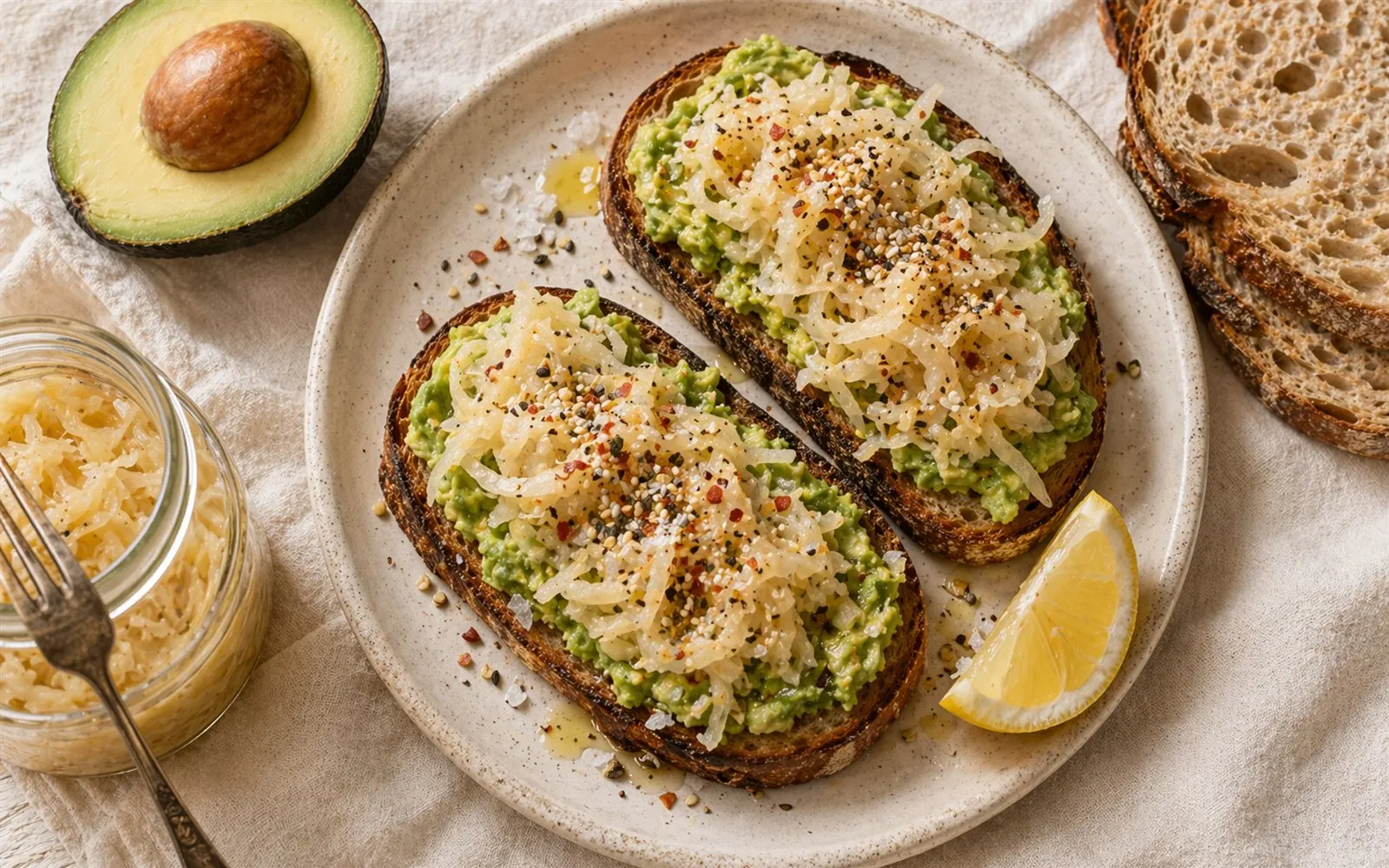
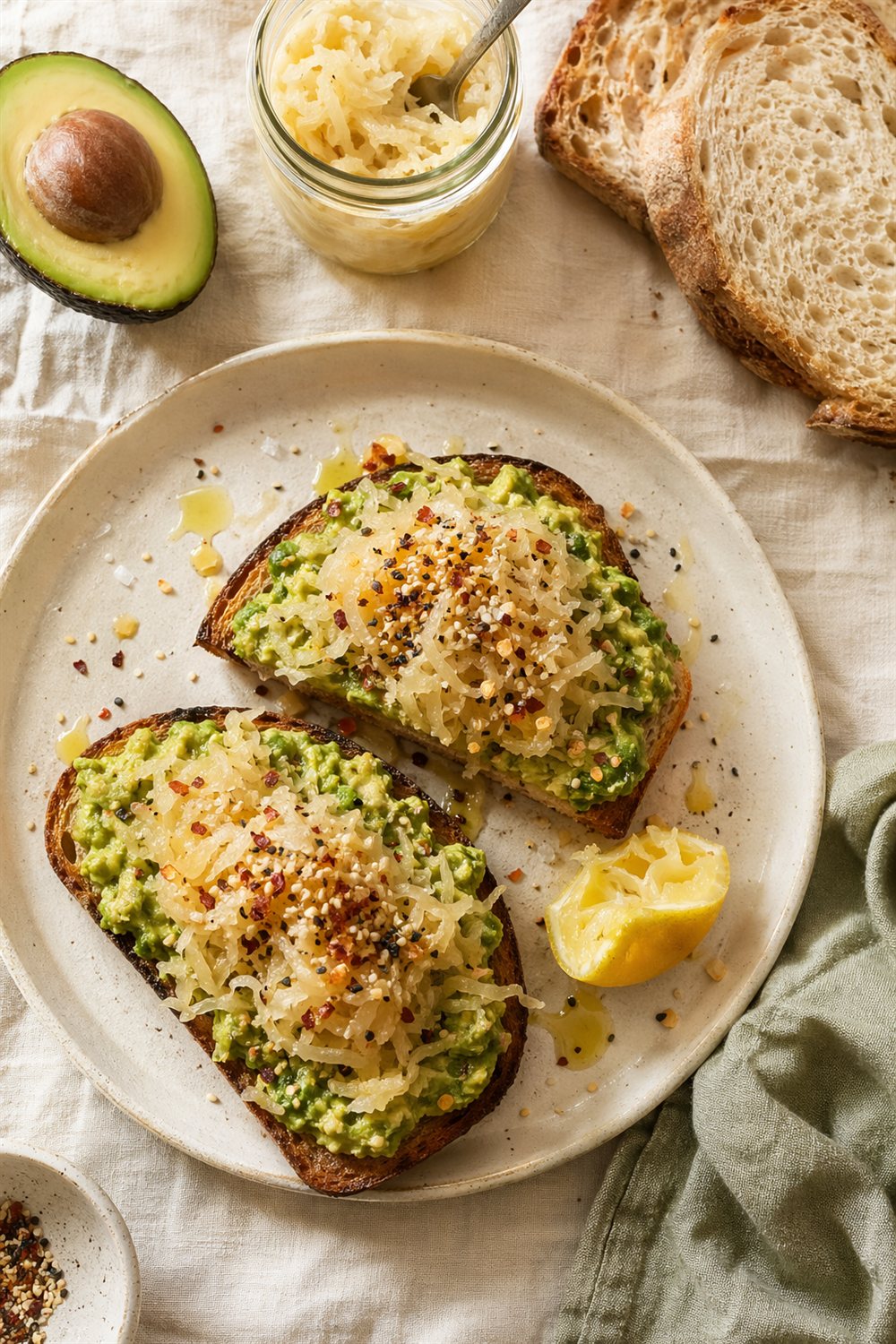
Crispy sourdough topped with smashed avocado, a generous spoonful of raw sauerkraut, everything bagel seasoning, and a squeeze of lemon — fermented meets fiber in 5 minutes.

Jump to recipe
Sourdough Avocado Toast with Sauerkraut — GutPlate recipe photo
Prep
5 min
Cook
3 min
Total
8 min
Serves
1 serving (2 slices)

Why you'll love this recipe

  • 5 minutes, no cooking — the simplest gut-health meal possible.
  • 11g fiber before lunch from avocado, sourdough, and sauerkraut.
  • Three fermented elements in one plate: sourdough, sauerkraut, and lemon.
  • The tang of sauerkraut pairs with creamy avocado better than you'd expect.
  • Endlessly customizable — add an egg, smoked salmon, or pickled onions.
  • Feels indulgent but it's whole food plant-forward.

Avocado toast is the most mocked food on the internet and the most eaten breakfast in practice. This version earns its keep by adding two things that most avocado toast recipes don’t: sourdough that’s actually fermented and a generous spoonful of raw sauerkraut on top.
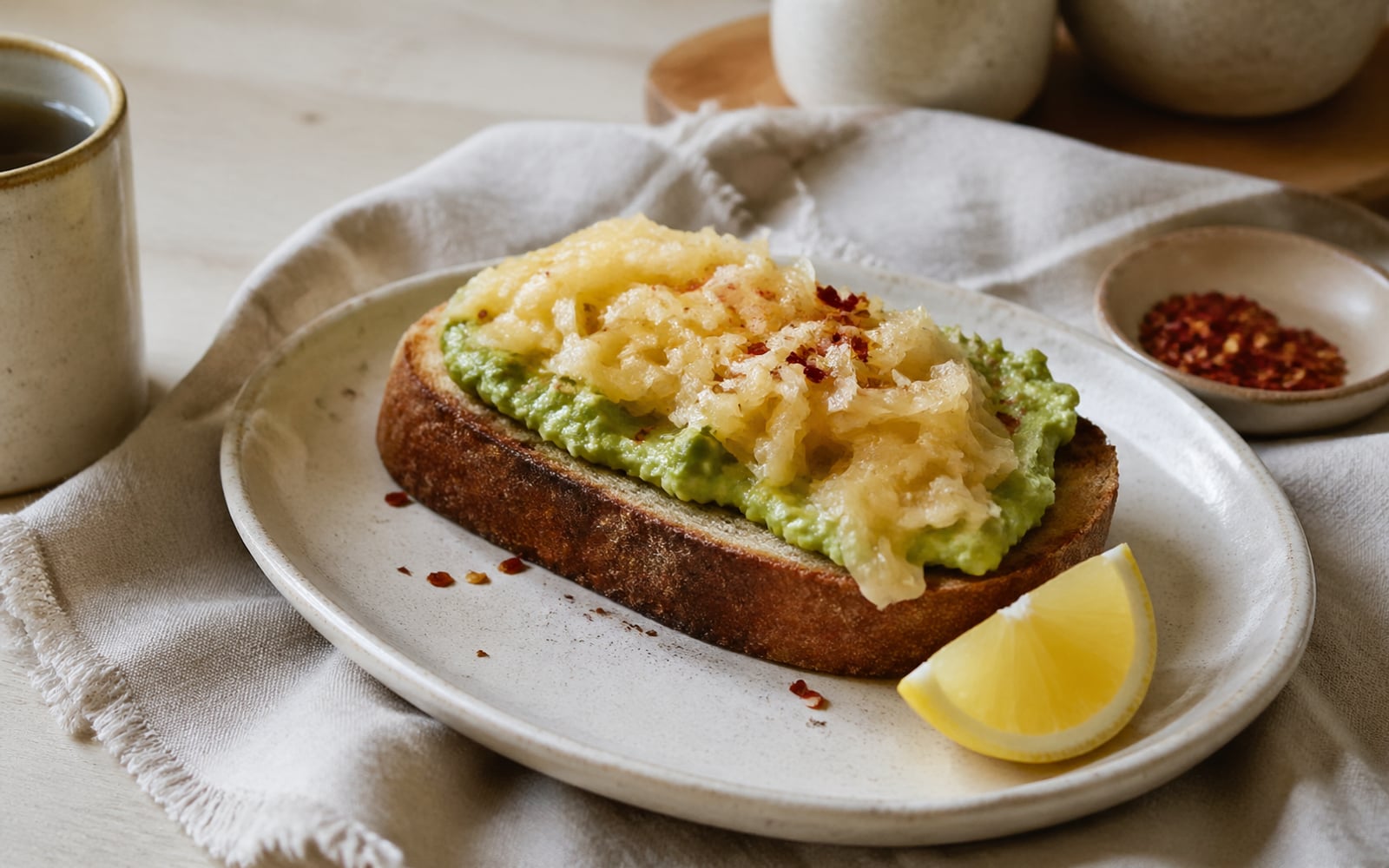
A thick slice of sourdough toast topped with smashed avocado and a generous spoonful of raw sauerkraut, with a sprinkle of red pepper flakes.

The sauerkraut is what turns this from a trendy breakfast into a gut-health meal. Its sharp, tangy bite cuts through the rich avocado in a way that’s genuinely delicious — not just “healthy.” If you’ve never put fermented cabbage on toast, you’re in for a pleasant surprise. The key is using raw, unpasteurized sauerkraut from the refrigerated section of your grocery store. The canned stuff on the shelf has been heat-processed and contains zero live cultures.

Sourdough matters here for a reason beyond taste. Real sourdough — the kind that’s been fermented for 12+ hours with wild yeast and lactobacillus — has measurably less phytic acid than regular bread, which means your body absorbs more of the iron, zinc, and magnesium in the wheat. The long fermentation also partially breaks down gluten, which is why many people who feel bloated after regular bread find they tolerate sourdough just fine.

The technique is almost insulting in its simplicity: toast hard, smash avocado, squeeze lemon, pile on sauerkraut, sprinkle with salt and everything seasoning. Five minutes. Eleven grams of fiber. Live probiotic cultures. Three different fermented foods on one plate. Not bad for a recipe that requires no cooking.
Key ingredients

Why these ingredients

Sourdough bread

True sourdough is fermented for 12-24 hours with wild Lactobacillus and yeast. This long fermentation partially breaks down gluten (reducing it by up to 50%), neutralizes phytic acid (improving mineral absorption), and produces organic acids that lower the bread's glycemic index.

Raw sauerkraut

Unpasteurized sauerkraut can contain 10^7-10^9 CFU/gram of Lactobacillus plantarum, L. brevis, and Leuconostoc mesenteroides. These are transient probiotics — they don't colonize permanently, but their passage through the gut has been associated with reduced inflammatory markers.

Avocado

Rich in monounsaturated oleic acid and soluble fiber. A University of Illinois study found that daily avocado consumption increased microbial diversity, boosted fiber-fermenting bacteria, and increased fecal short-chain fatty acid concentrations.

Lemon juice

Citric acid enhances non-heme iron absorption from the bread and avocado, and the vitamin C supports collagen synthesis in the gut mucosa.

Before you start

Equipment

  • Toaster or broiler

    for crisp sourdough

  • Fork

    for smashing the avocado

Recipe card

Sourdough Avocado Toast with Sauerkraut

Prep
5 min
Cook
3 min
Total
8 min
Servings
1

Ingredients

Instructions

Notes

  • Buy sauerkraut from the refrigerated section — shelf-stable canned sauerkraut has been pasteurized and contains no live cultures.
  • Real sourdough is fermented with wild yeast and lactobacillus, not just commercial yeast with vinegar added for flavor. Check the ingredient list.
  • The sauerkraut goes on LAST, unheated, to preserve the live cultures.

Nutrition per serving

Estimated; see our disclaimer.

Cal
420 kcal
Protein
10 g
Carbs
38 g
Fat
27 g
Fiber
11 g
Sugar
3 g
Sat Fat
4 g
Sodium
580 mg
Calcium
45 mg
Iron
2 mg

From our test kitchen

Pro tips

Toast it hard

Sourdough for avocado toast should be darker and crispier than you'd normally toast it. The structural integrity matters — a soft slice buckles under the toppings.

Drain the kraut lightly

Use a fork to lift the sauerkraut out of the jar, letting excess brine drip back. You want the cabbage and its cultures, not a puddle on your toast.

Sauerkraut goes on last

Never warm the sauerkraut. It goes on top of everything, at room temperature or cold, to preserve the live cultures.

When things go sideways

Troubleshooting

My avocado is brown and mushy.

Brown avocado has oxidized — it's safe but ugly. A generous squeeze of lemon immediately after smashing prevents this. Buy avocados that are firm with just a slight give.

The toast is soggy by the time I eat it.

Toast harder, drain the sauerkraut more thoroughly, and eat immediately. The avocado layer acts as a moisture barrier, so smash it on first.

I can't find raw sauerkraut.

Look in the refrigerated section near deli items, not the canned vegetable aisle. Brands to look for: Bubbies, Farmhouse Culture, Wildbrine, or any local producer. The label should say 'raw' or 'unpasteurized' and it must be refrigerated.

Keep it fresh

Storage & reheating

Make ahead

No. The only prep you can do ahead is keeping ripe avocados and a jar of sauerkraut stocked.

Fridge

Does not store well — eat immediately. Avocado oxidizes and bread goes soft.

Freezer

N/A

Reheat

N/A — this is a fresh-assembly recipe.

Make it yours

Variations

With a fried egg

Add a crispy-edged fried egg on top. The runny yolk mixes with the avocado and sauerkraut in the best possible way.

Smoked salmon

Layer thin slices of cold-smoked salmon between the avocado and sauerkraut. Add capers and dill for a Scandinavian twist.

Mediterranean

Replace sauerkraut with marinated artichoke hearts and sun-dried tomatoes. Add a crumble of feta.

Spicy kimchi version

Swap sauerkraut for chopped kimchi and add a drizzle of gochujang. Skip the everything bagel seasoning — the kimchi brings enough complexity.

Pantry swaps

Ingredient substitutions

Instead of

Sourdough

Use

Rye bread or pumpernickel

Both are traditionally fermented. Avoid soft sandwich bread — it doesn't have the structure or the fermentation benefits.

Instead of

Sauerkraut

Use

Kimchi or fermented hot sauce

Both are lacto-fermented and deliver live cultures. Kimchi is spicier; fermented hot sauce adds heat without bulk.

Instead of

Avocado

Use

White bean mash or hummus

Mash canned white beans with lemon and olive oil for a high-fiber, budget-friendly alternative.

Instead of

Everything bagel seasoning

Use

Za'atar or dukkah

Both add herbaceous crunch. Za'atar has a Middle Eastern lean; dukkah adds nuts.

Plate it up

What to serve with it

The evidence

Why this is good for your gut

This simple breakfast stacks three distinct fermentation-derived benefits on one plate, making it one of the most efficient gut-health meals you can eat.

Sourdough fermentation transforms bread. During the 12-24 hour fermentation process, wild *Lactobacillus* bacteria produce organic acids (primarily lactic and acetic acid) that lower the dough's pH. This acidic environment activates phytase enzymes that break down phytic acid — the anti-nutrient in wheat that binds minerals like iron, zinc, and magnesium, preventing their absorption.[1] The result: sourdough bread has significantly higher mineral bioavailability than commercial yeast bread made from the same flour.

The long fermentation also partially degrades gluten. Studies show that a 24-hour sourdough fermentation can reduce the gluten content of wheat bread by up to 50%, which may explain why many people with non-celiac gluten sensitivity tolerate sourdough better than conventional bread.[2] (This is NOT safe for celiac disease — the reduction isn't complete enough.)

Raw sauerkraut adds live *Lactobacillus* cultures — typically *L. plantarum*, *L. brevis*, and *Leuconostoc mesenteroides* at concentrations of 10^7-10^9 CFU per gram. A landmark 2021 study in *Cell* found that participants who increased their fermented food intake to six servings per day showed measurably increased gut microbial diversity and decreased inflammatory markers within 10 weeks.[3] You don't need six servings — but a spoonful on your morning toast is a good start.

Avocado completes the picture with monounsaturated fat and soluble fiber. The fat slows gastric emptying (keeping you full longer and allowing more thorough nutrient absorption), while the fiber feeds bacteria in the colon. A 2020 randomized trial found that daily avocado consumption specifically increased the abundance of *Faecalibacterium*, *Lachnospira*, and *Alistipes* — three genera associated with gut health and reduced inflammation.[4]

The lemon juice isn't just for flavor. Vitamin C in the citrus enhances non-heme iron absorption from both the sourdough and the avocado. Given that iron deficiency is the most common nutrient deficiency globally, this small addition is nutritionally meaningful.[5]

Good questions

Frequently asked questions

Does toasting sourdough kill the probiotics?

Sourdough bread is already baked at 400°F+, so there are no live cultures in the bread itself. The gut benefits of sourdough come from the fermentation process: the organic acids, the pre-digested gluten, and the improved mineral bioavailability — all of which survive baking.

Can I use regular bread?

You can, but you lose the benefits of sourdough fermentation. Real sourdough has a lower glycemic index, more bioavailable minerals, and partially broken-down gluten compared to commercial yeast bread.

The sauerkraut makes my toast soggy.

Drain the sauerkraut briefly with a fork before adding — you want the cabbage, not the excess brine. Also, a thick layer of smashed avocado creates a waterproof barrier between the bread and the kraut.

Is this low-FODMAP?

Sourdough is generally better tolerated than regular bread (the long fermentation reduces fructans), but avocado is high-FODMAP above 1/8 fruit. For low-FODMAP, use 2 tbsp avocado and limit sauerkraut to 1 tbsp.

References

  1. Sourdough fermentation and phytic acid degradation in wheat bread — Journal of Agricultural and Food Chemistry↩ back
  2. Gluten degradation during sourdough fermentation — Applied and Environmental Microbiology↩ back
  3. Fermented-food diet increases microbiome diversity, decreases inflammatory proteins — Cell↩ back
  4. Avocado consumption alters gastrointestinal bacteria and fecal metabolites — Journal of Nutrition↩ back
  5. Vitamin C and non-heme iron absorption — American Journal of Clinical Nutrition↩ back

Loved this recipe?

Save it to your Pinterest boards or share with a friend who needs more gut-friendly weeknight meals.

Newsletter

Weekly gut-friendly recipes, straight to your inbox.

One email every Sunday — new recipes, a practical gut-health tip, and zero spam. Unsubscribe anytime.

No spam 1-click unsubscribe

Signup coming soon. Follow us on Pinterest in the meantime.

Green Goddess Gut Smoothie — GutPlate recipe photo
smoothies 5 min

Green Goddess Gut Smoothie

A creamy spinach-avocado smoothie with banana, kefir, and a spoonful of flaxseed — blends in 2 minutes and delivers prebiotics, probiotics, and omega-3s in one glass.

1 serving View recipe
Kimchi Fried Rice — GutPlate recipe photo
dinner 15 min

Kimchi Fried Rice

A 15-minute weeknight fried rice that marries caramelized kimchi with day-old rice, a jammy egg on top, and a finishing spoon of raw kimchi for live cultures.

2 servings View recipe
Banana-Kefir Smoothie — GutPlate recipe photo
smoothies 3 min

Banana-Kefir Smoothie

A 3-minute probiotic smoothie with ripe banana, plain kefir, ground flax, and almond butter — your easiest daily gut support.

1 serving View recipe