Skip to content

Mango-Turmeric Lassi

A thick, creamy Indian-style lassi blending ripe mango with yogurt, turmeric, cardamom, and a pinch of black pepper — probiotic-rich and anti-inflammatory.

Jump to recipe
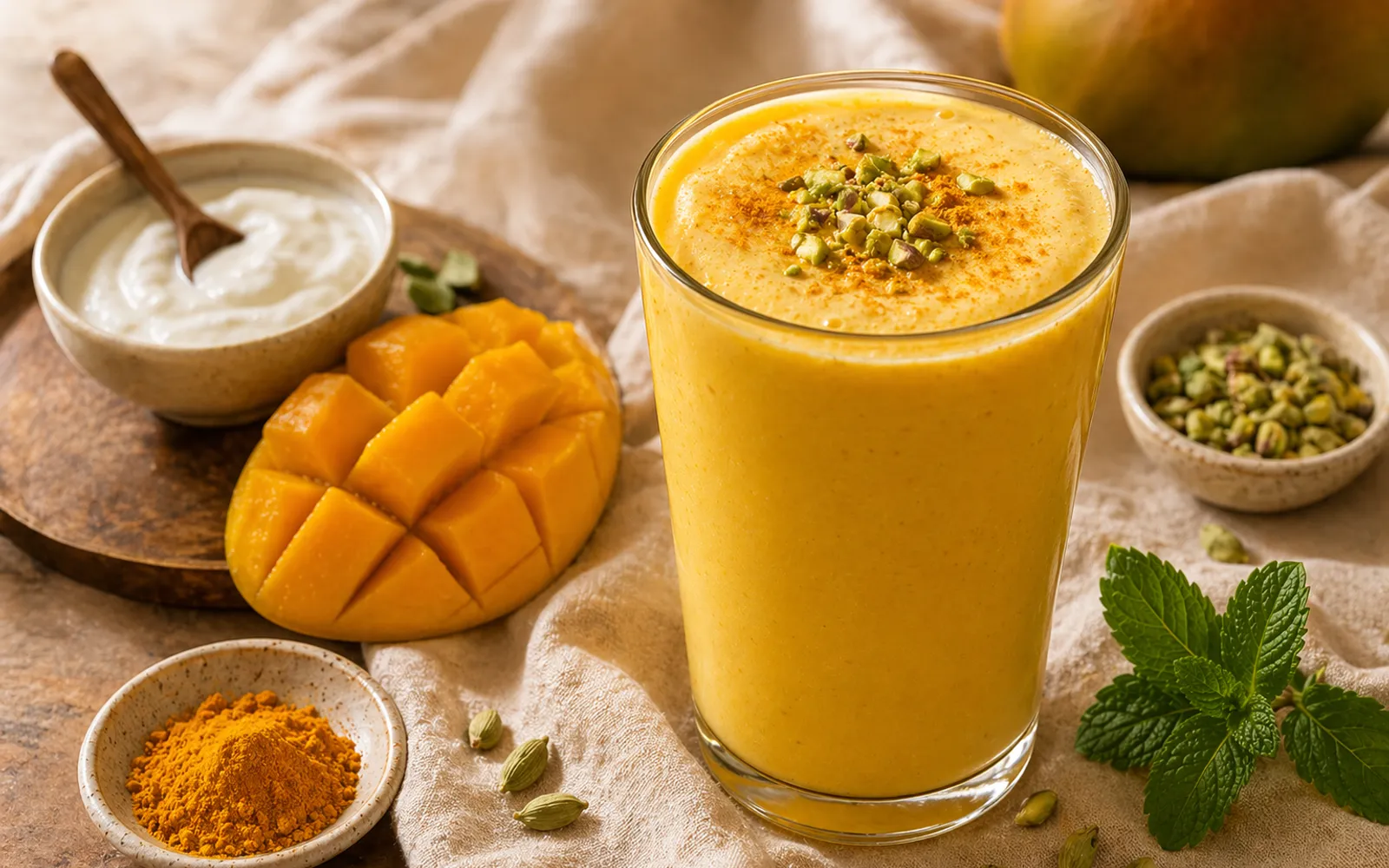
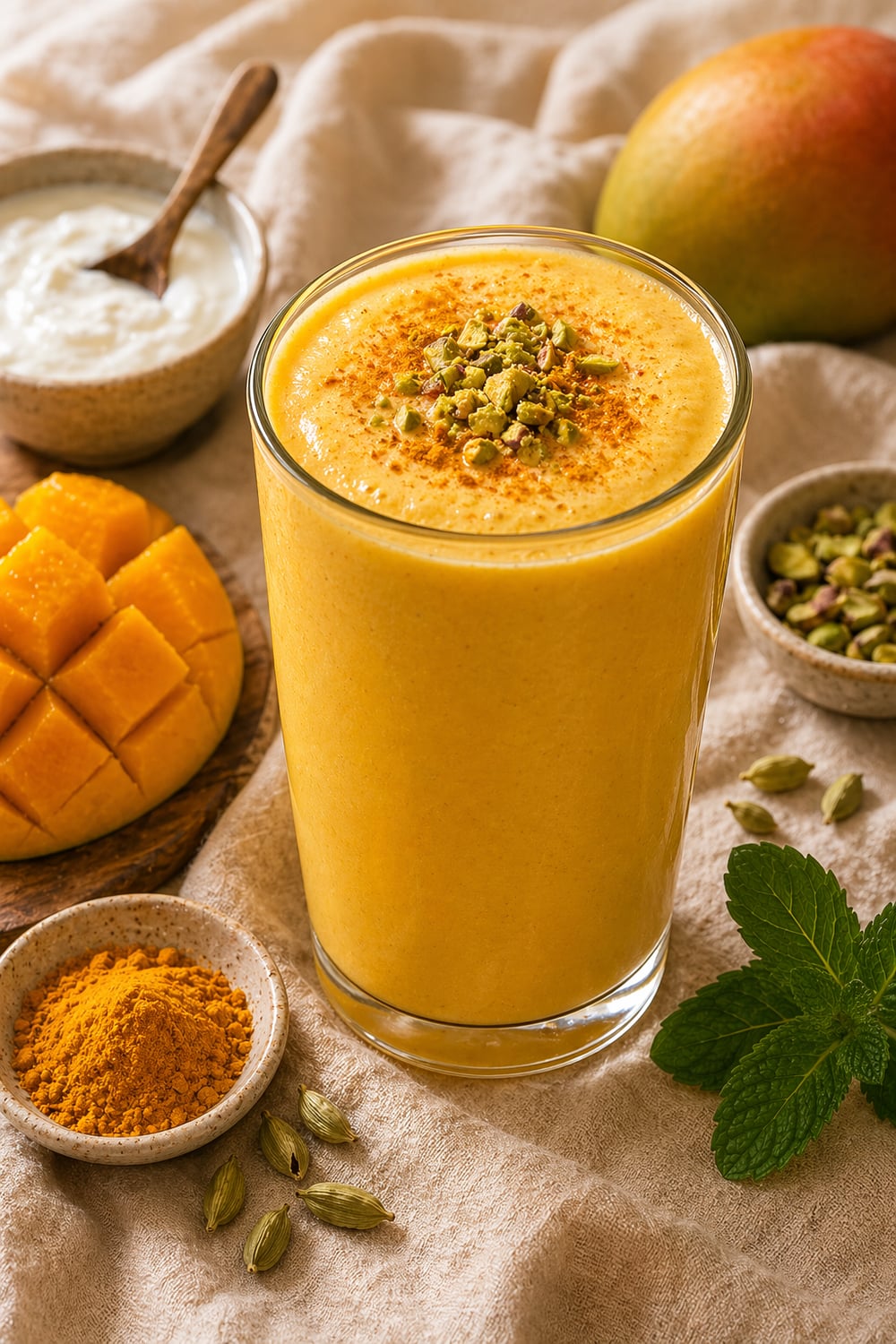
Mango-Turmeric Lassi — GutPlate recipe photo
Prep
5 min
Cook
Total
5 min
Serves
2 glasses

Why you'll love this recipe

  • 5 minutes from counter to glass.
  • Delivers live probiotic cultures in a format that tastes like a milkshake.
  • Turmeric + black pepper anti-inflammatory stack without tasting medicinal.
  • Cardamom gives it the authentic Indian lassi flavor most recipes miss.
  • Works as breakfast, snack, or dessert — genuinely versatile.
  • Thick enough to eat with a spoon if you skip the water.

A mango lassi is already one of the most satisfying drinks on earth — thick, sweet, tangy, and deeply cooling. This version adds a golden turmeric glow and a whisper of cardamom that pushes it from “mango smoothie” to “the thing you get at the best Indian restaurant in town.”
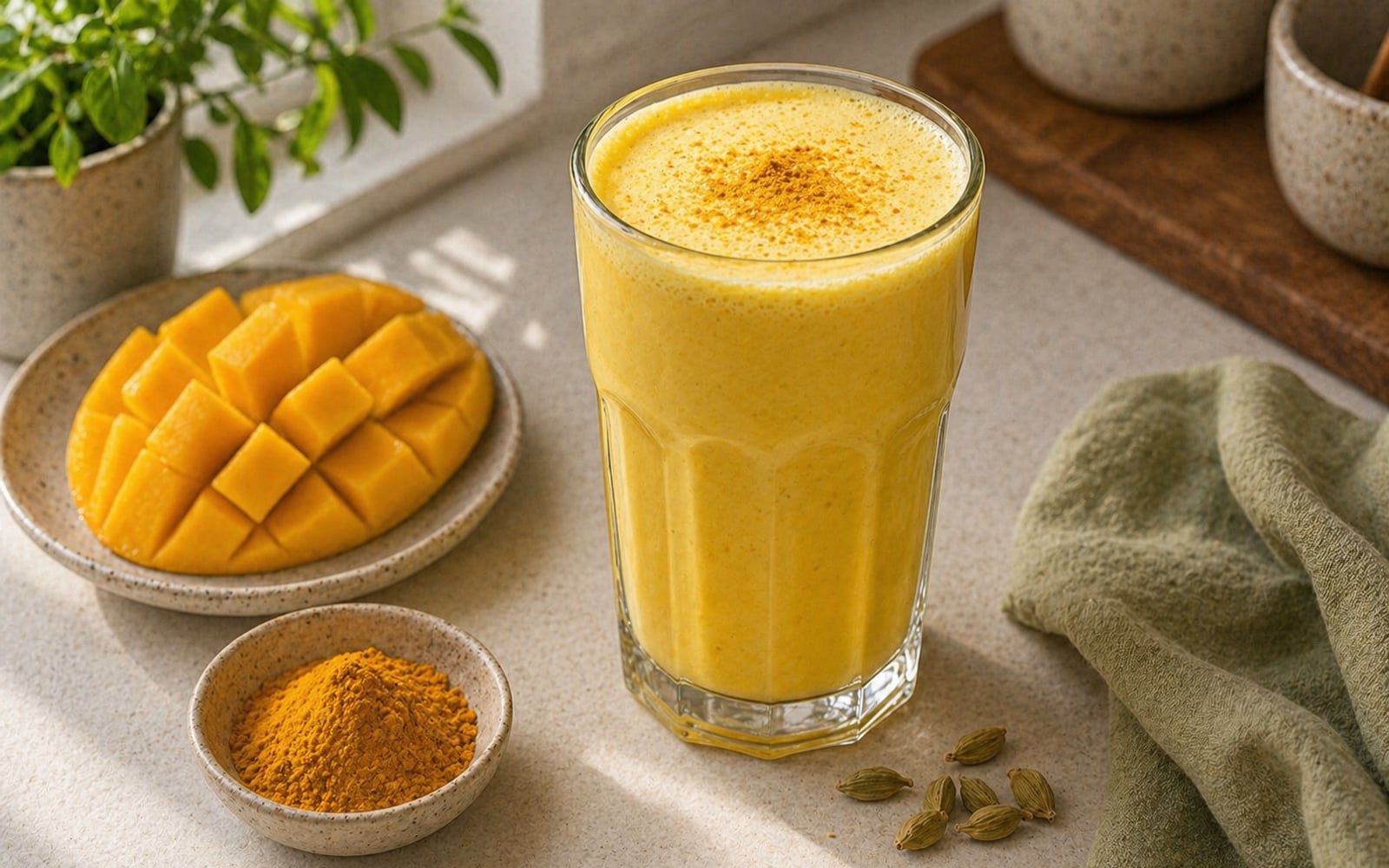
A tall glass of golden mango-turmeric lassi with a frothy top, beside fresh mango slices and a small bowl of ground turmeric and cardamom pods.

The base is simple: ripe mango, whole-milk yogurt with live cultures, a splash of cold water, and honey to taste. The turmeric turns it gold and adds an earthy warmth. The cardamom — and this is the ingredient that makes or breaks an authentic lassi — adds that unmistakable aromatic sweetness that you can’t get from any other spice. The black pepper is invisible to your taste buds at this quantity but does heavy lifting for curcumin absorption.

Blend it longer than you think you need to. A full 45 seconds, not just until smooth. The extra time incorporates air and creates the signature frothy cap on top — the difference between a lassi and a smoothie is that foam.

Frozen mango chunks are actually better than fresh here. They’re picked and frozen at peak ripeness (often sweeter than the fresh mangos at the grocery store) and they make the lassi thick and cold without diluting it with ice. If you use fresh mango, add 4-5 ice cubes and make sure the fruit is dead ripe — fragrant and soft when pressed.
Key ingredients

Why these ingredients

Whole-milk yogurt

Contains Lactobacillus bulgaricus and Streptococcus thermophilus as primary cultures, plus additional strains depending on the brand. The fat in whole-milk yogurt improves absorption of curcumin from the turmeric — the two work better together than either alone.

Mango

Rich in polyphenols (mangiferin, quercetin) and soluble fiber (pectin). Mangiferin has demonstrated prebiotic effects in animal models, selectively promoting Lactobacillus and Bifidobacterium growth. Also one of the richest fruit sources of vitamin A (as beta-carotene).

Cardamom

Contains 1,8-cineole, a terpene with demonstrated carminative (anti-gas) and gastroprotective properties. Traditional Ayurvedic medicine has used cardamom to support digestion for millennia — modern research confirms its antispasmodic effects on smooth muscle.

Before you start

Equipment

  • Blender

    any type — even an immersion blender works in a tall container

Recipe card

Mango-Turmeric Lassi

Prep
5 min
Cook
0 min
Total
5 min
Servings
2

Ingredients

Lassi

Garnish

Instructions

Notes

  • Frozen mango chunks make the creamiest, thickest lassi. If using fresh mango, use very ripe fruit (fragrant and gives slightly when pressed) and add ice.
  • For a richer lassi, replace the water with whole milk or use Greek yogurt instead of regular.
  • Cardamom is the secret to an authentic-tasting lassi. Don't skip it — even a small amount transforms the drink.

Nutrition per serving

Estimated; see our disclaimer.

Cal
180 kcal
Protein
6 g
Carbs
30 g
Fat
5 g
Fiber
2 g
Sugar
26 g
Sat Fat
2.5 g
Sodium
60 mg
Calcium
180 mg
Iron
0.5 mg

From our test kitchen

Pro tips

The frothy top

Blend for a full 45 seconds, not just until smooth. The extra blending time incorporates air and creates the characteristic frothy layer on top that distinguishes a good lassi from a smoothie.

Make it a golden lassi

For a more pronounced golden color and deeper turmeric flavor, increase turmeric to 1 teaspoon and add 1/2 teaspoon of freshly grated ginger. This pushes it toward a golden-milk lassi hybrid.

Keep it fresh

Storage & reheating

Fridge

Best consumed immediately. Will keep 24 hours in the fridge but the yogurt separates — shake or re-blend before drinking.

Freezer

Freeze in popsicle molds for a probiotic frozen treat (see our Berry-Coconut Probiotic Popsicles for technique).

Make it yours

Variations

Rose-mango lassi

Add 1 teaspoon rosewater and skip the turmeric. Garnish with dried rose petals and pistachios for a traditional Mughal-style lassi.

Savory lassi (chaas)

Skip the mango and honey entirely. Blend yogurt with water, a pinch of salt, roasted cumin powder, and fresh mint. This is the traditional everyday Indian drink — lighter, saltier, and even better for digestion.

Protein lassi

Add 1 scoop vanilla protein powder. Reduce honey to 1 teaspoon. A post-workout recovery drink with 25g+ protein.

Pantry swaps

Ingredient substitutions

Instead of

Fresh/frozen mango

Use

Canned Alphonso mango pulp

Alphonso pulp (available at Indian grocery stores) is intensely flavored and makes a richer lassi. It's pre-sweetened, so reduce or skip the honey.

Instead of

Yogurt

Use

Coconut yogurt

For dairy-free. The coconut flavor complements mango beautifully. Look for brands with added live cultures.

Instead of

Honey

Use

Maple syrup or jaggery

Jaggery is the traditional Indian sweetener — it dissolves in the blender and adds a deep, complex sweetness.

The evidence

Why this is good for your gut

The lassi is India's original probiotic drink — a daily staple consumed with or after meals for thousands of years, long before the word "probiotic" existed. Modern research validates the tradition.

Whole-milk yogurt used in a traditional lassi contains *Lactobacillus delbrueckii* subsp. *bulgaricus* and *Streptococcus thermophilus* as its primary fermentation cultures. These organisms survive gastric transit in significant numbers, particularly when consumed in a food matrix (as opposed to a supplement), because the fat and protein in yogurt buffer the stomach acid.[1] The casein and whey proteins in yogurt also slow gastric emptying, giving the probiotics more time in the less-acidic lower stomach.

Turmeric adds curcumin, which at 0.5 teaspoon delivers approximately 100mg of curcuminoids. While this is below the therapeutic dose used in clinical trials (500-2000mg), the black pepper in the recipe dramatically changes the math. Piperine inhibits hepatic and intestinal glucuronidation of curcumin, increasing its bioavailability by 2,000%.[2] The fat in the yogurt further enhances absorption, since curcumin is lipophilic.

Mango contributes mangiferin — a xanthone polyphenol unique to the mango family that has demonstrated prebiotic effects in animal models, selectively promoting *Lactobacillus* populations in the colon.[3] Like most fruit polyphenols, mangiferin is poorly absorbed in the small intestine, reaching the colon intact where it becomes a substrate for bacterial metabolism.

Cardamom rounds out the functional profile. Its primary active compound, 1,8-cineole, has carminative (gas-reducing) and antispasmodic effects on intestinal smooth muscle — which is why Indian cuisine traditionally pairs spiced yogurt drinks with heavy meals.

Good questions

Frequently asked questions

Can I use kefir instead of yogurt?

Yes — kefir produces a thinner, tangier lassi with even more probiotic diversity (30+ strains vs yogurt's 5-7). Reduce or eliminate the water since kefir is already liquid.

Is this low-FODMAP?

Mango is high in excess fructose and not low-FODMAP in large servings. For a low-FODMAP version, replace mango with 1 cup strawberries or papaya. Use lactose-free yogurt.

Why add black pepper to a sweet drink?

You can't taste it at this amount. Piperine in black pepper increases curcumin absorption by up to 2,000%. It's a functional addition, not a flavor one.

References

  1. Survival of yogurt bacteria in the human gut — Applied and Environmental Microbiology↩ back
  2. Influence of piperine on the pharmacokinetics of curcumin — Planta Medica↩ back
  3. Mangiferin: prebiotic potential and effect on gut microbiota — Food & Function↩ back

Loved this recipe?

Save it to your Pinterest boards or share with a friend who needs more gut-friendly weeknight meals.

Newsletter

Weekly gut-friendly recipes, straight to your inbox.

One email every Sunday — new recipes, a practical gut-health tip, and zero spam. Unsubscribe anytime.

No spam 1-click unsubscribe

Signup coming soon. Follow us on Pinterest in the meantime.

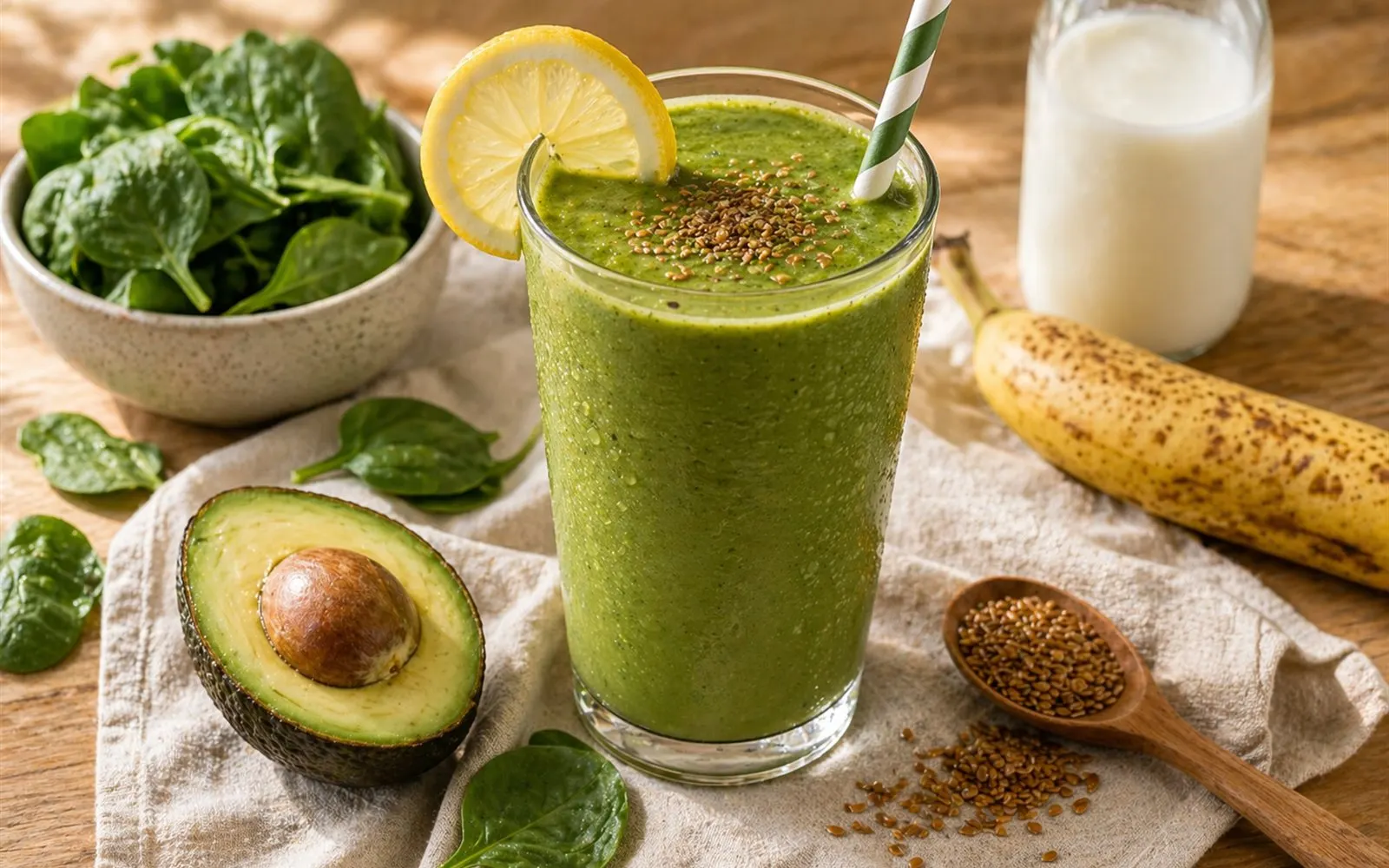
Green Goddess Gut Smoothie — GutPlate recipe photo
smoothies 5 min

Green Goddess Gut Smoothie

A creamy spinach-avocado smoothie with banana, kefir, and a spoonful of flaxseed — blends in 2 minutes and delivers prebiotics, probiotics, and omega-3s in one glass.

1 serving View recipe
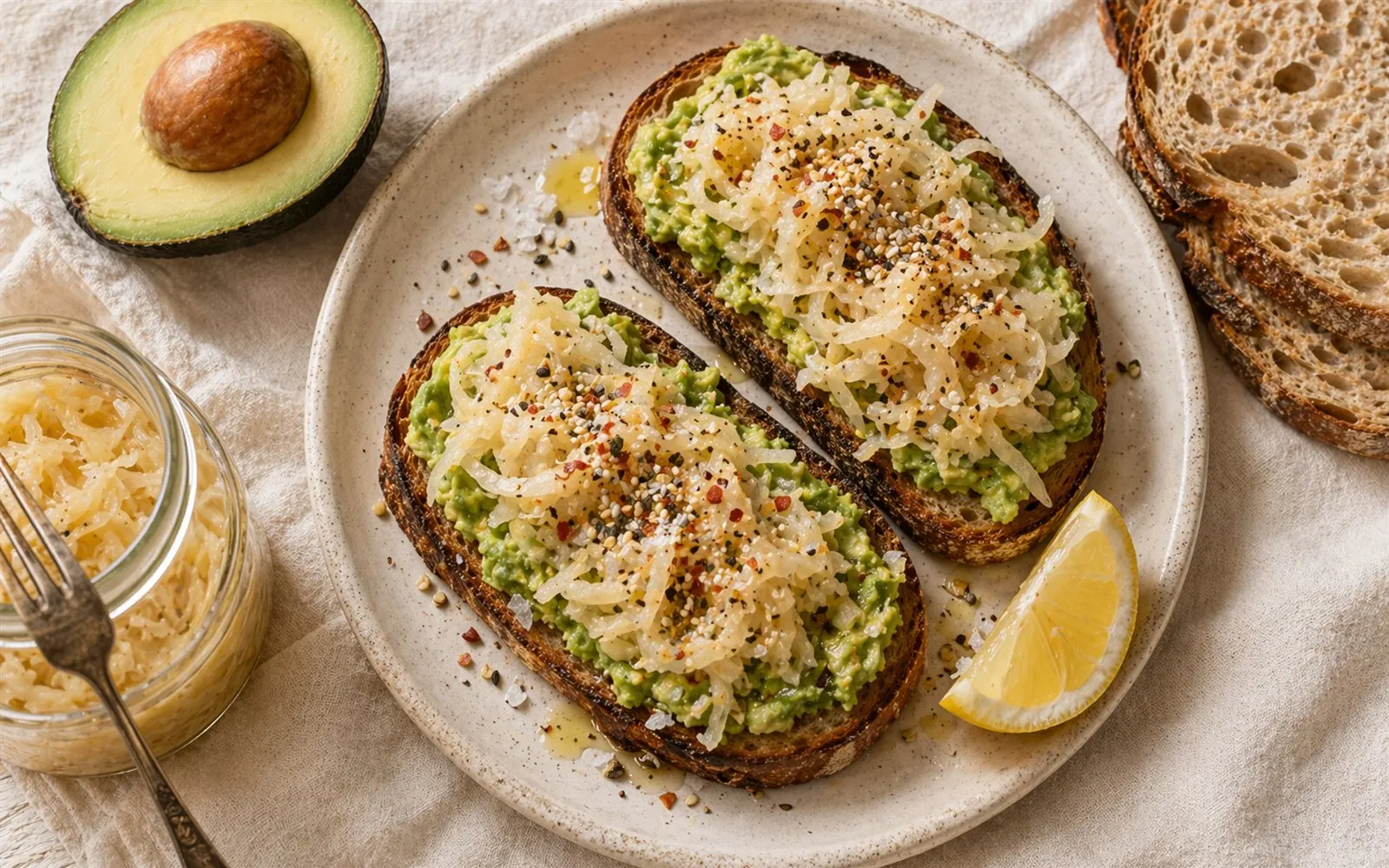
Sourdough Avocado Toast with Sauerkraut — GutPlate recipe photo
breakfast 8 min

Sourdough Avocado Toast with Sauerkraut

Crispy sourdough topped with smashed avocado, a generous spoonful of raw sauerkraut, everything bagel seasoning, and a squeeze of lemon — fermented meets fiber in 5 minutes.

1 serving View recipe
Sauerkraut & Apple Slaw — GutPlate recipe photo
sides 10 min

Sauerkraut & Apple Slaw

A 10-minute raw slaw that layers live sauerkraut with crisp apple, carrot, and a bright lemon-olive oil dressing — no cooking required.

4 servings View recipe