If you have been diagnosed with IBS or experience chronic bloating, cramping, and unpredictable bowel habits, there is a good chance someone has mentioned the low-FODMAP diet to you. It is the most clinically studied dietary intervention for irritable bowel syndrome, with response rates of 50–80% in controlled trials.[1] But it is also widely misunderstood — many people treat it as a permanent restriction list rather than what it actually is: a three-phase diagnostic tool. This guide walks through the diet properly, from the science behind it to the practical day-to-day.
What are FODMAPs?
FODMAP is an acronym coined by researchers at Monash University in Melbourne. It stands for:
- Fermentable
- Oligosaccharides (fructans, GOS)
- Disaccharides (lactose)
- Monosaccharides (excess fructose)
- And
- Polyols (sorbitol, mannitol, xylitol)
These are short-chain carbohydrates that are poorly absorbed in the small intestine. When they reach the large intestine, resident bacteria ferment them rapidly, producing gas (hydrogen, methane, or both). In people with a normal gut, this is fine — it is how prebiotics work. But in people with visceral hypersensitivity (the hallmark of IBS), the same gas and water movement that healthy guts tolerate causes pain, bloating, distension, and altered motility.[4]
The important nuance: FODMAPs are not “bad.” They are prebiotic fibers and sugars found in many of the healthiest foods on earth — garlic, onions, legumes, wheat, apples, dairy. The low-FODMAP diet does not eliminate them permanently; it identifies your personal threshold for each type.
Who is the diet for?
The low-FODMAP diet is specifically designed for people with:
- Diagnosed IBS (Rome IV criteria) — this is the strongest evidence base.
- Functional bloating or functional diarrhea where standard investigations (celiac screen, inflammatory markers, imaging) have come back normal.
- SIBO — sometimes used alongside antibiotic treatment, though the evidence here is thinner.
It is not designed for:
- General “gut health” optimization in people without symptoms.
- Weight loss.
- People with active inflammatory bowel disease (Crohn’s, ulcerative colitis) as a primary treatment — though it may help manage functional overlay symptoms.
- People with eating disorder history — the restriction phase requires careful oversight.
If you have not been evaluated by a gastroenterologist, do that first. The symptoms of IBS overlap with celiac disease, IBD, endometriosis, ovarian pathology, and several other conditions that need ruling out before dietary manipulation.
The three phases
Phase 1: Elimination (2–6 weeks)
During this phase, you reduce all high-FODMAP foods simultaneously. The goal is to establish a baseline — if your symptoms improve significantly (most people notice within 2–3 weeks), FODMAPs are likely a trigger. If they do not improve, FODMAPs may not be your primary issue, and the diet can be discontinued.
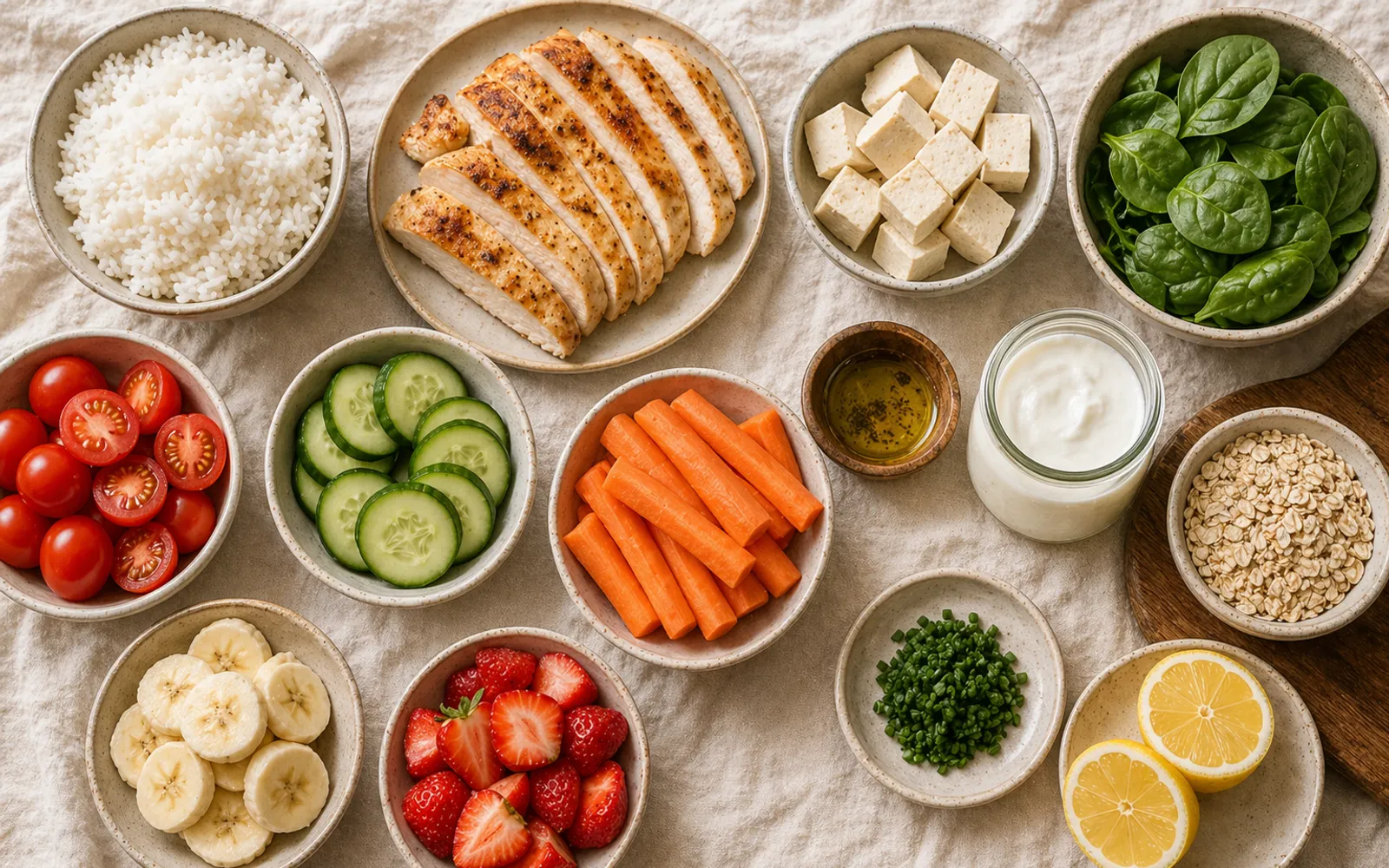
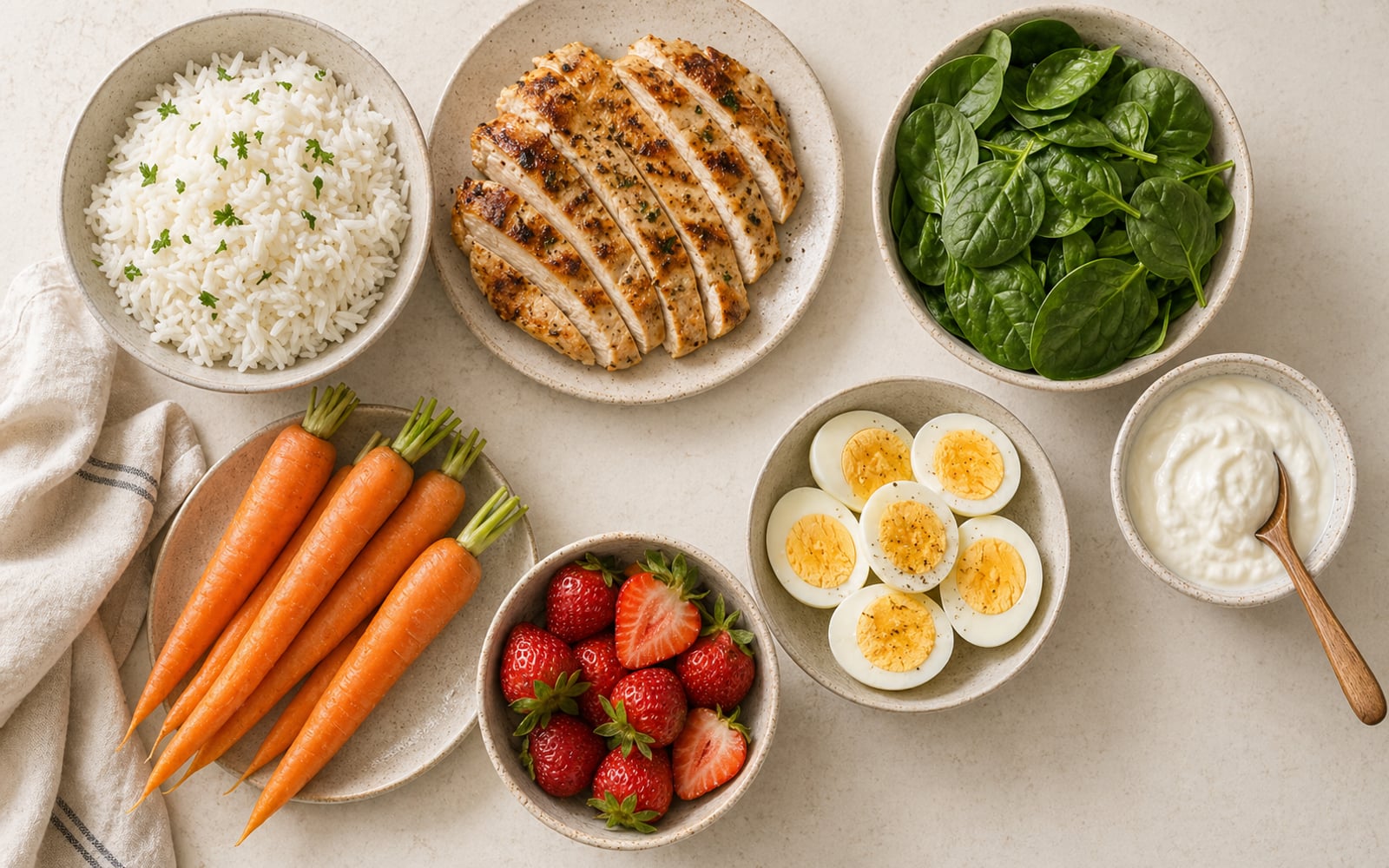
Foods to eat freely (low-FODMAP staples):
- Proteins: chicken, turkey, fish, eggs, firm tofu, tempeh
- Grains: rice, oats, quinoa, polenta, gluten-free bread and pasta, sourdough spelt bread (the fermentation reduces fructans)
- Vegetables: carrots, zucchini, bell peppers, spinach, kale, bok choy, green beans, potatoes, cucumber, tomato, eggplant, lettuce
- Fruits: strawberries, blueberries, grapes, oranges, kiwi, banana (firm), pineapple, cantaloupe
- Dairy alternatives: lactose-free milk, lactose-free yogurt, hard cheeses (cheddar, Parmesan — naturally very low in lactose)
- Fats: olive oil, butter, garlic-infused oil (fructans are water-soluble but not fat-soluble, so infused oil delivers garlic flavor without FODMAPs)
- Seasonings: all herbs, most spices, soy sauce, fish sauce, mustard, maple syrup (in small amounts)
Foods to restrict during elimination:
- High-fructan foods: garlic, onion, wheat (in large amounts), rye, artichoke, asparagus, beetroot, Brussels sprouts
- High-GOS foods: chickpeas, lentils, kidney beans, black beans, cashews, pistachios
- High-lactose foods: milk, soft cheeses, ice cream, regular yogurt
- High-fructose foods: apples, pears, mango, watermelon, honey, agave, high-fructose corn syrup
- Polyol-rich foods: avocado (large serves), stone fruits (peaches, plums, cherries), mushrooms, cauliflower, sugar-free gum and mints
A critical point: the Monash University FODMAP app (available on iOS and Android) is the gold-standard reference. FODMAP content varies by serving size — a small portion of avocado (⅛ of a whole) is low-FODMAP, while a whole half is high. The app gives traffic-light ratings by portion size and is updated as new foods are tested.
Phase 2: Reintroduction (6–8 weeks)
This is the phase most people skip — and skipping it is the biggest mistake you can make. Reintroduction is where you identify which specific FODMAP groups trigger your symptoms and at what dose.
You reintroduce one FODMAP subgroup at a time over 3 days:
- Day 1: Small dose (e.g., ¼ clove garlic for fructans)
- Day 2: Medium dose (e.g., ½ clove garlic)
- Day 3: Larger dose (e.g., 1 full clove)
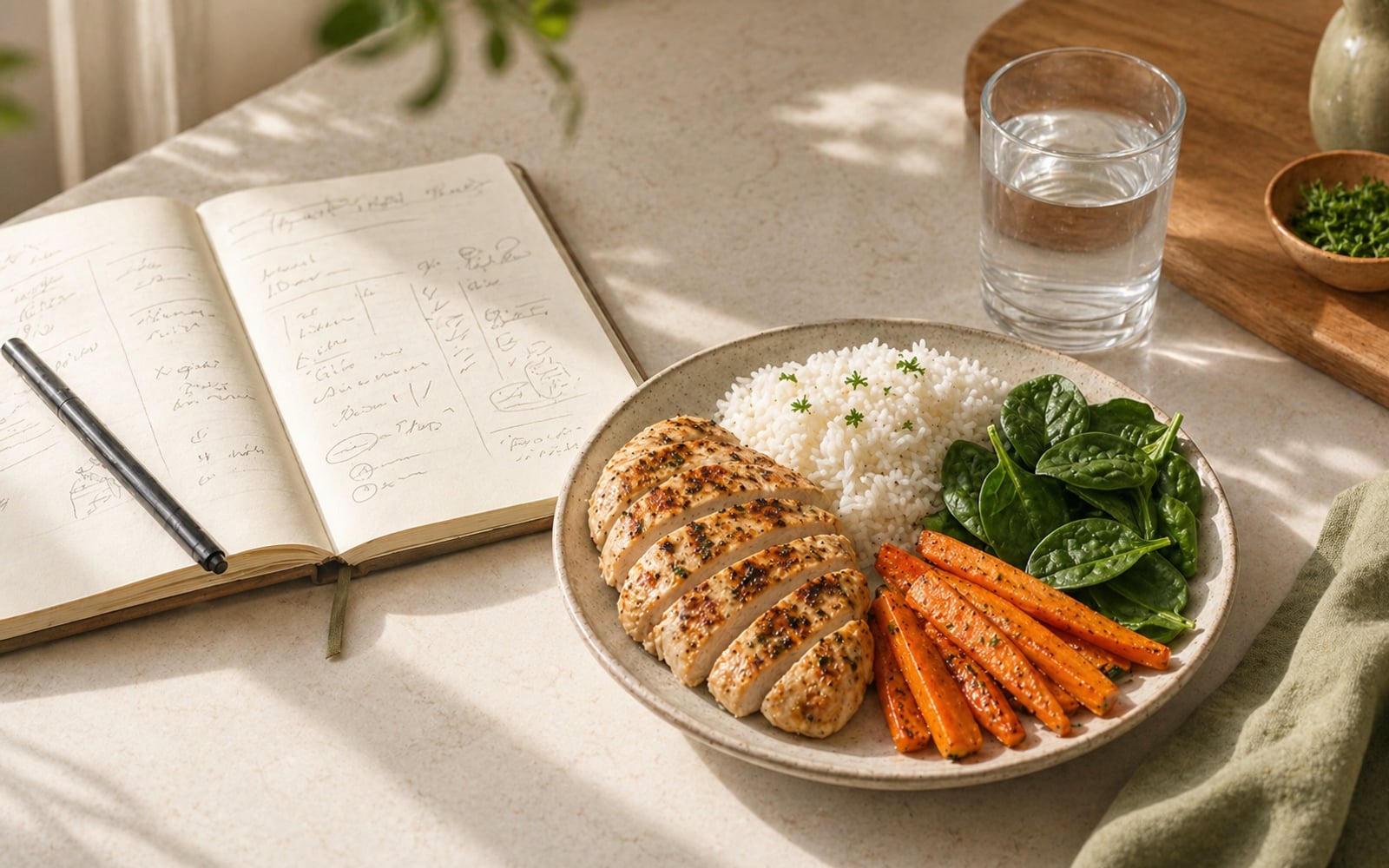
Then return to strict low-FODMAP for 3 “washout” days before testing the next group. Track symptoms daily in a journal or app. The six challenge groups are:
- Fructans (wheat) — test with 2 slices of wheat bread
- Fructans (garlic/onion) — test with garlic cloves
- GOS — test with canned lentils or chickpeas
- Lactose — test with regular milk
- Excess fructose — test with honey or mango
- Polyols (sorbitol) — test with blackberries or avocado
- Polyols (mannitol) — test with mushrooms or cauliflower
Most people find they react to 1–3 subgroups, not all of them. This is why the reintroduction phase matters so much — you may discover that you tolerate lactose and GOS perfectly well, and only fructans cause issues. That changes your diet dramatically compared to staying on full elimination.
Phase 3: Personalization (ongoing)
Armed with your reintroduction data, you build a long-term diet that:
- Avoids or limits only the FODMAP subgroups you actually react to, at the doses that trigger symptoms.
- Includes all the FODMAPs you tolerate — these are prebiotic fibers your microbiome needs.
- Periodically re-tests problem foods, since FODMAP tolerance can improve over time as the gut heals and the microbiome adapts.
This phase should feel like a normal diet with a few known triggers to manage — not an ongoing restriction. If you are still avoiding large categories of food months later, the diet has not been implemented correctly.
The microbiome concern
Here is the tension with the low-FODMAP diet: the very foods it restricts — garlic, onions, legumes, wheat — are some of the most potent prebiotic fibers available. Studies have shown that a strict low-FODMAP diet can reduce Bifidobacterium populations by 40–50% within 3–4 weeks.[2] This is why phase 1 should last no longer than 6 weeks, and why reintroduction is not optional.
To mitigate the microbiome impact during elimination:
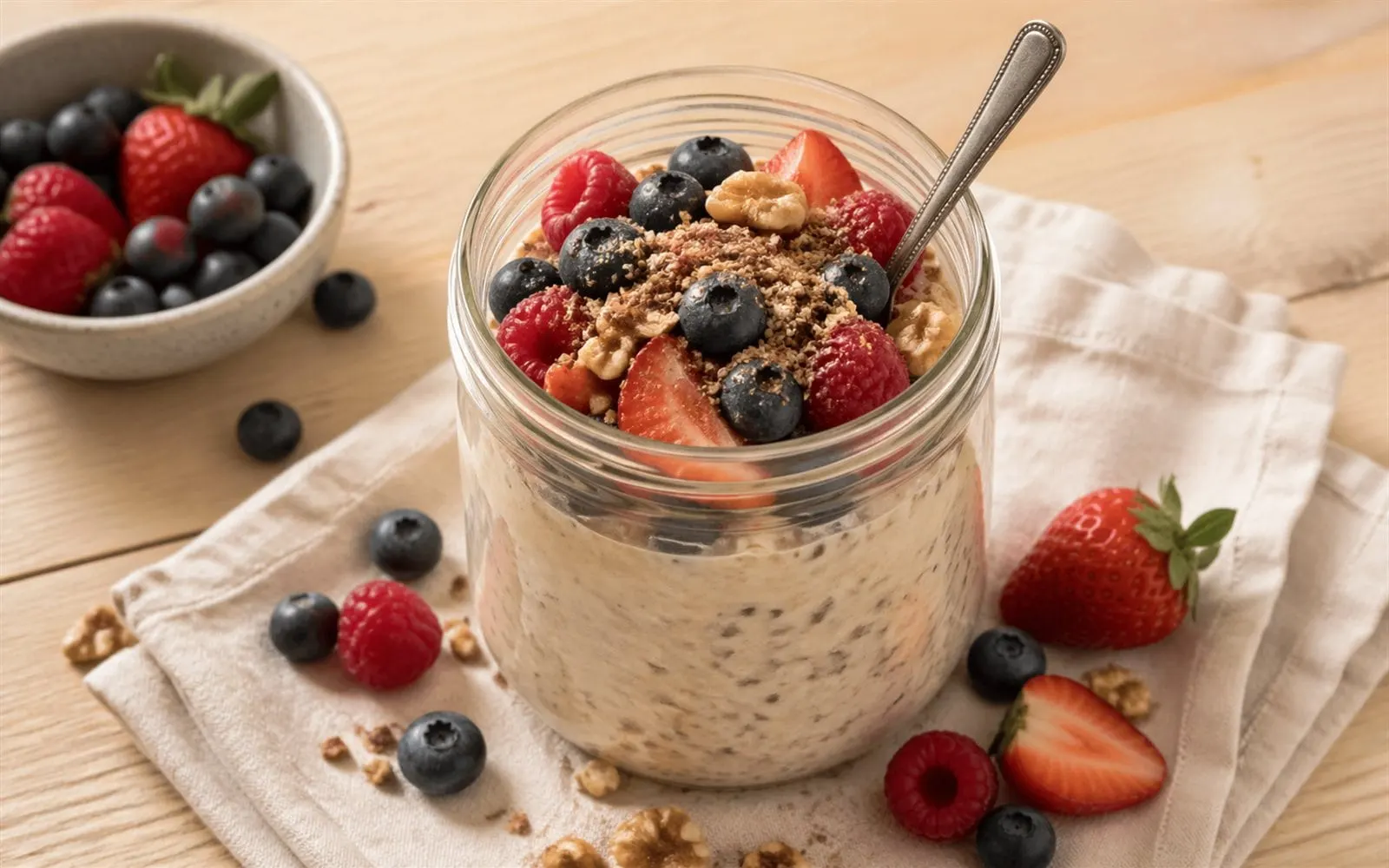
- Eat the low-FODMAP prebiotic foods that are available to you: oats (beta-glucan), firm bananas (resistant starch), kiwi fruit, strawberries, and carrots.
- Include fermented foods that are low-FODMAP: lactose-free yogurt, lactose-free kefir, small amounts of sauerkraut (check portions — Monash rates 1 tablespoon as low-FODMAP).
- Consider a Bifidobacterium-based probiotic during the elimination phase, though evidence for this is limited.
The long-term goal is always to eat as broadly as your symptoms allow. A well-executed low-FODMAP diet should expand your food variety over time, not shrink it.
Practical tips for the elimination phase
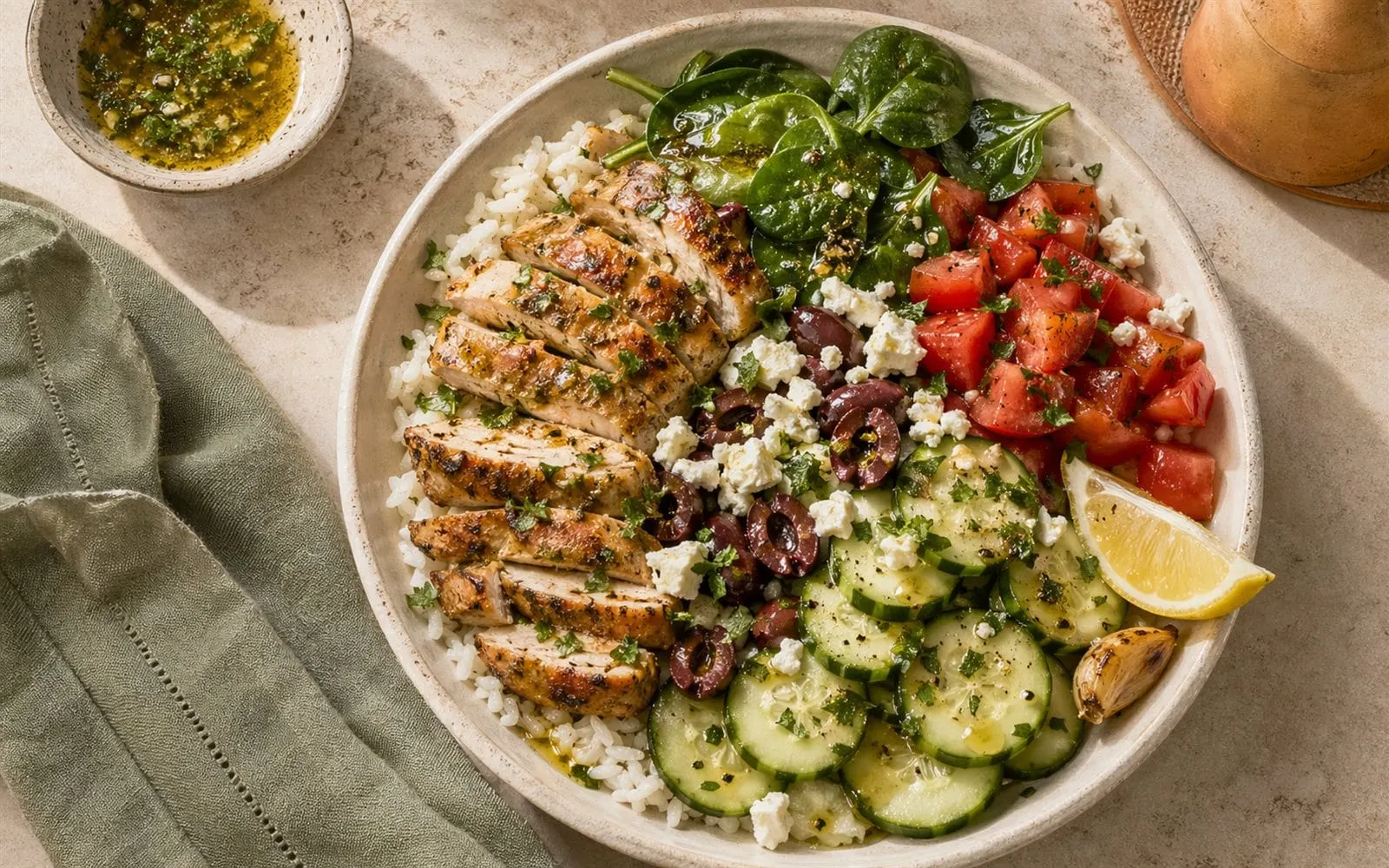
Meal structure: Build meals around a low-FODMAP protein + a low-FODMAP grain + 2–3 low-FODMAP vegetables + a fat. This formula works for any meal.
Garlic and onion workarounds: These are the hardest to give up because they are in everything. Garlic-infused olive oil is your best friend — sauté vegetables in it for flavor without fructans. The green tops of spring onions (scallions) are low-FODMAP while the white bulb is high, so use the green parts liberally. Chives are safe. Asafoetida (hing) is a spice that mimics onion/garlic flavor and is low-FODMAP.
Eating out: Communicate simply: “I cannot eat garlic, onion, or wheat.” Most restaurants can accommodate this more easily than a full FODMAP explanation. Asian cuisines (Japanese, Thai, Vietnamese) tend to use less onion and garlic as a base compared to Italian or Indian food.
Batch cooking: The elimination phase is much easier if you prep meals in advance. Having grab-and-go options eliminates the decision fatigue that leads to accidental high-FODMAP meals or giving up entirely.
When to get help
The low-FODMAP diet is best done with guidance from a FODMAP-trained dietitian, especially:
- If you have a history of disordered eating.
- If your symptoms do not improve after 4 weeks of strict elimination.
- If you are struggling with reintroduction — the challenge protocol is more nuanced than most online guides suggest.
- If you are losing weight unintentionally during elimination.
The Monash University website and the FODMAP Friendly certification program both maintain directories of trained practitioners.
Bottom line
The low-FODMAP diet is not a lifestyle — it is a structured diagnostic process with a beginning, middle, and end. Phase 1 identifies whether FODMAPs are a trigger. Phase 2 identifies which ones and at what dose. Phase 3 is your long-term, liberalized diet. Done properly, most people end up reintroducing the majority of the foods they eliminated and managing only 1–3 specific triggers. The goal is the broadest, most diverse diet your gut can tolerate — not the most restricted one.