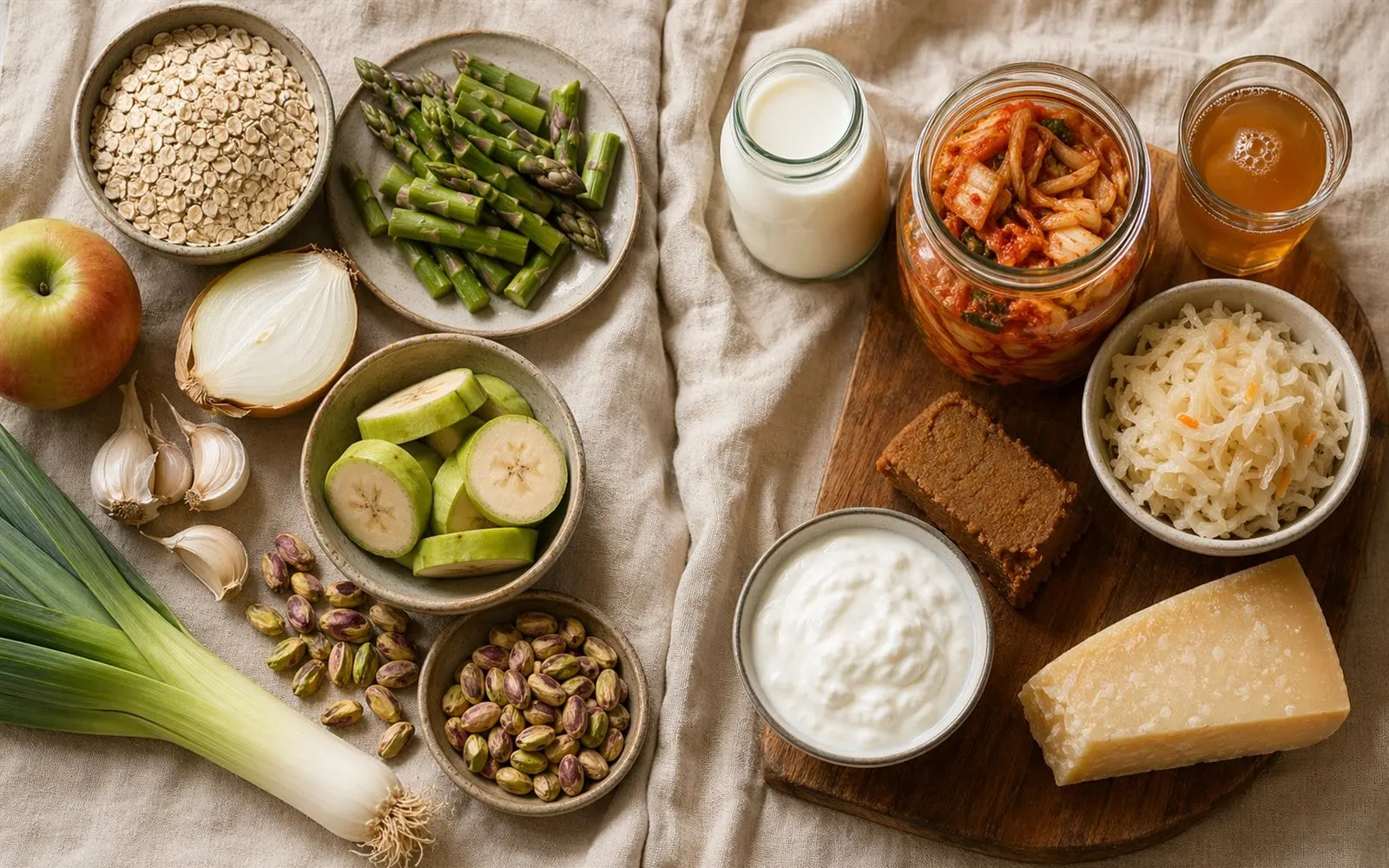
The terms prebiotic and probiotic sound almost interchangeable, which is unfortunate because they describe very different things. The short version: probiotics are living organisms you eat. Prebiotics are the food those organisms eat once they are inside you. And there is a third category — postbiotics — that most people have never heard of but that may matter more than either. Here is how all three categories actually work and what to do with each in your kitchen.
Probiotics: the live organisms
The formal definition, set by the International Scientific Association for Probiotics and Prebiotics (ISAPP) in 2013, is:
Probiotics are live microorganisms that, when administered in adequate amounts, confer a health benefit on the host.[1]
The key word is live. A yogurt that has been heat-treated after fermentation (many shelf-stable brands) is no longer technically probiotic — the cultures have been killed. Most probiotics that have been studied belong to two genera: Lactobacillus and Bifidobacterium. There are many others — Streptococcus thermophilus, Saccharomyces boulardii (a beneficial yeast), various Lactococcus species — and each has different effects depending on strain and dose.
This strain-specificity is important. Saying “I take probiotics” is like saying “I take medication” — it does not tell you much until you know which one and for what purpose.
The best-studied food sources
- Yogurt with the “Live and Active Cultures” seal (2 or 3 strains, typically). One cup daily is the dose most studied. Choose plain, full-fat or low-fat — the flavored varieties often contain 12–20 g of added sugar that undermines the benefit.
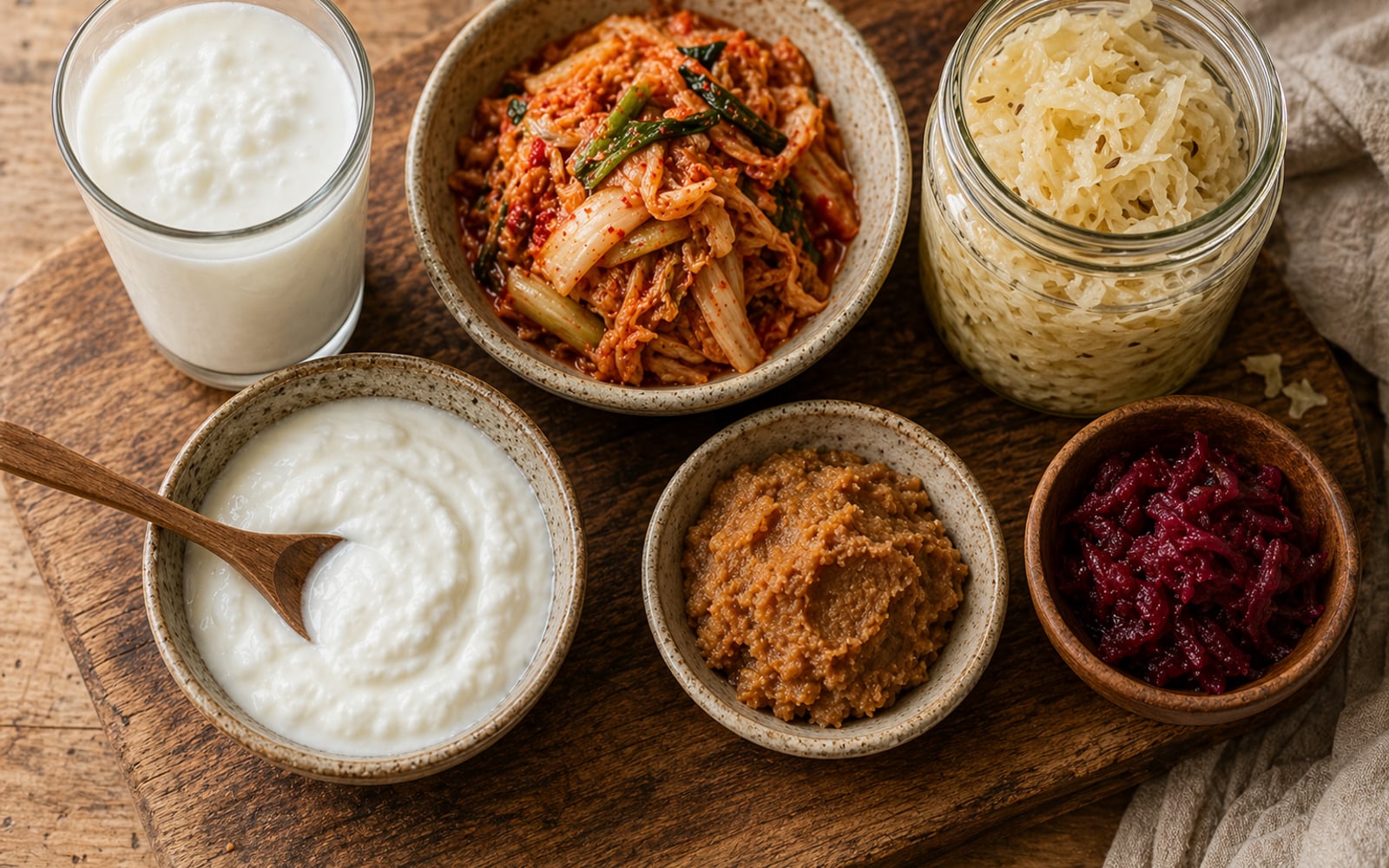
- Kefir — a fermented milk drink that usually carries 10–30 strains of bacteria and yeast, making it one of the most diverse dietary probiotics available. One cup per day is a practical dose, either straight, in smoothies, or poured over oats.
- Raw sauerkraut and kimchi from the refrigerated section (not shelf-stable). Start with 1–2 tablespoons per meal and build up. The refrigerated label matters — shelf-stable products have been pasteurized, killing the live cultures.
- Miso, tempeh, and natto — traditional soy ferments. Miso is best added off the heat (boiling kills the cultures). Tempeh can be cooked and still provides beneficial metabolites even after the organisms die. Natto is the strongest source of vitamin K2 and the enzyme nattokinase.
- Kombucha — a fermented tea; look for brands with live cultures and under 4 g sugar per serving. Many commercial kombuchas are closer to soda than a fermented food.
- Traditional pickles fermented in salt brine (not in vinegar). Vinegar pickles are not probiotic — the acetic acid does the preserving, not bacteria.
A common supplement-aisle trap: products that list impressive CFU counts (50 billion! 100 billion!) but have no published evidence for the specific strains they contain. CFU count alone does not predict effectiveness — strain identity and clinical evidence do. Food-first almost always wins here because fermented foods deliver bacteria in a food matrix with fiber, vitamins, and organic acids that support colonization.
How many servings of fermented food per day?
The Stanford study that made headlines in 2021 used six servings of fermented food per day and saw significant increases in microbial diversity and decreases in inflammatory markers within 10 weeks.[4] That is more than most people eat, but the effect was dose-dependent — meaning even 2–3 servings per day moved the needle. A practical daily minimum: one cup of kefir or yogurt plus one tablespoon of sauerkraut or kimchi.
Prebiotics: the fuel
Prebiotics were most recently defined by ISAPP in 2017:
Prebiotics are substrates that are selectively utilized by host microorganisms conferring a health benefit.[2]
In plain English, a prebiotic is a compound — almost always a type of fiber — that passes undigested through your small intestine and arrives in your colon, where your microbes ferment it. That fermentation produces short-chain fatty acids (especially butyrate, propionate, and acetate) that nourish the colon lining, regulate immune function, and reduce inflammation.[5]
The main classes
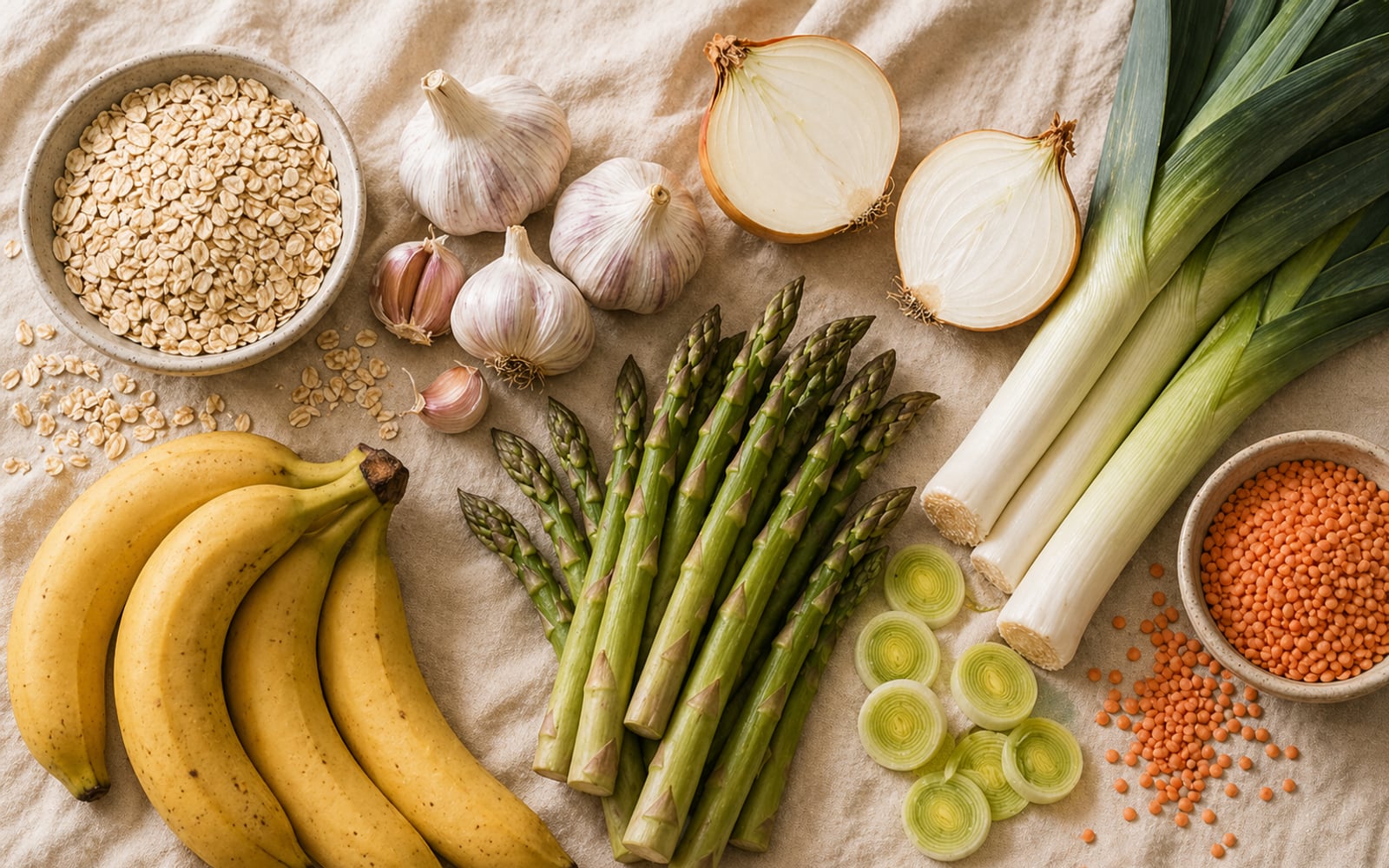
- Inulin and fructo-oligosaccharides (FOS) — garlic, onion, leek, artichoke, asparagus, chicory root, dandelion greens, banana. Jerusalem artichoke is one of the most concentrated food sources — a single 2-inch piece provides more inulin than a whole onion.
- Galacto-oligosaccharides (GOS) — legumes (chickpeas, lentils, beans), certain dairy. A cup of cooked lentils delivers roughly 15 g of total fiber, much of it GOS.
- Resistant starch — cooled cooked rice and potatoes, green bananas, raw oats, legumes. The key word is “cooled” — cooking then cooling starch causes retrogradation, which makes it resistant to digestion and available for bacterial fermentation. Reheating does not reverse this fully, so yesterday’s rice is genuinely more prebiotic than today’s.
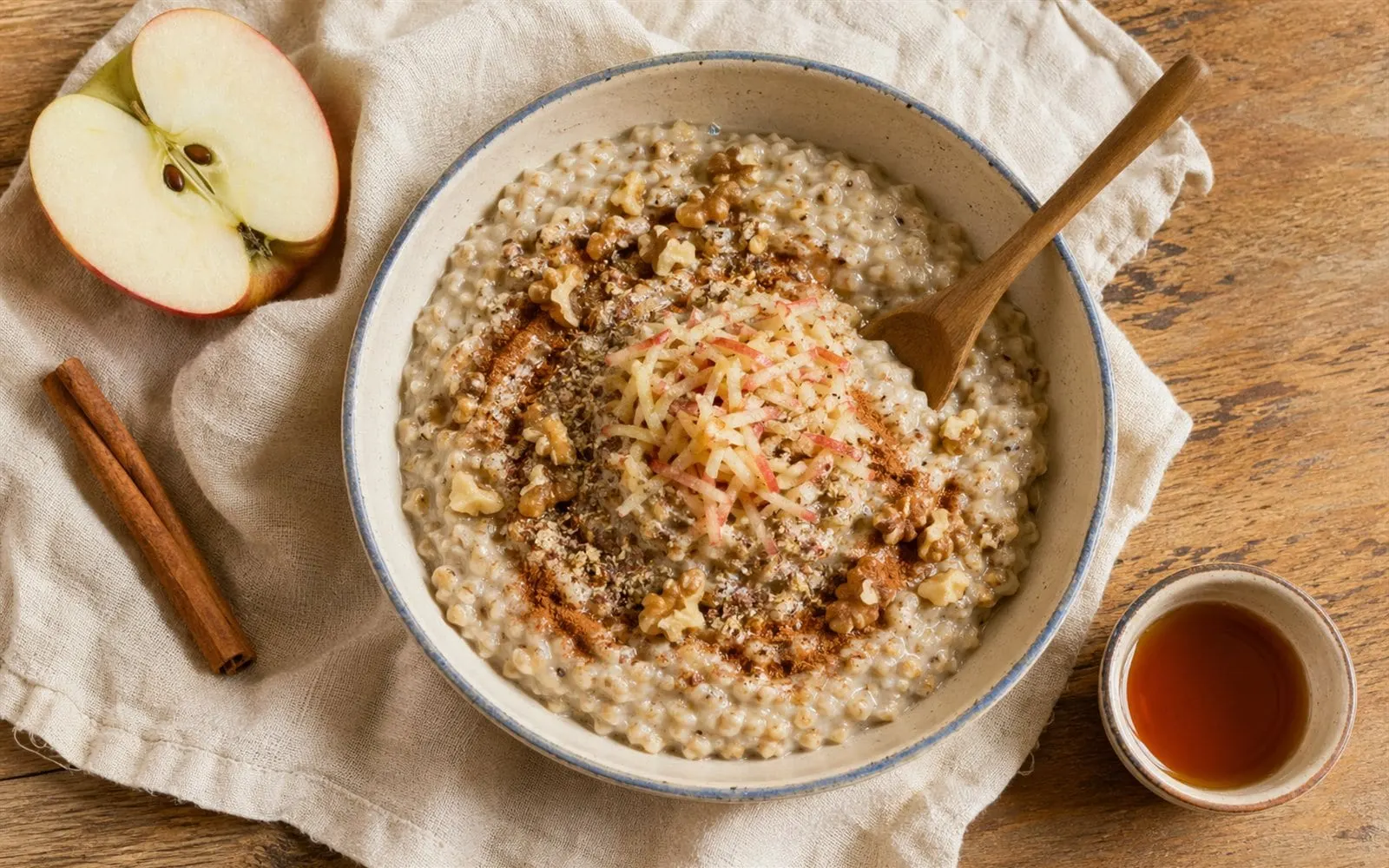
- Beta-glucan — oats, barley. One of the most studied prebiotics, with consistent evidence for improving microbial short-chain fatty acid production and lowering cholesterol.
- Pectin — apples, pears, citrus, berries. The old saying about an apple a day has a microbiome basis: apple pectin selectively feeds Bifidobacterium species.
If you are chasing probiotics without eating enough prebiotic fiber, you are essentially shipping soldiers to a base with no food. Many people who do not feel better on probiotic supplements have this exact gap — they are adding organisms without providing the substrate those organisms need to survive and produce beneficial metabolites.
How much prebiotic fiber per day?
There is no official RDA for prebiotic fiber specifically, but the general fiber target of 25–38 g per day (most adults eat 15–18 g) captures most prebiotic needs when the fiber comes from diverse plant sources. A practical daily target: aim for prebiotic-rich foods at every meal — oats at breakfast, legumes at lunch, a variety of vegetables at dinner — rather than trying to hit a gram target from a single food.
Postbiotics: the third player
The newest category in the conversation, postbiotics are the bioactive compounds produced by probiotic organisms during fermentation — the metabolic end products. These include:
- Short-chain fatty acids (butyrate, propionate, acetate) — the primary fuel for colonocytes and a key regulator of inflammation.
- Bacteriocins — antimicrobial peptides that help keep pathogenic bacteria in check.
- Enzymes like lactase (which helps digest dairy) and certain proteases.
- Vitamins — B vitamins, vitamin K2, and folate produced by bacterial metabolism.
- Organic acids — lactic acid, acetic acid — that lower colonic pH and create an environment hostile to pathogens.
Why postbiotics matter: some of the health benefits attributed to probiotics may actually be from postbiotics. This is why fermented foods like miso and tempeh can still provide gut benefits even after cooking kills the live organisms — the beneficial metabolites are already in the food. It is also why prebiotic fiber is so critical: without it, probiotic bacteria cannot produce the postbiotic compounds that do much of the actual work.[5]
Synbiotics: the combination
A synbiotic is a product or meal that contains both a probiotic and a prebiotic targeted to feed it — for example, yogurt with a tablespoon of oats and a sliced banana. Synbiotics can be more effective than either alone because the live microbes have food on arrival.
This is not an exotic concept; traditional food combinations around the world are synbiotic by design:
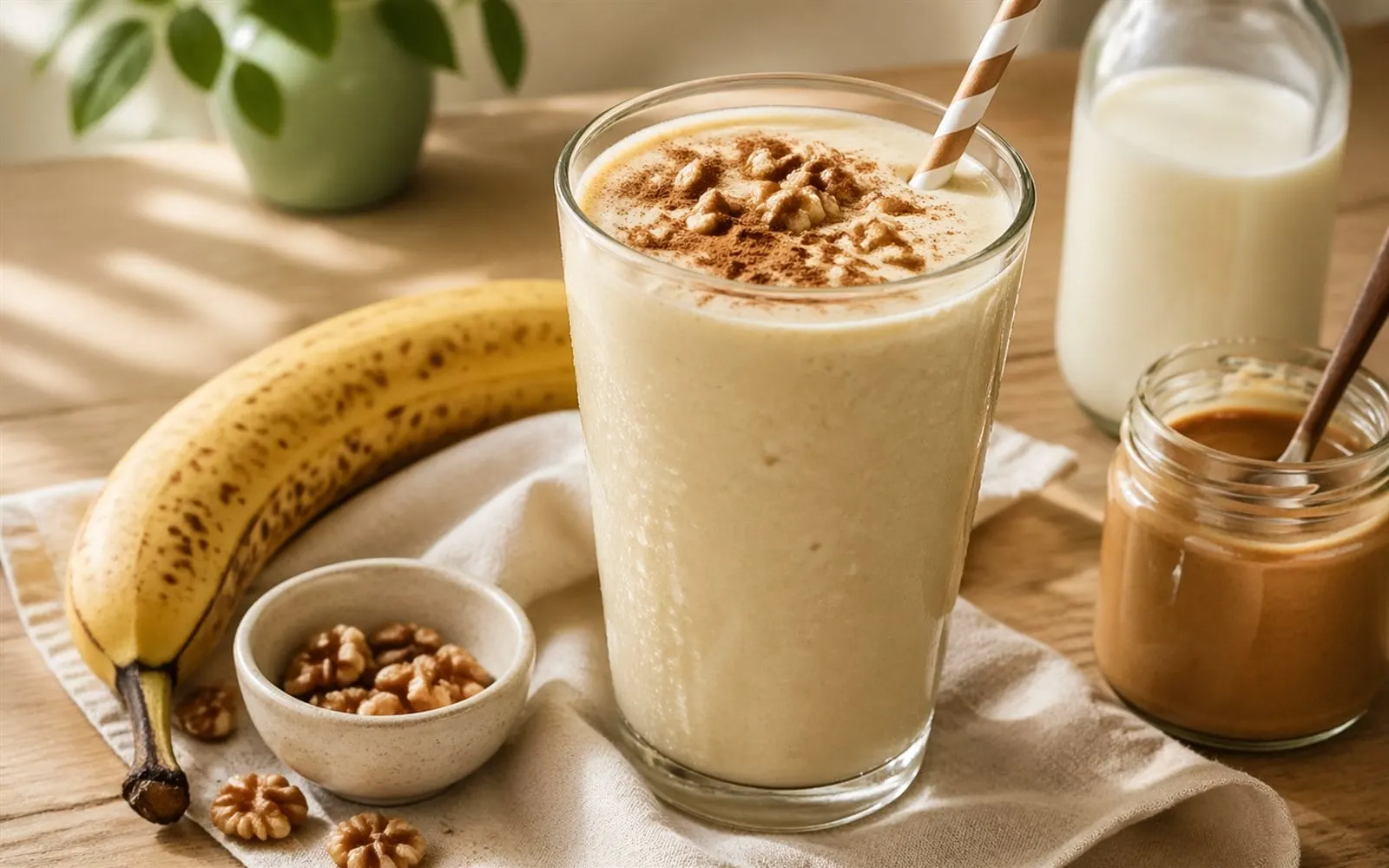
- Kefir with oats and banana — probiotic kefir + prebiotic beta-glucan and resistant starch.
- Miso soup with vegetables — probiotic miso + prebiotic fiber from onion, leek, and seaweed.
- Yogurt with berries and nuts — probiotic yogurt + prebiotic pectin and polyphenols.
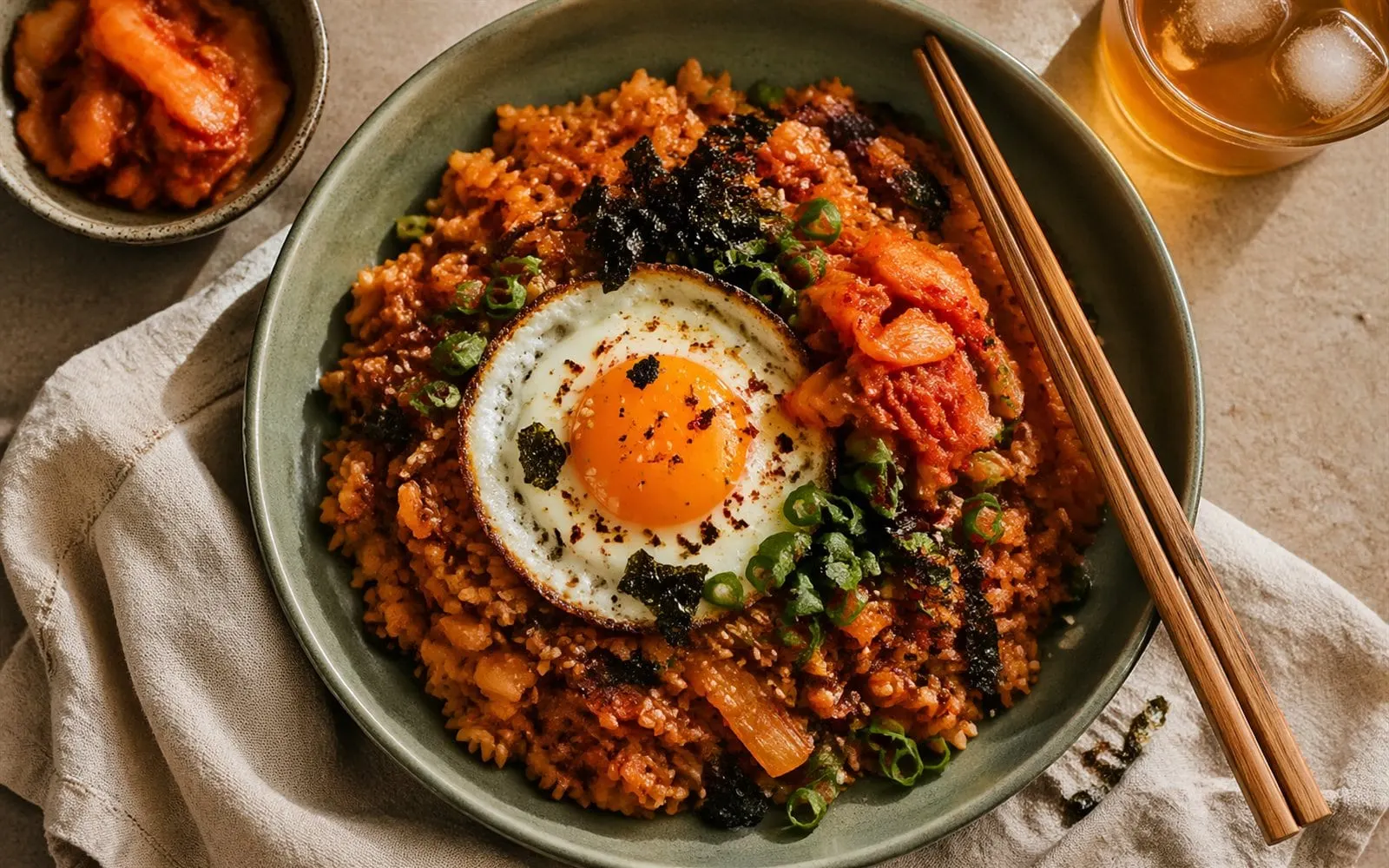
- Kimchi fried rice — probiotic raw kimchi spooned on top + resistant starch from cooled, reheated rice.
- Sourdough toast with sauerkraut — probiotic kraut + prebiotic fiber from whole-grain sourdough.
When you eat this way, you do not need to think about synbiotics as a category — you are already creating them at every meal.
Who should be cautious
Most people benefit from increasing both prebiotics and probiotics, but there are exceptions:
- SIBO (small intestinal bacterial overgrowth): Prebiotic-rich foods, especially those high in FODMAPs, can worsen symptoms by feeding bacteria in the wrong location. If you have been diagnosed with SIBO, work with a practitioner on timing — prebiotics are often reintroduced after treatment, not during.
- Histamine intolerance: Some fermented foods (aged cheese, wine, sauerkraut, kombucha) are high in histamine. If you experience headaches, flushing, or nasal congestion after fermented foods, try lower-histamine options like fresh yogurt or kefir first, and introduce aged ferments slowly.
- Immunocompromised individuals: Live probiotics (both in food and supplements) carry a small risk of infection in severely immunocompromised people. Consult your medical team before adding high-dose fermented foods.
- Rapid increases in fiber: Going from 15 g to 40 g of fiber overnight will cause bloating, gas, and discomfort regardless of how healthy the fiber is. Increase by 5 g per week and drink enough water to keep things moving.
A simple daily pattern
The easiest way to cover both bases without thinking about it:
- One probiotic-containing food per day. A cup of kefir in a smoothie, a spoon of kraut on a grain bowl, a cup of yogurt with fruit, a mug of miso soup. Two or three servings is even better if you can manage it.
- 30+ grams of fiber per day from diverse plants. Breakfast-lunch-dinner portions of whole grains, legumes, vegetables, fruit, nuts, and seeds add up faster than people expect. A bowl of oats (4 g), a cup of lentils (15 g), two cups of vegetables (8 g), a piece of fruit (4 g), and a handful of nuts (3 g) gets you to 34 g without trying hard.
- Variety over perfection. Rotating sources — kefir one day, kimchi the next, kombucha on weekends — feeds a broader microbial community than relying on a single product. The same principle applies to fiber: five different vegetables beats five servings of the same vegetable.
A few common questions
Do I need to refrigerate probiotic foods? The live ones, yes. If it is shelf-stable at room temperature, the cultures have almost certainly been pasteurized out. The exception is shelf-stable supplements that use spore-forming organisms (like Bacillus coagulans), which survive without refrigeration — but most food-based probiotics need cold.
Can I take probiotics with antibiotics? Timing matters more than the decision itself. If your clinician has suggested a specific probiotic during antibiotics, space it a few hours away from the dose so the antibiotic does not kill the probiotic on contact. Continue for 2–4 weeks after finishing the course. The most-studied strain for antibiotic-associated issues is Saccharomyces boulardii, a yeast that is not affected by antibacterial antibiotics.
Are probiotic supplements worth it? Sometimes, for specific issues (post-antibiotic dysbiosis, traveler’s diarrhea, certain IBS subtypes). For general wellness, dollar for dollar, a diverse plant-and-fermented-food diet beats most pill regimens. A cup of kefir costs about $0.75 and delivers 10–30 strains in a food matrix; most supplements cost $0.50–2.00 per day and deliver 1–3 strains without fiber.
What about prebiotic supplements like inulin powder? Chicory root inulin powder is a concentrated prebiotic that some people find helpful for increasing fiber intake. Start with 2–3 g per day and build to 5–10 g over several weeks. However, it delivers only one type of prebiotic — whole foods deliver multiple types in combination, which is more beneficial for microbial diversity.
Bottom line
Probiotics add organisms. Prebiotics feed the organisms you already have. Postbiotics are the beneficial compounds those organisms produce when well-fed. You need all three, but none of them comes primarily from a jar of pills — they come from a pattern of eating that includes a wide range of plants and a daily touch of fermented food. Build that pattern first and the rest becomes much easier to evaluate.