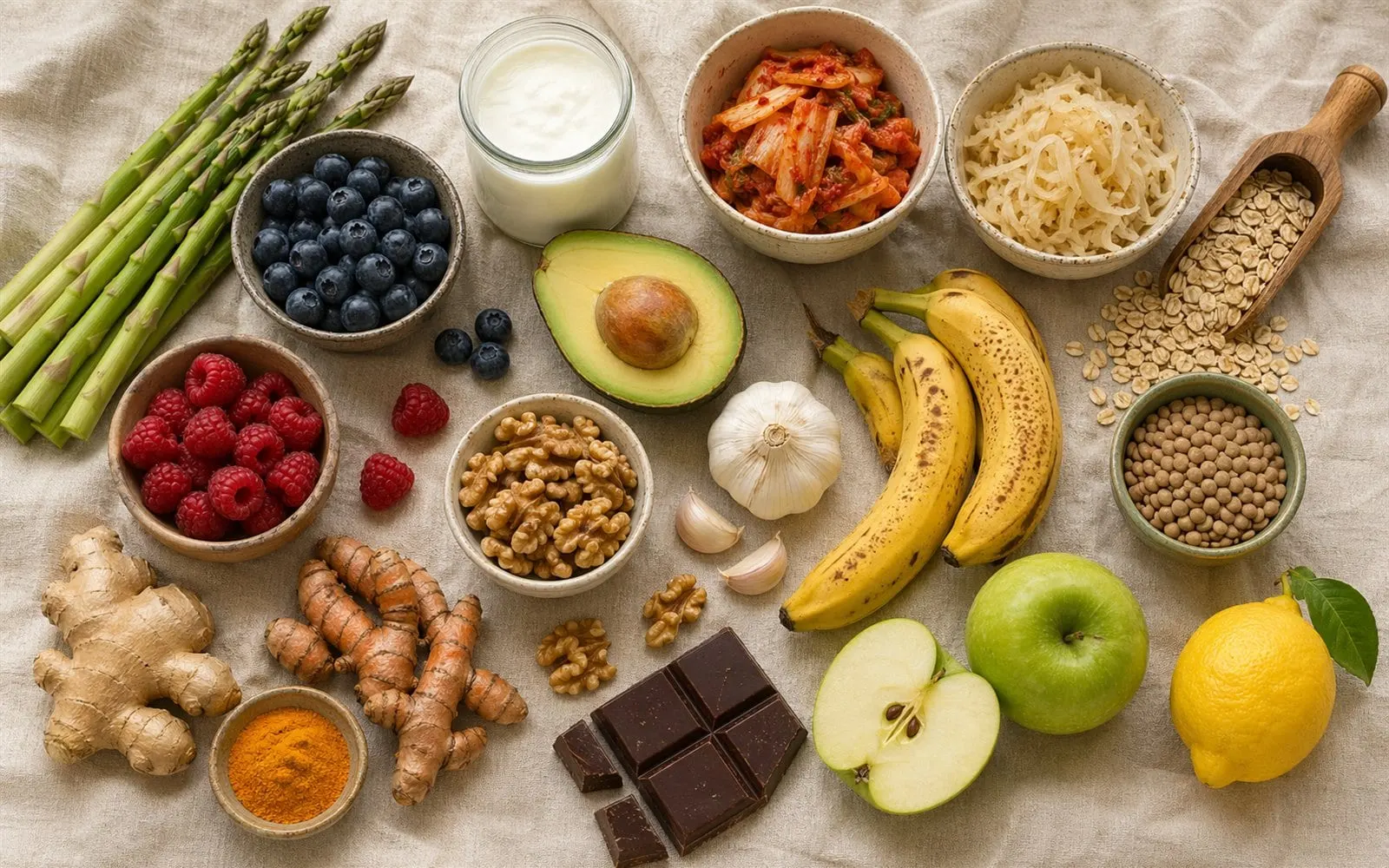
There is no single “gut-healing” food that replaces a broader pattern of eating, but there are foods that reliably show up in studies of microbial diversity, reduced inflammation, and improved digestive markers.[1] The following fifteen are the ones we reach for most often — organized by why they are useful, not alphabetically. For each one, we have included practical serving guidance and, where possible, a GutPlate recipe that features it.
Fermented foods (live cultures)
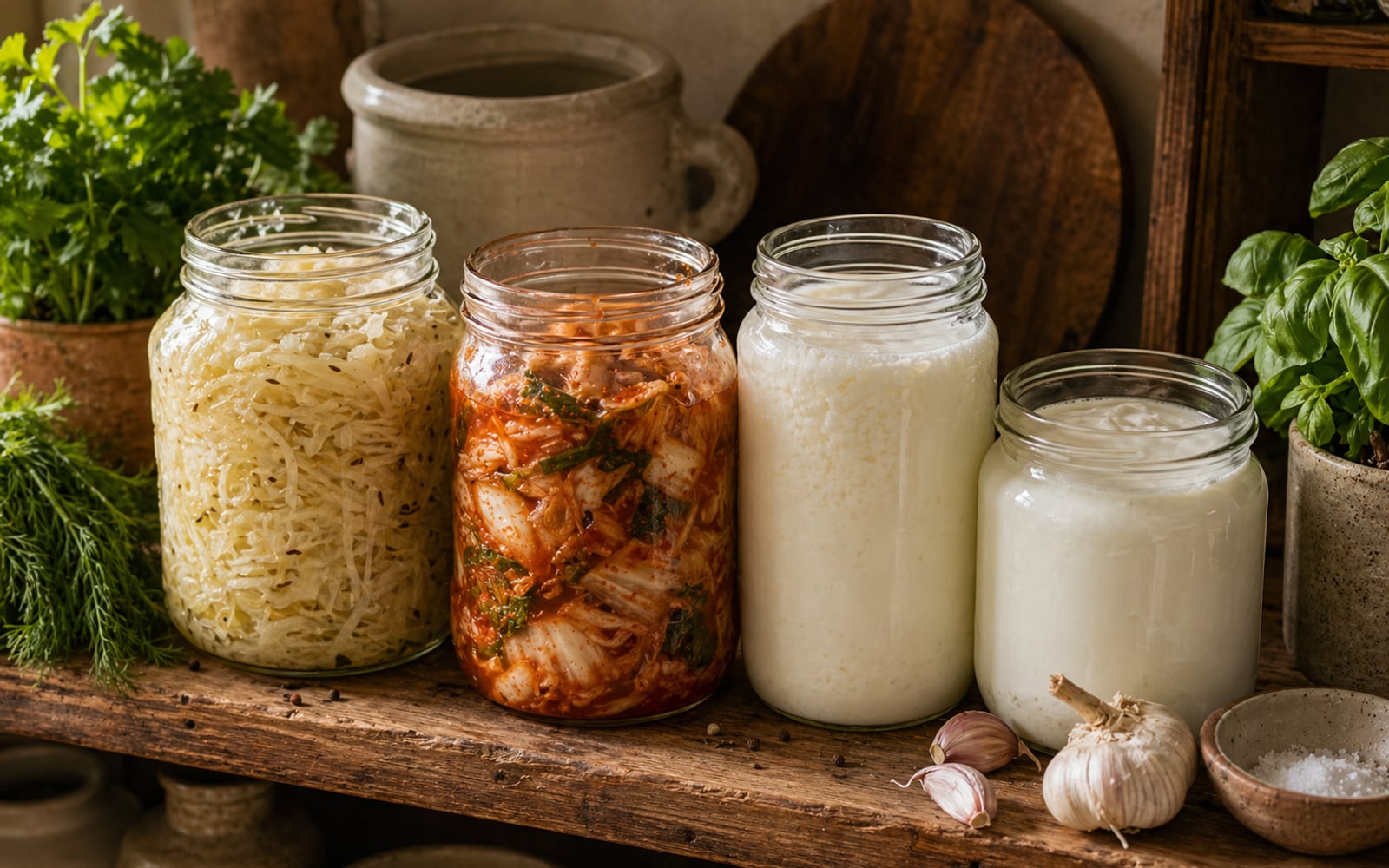
These are the foods that directly introduce beneficial microorganisms into your digestive system. The 2021 Stanford study found that increasing fermented food intake — even modestly — was more effective at increasing microbial diversity than increasing fiber alone in the same timeframe.[1]
1. Plain kefir
Kefir typically carries 10–30 microbial strains, far more than most yogurts. It is liquid, which makes it easy to blend into smoothies or pour over oats. Look for refrigerated, unsweetened kefir for the most microbial value and the least sugar. Serving: 1 cup daily is a practical target. Dairy-free coconut or water kefir options exist but typically carry fewer strains. Try it in: our Banana-Kefir Smoothie or Green Goddess Gut Smoothie.
2. Raw sauerkraut
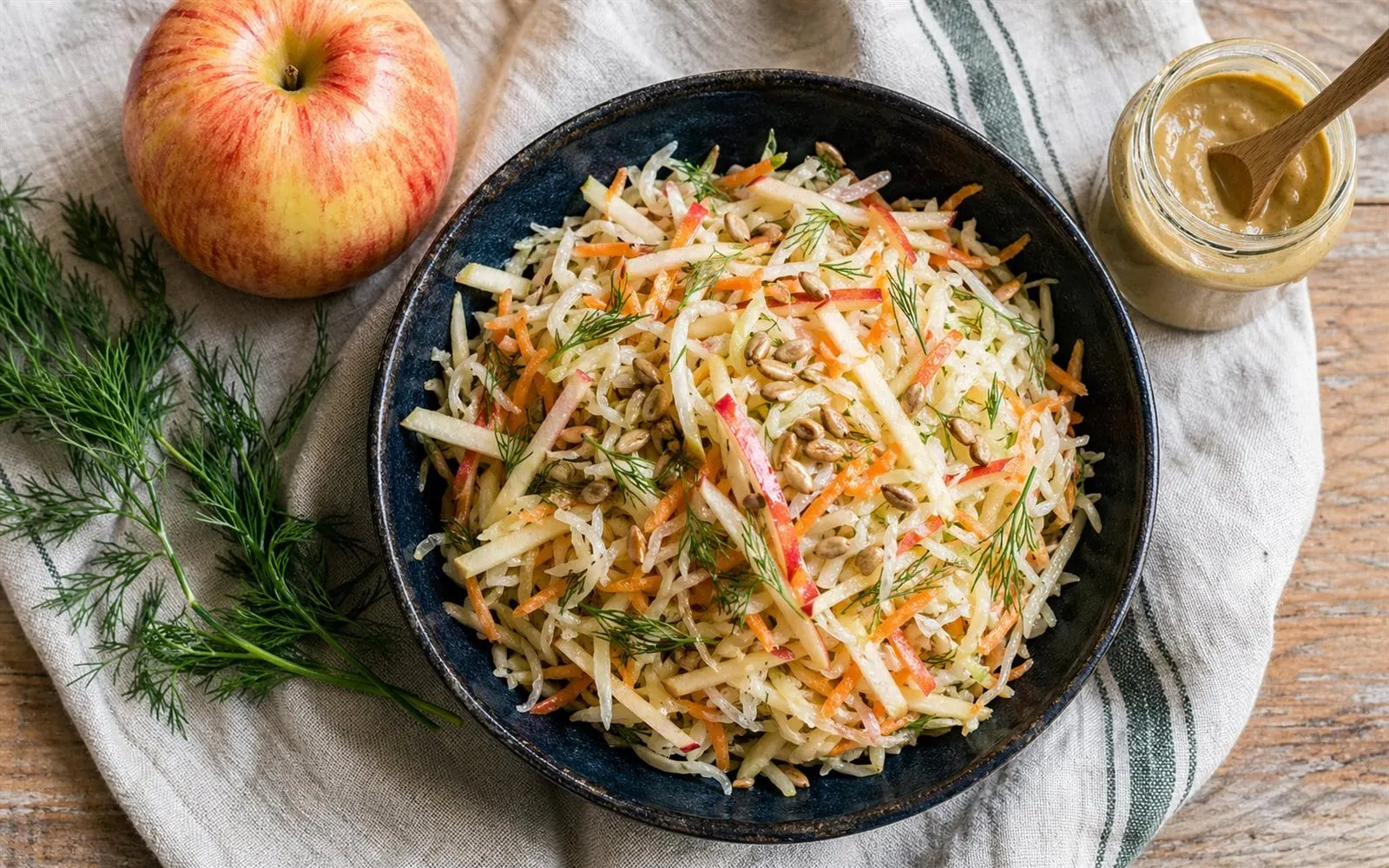
A 2-tablespoon serving adds lactobacillus, pediococcus, and leuconostoc species to your day, plus vitamin K2 and C. Crucial caveat: look for refrigerated, unpasteurized kraut; the shelf-stable kind has been heat-treated and no longer carries live cultures. Serving: Start with 1–2 tablespoons per meal as a condiment — on grain bowls, beside eggs, or tucked into a sandwich. The flavor is sharp at first but becomes addictive. Try it in: our Sauerkraut & Apple Slaw or Sourdough Avocado Toast with Sauerkraut.
3. Kimchi
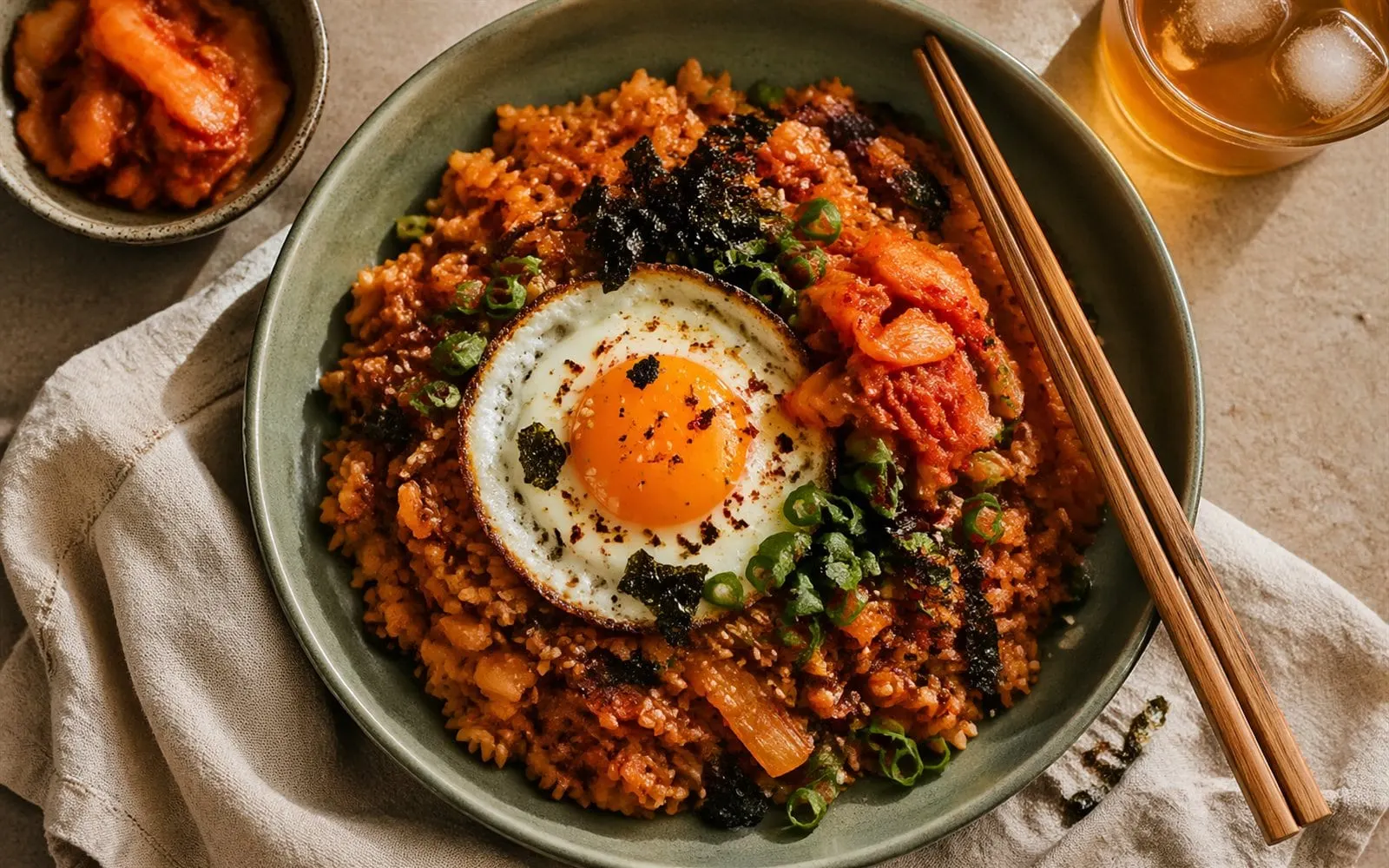
Korea’s answer to kraut, with garlic, ginger, and gochugaru joining the napa cabbage. A 2023 study showed regular kimchi consumption was associated with lower rates of functional constipation. Great cooked (caramelized into fried rice, where heat kills the cultures but the flavor is incredible) or raw (spooned on top of bowls at the table, preserving the live cultures). Serving: 2–4 tablespoons daily. The raw-on-top approach gives you the best of both — cooked kimchi for flavor, raw for microbes. Try it in: our Kimchi Fried Rice.
4. Miso (unpasteurized)
A tablespoon of white miso whisked into broth off the heat delivers koji-fermented enzymes and umami without the harsh salty punch of soy sauce. The “off the heat” part matters — miso cultures die above about 115°F (46°C), so add it after the pot leaves the stove. White (shiro) miso is milder and lower in sodium than red miso, making it a better starting point. Serving: 1 tablespoon dissolved in warm broth, dressings, or marinades. Try it in: our Ginger-Carrot Miso Soup.
5. Natural yogurt with live cultures
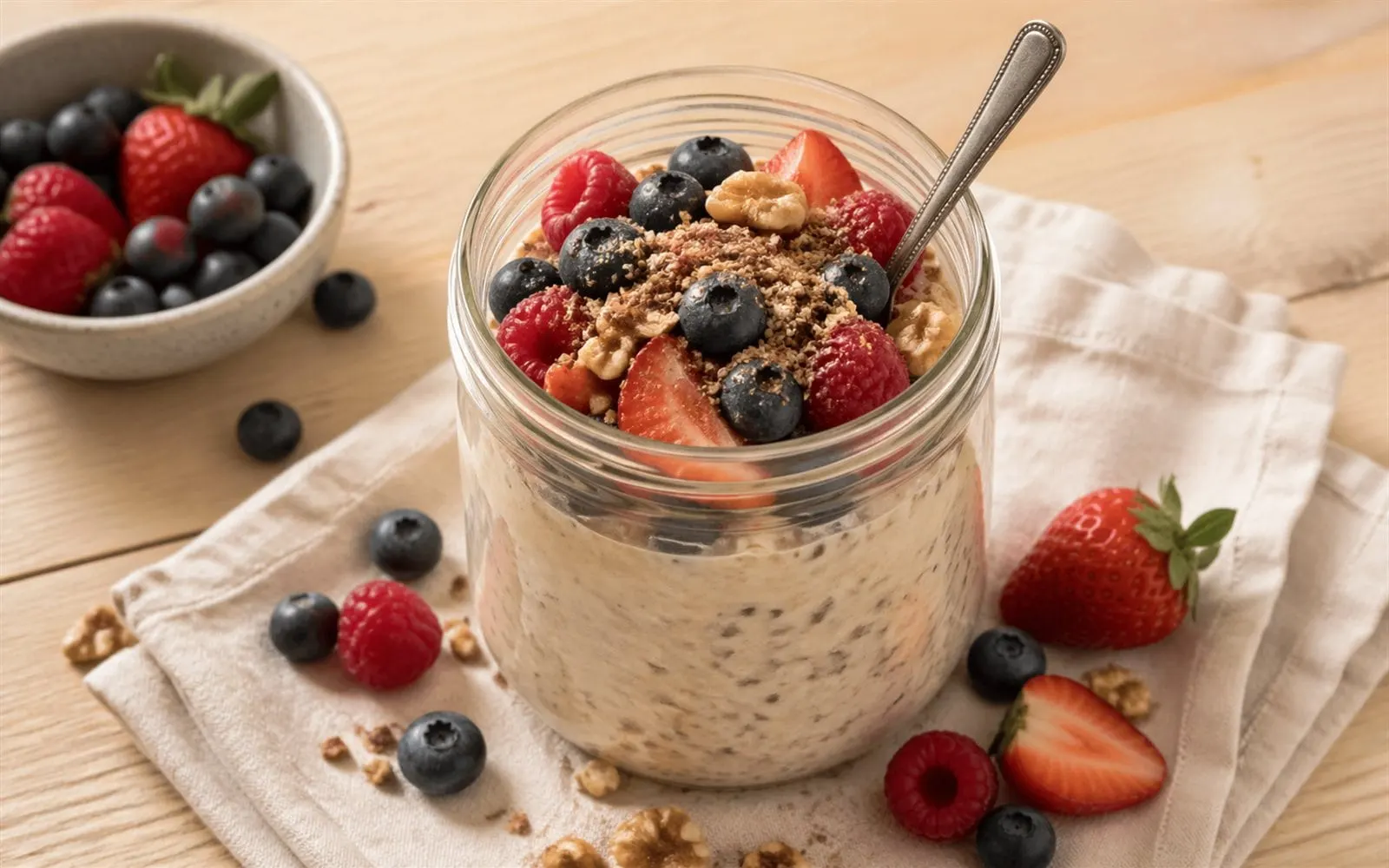
Plain, unsweetened Greek or regular yogurt with the “Live and Active Cultures” seal is the gateway probiotic food for most households. Greek yogurt has about double the protein of regular yogurt, but regular yogurt retains more whey (and its calcium). Both are effective. Stir in oats and berries; skip the sweetened fruit-on-the-bottom varieties that can contain 15–20 g of added sugar per serving, which undercuts the benefit. Serving: ¾–1 cup daily. Full-fat versions may be more satiating and the fat helps absorb fat-soluble vitamins. Try it in: our Overnight Oats with Kefir & Berries.
Prebiotic-rich foods (fuel for microbes)
Prebiotics are the specific fibers and resistant starches that your beneficial gut bacteria ferment into short-chain fatty acids — the compounds that actually fuel your colon lining and regulate inflammation.[3] Without them, probiotic organisms have nothing to eat.
6. Oats
The beta-glucan fiber in oats is one of the most studied prebiotics. A cooked cup of oats provides about 4 g of fiber and a meaningful dose of resistant starch, especially if you cool leftovers and reheat them — fermentable fiber that colonic bacteria convert to short-chain fatty acids like butyrate.[3] Steel-cut oats have the most intact fiber structure; rolled oats are nearly as good and cook faster. Instant oats are more processed but still a reasonable source. Serving: ½ cup dry (about 1 cup cooked) as a base for breakfast. Try it in: our Apple-Cinnamon Steel-Cut Oats or Overnight Oats with Kefir & Berries.
7. Legumes (lentils, chickpeas, beans)
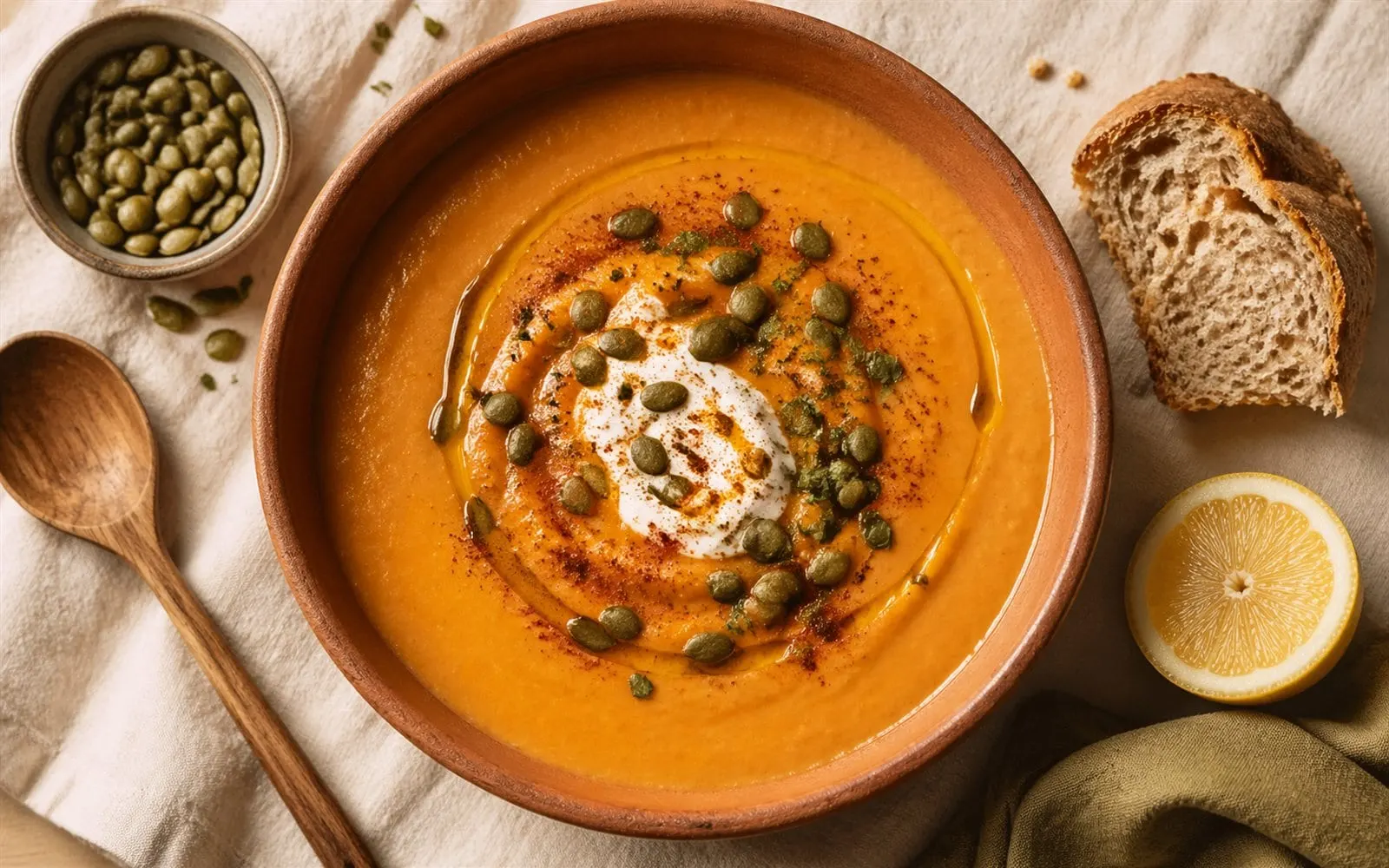
A single cup of cooked lentils delivers 15 g of fiber and a rich mix of galacto-oligosaccharides (GOS), one of the most effective prebiotic fibers. Red lentils cook in 15 minutes without soaking; brown and green lentils in 25. Canned beans and chickpeas are nearly as nutritious as dried — rinse them to reduce sodium by about 40%. If you have not eaten legumes regularly, start with ½ cup portions — your microbiome adapts within a couple of weeks and the gas diminishes. Try it in: our Coconut Red Lentil Dal or Roasted Sweet Potato & Lentil Soup.
8. Unripe (green) bananas
Resistant starch is highest in firm, slightly green bananas. As bananas ripen, resistant starch converts to sugar — a fully spotted banana has almost none. A just-yellow banana on oatmeal or blended into a smoothie is a simple way to include resistant starch without changing how you cook. Green banana flour is an even more concentrated source and can be stirred into smoothies or used in baking. Serving: 1 medium banana daily — greener is better for prebiotic content, riper is better for potassium and sweetness. Both have value. Try it in: our Banana-Kefir Smoothie.
9. Jerusalem artichokes
These knobby tubers (also called sunchokes) are one of nature’s highest sources of inulin, a potent prebiotic fiber. A small 2-inch piece added to a roasted vegetable tray goes a long way — they taste nutty and slightly sweet when roasted. Raw, thinly sliced sunchokes make a crunchy addition to salads. Introduce slowly — inulin can cause significant gas if you ramp up too quickly. Serving: Start with 1–2 tablespoons sliced, and build to ¼ cup over a couple of weeks.
10. Garlic and onions (if tolerated)
Both are rich in inulin and FOS (fructo-oligosaccharides). Raw garlic is more potent than cooked, but cooked still provides prebiotic fiber. If you are in an elimination phase of low-FODMAP these are off the table, but during tolerance testing they are among the most effective prebiotic vegetables you can add to daily cooking. Serving: 1–2 cloves of garlic and ½ an onion in a typical cooked dish is enough to provide meaningful prebiotic fiber. Garlic-infused olive oil is a low-FODMAP workaround — the fructans do not dissolve in oil, so you get the flavor without the FODMAPs.
Polyphenol and anti-inflammatory foods
Polyphenols are plant compounds that are poorly absorbed in the small intestine, which means most of them arrive intact in the colon where bacteria ferment them into bioactive metabolites.[2] This makes polyphenol-rich foods function almost like prebiotics — but for a different set of bacterial species.
11. Berries
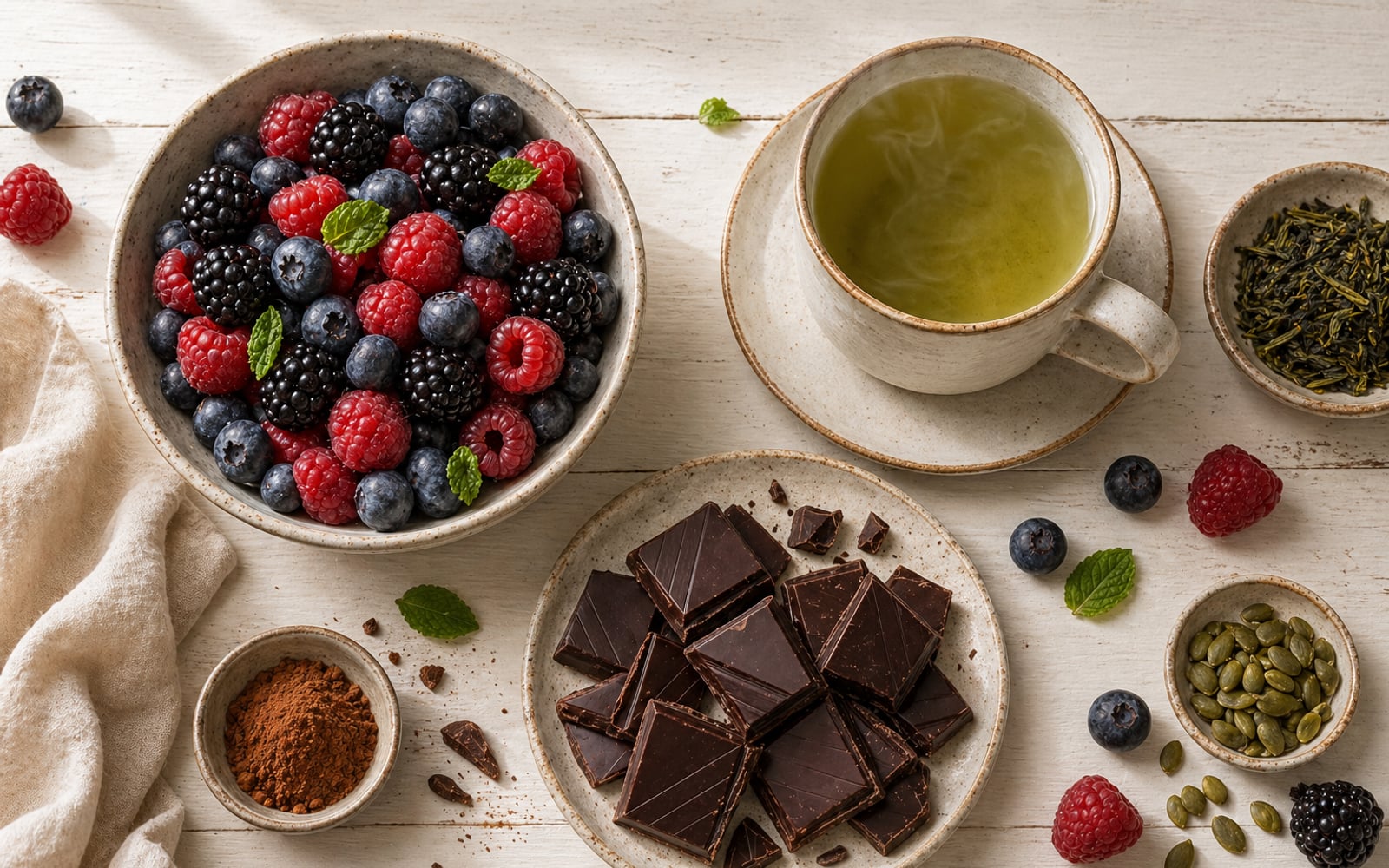
Blueberries, raspberries, strawberries, and blackberries are loaded with polyphenols — particularly anthocyanins — that selectively feed beneficial bacteria and reduce oxidative stress in the gut.[2] Frozen berries are as polyphenol-rich as fresh and often cheaper, since they are flash-frozen at peak ripeness. Wild blueberries have roughly double the anthocyanin content of cultivated ones. Serving: ½–1 cup daily, fresh or frozen, stirred into yogurt, oatmeal, or smoothies.
12. Extra-virgin olive oil
Polyphenols like oleocanthal and hydroxytyrosol in high-quality EVOO shift the microbiome toward a more anti-inflammatory profile in controlled studies. The key is “extra-virgin” — refined olive oil has had most polyphenols stripped out. A peppery, slightly bitter EVOO is a sign of high polyphenol content. Use generously as a finishing drizzle on soups, grain bowls, and roasted vegetables — not just as a cooking fat, since some polyphenols degrade at high heat. Serving: 1–2 tablespoons daily as a finishing drizzle.
13. Green tea
Catechins (especially EGCG) feed beneficial Bifidobacterium and Lactobacillus species while reducing pathogenic bacteria like Clostridium. Two cups daily is a reasonable dose backed by several observational studies. Matcha delivers a more concentrated dose since you consume the whole leaf, but any unsweetened green tea provides benefit. Serving: 2–3 cups daily. Steeping at 160–175°F (70–80°C) extracts more catechins than boiling water and avoids bitterness.
Gut-lining support
These foods support the physical integrity of the intestinal barrier — the single-cell-thick layer that separates your bloodstream from the contents of your gut.
14. Bone broth (or vegetable broth with collagenous analogs)
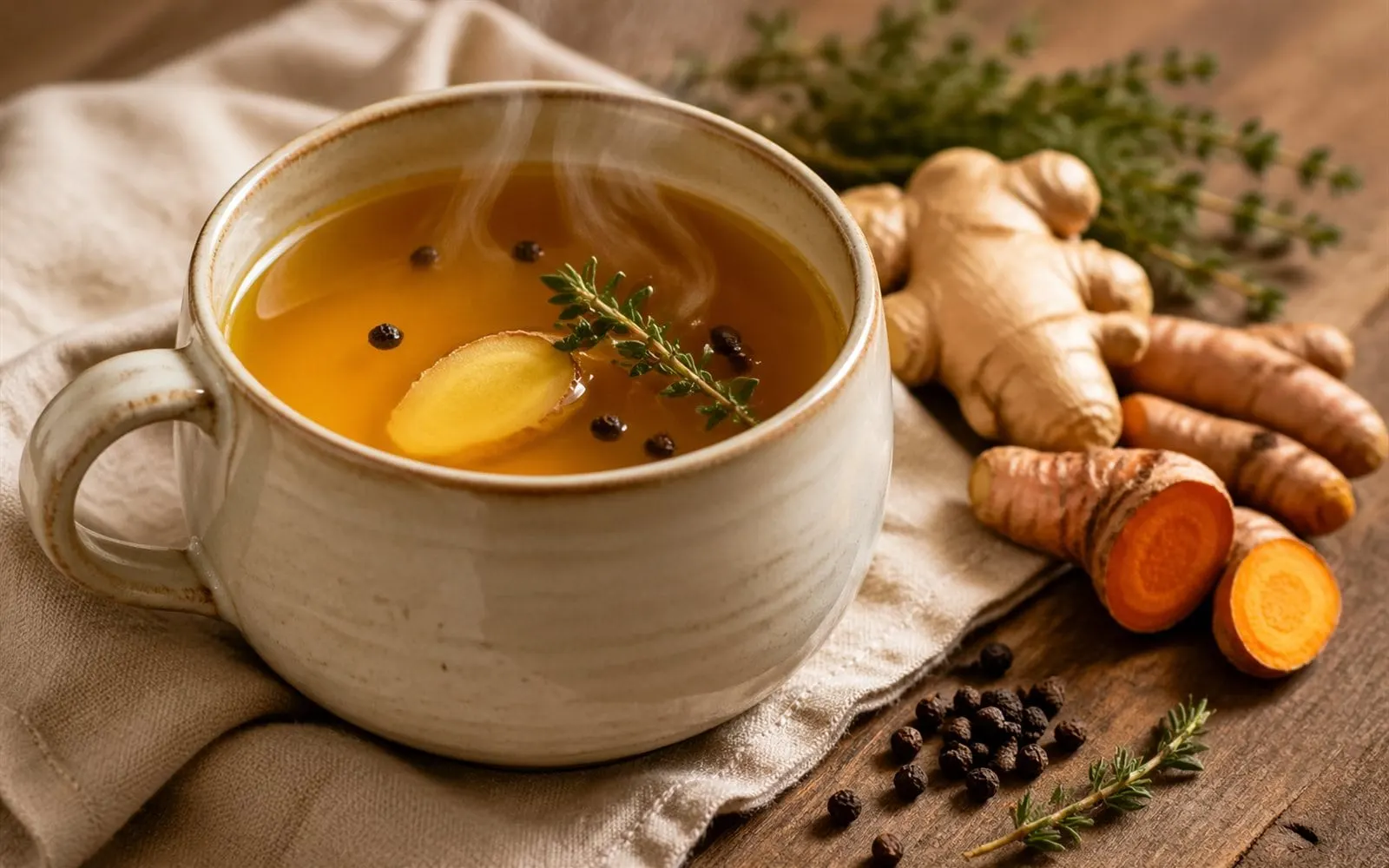
Glycine and glutamine from long-simmered bone broth provide amino-acid building blocks for the intestinal mucus layer. The gelatin that forms when broth cools is a sign of collagen extraction. A good bone broth should jiggle when refrigerated. Even if you are vegetarian, sipping warm broth with herbs (mushroom-kombu broth is a good plant-based option) is a gentle, hydrating habit that tends to correlate with better digestive comfort. Serving: 1 cup daily, sipped warm or used as a cooking liquid. Try it in: our Turmeric Bone Broth.
15. Chia and flax seeds
Both deliver high levels of soluble fiber plus omega-3 ALA (alpha-linolenic acid). Chia seeds absorb 10–12 times their weight in water, forming a gel that slows digestion and feeds colonic bacteria. Flax must be ground to release its nutrients — whole flaxseeds pass through undigested. Two tablespoons of chia or ground flax can add 8–10 g of soluble fiber — enough to meaningfully shift stool form and microbial fermentation within a couple of weeks.[3] Serving: 1–2 tablespoons daily, stirred into oatmeal, yogurt, smoothies, or used in puddings. Try it in: our Chia-Flax Mango Pudding.
Foods that work against your gut
It is worth briefly noting the foods that consistently show up on the other side of the research — the ones that reduce microbial diversity or promote inflammation when consumed regularly:
- Ultra-processed foods with emulsifiers (polysorbate-80, carboxymethylcellulose, carrageenan) — these additives have been shown in animal studies to thin the protective mucus layer in the gut and promote low-grade inflammation.[5]
- Artificial sweeteners (aspartame, sucralose, saccharin) — multiple studies show these alter the gut microbiome in ways that may impair glucose tolerance, though the evidence in humans is still evolving.
- Excessive added sugar — high-sugar diets feed inflammatory species at the expense of beneficial ones and can increase intestinal permeability.
- Highly refined grains — white bread, white rice, and white pasta have had most of their fiber stripped away. The prebiotic-rich bran and germ are removed during processing.
- Excessive alcohol — regular heavy drinking disrupts the gut barrier and shifts the microbiome toward pro-inflammatory patterns.
This is not about eliminating these foods entirely — it is about understanding that the balance between the 15 gut-healing foods above and these gut-disrupting ones is what determines your overall microbial trajectory.
How to use this list
You do not need all 15 every week. Aim to have one item from each of the four groups (a fermented food, a prebiotic-rich food, a polyphenol-rich food, and a gut-lining food) every day, and rotate within each group so your gut is exposed to a wider range over the month.
A practical pattern: kefir in the morning with oats and berries (that is three on the list before 8 AM), lentils at lunch with a drizzle of olive oil, a cup of green tea in the afternoon, and a spoon of raw kimchi alongside dinner with roasted garlic vegetables. That is seven of the fifteen in a single day — and it does not require supplements, expensive powders, or an overhaul of your grocery list.
The American Gut Project found that people who ate more than 30 different plant foods per week had the most diverse microbiomes.[4] This list gives you 15 to start rotating through — add in your regular fruits, vegetables, herbs, spices, and whole grains, and you are well past 30 without thinking about it.