Most people know they should eat more fiber. Very few know that “fiber” is not one thing — it is an umbrella term for dozens of structurally different carbohydrates, each with distinct effects on digestion, blood sugar, satiety, and the microbiome. Saying “eat more fiber” is about as specific as saying “exercise more” — the type matters as much as the amount. This guide breaks fiber down into its functional categories so you can build meals with intention, not just obligation.
The basics: what fiber is (and is not)
Dietary fiber is the portion of plant food that human digestive enzymes cannot break down. It passes through the stomach and small intestine largely intact and arrives in the large intestine, where one of two things happens: it is either fermented by bacteria (becoming fuel for the microbiome) or it passes through unfermented (adding bulk and speeding transit).
The key distinction: not all fiber feeds bacteria, and not all fiber adds bulk. Some does both. Some does neither particularly well. The effect depends on the fiber’s chemical structure — specifically, whether it dissolves in water and whether bacteria can ferment it.
Soluble fiber
What it is: Fiber that dissolves in water to form a gel-like substance. This gel slows gastric emptying, which means food moves through the stomach more slowly.
What it does:
- Lowers blood sugar spikes by slowing glucose absorption after a meal.
- Reduces LDL cholesterol — soluble fiber binds bile acids in the intestine, forcing the liver to pull cholesterol from the bloodstream to make more.
- Feeds gut bacteria — most soluble fibers are at least partially fermentable, producing short-chain fatty acids (SCFAs) like butyrate, propionate, and acetate.[1]
- Improves stool consistency — the gel adds moisture to stool without making it loose, which is particularly helpful for people with IBS-C (constipation-predominant IBS).
Best food sources:
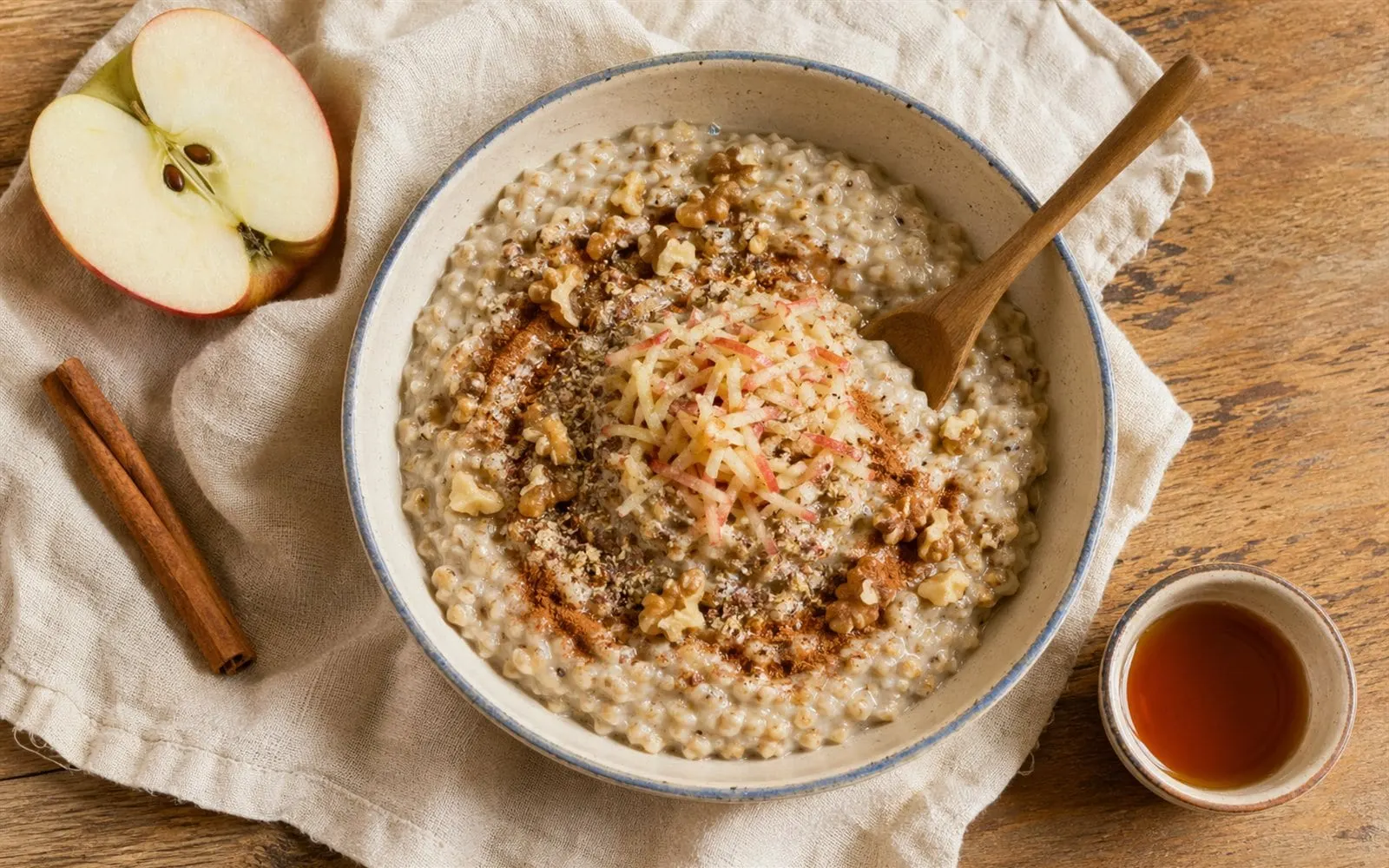
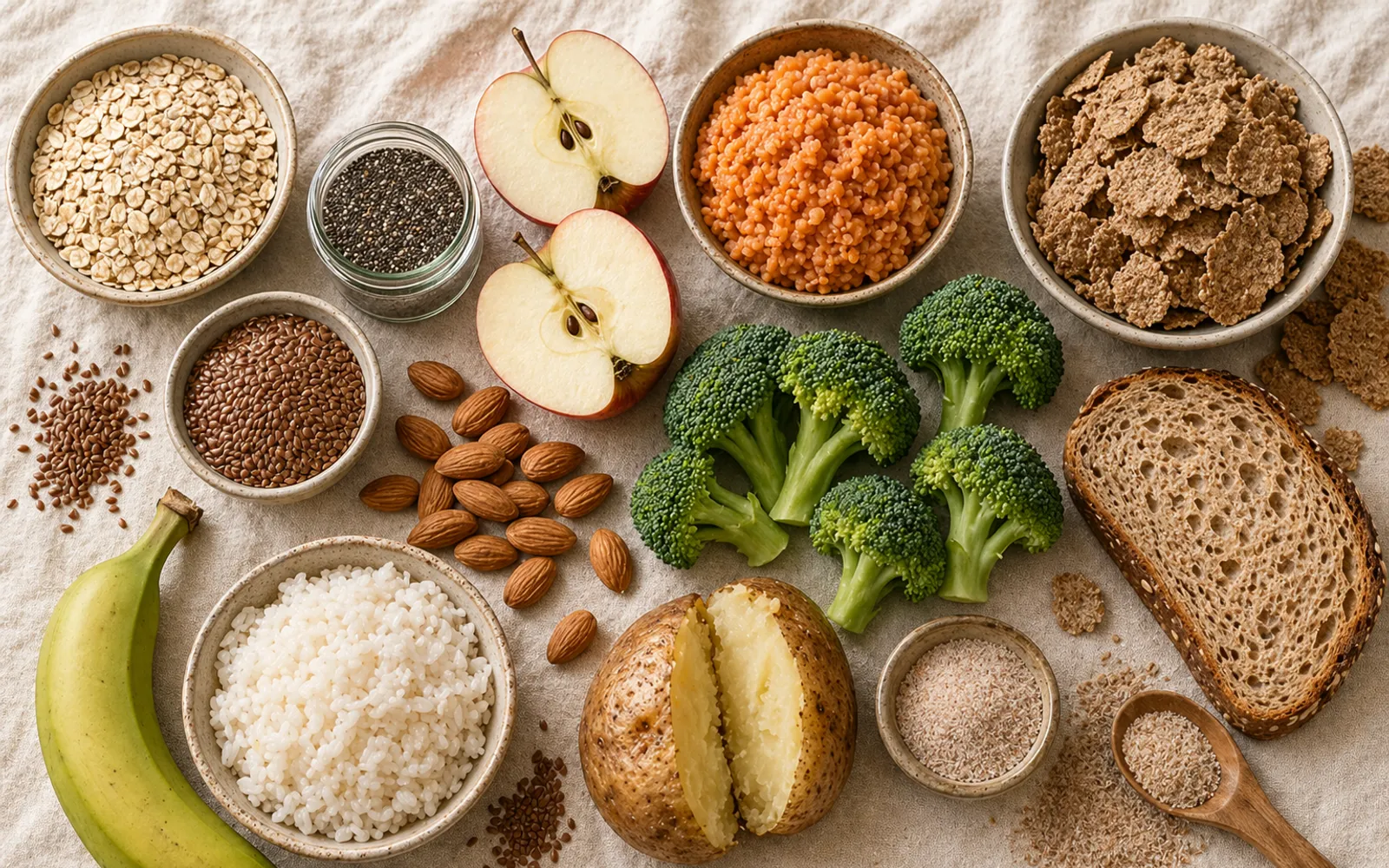
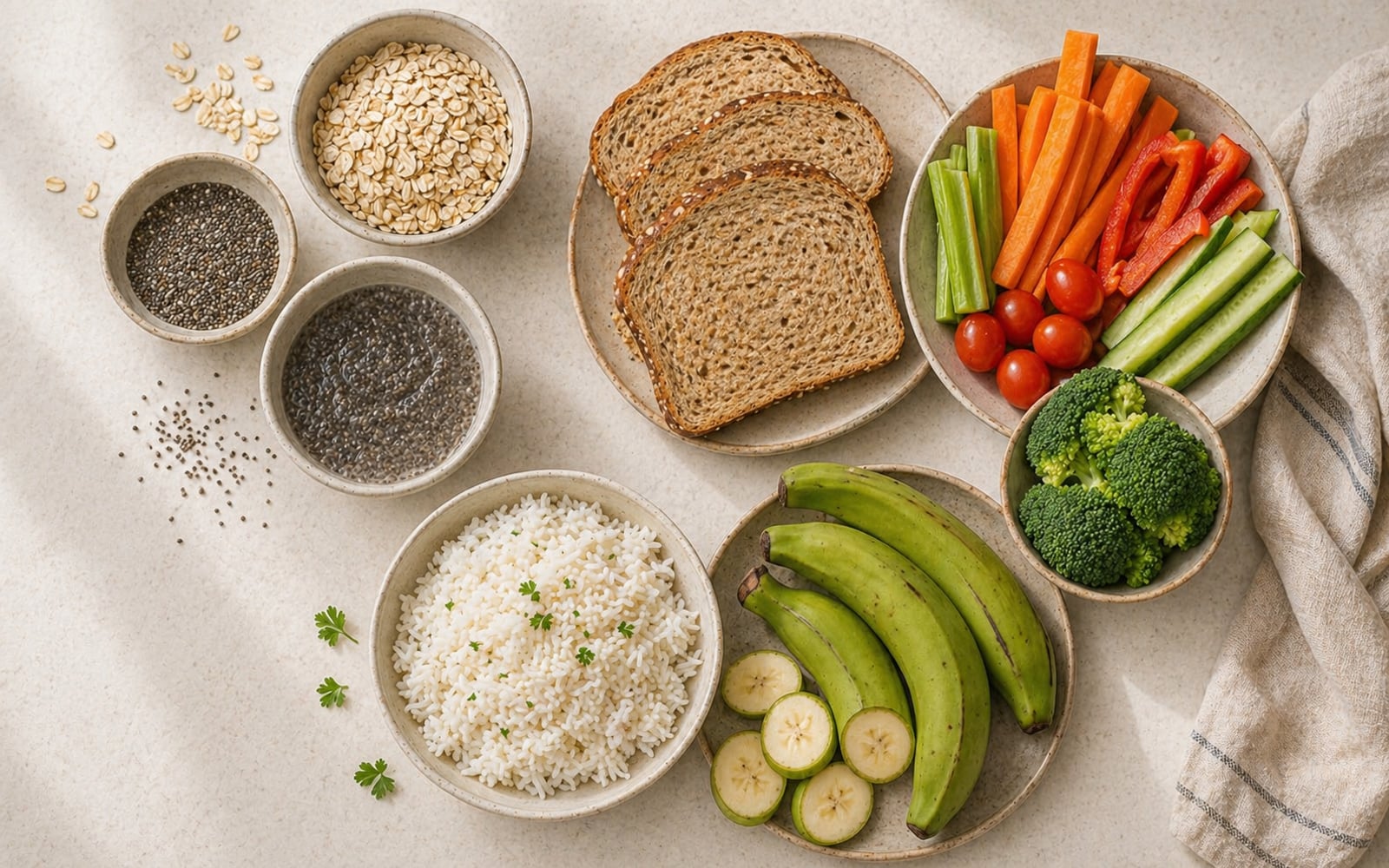
- Oats and barley — beta-glucan, one of the most studied soluble fibers. A bowl of oatmeal provides about 2 g of beta-glucan.
- Legumes — lentils, chickpeas, black beans, and kidney beans are among the highest soluble-fiber foods available. One cup of cooked lentils delivers 4–5 g of soluble fiber.
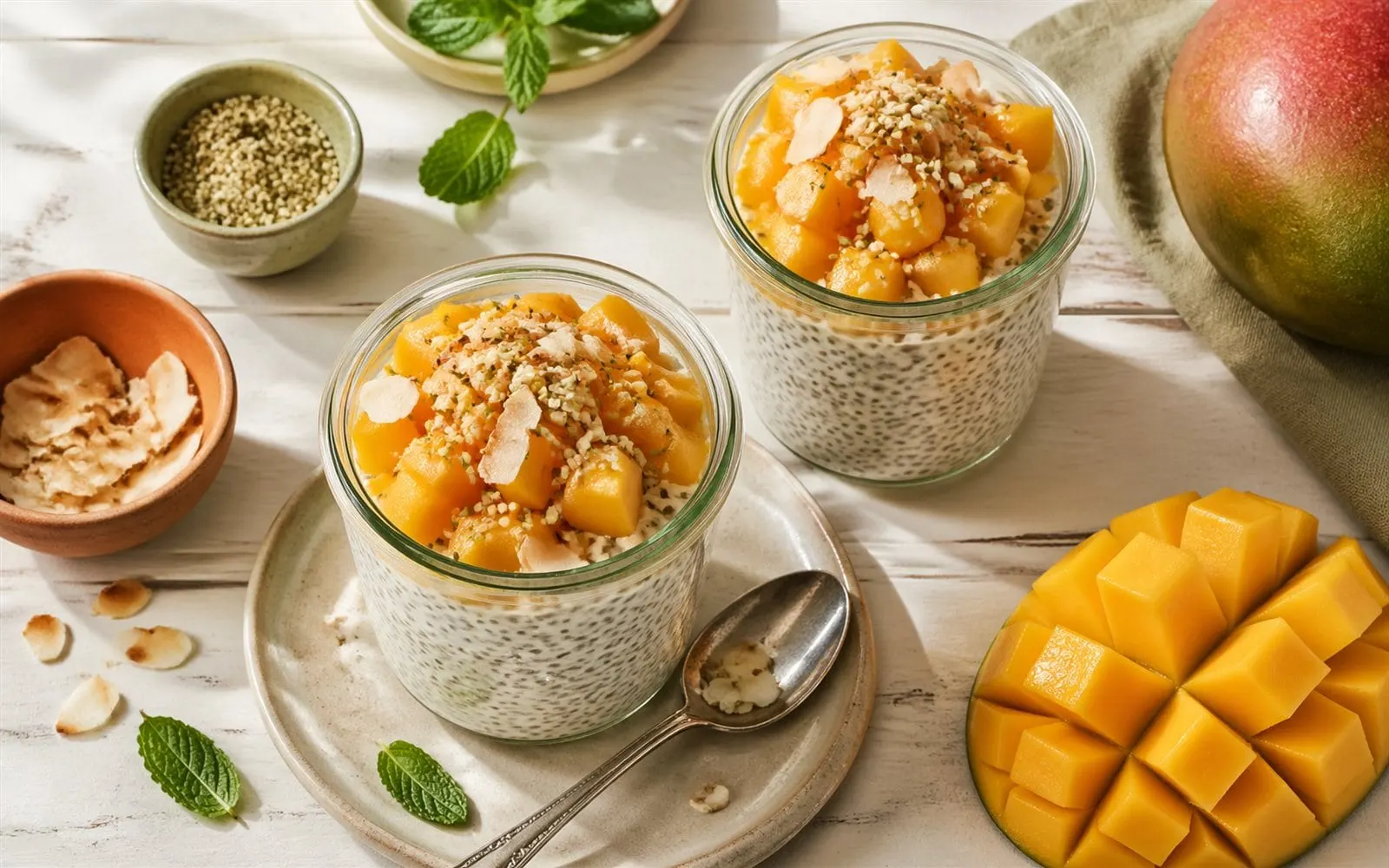
- Chia and flax seeds — the mucilaginous coating on chia seeds is almost pure soluble fiber. Two tablespoons of chia provide about 5 g.
- Apples, pears, and citrus — rich in pectin, a soluble fiber that selectively feeds Bifidobacterium species.
- Psyllium husk — the most concentrated supplemental source. One tablespoon provides 5 g of soluble fiber with minimal fermentation, making it well-tolerated even by people with IBS.
Insoluble fiber
What it is: Fiber that does not dissolve in water. It retains its structure throughout the digestive tract.
What it does:
- Adds bulk to stool — insoluble fiber increases stool weight and size, which stimulates peristalsis (the muscular contractions that move food through the intestines).
- Speeds transit time — helpful for constipation, though it can worsen symptoms in people with IBS-D (diarrhea-predominant).
- Provides mechanical “roughage” — it helps keep the colon walls clean and stimulates mucus secretion.
- Mostly not fermented — which means it does not produce SCFAs to the same degree as soluble fiber, but it also does not produce as much gas. For people who are sensitive to bloating, insoluble fiber is often better tolerated than highly fermentable soluble fiber.
Best food sources:
- Wheat bran — the single most concentrated source. Two tablespoons provide about 3 g of insoluble fiber.
- Whole grains — brown rice, whole wheat bread, bulgur, farro.
- Vegetables — especially the skins and stems. Broccoli stalks, celery, cauliflower, green beans, and dark leafy greens.
- Nuts and seeds — almonds, walnuts, sunflower seeds.
- Potato skins — the skin of a baked potato is almost entirely insoluble fiber.
Resistant starch
What it is: A type of starch that resists digestion in the small intestine and reaches the colon intact, where bacteria ferment it. It behaves functionally like soluble fiber but is chemically a starch — which is why it gets its own category.
What it does:
- Produces high amounts of butyrate — resistant starch is one of the most efficient substrates for butyrate production. Butyrate is the preferred fuel for colonocytes (the cells lining the colon), and it has strong anti-inflammatory and anti-cancer properties in laboratory studies.[4]
- Improves insulin sensitivity — multiple controlled studies show that resistant starch reduces the glycemic response to subsequent meals (the “second meal effect”).
- Feeds specific beneficial species — particularly Ruminococcus bromii, a keystone species in the gut ecosystem that helps break down resistant starch so other bacteria can access the fragments.
The four types:
- RS1 — physically trapped starch, found in whole grains, seeds, and legumes.
- RS2 — native granular starch with a crystalline structure. Raw potatoes and green bananas are the classic examples.
- RS3 — retrograded starch, formed when cooked starch is cooled. This is the most practical type for daily eating. Cook rice, pasta, or potatoes, cool them (even briefly in the fridge), then reheat — the cooling process changes the starch structure permanently. Yesterday’s rice has more resistant starch than today’s, even after reheating.[4]
- RS4 — chemically modified starch, found in some processed foods. Not relevant for whole-food eating.
Best food sources:
- Cooled cooked rice — especially long-grain white rice or brown rice.
- Cooled cooked potatoes — potato salad is surprisingly high in resistant starch.
- Green bananas — the greener, the more resistant starch. A fully ripe banana has almost none.
- Legumes — especially when cooked and cooled.
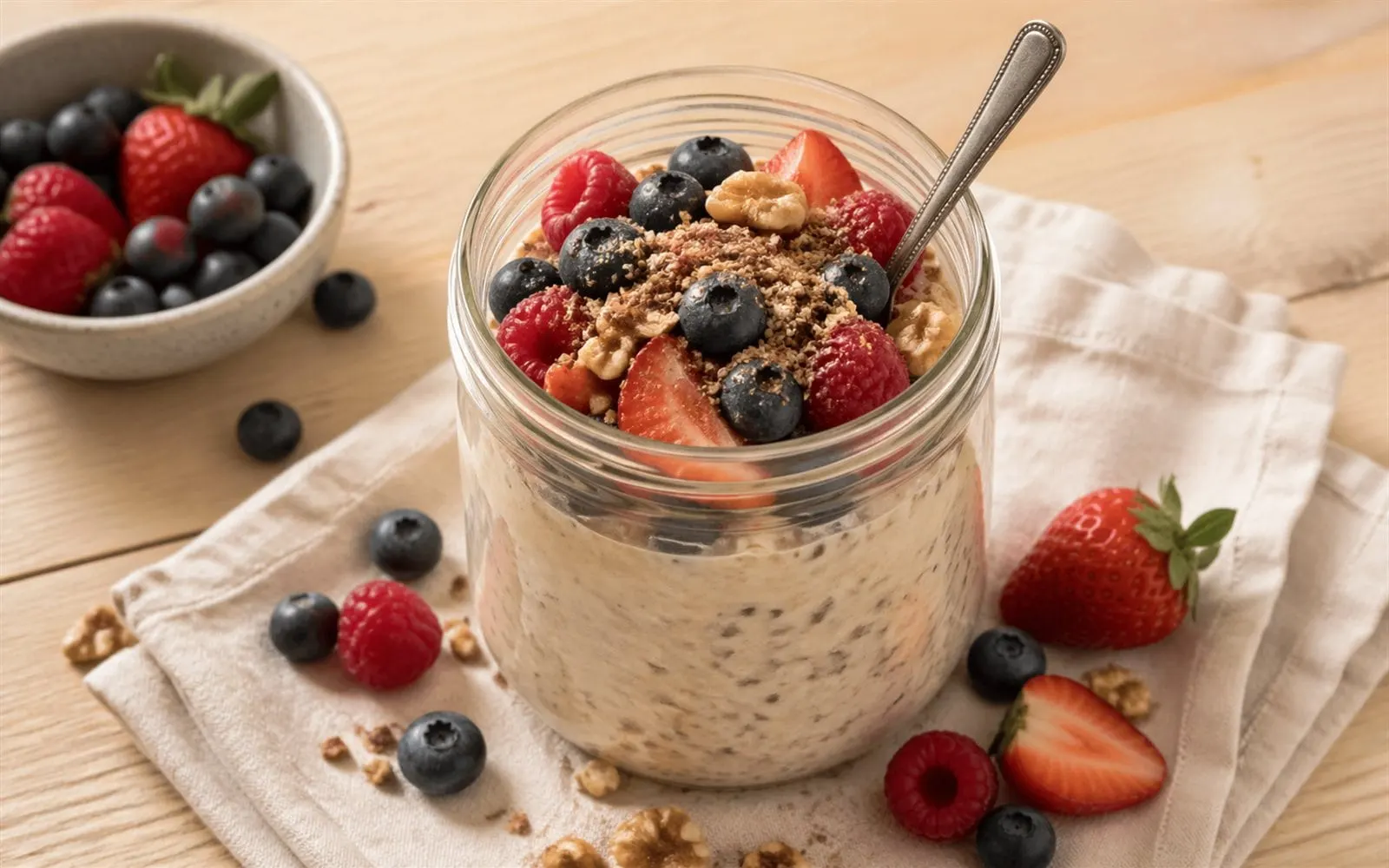
- Oats — particularly in overnight oats (soaked but not cooked, then chilled).
Prebiotic fiber: the microbiome-specific category
Not all fiber is prebiotic. A prebiotic fiber is one that is selectively fermented by beneficial gut bacteria, promoting their growth at the expense of less desirable species. The main prebiotic fibers are:
- Inulin and FOS (fructo-oligosaccharides) — found in garlic, onions, leeks, asparagus, artichokes, chicory root, and dandelion greens. These are the most potent and most studied prebiotics, but they are also high-FODMAP — meaning they can cause significant gas and bloating in sensitive individuals if introduced too quickly.
- GOS (galacto-oligosaccharides) — found in legumes and certain dairy products. Also high-FODMAP in large amounts but very effective at promoting Bifidobacterium growth.
- Beta-glucan — found in oats and barley. A gentler prebiotic that rarely causes gas even in sensitive people.
- Pectin — found in apples, pears, and citrus. Selectively feeds Bifidobacterium and Faecalibacterium prausnitzii.[3]
- Resistant starch (covered above) also functions as a prebiotic.
The American Gut Project found that the single strongest predictor of microbiome diversity was not total fiber intake — it was the number of different plant foods consumed per week.[2] People who ate more than 30 different plant species per week had significantly more diverse gut microbiomes than those who ate fewer than 10, regardless of total fiber grams.

How much fiber do you actually need?
Official recommendations:
- Women: 25 g per day
- Men: 38 g per day
- Most adults actually eat: 15–18 g per day
That gap — about 10–20 g — is significant. But hitting the target is easier than people think when you build meals with fiber-rich whole foods:
A sample day hitting 35 g:
- Breakfast: Overnight oats (½ cup oats = 4 g) with 2 tbsp chia seeds (5 g) and ½ cup blueberries (2 g) → 11 g
- Lunch: Lentil soup (1 cup lentils = 15 g) with whole-grain bread (2 slices = 4 g) → 19 g
- Dinner: Roasted cauliflower (1 cup = 2 g) with brown rice (1 cup = 3 g) → 5 g
- Total: 35 g — and that is without counting the vegetables, herbs, and garnishes that add 1–2 g each.
The ramp-up rule
If you are currently eating 15 g of fiber and jump to 35 g overnight, you will experience significant bloating, gas, and discomfort. This is not because fiber is bad for you — it is because your microbiome needs time to grow the populations of bacteria that ferment it efficiently.
The practical approach:
- Increase by 5 g per week (about one extra serving of legumes or one extra piece of fruit).
- Drink plenty of water — fiber absorbs water in the gut. Without enough fluid, high-fiber diets can worsen constipation rather than relieve it.
- Spread fiber intake across the day rather than loading it into one meal.
- Start with gentler fibers (oats, bananas, carrots, rice) before adding aggressive fermenters (onions, garlic, legumes in large quantities).
Within 2–3 weeks, your microbiome adapts — the bacterial populations that ferment fiber grow, gas production becomes more efficient (less bloating per gram of fiber), and the benefits compound.
Fiber supplements: when they help
Whole foods are always the first line because they deliver fiber in the context of vitamins, minerals, polyphenols, and water. But supplements have a role:
- Psyllium husk — the most evidence-backed fiber supplement. Useful for IBS (both constipation and diarrhea subtypes), cholesterol reduction, and blood sugar management. It is minimally fermented, which means less gas than inulin or GOS supplements. Start with 1 teaspoon in a full glass of water and build to 1–2 tablespoons.
- Inulin powder (chicory root) — a concentrated prebiotic. Effective but can cause significant gas. Start with 2 g and build slowly to 5–10 g.
- Acacia fiber — a gentler, slowly fermented prebiotic that is better tolerated than inulin for most people.
Avoid fiber supplements that contain artificial sweeteners, flavors, or colors — they undermine the purpose of improving gut health.
Bottom line
Fiber is not one thing, and your gut needs multiple types to function well:
- Soluble fiber for blood sugar, cholesterol, and bacterial fermentation.
- Insoluble fiber for bulk, transit speed, and regularity.
- Resistant starch for butyrate production and insulin sensitivity.
- Prebiotic fiber for selectively feeding beneficial bacteria.
The best strategy is not to track grams of each type — it is to eat a wide variety of whole plant foods at every meal. Oats at breakfast, legumes at lunch, diverse vegetables at dinner, fruit and nuts as snacks. Hit 30 different plant species per week and you will cover all four types without thinking about the categories. The fiber takes care of itself when the diversity is there.