The biggest obstacle to eating well for your gut is not knowledge — it is Tuesday at 6:30 PM when you are tired, hungry, and staring at a fridge with nothing ready to eat. That is when the takeaway menu wins, the frozen pizza goes in the oven, and the fiber-and-fermented-food intentions of last weekend quietly evaporate.
Meal prep solves this. Not the Instagram kind with 20 identical containers and a label maker — the practical kind, where you batch-cook a handful of flexible components on Sunday and assemble them into different meals all week. This guide gives you a system that takes about two hours and produces gut-friendly meals for 5–6 days.
The gut-health meal prep philosophy
Before getting to the logistics, here are the principles that make this approach different from generic meal prep:
- Diversity over uniformity. The American Gut Project found that people who ate 30+ different plant species per week had the most diverse microbiomes.[1] A gut-health meal prep should not be 5 identical bowls — it should produce mix-and-match components that create different combinations each day.
- Include a fermented element. The 2021 Stanford study showed that even small daily amounts of fermented food (a tablespoon of sauerkraut, a cup of kefir) increased microbial diversity within weeks.[2] Keep fermented condiments stocked and add them fresh at mealtime — they do not need to be prepped, just opened.
- Leverage resistant starch. Cooking grains and legumes, then cooling them in the fridge, increases their resistant starch content — the type of fiber that produces the most butyrate.[3] Meal prep creates resistant starch by default, since everything gets cooked and cooled.
- Prep components, not finished meals. A container of cooked lentils becomes a soup topping, a salad base, a taco filling, or a dal. Flexibility prevents the meal-prep fatigue that makes people give up by Wednesday.
The five components to prep
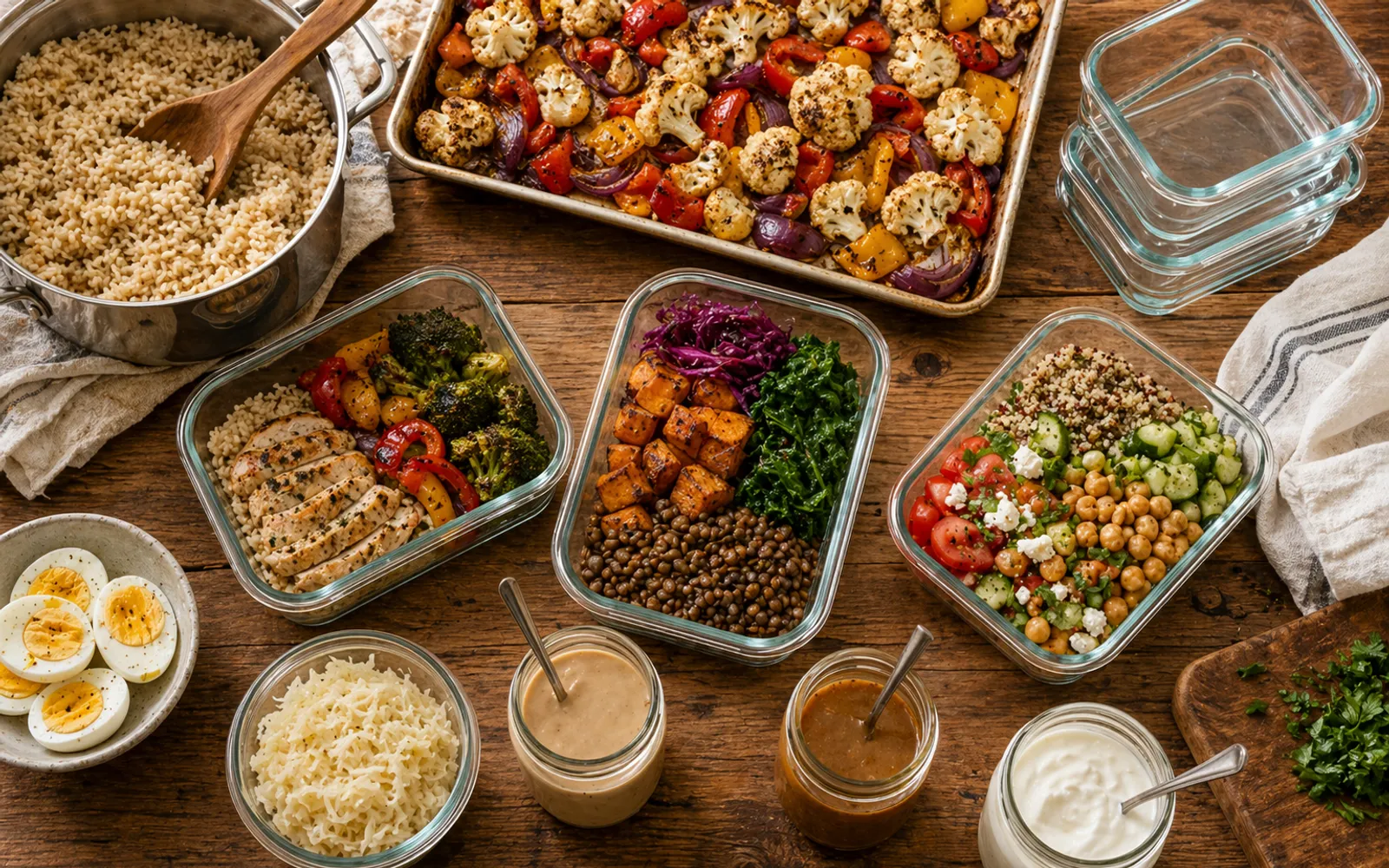
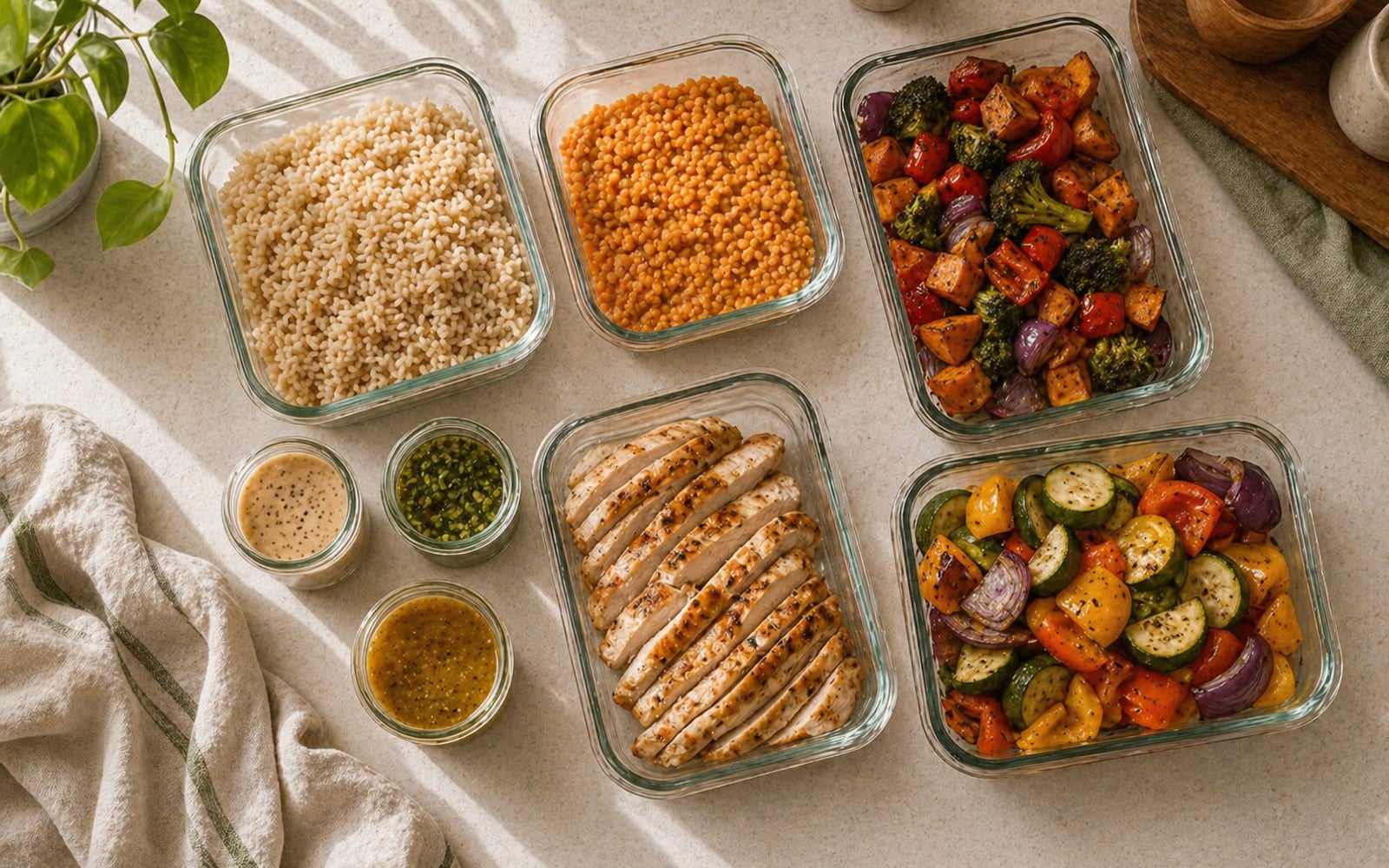
Every gut-friendly meal can be assembled from five categories. On Sunday, you prep one or two items from each:
1. A cooked grain (2–3 cups dry, makes 5–6 cups cooked)
This is your base. Cook once, use all week.
- Brown rice — cook 2 cups dry, cool, and refrigerate. The cooling increases resistant starch. Reheat portions as needed.
- Quinoa — cooks in 15 minutes, high in protein and fiber. Works warm or cold.
- Farro or barley — chewy, nutty, high in beta-glucan. Excellent in grain bowls and soups.
Prep time: 30–40 minutes (mostly hands-off).
2. A batch of legumes (1–2 cups dry, makes 3–5 cups cooked)
Legumes are the single highest-fiber food group and the most under-consumed in Western diets. A single cup of cooked lentils delivers 15 g of fiber — nearly half the daily target.
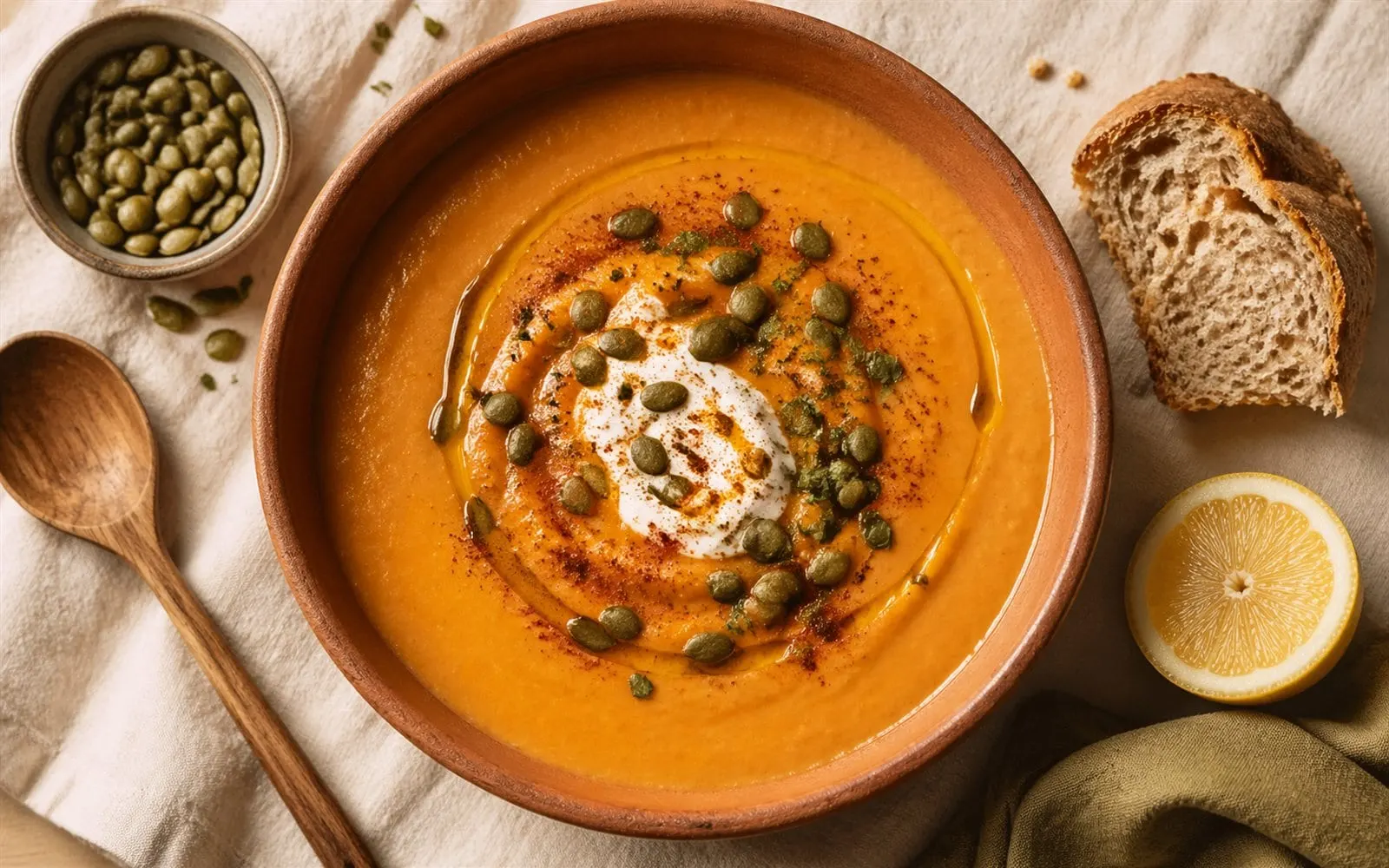
- Red lentils — cook in 15 minutes, no soaking required. Break down into a creamy dal or soup base.
- Chickpeas — soak overnight, cook for 45 minutes. Or use canned (rinse to reduce sodium by 40%). Roast some with spices for a crunchy snack or salad topper.
- Black beans — soak overnight, cook for 60 minutes. Great in bowls, tacos, and quesadillas.
Shortcut: Canned legumes are nearly as nutritious as dried. Keep 4–5 cans in the pantry for weeks when you skip the soak.
Prep time: 15 minutes active (lentils) to 60 minutes (dried beans, mostly hands-off).
3. Two to three roasted vegetables
Roasting concentrates flavor and creates caramelization that makes vegetables genuinely craveable. Aim for variety — different colors mean different polyphenols and fibers.
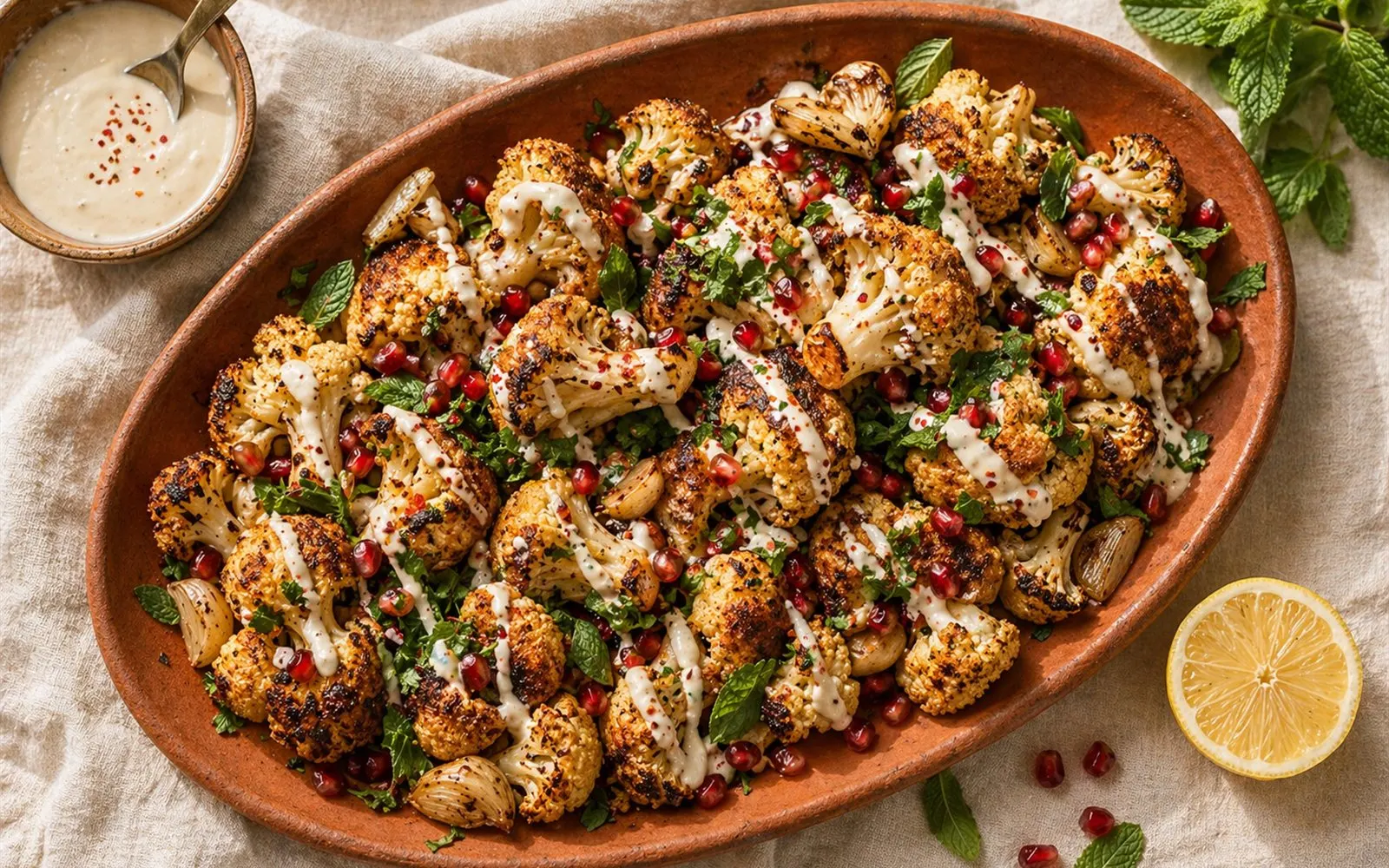
- Sheet-pan tray 1: Cauliflower, sweet potato, and red onion tossed with olive oil, salt, and cumin. Roast at 425°F (220°C) for 30 minutes.
- Sheet-pan tray 2: Zucchini, bell peppers, and cherry tomatoes with garlic-infused olive oil and Italian herbs. Same temperature, 20–25 minutes.
Tips:
- Cut everything to similar size so it cooks evenly.
- Line trays with parchment paper for easy cleanup.
- Do not overcrowd — single layer, with space between pieces, or the vegetables steam instead of roasting.
Prep time: 10 minutes chopping, 25–35 minutes roasting (hands-off, runs concurrently with grains/legumes).
4. A protein
If you eat meat, one batch-cooked protein goes a long way:
- Sheet-pan chicken thighs — season with salt, pepper, paprika, and garlic powder. Roast at 425°F for 25–30 minutes. Slice and store. Versatile in bowls, salads, wraps, and fried rice.
- Baked salmon fillets — season simply, bake at 400°F for 12–15 minutes. Best eaten within 2–3 days.
- Hard-boiled or jammy eggs — cook 6–8 at once. Peel and store in the fridge. Ready to add to any meal for protein and fat.
For plant-based: firm tofu (press, cube, bake at 400°F for 25 minutes) or tempeh (slice and pan-fry in sesame oil) both prep well.
Prep time: 15–30 minutes (runs concurrently with vegetables).
5. Sauces and dressings (5 minutes each)
A good sauce turns the same base components into completely different meals.
- Tahini-lemon dressing: ¼ cup tahini, 2 tbsp lemon juice, 1 tbsp olive oil, 1 clove minced garlic, water to thin. Mediterranean bowls.
- Miso-ginger dressing: 1 tbsp white miso, 1 tbsp rice vinegar, 1 tsp grated ginger, 1 tsp sesame oil, 1 tsp honey. Asian-style bowls and salads (bonus: the miso adds a fermented element).
- Simple vinaigrette: 3 tbsp olive oil, 1 tbsp apple cider vinegar, 1 tsp mustard, salt and pepper. Everything else.
Store in small jars. They keep 5–7 days in the fridge.
The 2-hour Sunday session: timeline
Here is how to prep all five components in a single session with minimal downtime:
0:00 — Preheat oven to 425°F. Start brown rice on the stove. Start lentils on the stove.
0:05 — While grains and legumes cook: chop vegetables for two sheet pans. Toss with oil and seasonings.
0:15 — Vegetables go in the oven (two trays, if they fit). Season chicken thighs or tofu.
0:20 — Prep one or two sauces/dressings while everything cooks. Hard-boil eggs if making them.
0:30 — Flip or rotate vegetables. Check rice.
0:45 — Vegetables come out. Chicken or tofu goes in (if oven space required swapping). Rice is likely done — fluff and cool.
0:60 — Lentils are done. Chicken or tofu comes out.
1:15 — Everything cooled enough to handle. Transfer to glass containers. Label if you are organized enough.
1:30 — Clean up. You are done.
Total active time: about 30 minutes of chopping and stirring. The rest is waiting.
The sample week
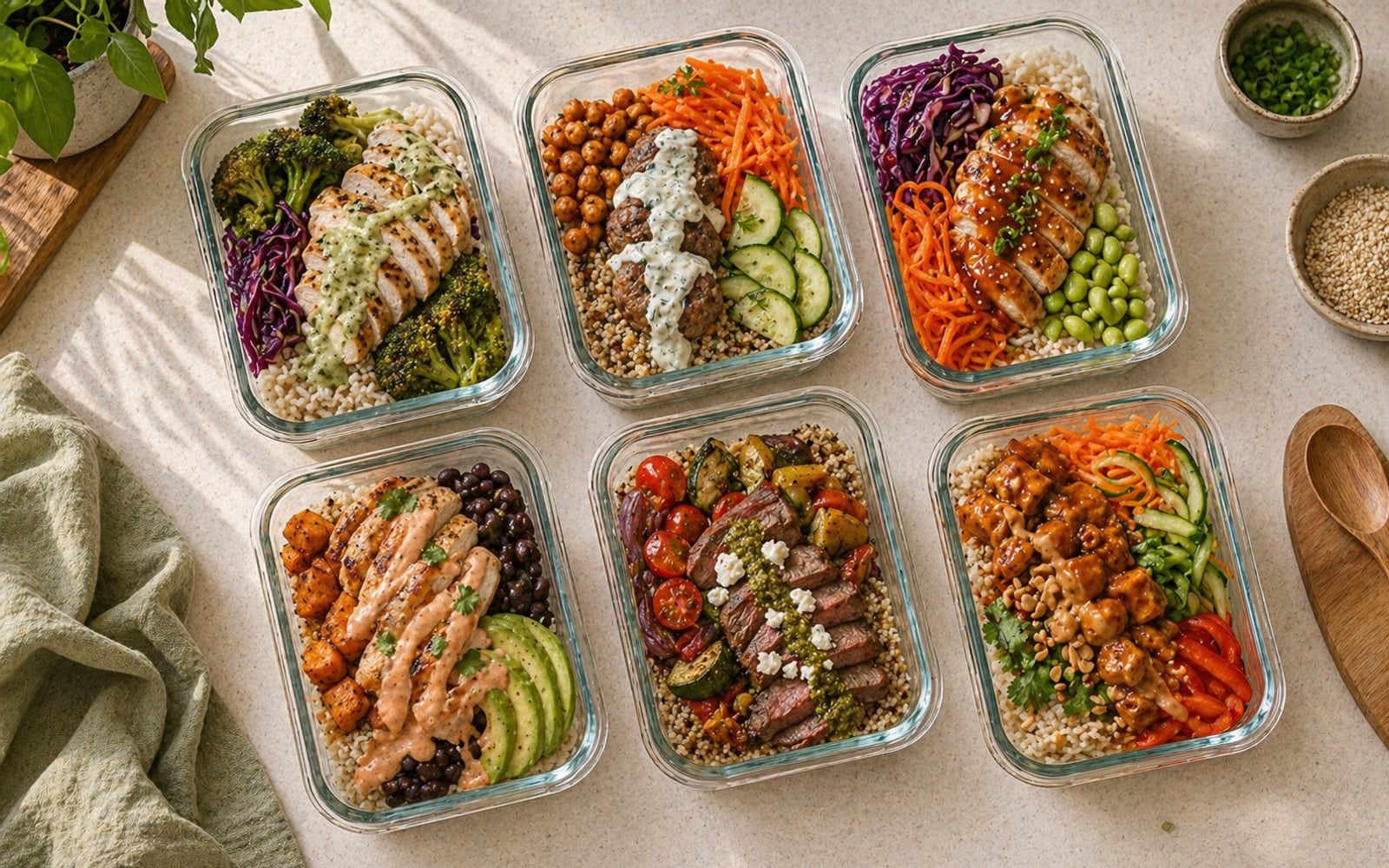
Here is how those five components turn into different meals every day:
Monday
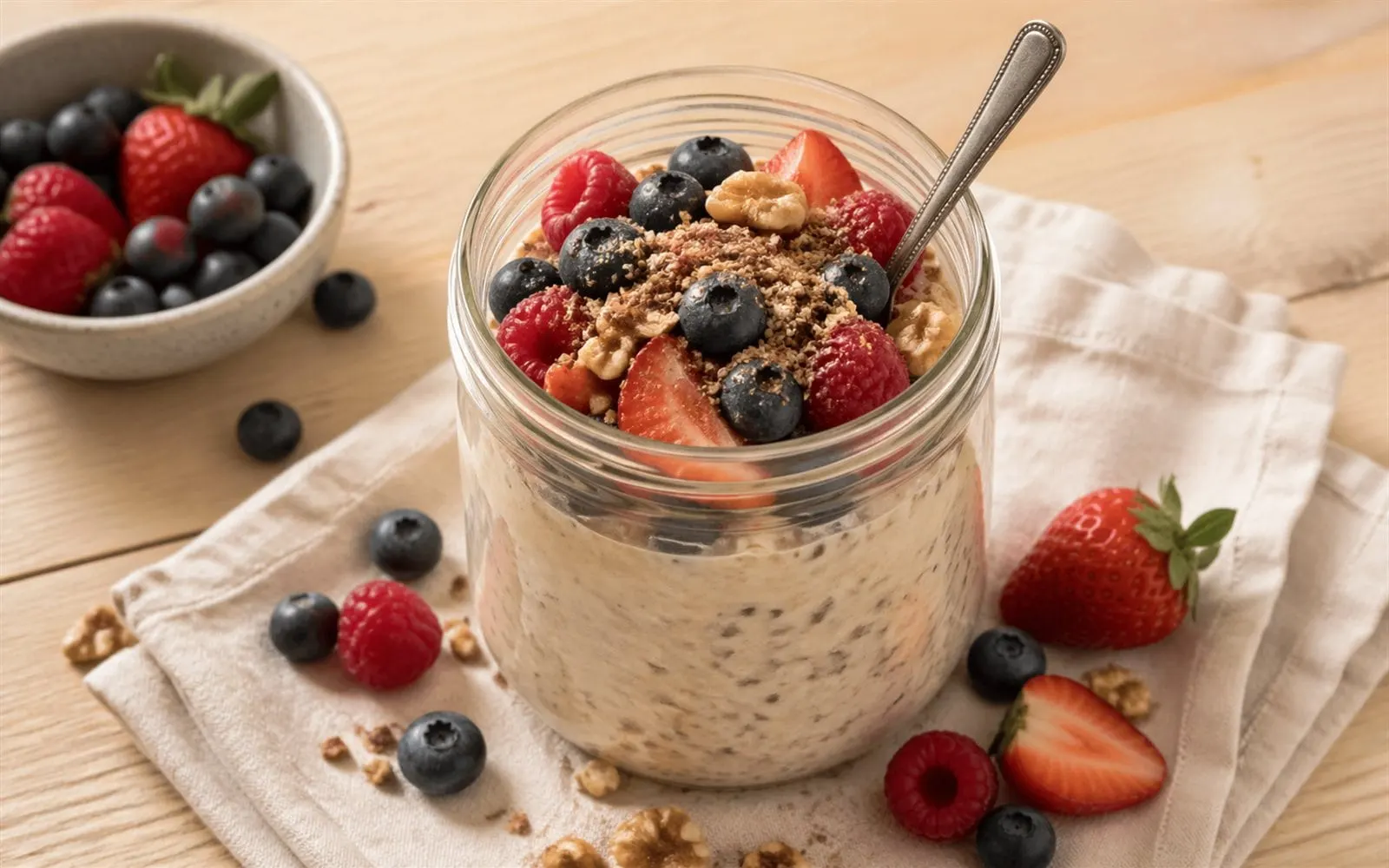
- Breakfast: Overnight oats (prepped Sunday night — oats, kefir, chia seeds, frozen berries, fridge overnight)
- Lunch: Brown rice + lentils + roasted cauliflower + tahini dressing + a spoon of sauerkraut
- Dinner: Chicken + roasted zucchini and peppers + brown rice + miso-ginger dressing
Tuesday
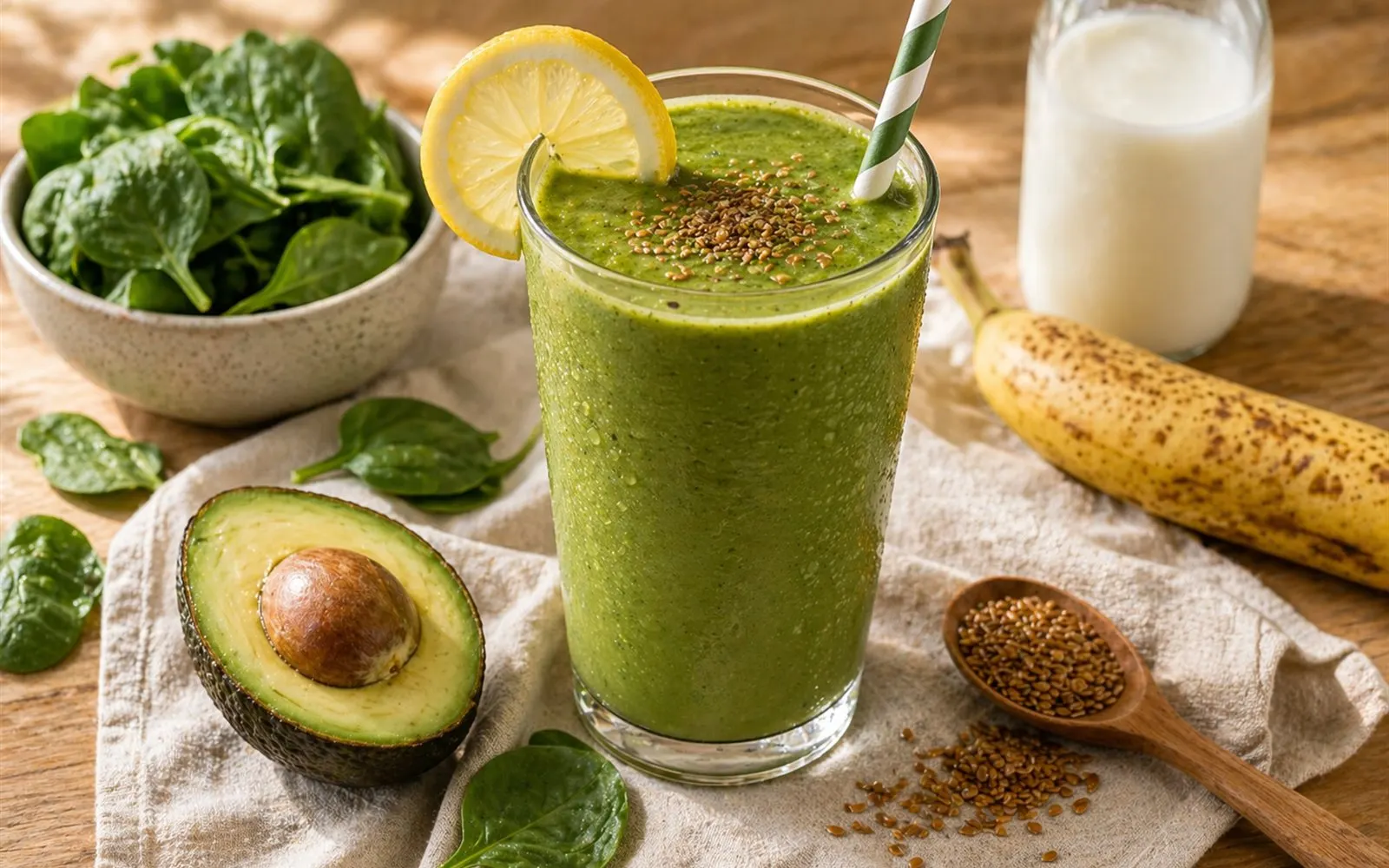
- Breakfast: Green smoothie (frozen spinach, banana, kefir, flaxseed)
- Lunch: Lentil soup (heat lentils with vegetable broth, cumin, and a handful of spinach)
- Dinner: Grain bowl with quinoa (if prepped) or rice + chickpeas + roasted sweet potato + vinaigrette + kimchi
Wednesday
- Breakfast: Overnight oats with different toppings (nuts, different fruit)
- Lunch: Leftover lentil soup + whole-grain toast with avocado
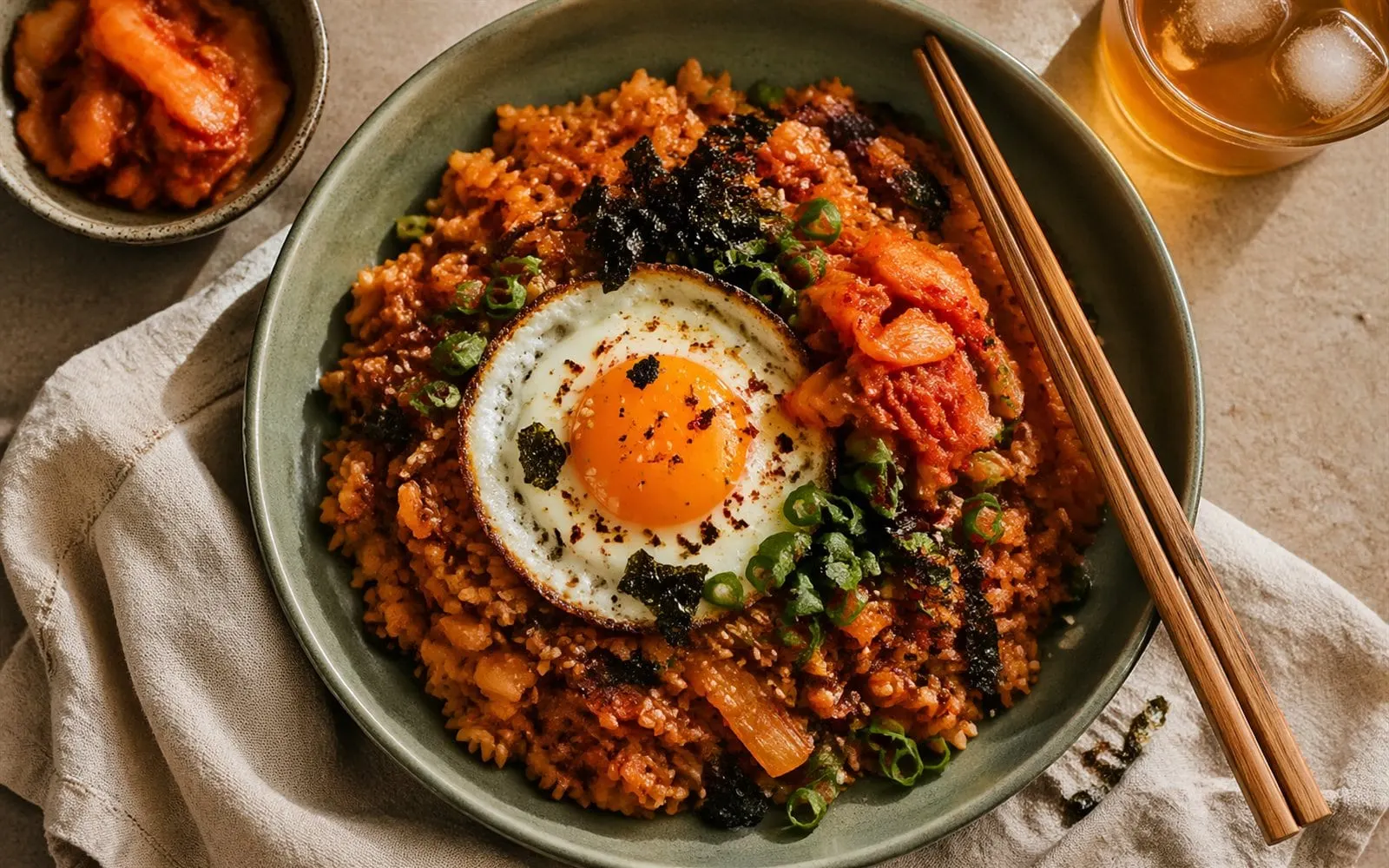
- Dinner: Kimchi fried rice — stir-fry day-old brown rice with an egg, vegetables, and kimchi (3 minutes)
Thursday
- Breakfast: Yogurt bowl — plain yogurt, granola, berries, drizzle of honey
- Lunch: Chicken salad — sliced chicken on greens with roasted vegetables, chickpeas, and vinaigrette
- Dinner: Dal — reheat lentils with coconut milk, turmeric, and cumin. Serve over rice with a spoon of yogurt.
Friday
- Breakfast: Toast with smashed avocado and sauerkraut
- Lunch: Remaining grain bowl or wrap (use a whole-wheat tortilla to wrap rice, vegetables, and protein)
- Dinner: Fresh-cooked meal — by Friday, most prep components are used up. Cook something simple or eat out.
Notice: every day includes at least one fermented food (kefir, sauerkraut, kimchi, miso, yogurt), multiple fiber-rich plants, and diverse plant species. The prep enables the principles without daily decision-making.
Storage and food safety
- Cooked grains: 5–6 days in the fridge. Also freeze well in portion-sized bags for up to 3 months.
- Cooked legumes: 5–6 days in the fridge. Freeze well.
- Roasted vegetables: 4–5 days in the fridge. Do not freeze well (they get mushy).
- Cooked chicken: 3–4 days in the fridge. Freeze well.
- Cooked fish: 2–3 days in the fridge. Do not freeze after cooking.
- Hard-boiled eggs: 5–7 days in the fridge (peeled or unpeeled).
- Sauces: 5–7 days in the fridge.
- Fermented condiments: Weeks to months in the fridge (they are already preserved).
Use glass containers with airtight lids. Let food cool to room temperature before refrigerating (within 2 hours of cooking). Label containers with the date if you are prepping for a full household.
Making it stick
The most common reason meal prep fails is ambition. People try to prep 15 different items on their first Sunday and burn out by week 2. Start smaller:
- Week 1: Cook one batch of grains and one batch of lentils. Buy a jar of sauerkraut and a container of kefir.
- Week 2: Add roasted vegetables to the routine.
- Week 3: Add a batch protein and one sauce.
- Week 4: You now have the full system. Adjust quantities based on what you actually ate versus what went to waste.
The goal is not perfection — it is removing the friction between intention and action. When the rice is already cooked and the lentils are already in the fridge, “eating well for your gut” stops being a project and starts being a 5-minute assembly job.
Bottom line
Gut health is built on consistency, not intensity. A 2-hour Sunday prep session that produces 5 days of fiber-rich, diverse, fermented-food-inclusive meals does more for your microbiome than any supplement regimen. The resistant starch forms automatically as food cools. The diversity comes from mixing and matching components differently each day. And the fermented foods — a spoon here, a splash there — add up to the daily exposure that clinical research shows makes a measurable difference.[2] Start with rice and lentils this Sunday. Your Tuesday-night self will thank you.